Category Archives: Advocacy

The Checker Café opened in 1934. Located at 2125 Ridge Avenue, it was in the heart of the Ridge Avenue Entertainment District.
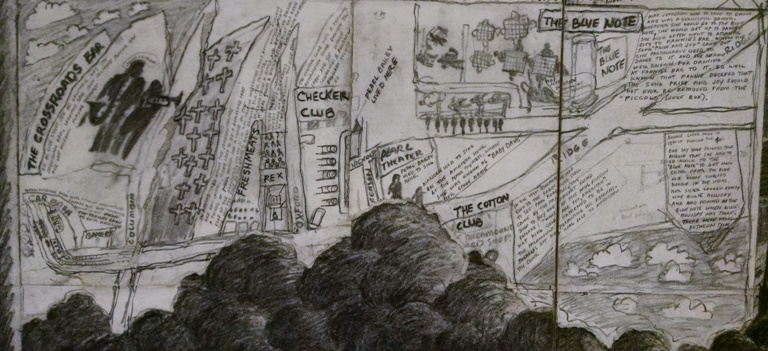
Ridge Avenue Cultural District

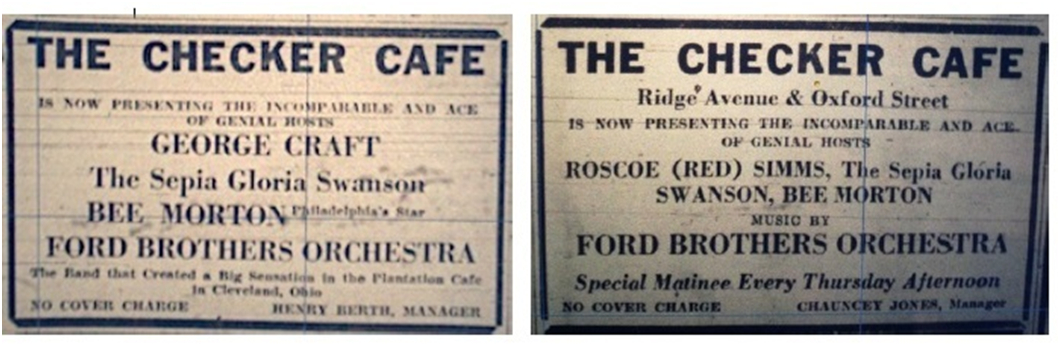
The Checker Café was a place to see and be seen. On May 23, 1935, Philadelphia Tribune columnist, “the Negro Councilman,” wrote:

When the show has nearly ended you will then see no other than our own sepia Gloria Swanson, who is direct from the Grand Terrace in Chicago and then you can tell the world that you have seen a real show.

As with many jazz venues, the Checker Café was about “intersectionality” before it became a thing. The “sepia Gloria Swanson” was a female impersonator.

In the 1980s under new ownership, the nightspot was renamed the Checker Club.

2125 Ridge Avenue - Checker Club Sign

Trumpeter Cullen Knight is the recipient of the 2015 Philadelphia Clef Club of Jazz and Performing Arts “Living Legend” Award. Knight shared some memories with Philadelphia Inquirer architecture critic Inga Saffron:

It’s a bit ironic that the Checker is the only one of those Ridge Avenue joints to survive. It wasn’t the biggest or best known of the venues that lined the avenue during North Philadelphia’s jazz heyday in the mid-20th century. That distinction was probably held by the Pearl Theater on the next block, where Bailey and her sister Jura worked as ushers, and brother Bill tended the candy counter.

Trumpeter Cullen Knight, who grew up a block away, says the Checker was where musicians hung out before and after the shows, partly because the food and the house trio were equally reliable. Its motto was “Good Food. Good Cooks. Good Service.” Among those providing service was Pearl Bailey, who did a stint as a singing waitress and is now immortalized by a mural on the building’s south side. In the ’30s, a gay singer known as the “Sepia Gloria Swanson” was also a regular.

While some clubs, like Ridge Cotton Club and Blue Note, took their inspiration from famous Harlem venues, the Checker got its name from the black-and-white pattern painted on the ground floor. Its horseshoe-shaped bar had just enough space in its curve for a small band. Tables occupied the rest of the room.

Read more

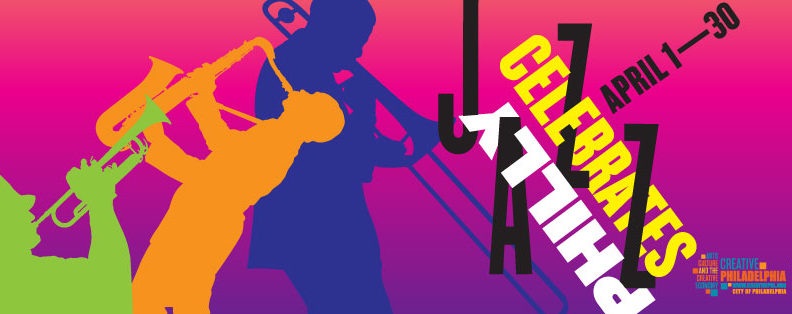
Philly Celebrates Jazz

April is Jazz Appreciation Month. The destruction of the Royal Theater, and John Coltrane and Women of Jazz murals gives one reason to believe otherwise, but Philly celebrates jazz.

Philly-Celebrates-Jazz

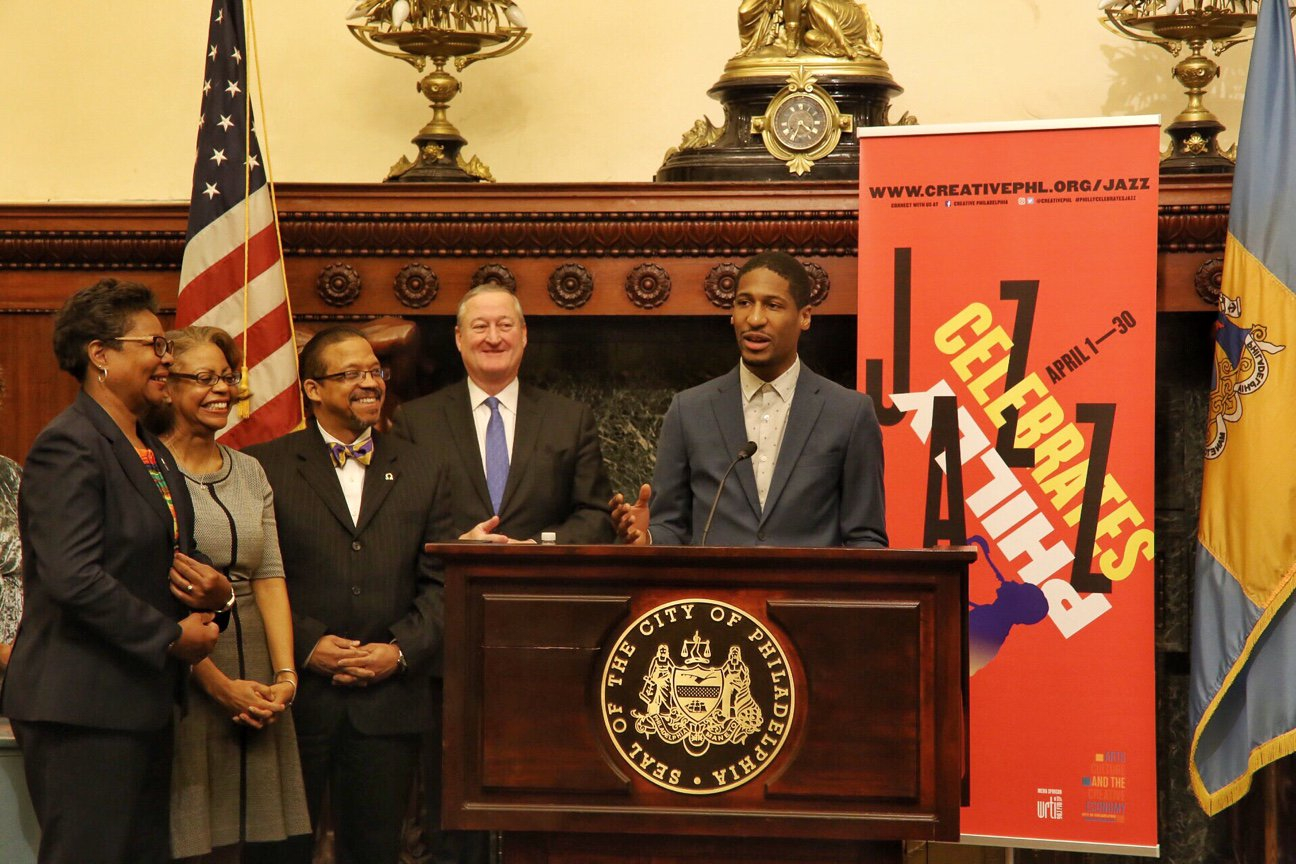
Mayor Jim Kenney kicked off the celebration by presenting the Benny Golson Award to multi-instrumentalist and “Late Show with Stephen Colbert” bandleader Jon Batiste.

Philly Loves Jazz - Jon Baptiste

Kenney said:

I am honored to present the first Benny Golson Award to Jon Batiste, who exemplifies what can be accomplished in using your talents in educating our youth in the importance of the arts and culture. As I have said many times, arts education is not a luxury, it is a necessity and one of the most effective ways of helping our children grow and develop into not only more creative, but also open-minded and compassionate people.

The Office of Arts, Culture and the Creative Economy organizes the month-long Philly Celebrates Jazz. Over 200 events are scheduled, including a photo exhibition, “Live Philly Jazz Vol. 2.

The WRTI Jazz Listening Sessions will be hosted by Jeff Duperon. The hour-long conversations will be held before a live audience in the Art Gallery @ City Hall. The listening sessions are free but space is limited. Seating is first come, first serve and you must register.

Over the course of Philadelphia’s jazz heyday, roughly 1940s to 1960s, there were jazz spots from the Aqua Lounge to Zanzibar Blue.

All That Philly Jazz - Aqua Lounge to Zanzibar Blue

The “Philly Celebrates Jazz Community Series” harkens back to the time when the joints were jumping in every neighborhood, including  “The Golden Strip,” Ridge Avenue and “The Strip.”

Philadelphia Celebrates Jazz Community Series

A complete calendar listing of Philly Celebrates Jazz events is available here.

Aqua Lounge

Paul Myers opened the Aqua Lounge circa 1965. It was one of Philadelphia’s premier jazz clubs. The Aqua Lounge was the first jazz venue on “the Strip.”

Aqua Lounge headliners included Roy Ayers, George Benson, Art Blakey, Dave Burrell, Betty Carter, Ron Carter, Johnny Coles, Charles Earland, Dizzy Gillespie, Dexter Gordon, Herbie Hancock, Jimmy Heath, Joe Henderson, Freddie Hubbard, Rahsaan Roland Kirk, Gloria Lynne, Hugh Masekela, Thelonious Monk, Lee Morgan, Irene Reid, Max Roach, Pharoah Sanders, Shirley Scott, Gil Scott-Heron, Archie Shepp, Horace Silver, Jimmy Smith, Dakota Staton, McCoy Tyner, and Jimmy Witherspoon.

In an interview with the University of Pennsylvania School of Arts and Sciences’ West Philadelphia Music Project, jazz drummer Lucky Thompson shared his memories of the Aqua Lounge:

And right along 52nd street, there was a club called the Aqua Lounge, it used to bring a lot of famous musicians through there, like Miles, Max [unclear], and I mean they would come out and stand in one of the corners smoking a cigarette, and Philly Joe Jones, and umm, a lot of Shirley Scott, a lot of famous musicians. Called the Aqua Lounge. That was one of the clubs known for being on the Strip.

Gil Scott-Heron name-checks the Aqua Lounge in “Is That Jazz?”

Lee Morgan had a week-long engagement at the Aqua Lounge in October 1971. It was his last hometown appearance before his tragic death four months later.

The Aqua Lounge closed around 1975. It is now the home of the African Cultural Art Forum.

Lee Morgan’s historical marker was unveiled in front of the Aqua Lounge/African Cultural Art Forum on International Jazz Day 2024.

The Aqua Lounge is a stop on the walking tour, 52nd Street Stroll.

Jazz Night Auditions at the Apollo Theater

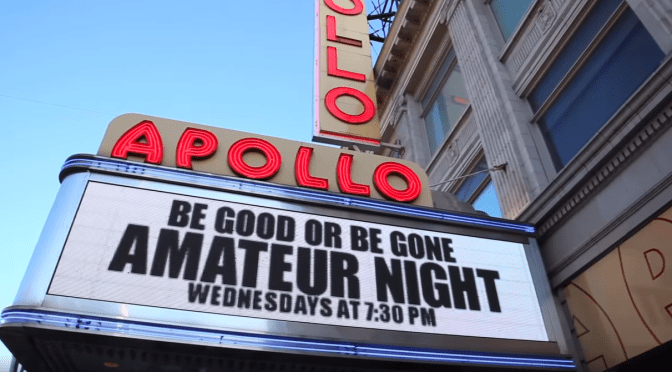
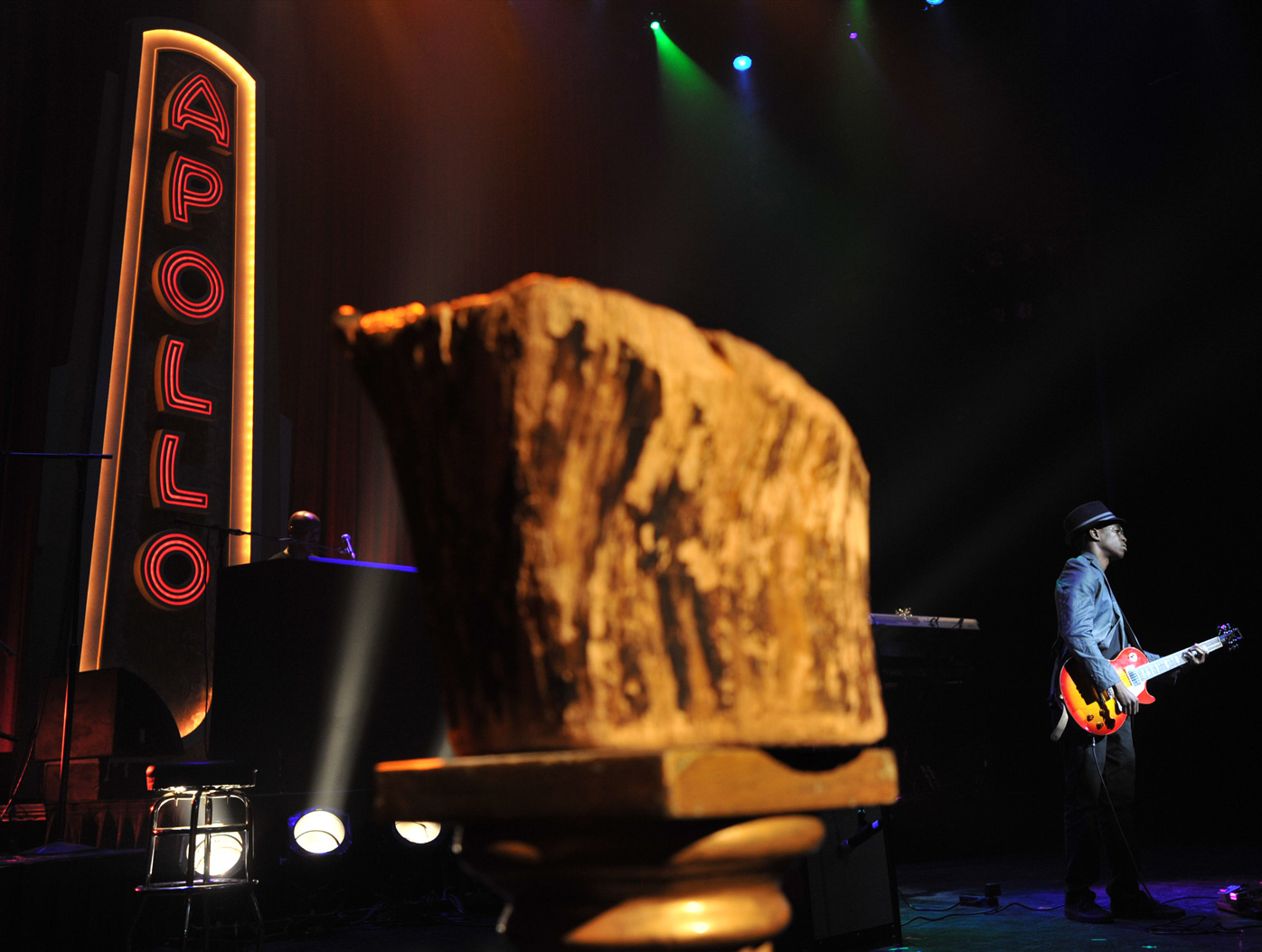
April is Jazz Appreciation Month. The Apollo Theater is kicking off the celebration with auditions for a special Jazz Night edition of Amateur Night.

Jazz Auditions - Apollo Theater

Got jazz talent? Alright then grab your instrument, accompanist, CD, flash drive, MP3 player or dancing shoes and head on up to Harlem on Saturday, April 1. The Apollo will provide 88 key keyboard, drum kit, guitar and bass amps.

Jazz Amateur Night at the Apollo - April 1

For more information on how to audition and eligibility rules, go here.

Historic Preservation and Social Justice

Two years ago I launched All That Philly Jazz, a place-based public history project that is telling the story of Philadelphia’s golden age of jazz. In documenting the places where jazz history unfolded, I am also contextualizing the impact of jazz musicians and the jazz culture on the struggle for social justice.

Fact is, the jazz culture was about “intersectionality” before the term was coined . As Philadelphia Inquirer architecture critic Inga Saffron notes in her column, “Ridge Avenue’s last standing jazz club,” gay performers such as the “Sepia Gloria Swanson” were an integral part of the scene.

Checker Cafe Ads

In a piece for PlanPhilly, I wrote about why historic preservation matters:

1409 Lombard Street helps tell the story of artistic greats like Lady Day, Ray Charles, John Coltrane, Miles Davis, Nina Simone and McCoy Tyner. It also tells the story of disruption and defiance. In remarks to the 1964 Berlin Jazz Festival, Dr. Martin Luther King Jr. said jazz is “triumphant music.” If walls could talk, they would tell how the jazz culture broke down social barriers. The first racially integrated nightspot in Center City was a jazz club, the Downbeat. For the first time, blacks and whites mixed on an equal basis. Jazz musicians created a cultural identity that was “a steppingstone” to the Civil Rights Movement.

At its core, historic preservation is about storytelling. The question then becomes: Who decides what gets saved and whose story gets told? The built environment reflects racial inequalities. Given African Americans’ socioeconomic status, few of the buildings associated with black history meet preservation standards regarding architectural significance. Although unadorned, they are places that tell a more complete American story. The stories of faith, resistance, and triumph are relevant to today’s social justice activists.

Read More

Women in Jazz Month

March is Women in Jazz Month, a time to celebrate the contributions of women to jazz.

As a lifelong activist, I want to celebrate the role that women in jazz played in paving the way for the Civil Rights Movement. While Billie Holiday’s “Strange Fruit” is well-documented, Ethel Waters’ “Supper Time” is not well-known. Written by Irving Berlin especially for Waters, the song is about a wife’s grief over the lynching of her husband.


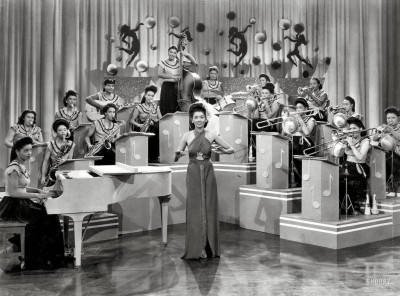
I also want to celebrate the pioneering women of the International Sweethearts of Rhythm, the first racially-integrated all-female big band. The 17-piece band was led by vocalist Anna Mae Winburn.

international-sweethearts-of-rhythm-e1425870519326

The Sweethearts were popular in the 1940s. Indeed, they were one of the top swing bands, appearing on radio broadcasts, and touring the U.S. and Europe.

The group disbanded in 1949.

Sister Rosetta Tharpe

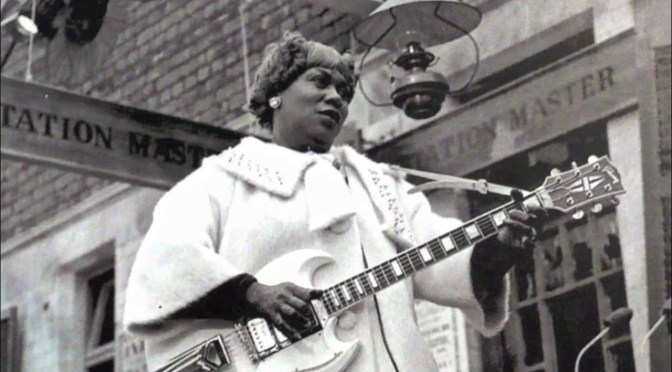
In 1957, Sister Rosetta Tharpe moved to Philadelphia. She was a first-generation resident in the historic Yorktown neighborhood, and a member of Bright Hope Baptist Church.

From Philadelphia, she did some of her finest recordings, releasing five LP’s and gaining a Grammy nomination with her 1968 album, “Precious Memories.” Her tours of Europe in the late 1950’s helped to spark the British blues revival and the onset of 1960’s popular music.

Sister Rosetta was gospel’s first superstar who brought spiritual music into the mainstream with a blend of blues, jazz, big band, and rhythm & blues. Her ringing soprano voice and guitar virtuosity set her apart from other greats of gospel’s Golden Age. In 2007, she was inducted into the Blues Hall of Fame.

In 2011, a historical marker was installed outside the house in Yorktown where she lived for 15 years until her death in 1973.

Sister Rosetta Tharpe Historical Marker

Walk of Fame Class of 2016 is All Philly Jazz

Philadelphia is a jazz town. This fact will be underscored on Wednesday, October 19th when the Philadelphia Music Alliance inducts the Class of 2016 into the Walk of Fame. This year’s inductees are organist Joey DeFrancesco, tenor saxophonist Benny Golson, bassist Christian McBride, bassist Jaco Pastorius, and WRTI radio broadcaster Bob Perkins

PMA Board chairman Alan Rubens said in a statement:

The Alliance is very excited to be able to specifically honor jazz this year as an extension of Philadelphia’s essential ties to this unique American art form’s rich legacy. It’s important to be reminded of the global impact and influence that Philadelphia has continued to bring to the jazz world, since the Roaring ’20s. Jazz doesn’t always get its due these days, even though it’s current as ever. Jazz is today, and it’s very much got a thriving pulse in our great city.

Read More

Eddie Lang Mural Dedication

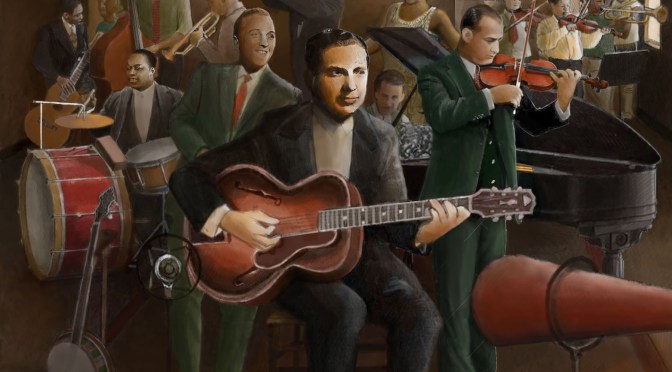
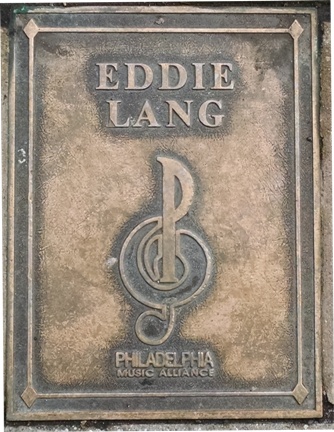
Eddie Lang, the “Father of Jazz Guitar,” was born in South Philadelphia. Lang was inducted into the Philadelphia Walk of Fame in 1992.

Eddie Lang Plaque

On Sunday, October 23, Eddie Lang Day, the Mural Arts Program will dedicate a mural in honor of the jazz legend.

Eddie Lang Mural

The dedication ceremony will be held at 7th and Fitzwater Streets. For more info, go here.

Benny, Brownie and Dizzy

On June 26, 1956, legendary trumpet player Clifford “Brownie” Brown had just left performing at Music City in Center City when he was killed in a car accident on the Pennsylvania Turnpike. He was only 25.

In tribute to his friend, Philly native and NEA Jazz Master Benny Golson composed “I Remember Clifford.” In an episode of Jazz Stories by Jazz at Lincoln Center, Golson recounted how Dizzy Gillespie became the first person to hear his tribute to Brownie:

I decided I would try to write a song that would be reminiscent of Clifford. And during those days, I could write a song in one day. You know, just a half-hour or so—might not have been that great though. But this tune, because of what he meant to me as a friend and fellow musician and what I wanted the song to be, consequentially, it took me almost a whole two weeks to do it. And once I did it, I wasn’t sure what I had.

So Dizzy came in early one night and I had come with my uniform that afternoon knowing that I wouldn’t be going back to the hotel. So since he was there, I decided to ask him what he thought about it. Chairs were still up on the tables, they hadn’t really prepared, but somehow he came early. So I asked him did he have a moment to listen because I wanted him to hear something. And he said, “Okay.”

He came over and sat down at the table and I started to play this tune and he said, “Hmm…” And then he started to take his trumpet out of the case and I thought to myself, “The man doesn’t even know the tune and he’s going to try to play it!” But he fooled me.

READ MORE