Category Archives: Historic Preservation

No More Auction Block for Black Americans

On January 1, 1863, the Emancipation Proclamation issued by President Abraham Lincoln went into effect.

Emancipation Proclamation - January 1, 1863

The executive order changed the legal status of more than 3.5 million enslaved African Americans in 10 designated states and areas then in rebellion against the United States:

That on the first day of January, in the year of our Lord one thousand eight hundred and sixty-three, all persons held as slaves within any State or designated part of a State, the people whereof shall then be in rebellion against the United States, shall be then, thenceforward, and forever free; and the Executive Government of the United States, including the military and naval authority thereof, will recognize and maintain the freedom of such persons, and will do no act or acts to repress such persons, or any of them, in any efforts they may make for their actual freedom.

This year marks the 400th anniversary of the arrival of the first enslaved Africans in English North America. There will be a year-long commemoration of 400 years of African American history.
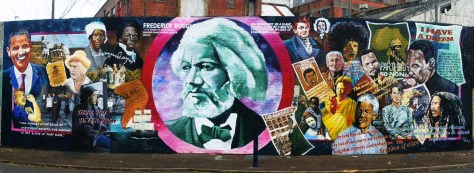
#400Years African Ameican History

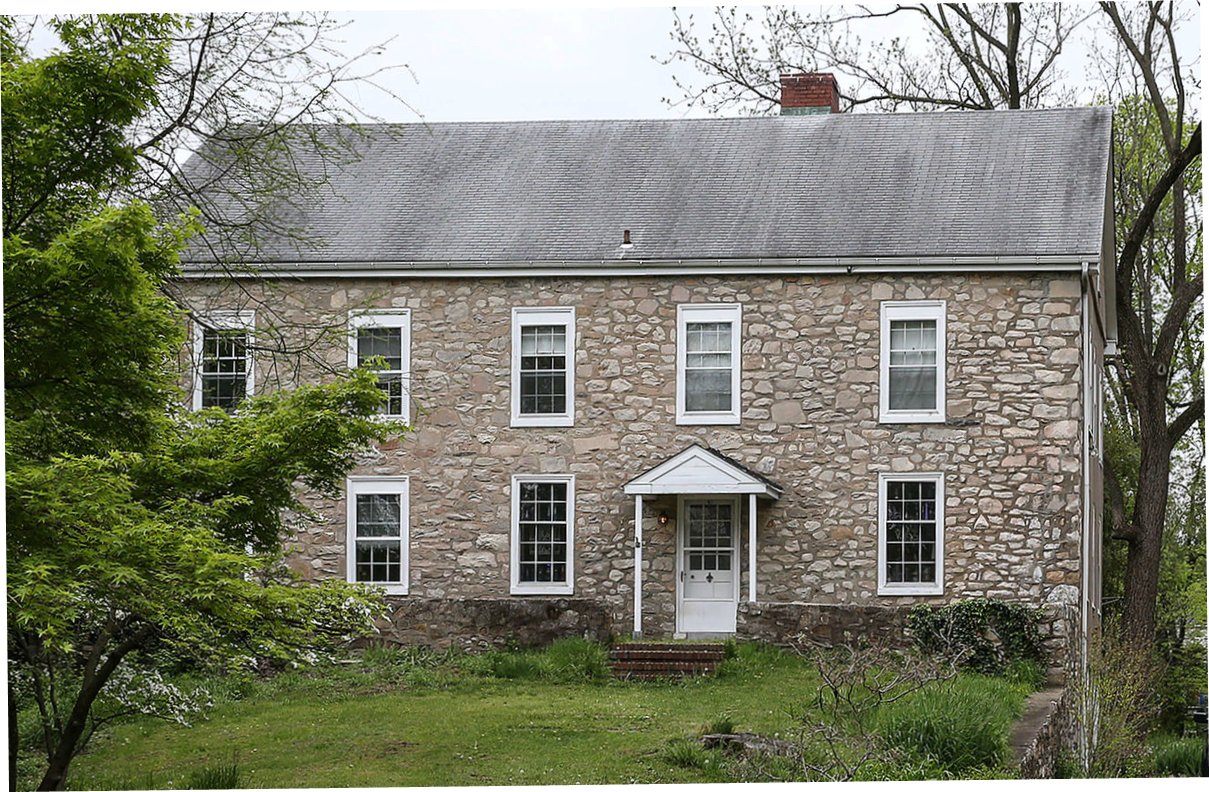
As the nation gears up to mark this milestone, K. Hovnanian Homes is gearing up to degrade Abolition Hall, a former Underground Railroad station where fugitive slaves found shelter on their journey to freedom. The purpose-built structure is listed on the National Register of Historic Places.

Ignoring the reasoned opposition of Friends of Abolition Hall and allies, the Whitemarsh Township Board of Supervisors voted to allow Hovnanian to build 67 townhouses within a stone’s throw of the historic landmark.

While the case winds its way through the courts, we’re taking the case for saving Abolition Hall to the court of public opinion. To that end, we launched VillagesatWhitemarsh.info which redirects to Abolition Hall Deserves Better. For the next 400 days, we will curate news and information to raise awareness among prospective Villages at Whitemarsh buyers that they would be buying into a cookie-cutter development that was built on hallowed ground. So caveat emptor.

Abolition Hall Deserves Better -Villages at Whitemarsh

If you have stories that you would like to share with this crowdsourced project, please contact Abolition Hall Deserves Better.
Remembering John Brown

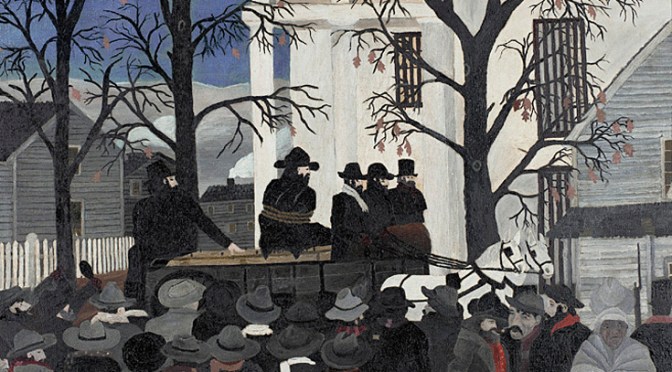
December 2 marks 159 years since freedom fighter John Brown’s last moments on Earth.

William H. Johnson - John Brown Legend

The fiery abolitionist is near and dear to my heart. Many years ago I visited John Brown’s Fort in Harpers Ferry, West Virginia.

John Brown's Fort

I’ve lost count of the number of times I touched base with my hero at the National Portrait Gallery.

John Brown - National Portrait Gallery

I also regularly visit John Brown at the Metropolitan Museum and share with him what’s going on.

The Last Moments of John Brown - Thomas Hovenden

So you can imagine my reaction when I learned a development project, the Villages at Whitemarsh, would encroach on the studio where Thomas Hovenden painted “The Last Moments of John Brown.”

Abolition Hall, an Underground Railroad station where runaway slaves found shelter in the purpose-built structure and surrounding fields, was converted into a studio after the Civil War. The developer, K. Hovnanian Homes, wants to build 67 generic townhouses a stone’s throw from the historic landmark.

Hovnanian won the first round but the fight is far from over. Friends of Abolition Hall appealed the Whitemarsh Township Board of Supervisors’ approval of the developer’s conditional use application.

John Brown’s “body lies a-mouldering in the grave. But his soul goes marching on.” Indeed, I believe to my soul that Abolition Hall deserves better.

To add your voice to those who oppose the desecration of this historic landmark and hallowed ground, please contact us.

Veterans Day 2018

In 1919, President Woodrow Wilson proclaimed November 11 as Armistice Day:

To us in America, the reflections of Armistice Day will be filled with solemn pride in the heroism of those who died in the country’s service and with gratitude for the victory, both because of the thing from which it has freed us and because of the opportunity it has given America to show her sympathy with peace and justice in the councils of the nations.

November 11 commemorates the armistice agreement Allied powers signed with Germany bringing hostilities to an end on the “eleventh hour of the eleventh day of the eleventh month” of 1918.

In June 1954, Congress passed legislation changing the name from Armistice Day to Veterans Day, a day to honor veterans of all wars. On October 8, 1954, President Dwight D. Eisenhower issued the first Veterans Day Proclamation.

Just six years earlier, President Harry S. Truman signed Executive Order No. 9981 establishing the President’s Committee on Equality of Treatment and Opportunity in the Armed Services. The EO signaled the government’s commitment to integrate the military.

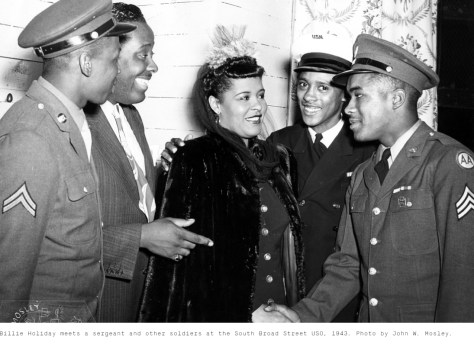
United Service Organizations (USO) policy expressly banned racial discrimination. However, there were separate facilities for African American servicemen in the Jim Crow South and segregated North. In Philadelphia, USO sites for African Americans included Parker Hall and South Broad Street USO. Billie Holiday entertained the soldiers at both locations.

Billie Holiday - South Broad Street USO

Parker Hall was on the top floor of the Parker Building.

Parker Hall - Germantown CDC

The Parker Building is now home to the ACES Museum whose mission is to preserve the history of World War II veterans and restore Parker Hall as a functioning USO for black veterans and their families. The ACES Museum is headquarters of the Philadelphia Chapter of the National Association of Black Veterans.

For more information, visit www.acesmuseum.online.

Philadelphia Jazz Summit 2018

The inaugural Philadelphia Jazz Summit will be held November 2-3, 2018. Spearheaded by jazz bassist Gerald Veasley, the event will bring together musicians, jazz enthusiasts, advocates, funders, and the arts and culture community.

Veasley, president of Jazz Philadelphia, said in a statement:

The time has come for Philadelphia to be recognized as the world-class jazz destination it is. Philadelphia has been fertile soil for jazz for over 100 years. The city has served as a launching pad for the careers of legends such as John Coltrane, Dizzy Gillespie, Billie Holiday, Lee Morgan, Melody Gardot, Christian McBride, Grover Washington, Jr., Sun Ra and many more.

Veasley added:

Jazz Philadelphia is here to provide more opportunities for the next generation of musicians to play here, stay here, and share their talent with the world. I’ve had a wonderful career as a Philadelphia-based musician, and I want to ensure that others can do the same.

The schedule includes speakers, workshops, and panel discussions that cover a wide range of topics, including applying for grants and residencies, educating artists and audiences, and playing in unconventional spaces. I’m on the panel, “The Philadelphia Story.” I’ll talk about ongoing project to document Philly’s jazz spots from A to Z, from the Aqua Lounge to Zanzibar Blue.

All That Philly Jazz - Aqua Lounge to Zanzibar Blue2

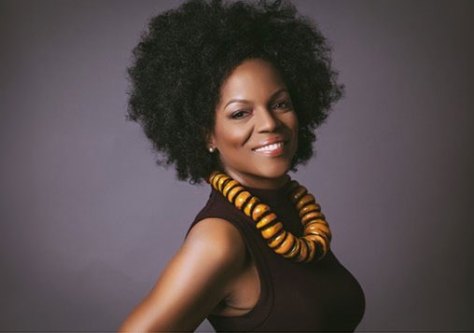
Nnenna Freelon, a jazz singer, composer, producer, arranger and six-time Grammy® nominee, is the keynote speaker. Freelon was selected in recognition of her cultural activism and commitment to social justice.

Nnenna Freelon

The Philadelphia Jazz Summit is free but you must register.

#ThisPlaceMatters: The Painted Bride

When I launched All That Philly Jazz five years ago, the Painted Bride Art Center was one of the first places added to the database. Jazz on Vine was the longest, continually running jazz series in Philadelphia.

So when I read the Magic Gardens had nominated the Painted Bride for listing on the Philadelphia Register of Historic Places, I had to weigh in because 230 Vine Street is one of the few extant buildings associated with Philadelphia’s jazz history. I gave public comment at the Committee on Historic Designation, which voted unanimously to add the building to the local register.

Fast forward to September 14, the nomination was before the full Commission. The room was packed with passionate people for and against the nomination. I, again, offered public comment which reads in part:

It is telling that the property owner does not dispute the historical significance of the building. Instead, their objection is based on fear that historic designation will reduce the market value of the property. However, “financial hardship,” such as it is, is not the issue before the Commission today. If the owner wants to claim “financial hardship,” a review process must be followed.

The issue before the Commission is whether the Painted Bride meets one or more criteria for historic designation. The Committee on Historic Designation got it right when they voted unanimously to add 230 Vine Street to the Philadelphia Register of Historic Places.

The property owner’s concern about the safety of 230 Vine Street is situational. For historic designation purposes, the owner has taken “interim measures” and put out yellow caution tape. For programming purposes, the Bride puts out the welcome mat.

After three hours of testimony from the Bride, Magic Gardens and the public, the Commission voted on the nomination. The vote was 5-to-5. Chair Robert Thomas voted to add 230 Vine Street to the Philadelphia Register of Historic Places.

It was obvious no one knew what to do in the event of a tie vote. Thomas was overheard saying a tie vote “creates problems.” But rather than take a recess to figure things out, the political hack called for a second vote. The second time around the vote was 5-to-4 to reject the nomination. Thomas told the Magic Gardens’ lawyer that he abstained “to avoid a tie vote.” In so doing, he consigned the Painted Bride to the trash heap of history.

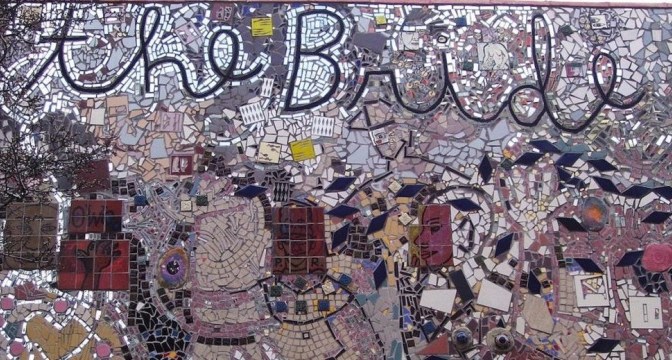
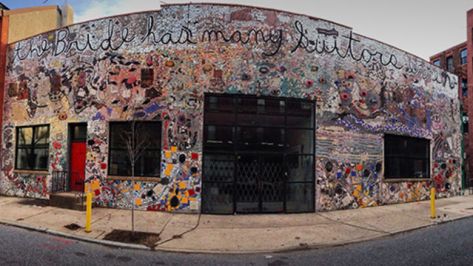
While I am disappointed the Painted Bride will not have historic designation, I am outraged that Thomas changed his vote from “yes” to effectively “no.” Why would the chair of a commission whose mission is to preserve buildings abstain knowing the outcome of the vote is the inevitable demolition of an historic resource wrapped with Isaiah Zagar’s iconic mosaic!?

Martin-Brown-Painted-Bride-4b

It’s always shady in Philadelphia. As I walked home, the Temptations’ song with the shattered glass came to mind. It’s just a matter of time before the sound of shattered glass is heard at 230 Vine Street.

Tribute to the Life and Music of Aretha Franklin

The Queen of Soul will be laid to rest this week. During her final performance in Philadelphia, Aretha Franklin told the audience:

I started, really in Philadelphia. I worked at Pep’s on Broad Street and I worked at the Cadillac Club. I’ve worked all over Philadelphia.

Indeed, she did. Ms. Franklin worked her magic at the Uptown Theater, where on Friday, August 31, the Uptown Entertainment and Development Corporation will host a tribute to the life and music of the Queen of Soul. The event will take place in front of the historic theater.

Uptown Theater Tribute to Aretha Franklin2

The program will begin at 6pm with musical tributes to Ms. Franklin, followed by a candlelight ceremony at 7pm. For more info, contact Linda Richardson at (215) 236-1878.

Message in the Music

Black Music Month was first observed on June 7, 1979 at the White House.

#BlackMusicMonth - June 7, 1979

As B.B. King observed, African Americans first got the blues when “they brought [us] over on a ship.”

Enslaved Africans used the message in the music to plan their escape.

Music helped runaways navigate the pathway to freedom.

On their quest for freedom, some of our enslaved ancestors found sanctuary in Abolition Hall and the surrounding fields. A developer’s plan to develop the fields struck a discordant note with Sydelle Zove, convener of Friends of Abolition Hall, and Avenging The Ancestors Coalition. ATAC Founder Michael Coard recently wrote:

Abolition Hall was built in 1856 by George Corson, a Quaker abolitionist. It, its adjacent family home, and purportedly its adjacent fields were where Black men, women, and children took shelter in courageous attempts to flee slavery. Zove says the developer proposes to “subdivide and reconfigure” this historic homestead to construct 67 townhouses on the open fields directly next to the hall. Once divided, notes Zove, the developer plans to sell the hall, the stone barn, and the Thomas Hovenden House – all listed on the aforementioned National Register. She continues by pointing out that it’s not just the hall that’s in jeopardy but also the “fields where cornstalks hid fugitives”—fields she describes as an “integral part of the site.”

The developer’s proposal would box in the national historic landmark. So Friends of Abolition Hall and ATAC are asking concerned citizens to raise their voices and tell Whitemarsh Township: Abolition Hall deserves better. The Board of Supervisors will meet on Thursday, June 14, 2018, at 7pm, 616 Germantown Avenue in Lafayette Hill.  If you need a ride, holler.

#AbolitionHall - ATAC - June 14, 2018

#ThisPlaceMatters: Abolition Hall

May is Preservation Month, a time for folks to celebrate places that matter to them. Few places matter more to me than Underground Railroad sites. Abolition Hall in Plymouth Meeting, Pennsylvania, is under threat by a proposal to build 67 townhouses on the George Corson homestead.

Abolition Hall - #ThisPlaceMatters

Charles L. Blockson, Curator Emeritus of the Charles L. Blockson Afro American Collection at Temple University, is the author of several books on the Underground Railroad. Blockson wrote:

Abolition Hall was an important terminal on the Freedom Network known as the Underground Railroad, not only has local significance but also national significance. As chairperson of the National Park Service Advisory Committee, I referenced this site to highlight the importance of the Underground Railroad. … The site played a significant role in the National Park Service Underground Railroad Study, adopted by Congress to designate the Network to Freedom as a national historic treasure. Abolition Hall is a national, historical site that should be preserved.

To that end, I reached out to Michael Coard, a founding member of Avenging The Ancestors Coalition. ATAC won the battle to ensure the National Park Service told the full history of the first President’s House.

Tweet - April 27, 2018 - Abolition Hall - Last Moments of John Brown

An attorney/activist, Coard is host of WURD’s “Radio Courtroom.” On April 29, I was a guest on his show. I alerted his listeners to the alarm sounded by Sydelle Zove in a recent op-ed:

To allow the proposed townhouse project to proceed through the standard land development process absent appropriate due diligence by the developer with regard to the stabilization, restoration, reuse, and marketing of the historic structures is to turn our backs on the Americans who lived here, those who sought shelter here, and others who spoke boldly in opposition to the institution of slavery.

Zove is a convener of Friends of Abolition Hall. She said in an email:

Our struggle to protect the legacy of this well-documented Underground Railroad station pales in comparison to the travails of the men, women, and children who arrived in Plymouth Meeting seeking sanctuary. And when these fugitives from bondage were welcomed by George and Martha Corson, it was their hosts who were placed at risk – of fines and imprisonment. Today, the Friends of Abolition Hall is determined to fight the proposed 67-unit townhouse plan that will consume the fields where runaways hid among the tall cornstalks. That same plan will send the historic structures – Abolition Hall, Hovenden House, and Barn – to the auction block where they will be sold to the highest bidder. The developer asserts that by not demolishing these buildings, he is preserving them. That is an insult to all who lived here, hid here, and to those of us who argue that Abolition Hall deserves better.

Their struggle is now ATAC’s struggle. Kanye West’s ignorant comment that slavery was a “choice” underscores the importance of preserving in public memory the places that tell the story of America’s original sin.

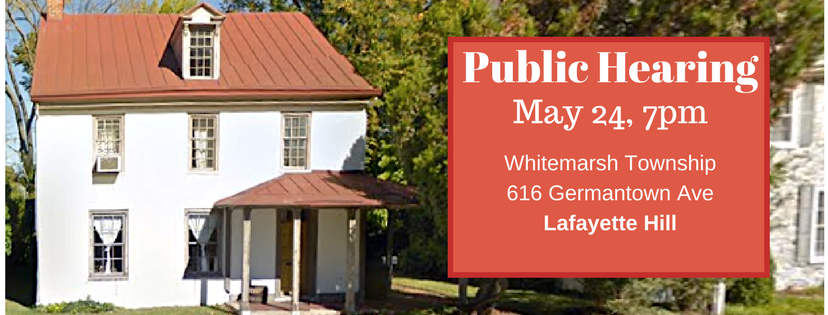
The developer, K. Hovnanian Homes, will be back before the Whitemarsh Township Board of Supervisors on May 24, 2018.

Whitemarsh Township Board of Supervisors Meeting - May 24, 2018

Freedom isn’t free. Friends of Abolition Hall needs help to continue their fight to save the historic buildings from the auction block. If the walls of Hovenden House, Abolition Hall, and the Barn could talk, they would tell stories of faith, resistance and triumph. Please make a tax-deductible donation in the name of the ancestors.

For more information, visit Friends of Abolition Hall.

Jane’s Walk: North Broad Then & Now

Since 2007, community historians across North America and around the world have taken to the streets to lead a Jane’s Walk, “a movement of free, citizen-led walking conversations inspired by Jane Jacobs.”

On Saturday, May 5, 2018, I will lead a Jane’s Walk, “North Broad Then & Now.” We will uncover North Broad’s forgotten past as an enclave of nouveau riche industrialists. North Broad was also an entertainment destination for African Americans. That was then.

Now after years of neglect and disinvestment, North Broad is experiencing a development boom. We will explore North Philadelphia’s jazz history and issues ripped from the headlines such as gentrification, civil rights and cultural heritage preservation.

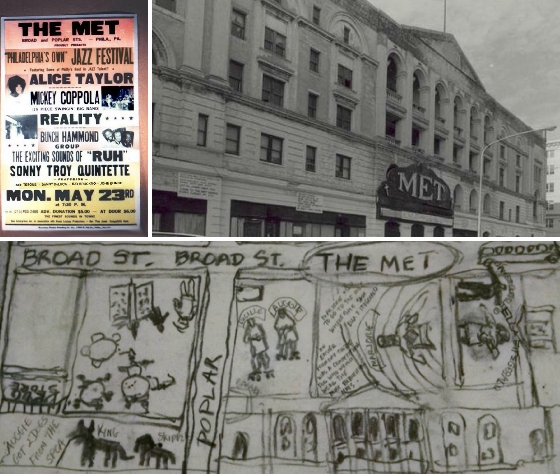
The walking tour will begin at the Metropolitan Opera House that was commissioned by Oscar Hammerstein.

Metropolitan Opera House Collage

Points of interest along the way include:

  • Oldest continuously operating Green Book site in Pennsylvania;
  • Majestic Hotel/Beaux Arts Café;
  • Flamingo Apartments;
  • Loyal Order of Moose Lodge/Legendary Blue Horizon;
  • Heritage House/Freedom Theater;
  • Alfred E. Burk Mansion;
  • Progress Plaza;
  • Chesterfield Hotel/Ebony Lounge;
  • Barber’s Hall;
  • Artic Records;
  • Linton’s Restaurant;
  • Grand Opera House/Nixon Grand Theatre.

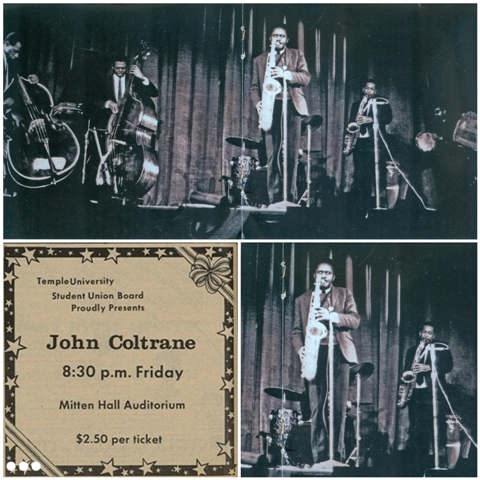
The walk will end at Temple University’s Mitten Hall, where John Coltrane last performed in Philadelphia. That night, Coltrane performed “My Favorite Things” which he first recorded in 1961. The show tune is from “The Sound of Music,” a Broadway musical with music by Richard Rodgers and lyrics by Oscar Hammerstein II, the grandson of the industrialist who commissioned the Metropolitan Opera House.

Mitten Hall Collage

We will meet at the Metropolitan Opera House, located at 858 N. Broad Street (at Poplar Street). The free event will be held, rain or shine, on Saturday, May 5, from 10:00am to 11:30am. No reservations are required.

Blue Note Salon

On December 8, 1956, the Miles Davis Quintet, featuring Miles Davis (trumpet), John Coltrane (tenor saxophone), Red Garland (piano), Paul Chambers (bass) and Philly Joe Jones (drums) performed at the Blue Note. The set was featured on the Mutual Network live remote radio broadcast, Bandstand, U.S.A.

That same night, the police raided “the town’s swankiest jazz emporium.” The Blue Note was a “black and tan” club, an integrated nightspot where blacks and whites socialized on an equal basis. As such, it was the target of police harassment.

Philadelphia Tribune - Dec. 11, 1956

From the beginning, jazz was a tool for social change. Jazz musicians’ unbowed comportment created a cultural identity that was a steppingstone to the Civil Rights Movement. In remarks to the 1964 Berlin Jazz Festival, Dr. Martin Luther King Jr. said jazz is “triumphant music”:

Jazz speaks for life. The Blues tell the story of life’s difficulties, and if you think for a moment, you will realize that they take the hardest realities of life and put them into music, only to come out with some new hope or sense of triumph.

This is triumphant music.

Modern jazz has continued in this tradition, singing the songs of a more complicated urban existence. When life itself offers no order and meaning, the musician creates an order and meaning from the sounds of the earth which flow through his instrument.

It is no wonder that so much of the search for identity among American Negroes was championed by Jazz musicians. Long before the modern essayists and scholars wrote of racial identity as a problem for a multiracial world, musicians were returning to their roots to affirm that which was stirring within their souls.

Much of the power of our Freedom Movement in the United States has come from this music. It has strengthened us with its sweet rhythms when courage began to fail. It has calmed us with its rich harmonies when spirits were down.

On April 21, 2018, All That Philly Jazz and Black Quantum Futurism will present the “Blue Note Salon” which pays homage to jazz musicians’ legacy of resistance. The community discussion will feature creative change makers who work on social justice issues. Their work is at the intersection of art, community engagement and social change.

Blue Note Salon

The event is free and open to the public. To RSVP, go here.