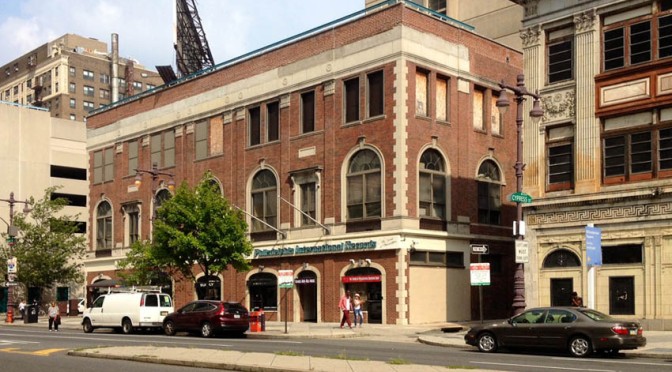
The Queen Mary Room was located in the Rittenhouse Hotel.
In the spring of 1957, agent Jerry Field signed Nina Simone to perform here for $100 a week, later increased to $175. Circa December 1957, the legend-in-the-making recorded her debut album with Bethlehem Records, “Little Girl Blue.” The album tracks include “My Baby Just Cares for Me.”
Today is the International Day for the Remembrance of the Slave Trade and its Abolition. UNESCO designated August 23 because it marks the beginning of the 1791 slave rebellion in Santo Domingo (today Haiti and the Dominican Republic) led by Toussaint L’Ouverture.
The 2017 theme, “Remember Slavery: Recognizing the Legacy and Contributions of People of African Descent,” focuses on the ways in which enslaved Africans and their descendants “influenced and continue to shape societies around the world.”
The under-told story of the Transatlantic Slave Trade is also the focus of a TED-Ed video that has garnered 2.5 million views.
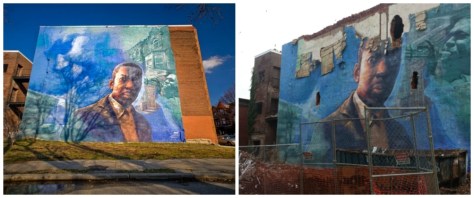
Philadelphia is the City of Murals. The murals celebrate events, as well as residents who have made a difference. Few are more celebrated than John Coltrane who moved to Philadelphia in 1943. Coltrane resided in an apartment in Yorktown before buying a house in Strawberry Mansion in 1952. The house is now listed on the National Register of Historic Places and is a National Historic Landmark.
Coltrane kicked his heroin habit and composed “Giant Steps” in that house.
In 2002, the Strawberry Mansion community, in collaboration with the Mural Arts Program, honored their former neighbor. The Pennrose Company demolished the Tribute to John Coltrane mural in 2014.
To be sure, murals come and go. However, there is too much love for Trane to let the demolition go unnoticed. It has taken a while but a new mural celebrating the life and legacy of the jazz innovator will soon be dedicated. The community is invited to add a brushstroke at a public paint day on Saturday, August 19 from 1-3 p.m., at Fairmount Park’s Hatfield House, located at 33rd Street and Girard Avenue.
So get up for the down brushstroke. Everybody get up and join the Mural Arts Philadelphia, Fairmount Park Conservancy, Strawberry Mansion Neighborhood Action Committee and All That Philly Jazz.
On Saturday, August 12, the Beech Companies will hold its 11th Annual Jazz on the Ave Music Fest in the Cecil B. Moore community in North Philadelphia.
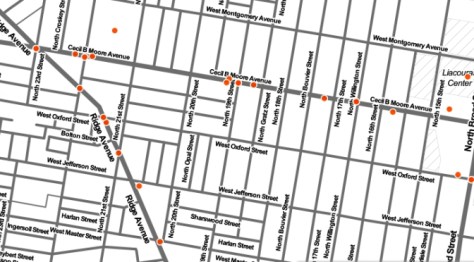
The festival will be held along Cecil B. Moore Avenue between Broad and 17th Street. During Philadelphia’s jazz heyday, this stretch of Cecil B. Moore Avenue (then named Columbia Avenue) was part of the storied “Golden Strip.” From 13th Street to 23rd Street, Columbia Avenue was lined with jazz clubs.
Ken Scott, president and CEO of the Beech Companies, said:
Thousands attend the festival each year. It’s a great community event and an opportunity to celebrate the great musical history of Cecil B. Moore Avenue. Formerly named Columbia Avenue and affectionately called the Golden Strip, the avenue was a famed destination for jazz entertainment during Philadelphia’s golden era of jazz from the 1940s through the early 1960s. We are continuing that tradition with our annual festival. Jazz on the Ave is one of our ways of giving back to the community. We have a powerful line-up.
This year’s lineup includes:
Grammy Award-winning singer/songwriter/multi-instrumentalist Tony Rich
Grammy nominee, singer/songwriter/producer Eric Roberson
Jazz/soul singer Frank McComb
Grammy-nominated neo-soul singer/songwriter Glenn Lewis
Jeff Bradshaw & Friends
The free jazz festival will be held from noon to 8:30pm. For more info, visit Jazz on the Ave.
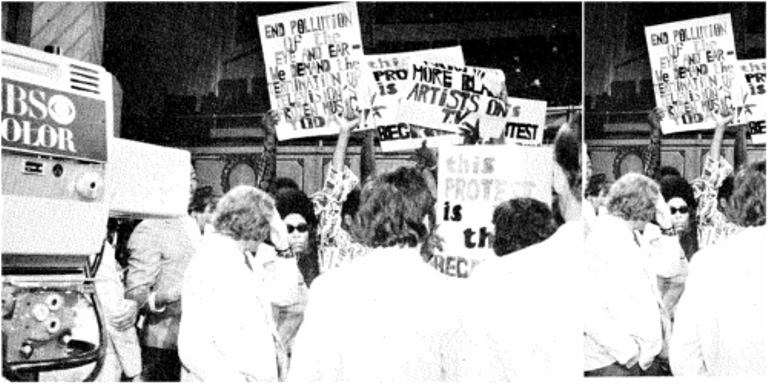
In 1970, a band of musicians sounded a call to arms over the exclusion of black jazz musicians in the mass media, specifically commercial television. Broadcast TV was the dominant medium of the era. Multi-instrumentalist Rahsaan Roland Kirk spearheaded Jazz and People’s Movement. Kirk circulated a petition in New York City jazz clubs which was signed by, among others, Lee Morgan, Charles Mingus, Andy Cyrrile, Billy Harper, Freddie Hubbard, Cecil Taylor, Elvin Jones, Pharoah Sanders, Archie Shepp and Roy Haynes.
The petition read, in part:
Many approaches have been used through the ages in the attempted subjugation of masses of people. One of the very essential facets of the attempted subjugation of the black man in America has been an effort to stifle, obstruct and ultimately destroy black creative genius; and thus, rob the black man of a vital source of pride and liberating strength. In the musical world, for many years a pattern of suppression has been thoroughly inculcated into most Americans. Today many are seemingly unaware that their actions serve in this suppression – others are of course more intentionally guilty. In any event, most Americans for generations have had their eyes, ears and minds closed to what the black artist has to say.
Obviously only utilization of the mass media has enabled white society to establish the present state of bigotry and whitewash. The media have been so thoroughly effective in obstructing the exposure of true black genius that many black people are not even remotely familiar with or interested in the creative giants within black society.
[…]
Action to end this injustice should have begun long ago. For years only imitators and those would sell their souls have been able to attain and sustain prominence on the mass media. Partially through the utilization of an outlandish myth, that in artistic and entertainment fields bigotry largely no longer exists, and by showrooming those few blacks who have sold out, the media have so far escaped the types of response that such suppression and injustice should and now will evoke.
Jazz and People’s Movement took action. Demonstrators disrupted tapings of The Tonight Show with Johnny Carson, The Dick Cavett Show and The Merv Griffin Show. On signal, group members played noisemakers and instruments that they had smuggled into the studios. They also passed out leaflets and displayed placards.
Also in the ‘70s, trumpeter, arranger and all-around musical genius Quincy Jones was on the board of the Institute of Black American Music whose mission was similar to Jazz and People’s Movement.
Fast forward to today, the multi-Grammy winning Jones is taking a journey into jazz and beyond with Qwest TV, the world’s first subscription video-on-demand platform dedicated to jazz from bebop to hip-hop. In a statement, Jones said:
The dream of Qwest TV is to let jazz and music lovers everywhere experience these incredibly rich and diverse musical traditions in a whole new way.
At my core, I am a bebopper, and over the course of my seventy-year career in music I have witnessed firsthand the power of jazz – and all of its off-spring from the blues and R&B to pop, rock and hip-hop, to tear down walls and bring the world together. I believe that a hundred years from now, when people look back at the 20th century, they will view Bird, Miles and Dizzy, as our Mozart, Bach, Chopin and Tchaikovsky, and it is my hope that Qwest TV will serve to carry forth and build on the great legacy that is jazz for many generations to come.
The streaming service will launch in fall 2017. For more info, visit Qwest TV.
The Lennox Grill was located in North Philly across from drummer Philly Joe Jones’ childhood home on N. 19th Street between Columbia Avenue (now Cecil B. Moore Avenue) and Montgomery Street.
In a December 6, 1959 conversation with celebrated jazz journalist Ralph J. Gleason, Philly Joe shared memories of the Lennox Grill:
I lived across the street from a place called the Lennox Grill in Philadelphia and I used to peek through the windows in the back of the club, and they had bars on the windows, so I used to always stand there and peek and look at this drummer. This man used to kill me, he had a pipe in his mouth and a regular old setup of drums, you know, no high hat, nothing like that, just a bass drum and a little cymbal. Cymbals were small then, but he was swinging like I don’t know what and I used to like to go there. My brother used to come around the corner and look up and see me peeking in the window and say, “Come on now!” and I’d go home—I only lived across the street. I used to sneak out of the house sometimes at night because they’d be playin’ after my bedtime, I had to go to school, but I used to sneak out of the house and run across the street, 10:30 and 11 o’clock at night I used to sneak out of the house and run across the street and peek in that window and listen to him playin’ drums.
Conversations in Jazz: The Ralph J. Gleason Interviews is available on Amazon.com.
In June 2001, jazz scholar Ashley Kahn interviewed Alice Coltrane.
Mrs. Coltrane shared memories of her legendary husband John Coltrane, including his views of Dr. Martin Luther King Jr. and Malcolm X:
A lot was going on in the ’60s—black empowerment, civil rights, new jazz music was becoming the New Thing, which also had a political edge. How did John look upon all of that at the time—especially race politics? Was he with Dr. King or more with Malcolm [X]?
He was very interested in the civil-rights movement. He appreciated both men from their different perspectives. He did see the unity in what they were trying to achieve, basically almost the same thing, taking different directions to reach that point of achievement.
He knew that Dr. Martin Luther King was an intelligent man, who would’ve probably found his quest in civil rights more horrible, more horrendous, by going through the system as a lawyer or a professor. John felt that [King] as a preacher could reach the heart of the people. And he felt that this was very good, that it was an asset, that he would be able to lead the people based on the spiritual sense instead of the civic, intellectual, legalistic. John felt if you can talk to their heart you’ll get their support, and you’ll get them to believe in what you’re doing.
About Malcolm, I know John had attended some of his talks that were in our area. Once he came back and I asked him, “How was the lecture?” and he said he thought it was superb. Different approaches to the same goal, telling the people [to] be wise, try to get some kind of economic freedom, be self-sufficient, depend on yourself, strengthen your family ties. Things like that, not even involved with religion, just basic areas of improvement so that you can make yourself a strong force for the good that needs to be achieved. He told me that he appreciated the way that when the really tough questions were asked from the audience, every one was answered with an intelligence which the people could comprehend.
I know that some musicians who were around at the time were more militant. How did John feel about that?
He would not be a part of it, and this is what many people wanted him to do. They’d say, “Why don’t you take your horn, use it as an instrument to rally people together, to awaken consciousness in these people to really stand and fight for their rights?” He just said, “That’s not the way for me to go with this music.” It was not the way for him, to take his music into a militant zone to try to stress a point. If anything, we saw him going up. I would imagine his philosophy would be closer to Martin Luther King Jr.: Let me try to reach your heart, your spirit and your soul, and then we can move forward uniformly as a people and accomplish great things.
He didn’t prefer violence to peace, and he was very disturbed by the consequences [of the riots in the mid-1960s] and all the people who were getting hurt in the rioting. I believe he called us once [when] he was out of town when those [riots] were happening. He was mainly on the phone with his mother, because she was with us at the time and she was quite upset about it.
Earlier this month, I attended a panel discussion on “Art in Public Space” held in the Hamilton Garden of the Kimmel Center. As I waited for the program to start, I checked out the view from the top floor. What I saw left a hole in my heart.
Sadly, the building that held the stories of the songwriters, musicians, producers and arrangers is now lost to history. For the love of money, African Americans’ cultural heritage was erased from public memory.
Gamble and Huff sold the historic building to Dranoff Properties which plans to build a luxury hotel and condos for the one percent. Three years after the demolition of “309,” there’s just a hole in the ground. The reason: Dranoff Properties is waiting for a corporate welfare check to the tune of $19 million before breaking ground on the “biggest, tallest and most expensive” project the company has ever done.
In the poorest big city in the country, spending taxpayers’ money to further enrich the rich is the sound of Philadelphia.
On June 7, 1979, President Jimmy Carter proclaimed the month of June “Black Music Month.” Every president since then has recognized the contribution of black musicians to the nation’s cultural heritage. In 2009, President Barack Obama changed the month-long celebration to “African-American Music Appreciation Month.”
The tradition continues with President Donald Trump:
During June, we pay tribute to the contributions African Americans have made and continue to make to American music. The indelible legacy of these musicians who have witnessed our Nation’s greatest achievements, as well as its greatest injustices give all Americans a richer, deeper understanding of American culture. Their creativity has shaped every genre of music, including rock and roll, rhythm and blues, jazz, gospel, hip hop, and rap.
[…]
We also take time this month to recognize the musical influence of two of the greatest jazz musicians of all time, Dizzy Gillespie and Ella Fitzgerald, as this year marks their centennial birthdays. Gillespie, through his legendary trumpet sound and Fitzgerald, through her pure, energetic voice, treated people around the world to spirited and soulful jazz music. Their work has influenced countless musicians, and continues to inspire listeners young and old.
NOW, THEREFORE, I, DONALD J. TRUMP, President of the United States of America, by virtue of the authority vested in me by the Constitution and the laws of the United States, do hereby proclaim June 2017 as African-American Music Appreciation Month. I call upon public officials, educators, and all the people of the United States to observe this month with appropriate activities and programs that raise awareness and appreciation of African-American Music.
I kicked off this year’s celebration by attending opening night of Motown The Musical.
The multi-media musical recaps familiar stories about how Berry Gordy Jr. founded the Motown Record Company; Gordy’s affair with Diana Ross; self-destructive Florence Ballard; the tempting Temptations and their rivalry with the Four Tops; songwriter, singer and Motown lifer Smokey Robinson; child prodigy and history-maker Stevie Wonder; and the discovery of The Jackson 5. The Motown breakups include Mary “My Guy” Wells, Marvin Gaye, songwriting and production team Holland-Dozier-Holland, and Diana Ross and the Supremes.
The audience went nuts when Martha Reeves and the Vandellas gave “Philadelphia, PA” a shout-out in “Dancing in the Streets.” Although one knows how the stories end, the retelling is fresh and joyous. The musical culminates with a “family” reunion to celebrate the 25th anniversary of Motown.
I remember like it was yesterday watching the television special, Motown 25: Yesterday, Today, Forever. In 1983, I sang the songs at the top of my lungs, danced in front of the TV, and marveled as Michael Jackson debuted the moonwalk. At the Academy of Music, I danced in my seat and tried not to sing too loud.
But it wasn’t just the songs and dancing that kept a smile on my face. I love that the music is contextualized. Motown addresses racial segregation in the South and the North, the senseless war in Vietnam, the March on Washington, the assassination of Dr. Martin Luther King Jr., and the Black Power Movement. By the 1970s, the “Motown Sound” was the sound of the struggle for racial justice.
Motown The Musical is playing at the Academy of Music through June 11. For ticket information, visit kimmelcenter.org.
The highlight of the stroll was 2125 Ridge Avenue, the former location of the Checker Café, a “black and tan” (read: racially integrated) jazz club. The nightclub’s motto was “Good Food. Good Cooks. Good Service.” One of the servers was a teenage singing waitress named Pearl Bailey.
Since October 2016, I’ve been locked in battle with the Philadelphia Housing Authority which wants to demolish the building that has been a visual anchor for more than 100 years. The Pennsylvania Historical and Museum Commission agreed with me the building is of historical significance. Last week, PHA signed a programmatic agreement that saves the building for now. Under the agreement, PHA must stabilize the building.
I say for now because PHA has made it clear it wants to demolish the building. I guess it doesn’t fit their “vision” for a revitalized Ridge Avenue. In an area full of vacant lots, PHA wants to replace a building that may be eligible for listing in the National Register of Historic Places with yet another vacant lot.
I encouraged the 40+ people who participated in my Jane’s Walk to make some noise and tell decision-makers that this place matters. If you care about preserving Philadelphia’s cultural heritage, DM me on Twitter or email to phillyjazzapp[@]gmail.com.












 All That Philly Jazz