Category Archives: Green Book

Café Society

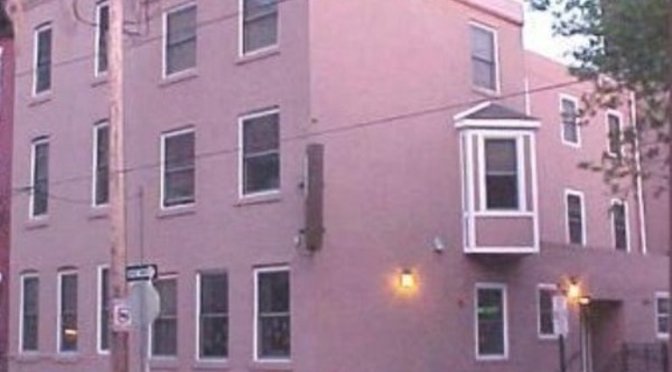
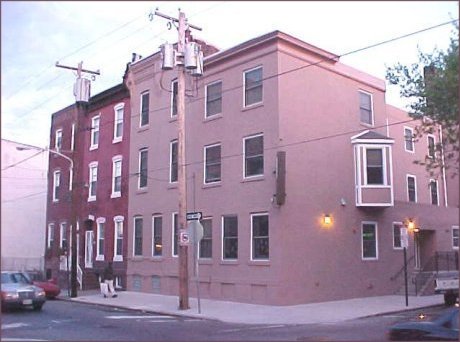
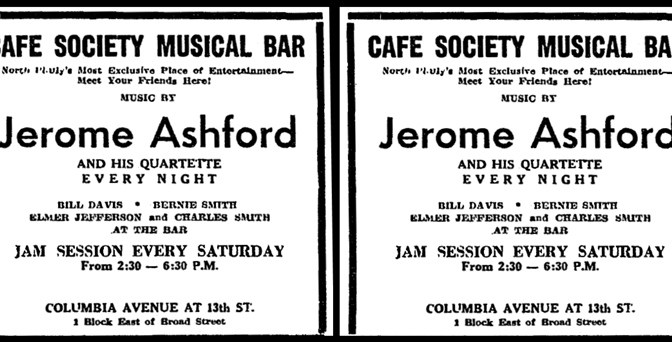
Located on the Golden Strip, the Café Society was listed in The Negro Motorist Green Book.

In Whisper Not: The Autobiography of Benny Golson, the NEA Jazz Master recounted:

I used to dream of playing with Philly Joe. He played with all my recorded heroes when they came to town: Coleman Hawkins, Ben Webster, Roy Eldridge, Charlie Parker, Dizzy Gillespie, and Eddie Heywood. I came home from my first year in college, in 1948, and “Bass” Ashford, a mainstay on the local scene, asked me to join his quartet for the entire summer season at Café Society, at 13th Street and Columbia Avenue. Café Society was a very popular jazz spot in North Philly, not far from where I lived and only three blocks from John Coltrane’s house. John often popped in while the group played there. I showed up for the first rehearsal to find that Philly Joe would be our percussionist! I almost fainted. I acted as if nothing were unusual, but I was flying.
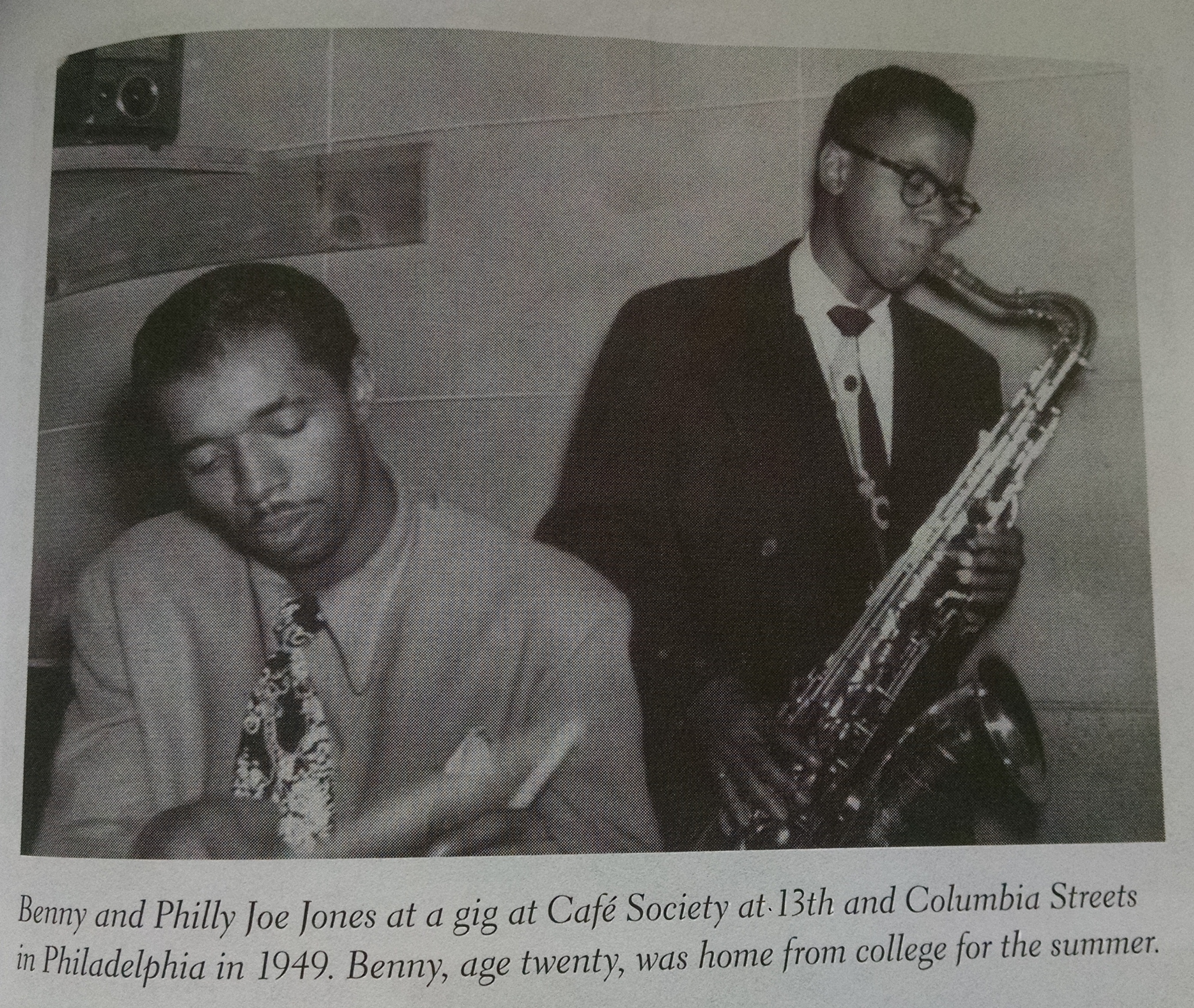
Cafe Society - Philly Joe Jones - Benny Golson - Caption

Published by Temple University Press, Golson’s autobiography is available for purchase here.

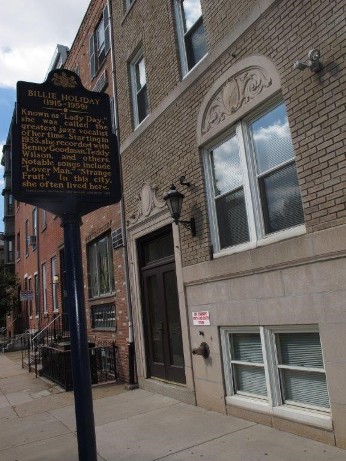
The legendary Showboat was located in the basement of the Douglass Hotel. Pianist Sam Dockery led the house band. The historical marker out front notes that Billie Holiday “often lived here.”

Douglass Hotel

The Showboat opened in the mid-1940s. Herb Keller bought the club and hotel in 1950. He sold both to Herb Spivak in 1964. Spivak renamed the jazz spot the “Showboat Jazz Theatr” (purposely leaving off the “e”).

All That Philly Jazz Director Faye Anderson interviewed Spivak on International Jazz Day 2019.

Herb Spivak - Faye M. Anderson

The Showboat was compact. Spivak more than tripled the seating capacity from 100 to 320. The small bandstand was behind the bar. The Showboat played host to jazz greats such as Miles Davis, Dizzy Gillespie, Lee Morgan, Art Blakey, Cannonball Adderley, Bootsie Barnes, Philly Joe Jones, Thelonious Monk, Aretha Franklin, Dinah Washington and Ramsey Lewis.

On June 17, 1963, John Coltrane Quartet recorded “Live at the Showboat” featuring Coltrane (sax) McCoy Tyner (piano), Jimmy Garrison (bass) and Roy Haynes (drums).

Before 1964, Jazz Musicians Traveled While Black

Philadelphia Jazz Appreciation Month is in full swing. In a recent interview, I noted that jazz musicians performed in nightclubs where they could not sit and hotels where they could not stay. The jazz legends whose music paved the way for the Civil Rights movement were subjected to racial discrimination as they traveled while black.

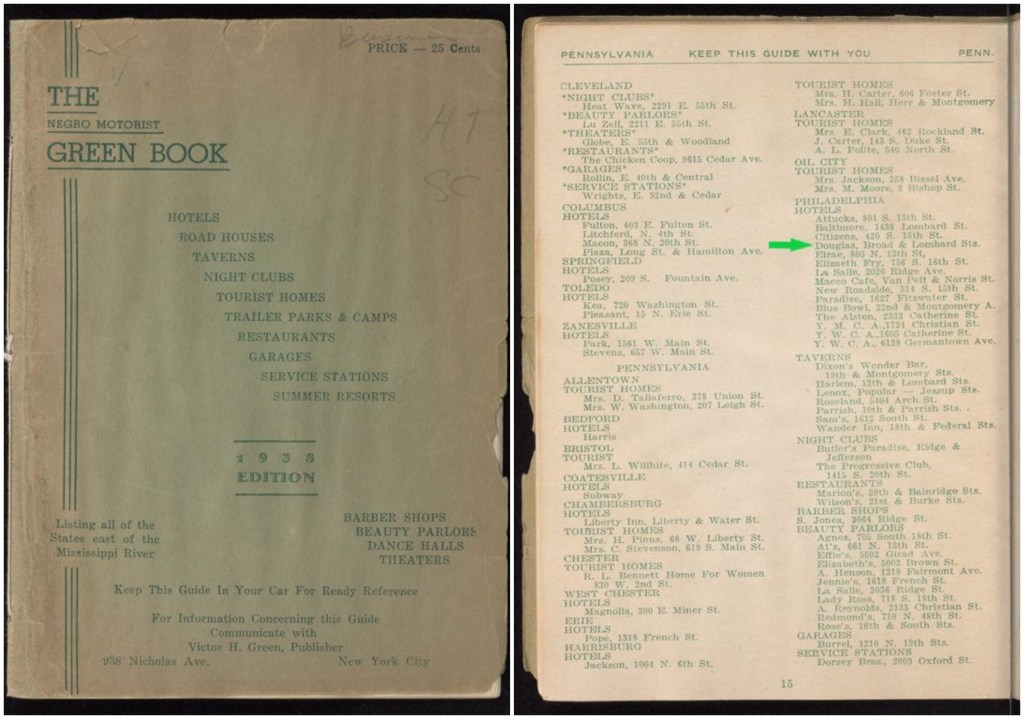
In 1936, Victor H. Green, a postal worker and civil rights activist, published the first edition of The Negro Motorist Green Book, a travel guide to navigate Jim Crow laws in the South and de facto segregation in the North.

The “Green Book,” as it was called, lists hotels, tourist homes, restaurants, nightclubs, beauty parlors, barber shops and other services. Philadelphia hotels in the 1949 edition include the Attucks, Chesterfield and Douglass.

Douglass Hotel Bus Ad - Cropped

The list of clubs includes Emerson’s Tavern, the setting for the Tony Award-winning play, “Lady Day at Emerson’s Bar and Grill,” Café Society and Watts’ Zanzibar.

Cafe Society - Watts' Zanzibar

In the wake of the landmark 1964 Civil Rights Act which outlawed racial discrimination, the last edition of the “Green Book” was published in 1966-67.

UPDATE:  A documentary, “The Green Book Chronicles,” co-produced by Calvin Alexander Ramsey and Becky Wible Searles, is in production.

In an interview with NBCBLK, Ramsey said:

There was no Internet back then to get the Green Book, this was put together with love from black people for each other to keep each other safe. The Green Book to me was a love letter of sorts. There was a time when we loved each other so much that we would open our homes just to keep another black person safe. You could be a superstar, a singer, an artist and in those days still have no place to stay, eat or bathe while on the road, so this book was about the love and ability to preserve our dignity.

Show Ramsey and his team some love and make a donation to help them complete “The Green Book Chronicles.”

Douglass Hotel

In Jimmy Heath’s autobiography “I Walked with Giants,” drummer Roy Haynes recounted:

I met Jimmy around 1946 when I was with Luis Russell and we played the Earle Theater in Philadelphia. A lot of the big bands would come through the Earle. We stayed at the Douglas Hotel, which was in South Philly. That was the hotel where a lot of the big black bands stayed.

The building is still there. The historical marker out front notes that Billie Holiday “often lived here” when she was in town.

Douglass Hotel

The Douglass Hotel was first listed in The Negro Motorist Green Book in 1938.

The safe space was not just a place to lay one’s head. The legendary Showboat was located in the basement. John Coltrane recorded a live album here in 1963.

After the Showboat, the space became the Bijou Café. Grover Washington Jr. recorded “Live at the Bijou” in 1977.


The Douglass Hotel is a stop on the Green Book walking tour which will be held on Saturday, October 12, 2024, 10am to 12pm. Tickets are $25 per person.

Buy Tickets

Attucks Hotel

Named after Crispus Attucks, the first patriot to die in the Boston Massacre, the Attucks Hotel was popular with Black entertainers and athletes who were not allowed to stay at Philadelphia hotels that catered to whites. Guests included Hank Aaron, Roy Campanella, Ella Fitzgerald, Redd Foxx, Satchel Paige, Bill “Bojangles” Robinson and Billie Holiday.

John Timpane of the Philadelphia Inquirer wrote:

The year 1947 was a year of betrayal for [Billie] Holiday. She was at the peak of her career, earning upward of $60,000 a year, but hooked on heroin and opium. After a show at the Earle, her room at the Attucks Hotel was raided, and she was arrested on charges of narcotics possession.

From Monrovia Sound Studio:

Jelly Roll Morton and members of his orchestra would have had just a short drive of about 5 miles from the Attucks Hotel … to the R.C.A. studios in Camden, N.J. to carry out a contracted recording assignment. The route would have taken them across the Delaware River via the Delaware River Bridge (formally the Benjamin Franklin Bridge).

Hotel Attucks - Universal Institute Charter School

The Attucks Hotel is now home to Universal Institute Charter School.The school is part of Universal Companies, founded and chaired by legendary producer, songwriter, and Rock and Roll Hall of Famer Kenny Gamble.

Royal Theater

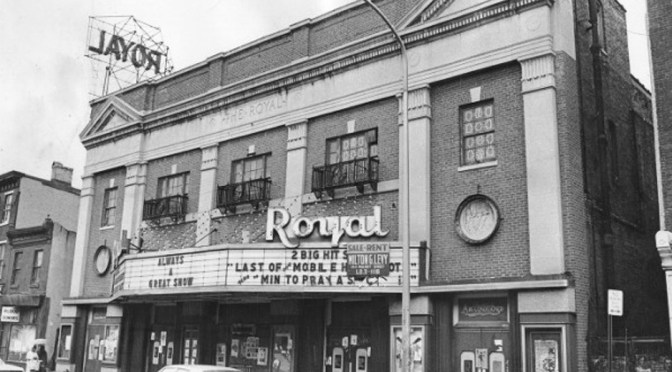
Opened in 1920, the Royal Theater was advertised as “America’s Finest Colored Photoplay House.” The all-black staff formed the nucleus of the Colored Motion Picture Operators Union.

The 1,200-seat theater showed movies by African American film pioneer Oscar Micheaux. The small stage played host to luminaries such as Fats Waller, Bessie Smith, Pearl Bailey, Della Reese and Cab Calloway.

South Philly residents were the Royal’s most loyal patrons and participated in talent shows and radio broadcasts. Business owners received increased foot traffic after Royal shows. But by the 1960s, the threat of the construction of an expressway in the neighborhood (that never materialized) and civil rights legislation which allowed blacks to move freely and patronize other entertainment venues, decimated the Royal’s neighborhood and attendance.

The Royal closed its doors in 1970. It is listed on the Philadelphia Register (1976) and National Register of Historic Places (1980).

Royal Theater Mural


The Royal Theater and adjacent parcels were purchased by music mogul Kenny Gamble from the Preservation Alliance of Greater Philadelphia in 2000 for $250,000.

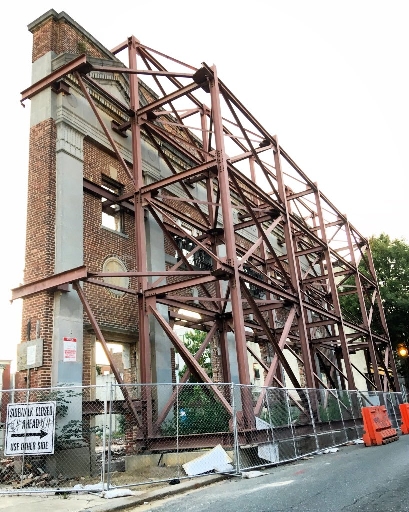
In 2016, Kenny Gamble’s Universal Companies sold the Royal Theater. The facade is all that remains of the historic landmark. It, too, would have been demolished but the Preservation Alliance of Greater Philadelphia holds an easement.

Royal Theater Facadectomy

The Royal Theater is a stop on the Green Book walking tour which will be held on Saturday, November 9, 2024, 10am to 12pm. Tickets are $25 per person.

Buy Tickets

Standard Theater

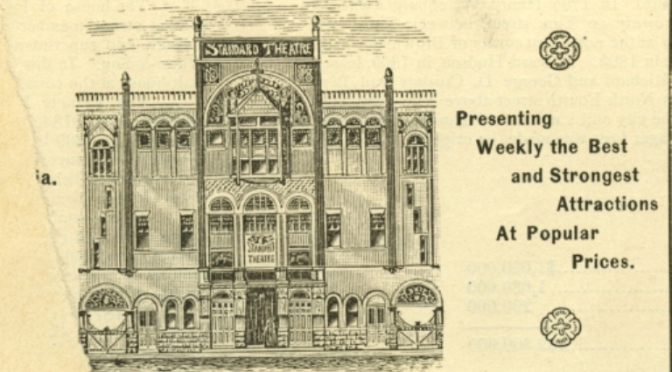
A stop on the “Chitlin Circuit,” the Standard Theater was owned by African American entrepreneur John T. Gibson.

Standard Theater - Feature

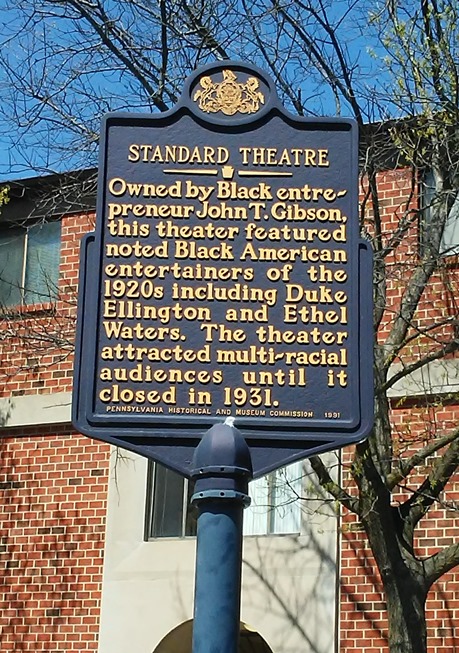
Standard Theatre

From ExplorePAHistory.com

In 1914, Gibson bought the Standard Theatre on the 1100 block of South Street. His timing couldn’t have been better, for in the following years, tens of thousands of southern blacks would pour into the city of Philadelphia as part of the Great Migration unleashed by the First World War.

Young men and women, with good jobs and money in their pockets, flocked to Gibson’s Standard Theatre to see a fare of “High Class and Meritorious Vaudeville,” stage shows, and popular music. The Standard became a regular stop for Black performers on their national tours: comedians Bylow and Ashes, singers Bessie Smith and Ethel Waters, Erma C. Miller’s Brown Skinned Models, popularly known as the “Black Rockettes,” and jazz bands led by Louis Armstrong and Duke Ellington.

READ MORE

Ridge Cotton Club

Opened in the 1930s and listed in the The Negro Motorist Green Book, the Ridge Cotton Club shows the influence of Harlem and the Cotton Club. And like the legendary Harlem nightspot, it was probably controlled by the mob.

Two of the original owners, Morris Brodsky and Harry Hirsch, died within days of each other in January 1949 following “injuries inflicted by an assailant.”

The Elmer Snowden Trio played here in April 1946.

Watts’ Zanzibar

Watts’ Zanzibar was located on the “Golden Strip.” In the 1940s, the house band was led by tenor saxophonist Jimmy Oliver who later played with Bootsie Barnes, the Heath Brothers and John Coltrane, and recorded with Dizzy Gillespie.

In an essay in “Lost Shrines of Jazz,” noted author and scholar James G. Spady wrote:

Perhaps no institution in the city was more responsible for Philly’s bop revolution than a North Philly club named Watts’ Zanzibar, located at 1833 W. Columbia Avenue (now named Cecil B. Moore Avenue, in honor of a black attorney and 1960s Civil Rights leader in Philadelphia). It was recognized as the bop spot, the home of modern African American culture. Sonically and sartorially hip, it both nurtured and reflected bop ethics and aesthetics. The very name reflected the old and the new: Africa and America, Watts’ Zanzibar. The proprietors were brothers Richard and Robert Watts.

Read more

Ebony Lounge

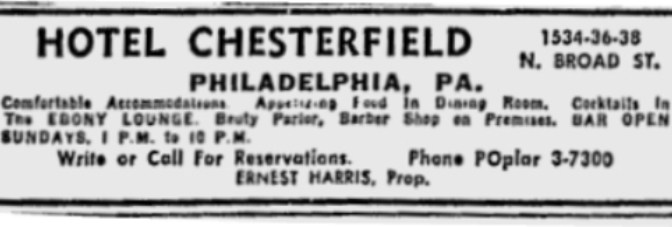
The Ebony Lounge was located in the lower level of the Chesterfield Hotel which was owned by Ernest and Evelyn Harris.

Alonzo Kittrels
of the Philadelphia Tribune reminisced:

[T]he Chesterfield Hotel, a landmark that deserves its own back-in-the-day column, given its significance in the lives of Black people. It was particularly important in the lives of the performers at the nearby Uptown Theater. This hotel was where many performers stayed while appearing at this venue.

Ebony Lounge - SCOOP USA

In a March 28, 1960 conversation with celebrated jazz journalist Ralph J. Gleason, bassist Percy Heath reminisced about his start as a professional musician:

But I remember when Red Garland did come to Philadelphia he was singing and playing “Billie’s Bounce” and “Now’s the Time” and we hadn’t heard those things, and he was sort of an authority on Charlie Parker tunes at that time. But there were an awful lot of promising musicians around Philadelphia. I really started with a trio. At that time we used to play in little cocktail bars and there was hotel there, the Philadelphia Chesterfield Hotel, they had a lounge. We played in there quite a bit and then we’d go around to Wilmington, Delaware, and play some club down there.

Conversations in Jazz: The Ralph J. Gleason Interviews is available on Amazon.com.