Category Archives: Cultural Heritage Preservation

Leonard Bernstein@100

This year marks the centennial birthday of several jazz luminaries, including Ella Fitzgerald, Dizzy Gillespie, Lena Horne and Thelonious Monk. Philharmonic Laureate Conductor Leonard Bernstein was born on August 25, 1918 but the celebrations are already underway. The worldwide festivities will continue until August 25, 2019.

Bernstein had a longstanding appreciation of jazz, blues and spirituals. His 1939 Harvard University bachelor’s thesis was entitled, “The Absorption of Race Elements into American Music.”

From LeonardBernstein.com:

From his earliest years, jazz was an integral part of Bernstein’s life, and it made a crucial impact on his own music.

As a teenager in the 1930s, he put together a jazz band, was famous for his jazz piano playing at parties, and directed a swing band at summer camp. Some of the jazz-inflected music he composed in the mid-1930s at Harvard, and later at Curtis [Institute], provided source material for future works. Perhaps most significantly, his undergraduate thesis was no less than an assertion that jazz is the universal basis of American composition. In New York soon after college, he got to know jazz intimately, by day transcribing for publication the improvisations of legendary players like Coleman Hawkins, and playing piano in jazz clubs at night.

About 15 years ago, I first saw this video of Bernstein conducting Louis Armstrong performing “St. Louis Blues” with the composer, W.C. Handy, in the audience. The images are forever etched in my mind.

On December 2, I will attend the Louis Bernstein Marathon at the CUNY Graduate Center, an eight-hour concert featuring performances of Bernstein’s most popular work. For me, the event is a mash-up of two of my passions: good music and historic preservation. The CUNY Graduate Center is located in the repurposed B. Altman & Co.
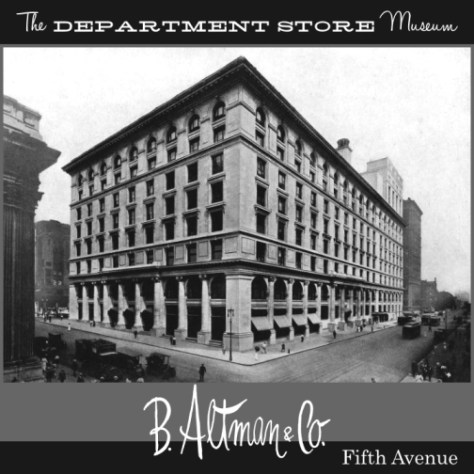
B. Altman

For Louis Bernstein at 100 calendar of events, go here.

Going to Chicago for PastForward

I’m going to Chicago for PastForward 2017. I am a two-time recipient of a diversity scholarship to attend the National Trust for Historic Preservation’s annual conference. But as I wrote for the Preservation Leadership Forum blog, I am an accidental preservationist:

I love old buildings. I love even more the stories that old buildings hold—they are places where history happened. To borrow a phrase from blues singer Little Milton, “if walls could talk” they would tell stories of faith, determination and triumph. For me, historic preservation is about staking African Americans’ claim to the American story.

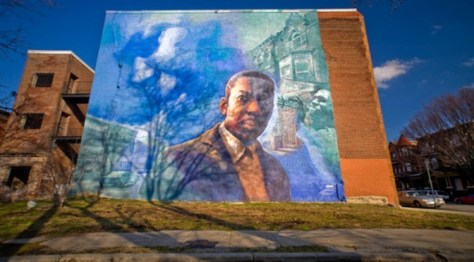
One of my first stops will be State and Washington streets to check out the 10-story mural of Muddy Waters.

Muddy Waters Mural

I’ll also check out the former home of the blues icon. Sadly, the 125-year-old building is under threat of demolition.

Muddy Waters Home

Discussions on reUrbanism, preservation and health, and technology will be live streamed. You can sign up as a virtual attendee for free. You can also follow the conversation on Twitter using the hashtag #PastForward17.

I’m going to Chicago, y’all.

While in the Windy City, I will use the CTA to get around. NEA Jazz Master and Philly naive Jimmy Heath composed “CTA.” Miles Davis said it was named after Heath’s then-girlfriend Connie Theresa Ann.

Thelonious Monk@100

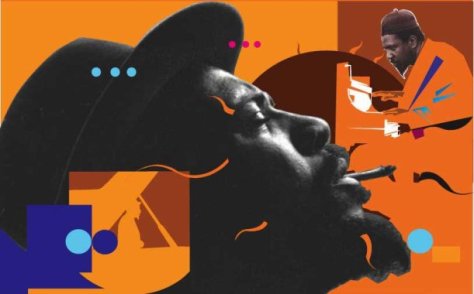
This year is the centennial of the birth of Thelonious Monk. Monk’s 100th birthday is being celebrated across the country.

Thelonious Monk

For Philadelphia, one day is not enough. Starting at midnight on October 10, WRTI will play his most recognized composition to start off every new broadcast day for a whole year. The station will not have to hit repeat since there are more than 1000 versions of “’Round Midnight.” Fittingly, Monk was a classically trained pianist.

One of my most memorable experiences was attending Monk’s funeral in 1982. The homegoing service was held at Saint Peter’s Church in New York City. Musicians played version-after-version of “’Round Midnight.” It was a loving tribute to the man who composed the most recorded jazz standard in history.

National Museum of African American History and Culture Turns One

September 24 marked the first anniversary of the National Museum of African American History and Culture, more affectionately known as my home away from home.

NMAAHC First Anniversary

From Day One, NMAAHC has had the people’s stamp of approval. In its first year, the museum has welcomed more than two million visitors. Lonnie G. Bunch III, founding director of the museum, said:

We are so grateful to America for making this first year unprecedentedly successful. This first anniversary gives us at the Smithsonian the opportunity to thank everyone for this incredible gift and for making it possible to continue our mission to help America grapple with history by seeing their past through an African American lens – and ultimately help Americans find healing and reconciliation.

NMAAHC has received the stamp of approval of the U.S. Postal Service which issued the “Celebrating African American History and Culture” Forever stamp.

NMAAHC Forever Stamp

The numbers show that the National Museum of African American History and Culture is a gift to the American people:

  • Almost 2.5 million visitors walked through the 400,000-square-foot building.
  • Of those visitors, 922 were ambassadors.
  • About 10,000 of all 2.5 million people who passed through were between the ages of 4 and 7 years old.
  • About 3,000 objects were on display while NMAAHC’s permanent collection is more than 13 times that size, at almost 40,000 objects.

For more info, check out “NMAAHC’s First Year by the Numbers.”

John Coltrane Mural Dedication

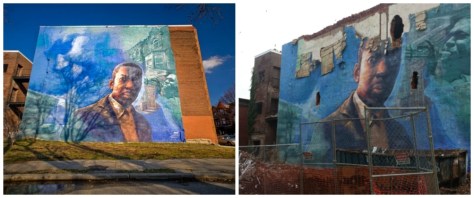
Advocacy works! In 2014, Pennrose Company demolished the “Tribute to John Coltrane” mural that was located at 33rd and Diamond Streets, a short walk from Coltrane’s former residence in the Strawberry Mansion neighborhood.

Tribute to John Coltrane Mural

It took a little prodding, but Pennrose stepped up and made a significant contribution to Mural Arts Philadelphia for a new Coltrane mural.

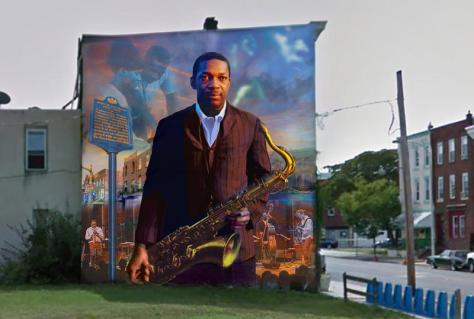
John Coltrane Mural

The “Why We Love Coltrane” mural , located at 29th and Diamond Streets, will be dedicated at a public event on Sunday, September 24, 2017, from 1pm to 3pm. All That Philly Jazz is a co-host of the free event.

29th and Diamond

For background information, listen to WRTI’s interview with Mural Arts Executive Director Jane Golden and visual artist Ernel Martinez, “A New Mural Rising to Honor John Coltrane.”

Paint Day: John Coltrane Mural

Philadelphia is the City of Murals. The murals celebrate events, as well as residents who have made a difference. Few are more celebrated than John Coltrane who moved to Philadelphia in 1943. Coltrane resided in an apartment in Yorktown before buying a house in Strawberry Mansion in 1952. The house is now listed on the National Register of Historic Places and is a National Historic Landmark.

Coltrane kicked his heroin habit and composed “Giant Steps” in that house.

In 2002, the Strawberry Mansion community, in collaboration with the Mural Arts Program, honored their former neighbor. The Pennrose Company demolished the Tribute to John Coltrane mural in 2014.

Tribute to John Coltrane Collage

To be sure, murals come and go. However, there is too much love for Trane to let the demolition go unnoticed. It has taken a while but a new mural celebrating the life and legacy of the jazz innovator will soon be dedicated. The community is invited to add a brushstroke at a public paint day on Saturday, August 19 from 1-3 p.m., at Fairmount Park’s Hatfield House, located at 33rd Street and Girard Avenue.

So get up for the down brushstroke. Everybody get up and join the Mural Arts Philadelphia, Fairmount Park Conservancy, Strawberry Mansion Neighborhood Action Committee and All That Philly Jazz.

For more info, visit Mural Arts Philadelphia.

11th Annual Jazz on the Ave

On Saturday, August 12, the Beech Companies will hold its 11th Annual Jazz on the Ave Music Fest in the Cecil B. Moore community in North Philadelphia.

Jazz on the Ave

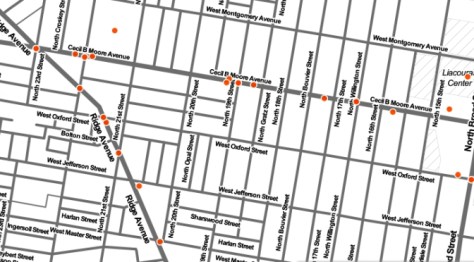
The festival will be held along Cecil B. Moore Avenue between Broad and 17th Street. During Philadelphia’s jazz heyday, this stretch of Cecil B. Moore Avenue (then named Columbia Avenue) was part of the storied “Golden Strip.” From 13th Street to 23rd Street, Columbia Avenue was lined with jazz clubs.

Golden Strip

Ken Scott, president and CEO of the Beech Companies, said:

Thousands attend the festival each year. It’s a great community event and an opportunity to celebrate the great musical history of Cecil B. Moore Avenue. Formerly named Columbia Avenue and affectionately called the Golden Strip, the avenue was a famed destination for jazz entertainment during Philadelphia’s golden era of jazz from the 1940s through the early 1960s. We are continuing that tradition with our annual festival. Jazz on the Ave is one of our ways of giving back to the community. We have a powerful line-up.

This year’s lineup includes:

  •  Grammy Award-winning singer/songwriter/multi-instrumentalist Tony Rich
  • Grammy nominee, singer/songwriter/producer Eric Roberson
  • Jazz/soul singer Frank McComb
  • Grammy-nominated neo-soul singer/songwriter Glenn Lewis
  • Jeff Bradshaw & Friends

The free jazz festival will be held from noon to 8:30pm. For more info, visit Jazz on the Ave.

A Room with a View of the Blues

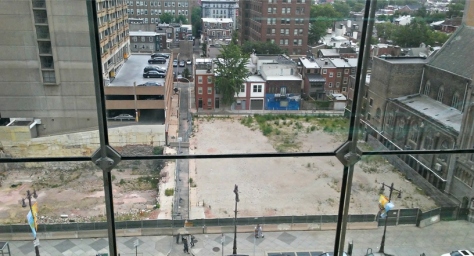
Earlier this month, I attended a panel discussion on “Art in Public Space” held in the Hamilton Garden of the Kimmel Center. As I waited for the program to start, I checked out the view from the top floor. What I saw left a hole in my heart.

PRI Vacant Lot

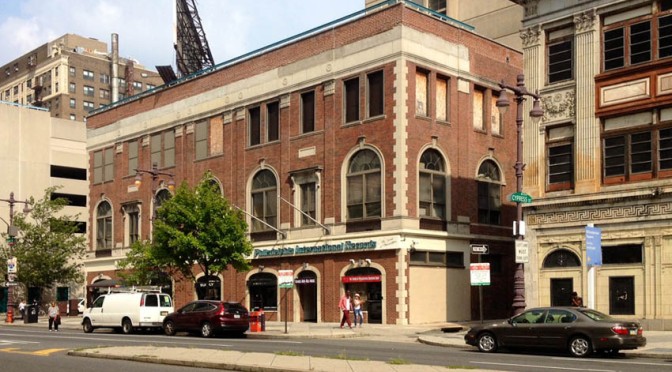
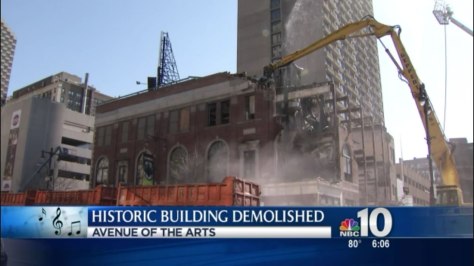
The hole is where Philadelphia International Records once stood.

AveArtsDemo1

Kenny Gamble and Leon Huff have earned their place in history.

Kenny Gamble - Leon Huff - History

Sadly, the building that held the stories of the songwriters, musicians, producers and arrangers is now lost to history. For the love of money, African Americans’ cultural heritage was erased from public memory.

Gamble and Huff sold the historic building to Dranoff Properties which plans to build a luxury hotel and condos for the one percent. Three years after the demolition of “309,” there’s just a hole in the ground. The reason: Dranoff Properties is waiting for a corporate welfare check to the tune of $19 million before breaking ground on the “biggest, tallest and most expensive” project the company has ever done.

In the poorest big city in the country, spending taxpayers’ money to further enrich the rich is the sound of Philadelphia.

African-American Music Appreciation Month 2017

On June 7, 1979, President Jimmy Carter proclaimed the month of June “Black Music Month.” Every president since then has recognized the contribution of black musicians to the nation’s cultural heritage. In 2009, President Barack Obama changed the month-long celebration to “African-American Music Appreciation Month.”

The tradition continues with President Donald Trump:

During June, we pay tribute to the contributions African Americans have made and continue to make to American music. The indelible legacy of these musicians who have witnessed our Nation’s greatest achievements, as well as its greatest injustices give all Americans a richer, deeper understanding of American culture. Their creativity has shaped every genre of music, including rock and roll, rhythm and blues, jazz, gospel, hip hop, and rap.

[…]

We also take time this month to recognize the musical influence of two of the greatest jazz musicians of all time, Dizzy Gillespie and Ella Fitzgerald, as this year marks their centennial birthdays. Gillespie, through his legendary trumpet sound and Fitzgerald, through her pure, energetic voice, treated people around the world to spirited and soulful jazz music. Their work has influenced countless musicians, and continues to inspire listeners young and old.

NOW, THEREFORE, I, DONALD J. TRUMP, President of the United States of America, by virtue of the authority vested in me by the Constitution and the laws of the United States, do hereby proclaim June 2017 as African-American Music Appreciation Month. I call upon public officials, educators, and all the people of the United States to observe this month with appropriate activities and programs that raise awareness and appreciation of African-American Music.

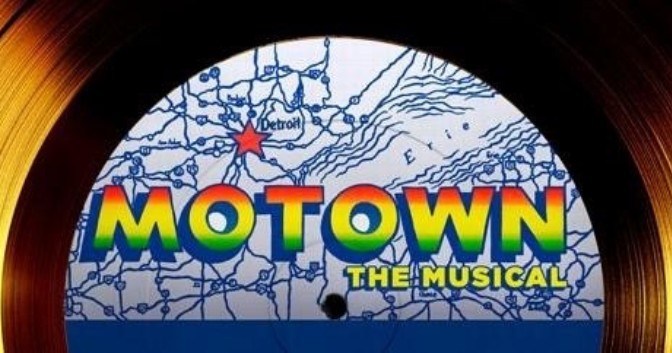
I kicked off this year’s celebration by attending opening night of Motown The Musical.

The multi-media musical recaps familiar stories about how Berry Gordy Jr. founded the Motown Record Company; Gordy’s affair with Diana Ross; self-destructive Florence Ballard; the tempting Temptations and their rivalry with the Four Tops; songwriter, singer and Motown lifer Smokey Robinson; child prodigy and history-maker Stevie Wonder; and the discovery of The Jackson 5. The Motown breakups include Mary “My Guy” Wells, Marvin Gaye, songwriting and production team Holland-Dozier-Holland, and Diana Ross and the Supremes.

The audience went nuts when Martha Reeves and the Vandellas gave “Philadelphia, PA” a shout-out in “Dancing in the Streets.” Although one knows how the stories end, the retelling is fresh and joyous. The musical culminates with a “family” reunion to celebrate the 25th anniversary of Motown.

I remember like it was yesterday watching the television special, Motown 25: Yesterday, Today, Forever. In 1983, I sang the songs at the top of my lungs, danced in front of the TV, and marveled as Michael Jackson debuted the moonwalk. At the Academy of Music, I danced in my seat and tried not to sing too loud.

But it wasn’t just the songs and dancing that kept a smile on my face. I love that the music is contextualized. Motown addresses racial segregation in the South and the North, the senseless war in Vietnam, the March on Washington, the assassination of Dr. Martin Luther King Jr., and the Black Power Movement. By the 1970s, the “Motown Sound” was the sound of the struggle for racial justice.

Motown The Musical is playing at the Academy of Music through June 11. For ticket information, visit kimmelcenter.org.

Preservation Month 2017

May is Preservation Month, a time to celebrate places that matter to you. On May 6, I led a Jane’s Walk, “Ridge Avenue Stroll through Philly’s Jazz History.” The first stop was the legendary Blue Note. The Ray Bryant Trio was the Blue Note’s house band. Interestingly, Bryant co-wrote the smash hit, “Madison Time,” which was released in 1959.

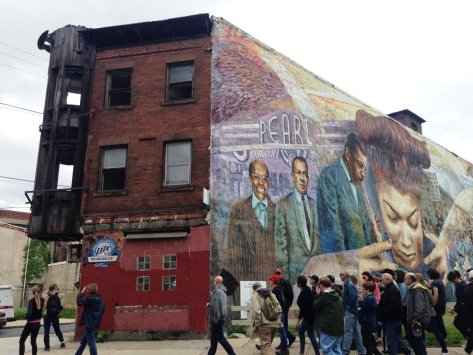
The highlight of the stroll was 2125 Ridge Avenue, the former location of the Checker Café, a “black and tan” (read: racially integrated) jazz club. The nightclub’s motto was “Good Food. Good Cooks. Good Service.” One of the servers was a teenage singing waitress named Pearl Bailey.

2125 Ridge Avenue - Checker Cafe

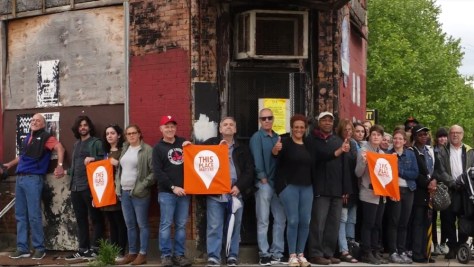
2125 Ridge Avenue - This Place Matters

Since October 2016, I’ve been locked in battle with the Philadelphia Housing Authority which wants to demolish the building that has been a visual anchor for more than 100 years. The Pennsylvania Historical and Museum Commission agreed with me the building is of historical significance. Last week, PHA signed a programmatic agreement that saves the building for now. Under the agreement, PHA must stabilize the building.

I say for now because PHA has made it clear it wants to demolish the building. I guess it doesn’t fit their “vision” for a revitalized Ridge Avenue. In an area full of vacant lots, PHA wants to replace a building that may be eligible for listing in the National Register of Historic Places with yet another vacant lot.

I encouraged the 40+ people who participated in my Jane’s Walk to make some noise and tell decision-makers that this place matters. If you care about preserving Philadelphia’s cultural heritage, DM me on Twitter or email to phillyjazzapp[@]gmail.com.