
Tag Archives: Cultural Heritage Preservation

Happy Mother’s Day
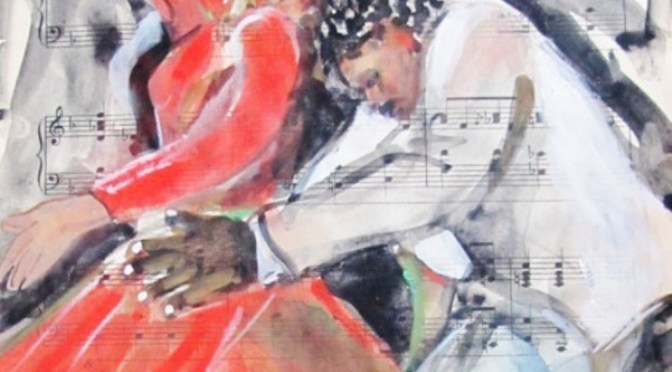
Jazz Early Warning Signs
Jazz Appreciation Month 2015 is now in the archives. From Philadelphia to Paris, fans turned out to celebrate America’s classical art form.
But there are early warning signs that all is not well. According to Nielsen‘s 2014 Year End Report, jazz is tied with classical music as the “least consumed” music in the U.S. Jazz represented just 0.3% of all music streamed in 2014, a reflection of its aging audience.
To expand the audience for jazz, it’s not enough to simply showcase young artists. In an interview with JUMP magazine, Philadelphia Jazz Project Director Homer Jackson observed:
The point about young people that is really critical, is that if we have so many young artists working in jazz, why aren’t they able to engage young people themselves? Most young artists I know do not have a huge youth audience themselves. That’s really critical because at some point the elders are gonna be gone and so who is going to be in the audience? So, I challenge young artists to come up with some strategies and I challenge the curators to come with strategies to help young artists to be able to present their stuff.
One of the strategies must be to make jazz fun for the audience. Thelonious Sphere Monk III (T.S. Monk) recently wrote:
If we just add some ingredients from the rest of the entertainment world, people will view jazz as fun once again, and they will come back. If millions didn’t love the music today, there wouldn’t be what we call a catalog, and my father, Thelonious Sphere Monk, Louis Armstrong, Ella Fitzgerald, Miles Davis, Dave Brubeck, John Coltrane, Buddy Rich and so many more, would have disappeared. We wouldn’t have had an International Jazz Day concert streamed to 1.2 billion people in 2013, and 2.5 billion people in 2014. None of that would be possible if there wasn’t an inherent love of this music, ironically by Americans. We often love ourselves, and don’t know it.
So I say to all my friends in jazz — musicians, promoters, club owners, listeners, and everybody — let’s bring back the fun. Let’s go big. That will bring the attention, and the money will follow.
To borrow a phrase, your audience just wanna have fun.

The African Room
SCOOP USA Publisher Sonny Driver, owner of the First Nighter, says he first saw Miles Davis at this West Philly jazz spot owned by Tubby Northington.
Like a lot of black entrepreneurs, Northington raised money for the Civil Rights Movement.

International Jazz Day 2015
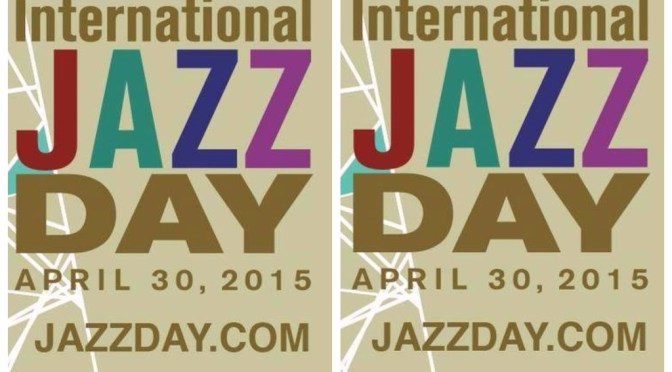
In November 2011, the United Nations Educational, Scientific and Cultural Organization (UNESCO) officially designated April 30 as International Jazz Day in order to highlight jazz and its diplomatic role of uniting people in all corners of the globe. International Jazz Day is chaired and led by Irina Bokova, UNESCO Director General, and legendary jazz pianist and composer Herbie Hancock, who serves as a UNESCO Ambassador for Intercultural Dialogue and Chairman of the Thelonious Monk Institute of Jazz.
The Institute is the lead nonprofit organization charged with planning, promoting and producing this annual celebration.

What Happened, Miss Simone?
The official trailer for the Netflix-produced documentary “What Happened, Miss Simone?” is now available:
The two minute clip is a veritable bombardment of vintage Nina Simone footage, and suggests the feature will come loaded with amazing scenes of her in concert, before the recording studio’s mic, on tour and in the streets, fighting tirelessly for the justice she so knew to be so necessary. What we’re promised by the trailer is a portrait of the artist as an imperfect woman–a genius musician and freedom fighter chased by terrible demons. Nina Simone was a woman who suffered, in spite of the joy and knowledge she brought to so many around her.

Chester’s Fun Spot
South Philly native Jamil Overton, a former vocalist and sax player, recalls that Chester’s Fun Spot was where Grover Washington Jr. “built up his chops when he first got here from Buffalo” in 1967.
Washington had a regular gig playing Thursday to Sunday. Nate Murray held it down Monday to Wednesday.

Before 1964, Jazz Musicians Traveled While Black
Philadelphia Jazz Appreciation Month is in full swing. In a recent interview, I noted that jazz musicians performed in nightclubs where they could not sit and hotels where they could not stay. The jazz legends whose music paved the way for the Civil Rights movement were subjected to racial discrimination as they traveled while black.
In 1936, Victor H. Green, a postal worker and civil rights activist, published the first edition of The Negro Motorist Green Book, a travel guide to navigate Jim Crow laws in the South and de facto segregation in the North.
The “Green Book,” as it was called, lists hotels, tourist homes, restaurants, nightclubs, beauty parlors, barber shops and other services. Philadelphia hotels in the 1949 edition include the Attucks, Chesterfield and Douglass.

The list of clubs includes Emerson’s Tavern, the setting for the Tony Award-winning play, “Lady Day at Emerson’s Bar and Grill,” Café Society and Watts’ Zanzibar.

In the wake of the landmark 1964 Civil Rights Act which outlawed racial discrimination, the last edition of the “Green Book” was published in 1966-67.
UPDATE: A documentary, “The Green Book Chronicles,” co-produced by Calvin Alexander Ramsey and Becky Wible Searles, is in production.
In an interview with NBCBLK, Ramsey said:
There was no Internet back then to get the Green Book, this was put together with love from black people for each other to keep each other safe. The Green Book to me was a love letter of sorts. There was a time when we loved each other so much that we would open our homes just to keep another black person safe. You could be a superstar, a singer, an artist and in those days still have no place to stay, eat or bathe while on the road, so this book was about the love and ability to preserve our dignity.
Show Ramsey and his team some love and make a donation to help them complete “The Green Book Chronicles.”


Flamingo Apartments
Opened in 1950, the Flamingo Apartments was the first interracial apartment building in Philadelphia.
The complex was one block from the Blue Horizon and Mercantile Hall which played host to jazz legends, including Duke Ellington, Cliff Brown and Fats Navarro, and a short walk to the legendary Golden Strip.
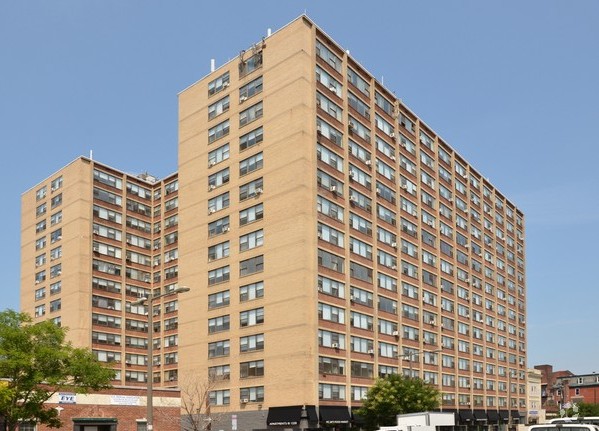
In an interview with All About Jazz, WRTI Jazz Host Bob Perkins recalled:
A year ago, I did a short documentary on Bird (Charlie Parker), and found out about the apartment he lived in at Broad and Stiles near Girard Avenue.
[…]
Curiously, I lived in the same building 30 years later. Bird was there in 1952 to 1953. I lived there in 1980, between marriages. And, believe it or not, Dave Brubeck also lived there! He told me that, personally. It was called the Flamingo apartments—a hot place to live at the time. Arthur Prysock lived there.

Billie Holiday Joins Walk of Fame
Billie Holiday soon will have her own Walk of Fame plaque.

 All That Philly Jazz