Election Day is Tuesday, November 6. Be careful how you vote.
As we know, stuff happens. So if you encounter problems at your polling place, call 866-OUR-VOTE.

Election Day is Tuesday, November 6. Be careful how you vote.
As we know, stuff happens. So if you encounter problems at your polling place, call 866-OUR-VOTE.
We all have seen Google Doodles. The drawings “celebrate holidays, anniversaries, and the lives of famous artists, pioneers, and scientists.”
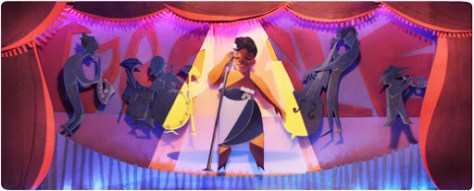
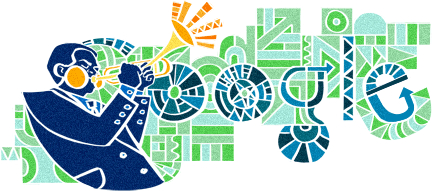
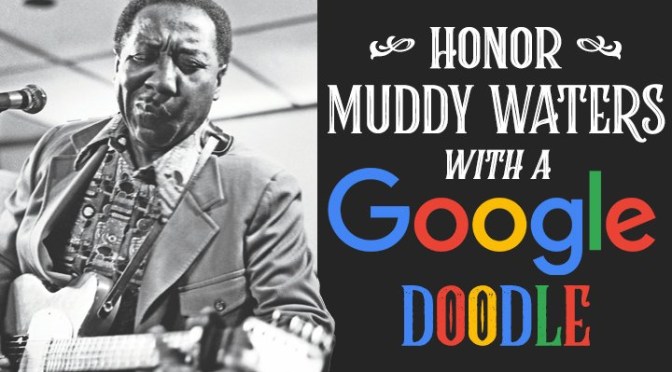
Google accepts suggestions from the public. You can help one of the most celebrated bluesmen, Muddy Waters, get a Google Doodle.

American Blues Scene, a popular website, is petitioning Google to create a Muddy Waters doodle:
No figure has inspired an international music explosion quite like blues musician McKinley “Muddy Waters” Morganfield, who left a log cabin in a Mississippi cotton field to break much greater ground with his inimitable guitar and vocal style. After more than 100 years, Muddy Waters’ continuing impact has proven the blues singer to be one of the most significant figures in the history of American Music, inspiring generations of artists and cultural movements like Folk, Chicago Blues, and Rock n Roll.
You can sign the petition here. You can also email Google at proposals@google.com and tell them about the “Hoochie Coochie Man.”
The blues master is memorialized on a Chicago high-rise.

With your help, Muddy Waters will be immortalized for all Google users.
This year marks the centennial birthday of several jazz luminaries, including Ella Fitzgerald, Dizzy Gillespie, Lena Horne and Thelonious Monk. Philharmonic Laureate Conductor Leonard Bernstein was born on August 25, 1918 but the celebrations are already underway. The worldwide festivities will continue until August 25, 2019.
Bernstein had a longstanding appreciation of jazz, blues and spirituals. His 1939 Harvard University bachelor’s thesis was entitled, “The Absorption of Race Elements into American Music.”
From LeonardBernstein.com:
From his earliest years, jazz was an integral part of Bernstein’s life, and it made a crucial impact on his own music.
As a teenager in the 1930s, he put together a jazz band, was famous for his jazz piano playing at parties, and directed a swing band at summer camp. Some of the jazz-inflected music he composed in the mid-1930s at Harvard, and later at Curtis [Institute], provided source material for future works. Perhaps most significantly, his undergraduate thesis was no less than an assertion that jazz is the universal basis of American composition. In New York soon after college, he got to know jazz intimately, by day transcribing for publication the improvisations of legendary players like Coleman Hawkins, and playing piano in jazz clubs at night.
About 15 years ago, I first saw this video of Bernstein conducting Louis Armstrong performing “St. Louis Blues” with the composer, W.C. Handy, in the audience. The images are forever etched in my mind.
On December 2, I will attend the Louis Bernstein Marathon at the CUNY Graduate Center, an eight-hour concert featuring performances of Bernstein’s most popular work. For me, the event is a mash-up of two of my passions: good music and historic preservation. The CUNY Graduate Center is located in the repurposed B. Altman & Co.
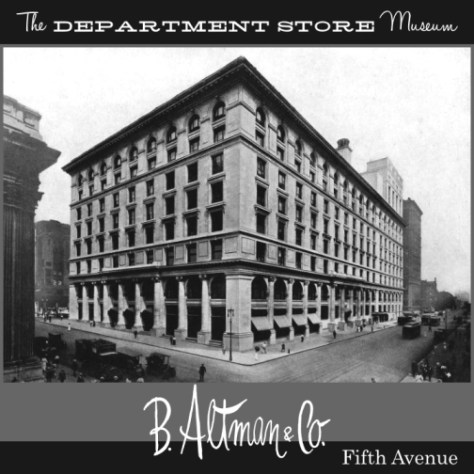
For Louis Bernstein at 100 calendar of events, go here.
I’m going to Chicago for PastForward 2017. I am a two-time recipient of a diversity scholarship to attend the National Trust for Historic Preservation’s annual conference. But as I wrote for the Preservation Leadership Forum blog, I am an accidental preservationist:
I love old buildings. I love even more the stories that old buildings hold—they are places where history happened. To borrow a phrase from blues singer Little Milton, “if walls could talk” they would tell stories of faith, determination and triumph. For me, historic preservation is about staking African Americans’ claim to the American story.
One of my first stops will be State and Washington streets to check out the 10-story mural of Muddy Waters.

I’ll also check out the former home of the blues icon. Sadly, the 125-year-old building is under threat of demolition.

Discussions on reUrbanism, preservation and health, and technology will be live streamed. You can sign up as a virtual attendee for free. You can also follow the conversation on Twitter using the hashtag #PastForward17.
I’m going to Chicago, y’all.
While in the Windy City, I will use the CTA to get around. NEA Jazz Master and Philly naive Jimmy Heath composed “CTA.” Miles Davis said it was named after Heath’s then-girlfriend Connie Theresa Ann.
We’ll be back after Labor Day.
March is Women in Jazz Month, a time to celebrate the contributions of women to jazz.
As a lifelong activist, I want to celebrate the role that women in jazz played in paving the way for the Civil Rights Movement. While Billie Holiday’s “Strange Fruit” is well-documented, Ethel Waters’ “Supper Time” is not well-known. Written by Irving Berlin especially for Waters, the song is about a wife’s grief over the lynching of her husband.
I also want to celebrate the pioneering women of the International Sweethearts of Rhythm, the first racially-integrated all-female big band. The 17-piece band was led by vocalist Anna Mae Winburn.

The Sweethearts were popular in the 1940s. Indeed, they were one of the top swing bands, appearing on radio broadcasts, and touring the U.S. and Europe.
The group disbanded in 1949.
African American bankers E. C. Brown and Andrew Stevens opened the Dunbar Theater in 1919, with plans to offer refined entertainment. However, within two years, business floundered and Brown and Stevens sold the theater to John T. Gibson, the black owner of the more raucous Standard Theater on South Street.
Later during the Depression, Gibson was forced to sell the theater to white owners who renamed it the Lincoln Theater.

From the 1920s to 1940s, the 1600-seat theater hosted major performers such as Duke Ellington, Louise Beavers, Willie Bryant, Lena Horne, Don Redman, Ethel Waters, Cab Calloway, Paul Robeson and Fats Waller.

The joint was jumping.
February is Black History Month. This year’s commemoration is special because we are still celebrating the opening of the National Museum of African American History and Culture.

I have visited the museum twice; my next visit is later this month. The museum can be overwhelming so I methodically focus on one floor at a time, beginning with the History Galleries.

It is as emotionally wrenching as you would imagine. It is also motivating and inspiring. I thanked the ancestors for surviving the brutality of slavery and maintaining their humanity, their “soul value.” I am empowered by their enduring legacy of struggle and resistance.
Last week, I checked out the Culture Galleries.

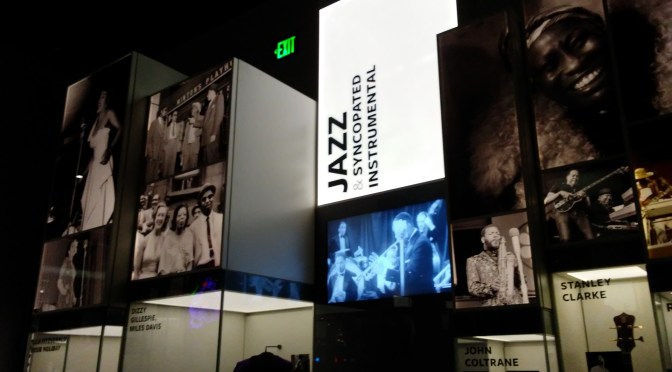
It was sheer joy to experience black culture in all its glory – music, fashion, dance, culinary and visual arts, as well as the performing arts. Philadelphia’s music legends are in the house, including Marian Anderson, John Coltrane, Dixie Hummingbirds, Kenny Gamble, Dizzy Gillespie, Billie Holiday, Leon Huff, Patti LaBelle, Paul Robeson and Sister Rosetta Tharpe. There’s an image of a billboard advertising an appearance by Fats Waller at the Lincoln Theater, a Philly landmark.

I ended each visit at Contemplative Court where I sat and, well, contemplated how we got over.

All That Philly Jazz was named one of the top 50 jazz blogs and websites for jazz musicians, teachers and students. We came in at #41. The list includes JazzWax and Jazz at Lincoln Center.
Way to go!
For more news and mentions, check out ICYMI: All That Philly Jazz in the News.
Ripley’s Music Hall was located in the former Hippodrome in South Philly. The music venue played host to greats of all genres, including McCoy Tyner, Jimmy Cliff, Peter Tosh, Sam & Dave, Gil Scott-Heron and Stevie Ray Vaughan.

Ripley’s Music Hall was demolished. A new building constructed on the site was occupied by Tower Records, which closed in 2012.




 All That Philly Jazz