Tag Archives: #CivilRights

Billie Holiday Will Be Inducted into Walk of Fame

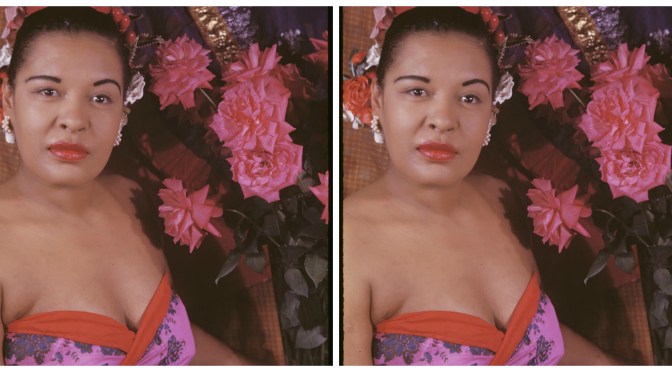
It’s been 100 years in the making, but Billie Holiday is finally getting a plaque on the Walk of Fame. The announcement was made by the Philadelphia Music Alliance earlier this week.

The induction ceremony will be held on October 26. For updates, follow @PhillyJazzApp on Twitter. Billie loved her man and we love Billie.


What Happened, Miss Simone?

The official trailer for the Netflix-produced documentary “What Happened, Miss Simone?” is now available:

The two minute clip is a veritable bombardment of vintage Nina Simone footage, and suggests the feature will come loaded with amazing scenes of her in concert, before the recording studio’s mic, on tour and in the streets, fighting tirelessly for the justice she so knew to be so necessary. What we’re promised by the trailer is a portrait of the artist as an imperfect woman–a genius musician and freedom fighter chased by terrible demons. Nina Simone was a woman who suffered, in spite of the joy and knowledge she brought to so many around her.

READ MORE

Flamingo Apartments

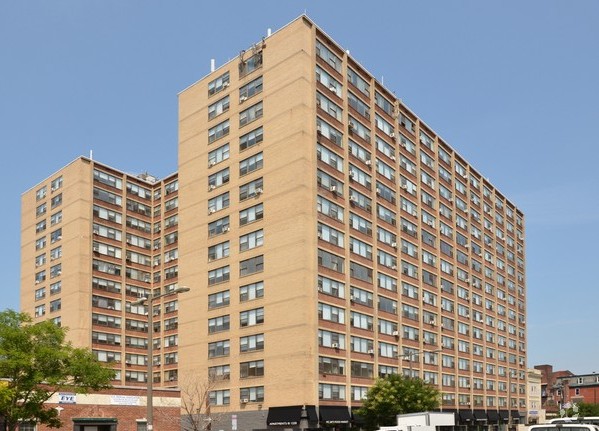
Opened in 1950, the Flamingo Apartments was the first interracial apartment building in Philadelphia.

The complex was one block from the Blue Horizon and Mercantile Hall which played host to jazz legends, including Duke Ellington, Cliff Brown and Fats Navarro, and a short walk to the legendary Golden Strip.

 In an interview with All About Jazz, WRTI Jazz Host Bob Perkins recalled:

A year ago, I did a short documentary on Bird (Charlie Parker), and found out about the apartment he lived in at Broad and Stiles near Girard Avenue.

[…]

Curiously, I lived in the same building 30 years later. Bird was there in 1952 to 1953. I lived there in 1980, between marriages. And, believe it or not, Dave Brubeck also lived there! He told me that, personally. It was called the Flamingo apartments—a hot place to live at the time. Arthur Prysock lived there.

Read more

Billie Holiday Joins Walk of Fame

Billie Holiday soon will have her own Walk of Fame plaque.

Billie Holiday Joins Walk of Fame

Bessie Smith: HBO Films

Written and directed by Dee Rees, “Bessie” follows the life and times of legendary “Empress of the Blues” Bessie Smith (played by Queen Latifah).”Bessie” also stars Mo’Nique, Khandi Alexander, Charles S. Dutton, Mike Epps and Tika Sumpter.

The biopic will premiere on HBO on Saturday, May 16, 2015. For more info, visit BessietheMovie.com.

In Philadelphia, Jazz Lives

The 5th Annual Philadelphia Jazz Appreciation Month celebration is underway.

Jazz Lives - McCoy Tyner

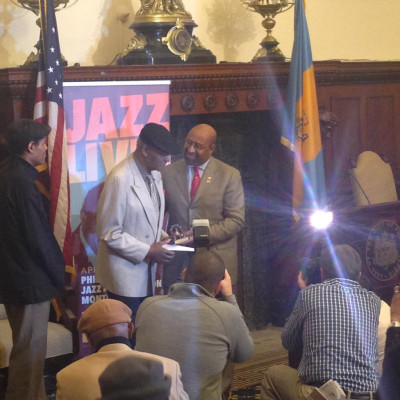
The 2015 Philadelphia Jazz Honoree is West Philly native McCoy Tyner, a four-time Grammy winner and NEA Jazz Master. Mayor Michael A. Nutter gave Tyner an inscribed Liberty Bell, the equivalent of the keys to the city.

McCoy Tyner - 4.1.15

Tyner said his Philly roots are deep:

It’s wonderful to be back home in Philadelphia. I would like to thank the Mayor and the people of this great city for making this possible for me. No matter where I am in the world, Philadelphia always has a special place in my heart.

For information about Philadelphia Jazz Appreciation Month events, visit www.creativephl.org/jazz.

Pearl Bailey House

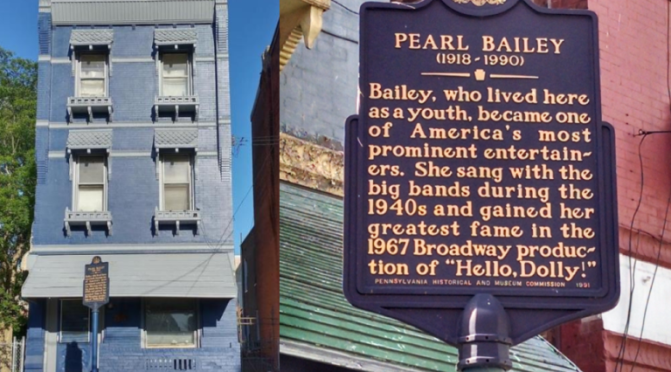
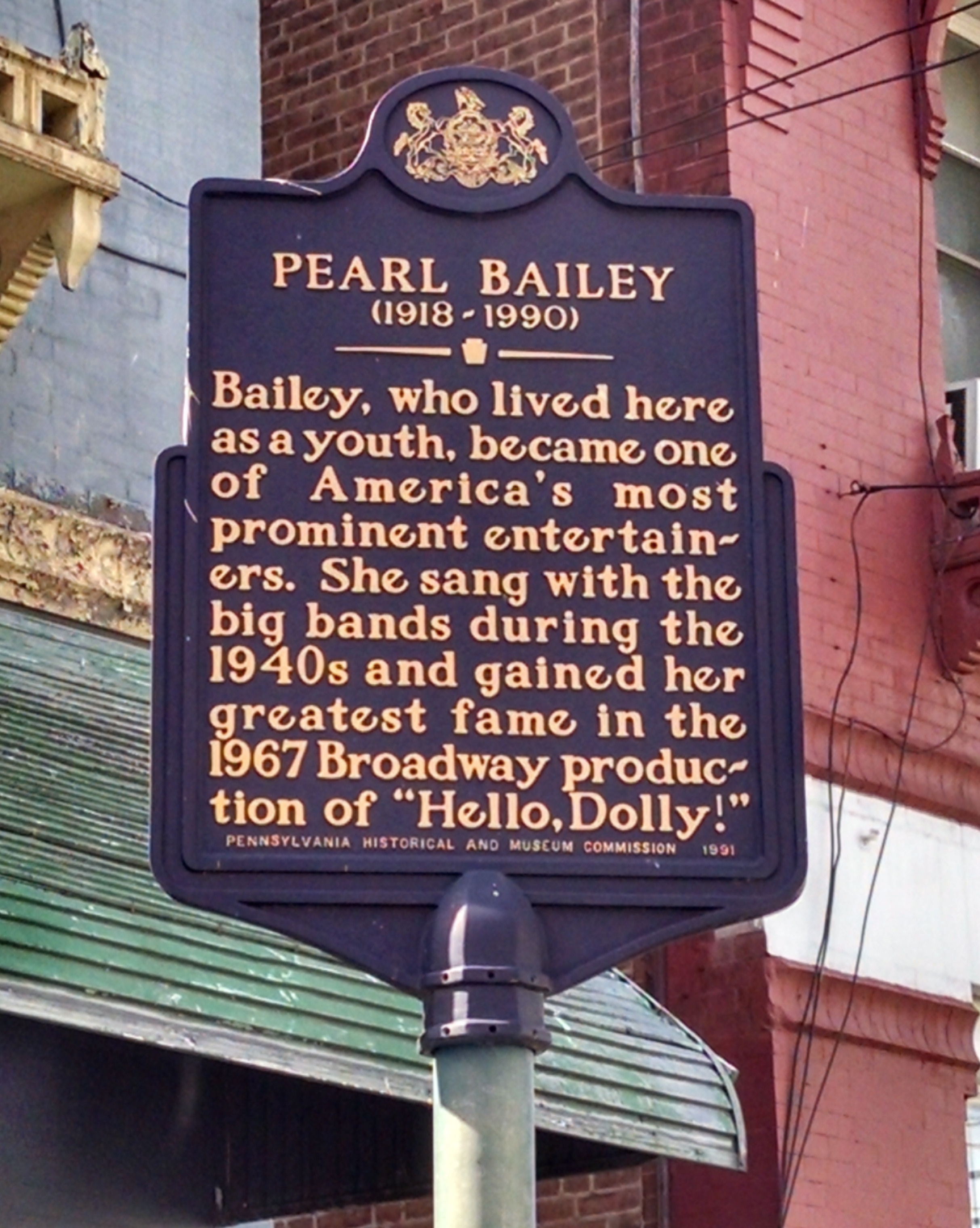
Pearl Bailey grew up in North Philadelphia in the 1920s and ’30s. Her family was part of the Great Migration from the South. She began her storied career by winning an amateur song and dance contest at the Pearl Theatre, which was located on the Ridge Avenue jazz corridor, a few blocks from the Golden Strip.

Pearl Bailey - 4.5.15

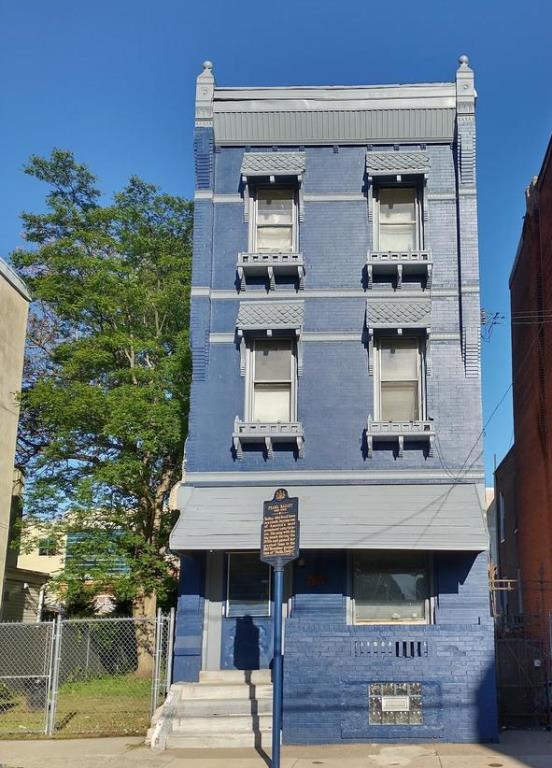
After she hit the big time, Bailey bought the house on N. 23rd Street for family members who had migrated from Newport News, Va., where she was born.

Pearl Bailey House

The current owner, William Sharrock, shared that overnight guests included comedians Redd Foxx and Slappy White, Bailey’s ex-husband. She opened the house to friends because African Americans were barred from hotels that catered to white guests.

The Pearl Bailey House has been visited by, among others, Bon Jovi and Bill Clinton (yes, that Bill Clinton).

Tuskegee Clubhouse

In an interview with All About Jazz, bassist Jymie Merritt talked about the “Forerunners” jazz workshops:

JM: So I started a workshop at the Tuskegee Clubhouse, and I got Kenny Lowe, the late, gifted pianist, the drummer Donald Bailey (we called him Duck), singer September Wrice and the saxophonist Odean Pope. And we kept it going for five years until I went with Max Roach.

AAJ: So the “Forerunners” was an ongoing workshop.

JM: Yes, and then we got to play on Sundays at Father Paul Washington’s church [Church of the Advocate], and I used that opportunity to go beyond the kind of bass playing I’d been exposed to, in order to develop new forms and build from that.

READ MORE

Earle Theater

The Earle Theater was a stop on the “Chitlin’ Circuit.” It was the most expensive theater ever built in Philadelphia. The Earle had an ornate interior and exterior and seating for 2,700. It was demolished in July 1953.

Earle Theater

In an interview with the Smithsonian Oral History Project, Philly native and NEA Jazz Master Benny Golson talked about how he was inspired to master the saxophone after seeing Lionel Hampton and Arnett Cobb at the Earle Theater:

I guess they usually went until 9 or 10 at night, which meant that they had about three or four shows a day. It was an ongoing thing. Week after week they’d have whatever band was popular. Benny Goodman, Woody Herman, anything. Charlie Spivak, Claude Thornhill, Tommy Dorsey. Any band that was popular, they would bring there. It was an ongoing thing. Count Basie, Duke Ellington. They all came there.

The reason I went is because I was in high school – Benjamin Franklin High School. The kids were coming back and says, “Oh man. You got to go to the Earle Theater and hear Lionel Hampton. You got to hear him play Flying Home.” Blah blah blah blah. So one day I didn’t go to school. I went there. That’s when I heard him. That’s when my life changed. That’s when I heard Arnett Cobb. Incidentally, years later – many years later – it must have been 50 years later – I happened to see him in Nice, France. I said, “You’re the reason that I play the saxophone.” He says, “I never knew that. Really?” I said, “Yes.” He had tears in his eyes, because he knew who I was. I said, “I hear you play, and that’s when my life changed.”

Read more