Tag Archives: Civil Rights

African-American Music Appreciation Month 2017

On June 7, 1979, President Jimmy Carter proclaimed the month of June “Black Music Month.” Every president since then has recognized the contribution of black musicians to the nation’s cultural heritage. In 2009, President Barack Obama changed the month-long celebration to “African-American Music Appreciation Month.”

The tradition continues with President Donald Trump:

During June, we pay tribute to the contributions African Americans have made and continue to make to American music. The indelible legacy of these musicians who have witnessed our Nation’s greatest achievements, as well as its greatest injustices give all Americans a richer, deeper understanding of American culture. Their creativity has shaped every genre of music, including rock and roll, rhythm and blues, jazz, gospel, hip hop, and rap.

[…]

We also take time this month to recognize the musical influence of two of the greatest jazz musicians of all time, Dizzy Gillespie and Ella Fitzgerald, as this year marks their centennial birthdays. Gillespie, through his legendary trumpet sound and Fitzgerald, through her pure, energetic voice, treated people around the world to spirited and soulful jazz music. Their work has influenced countless musicians, and continues to inspire listeners young and old.

NOW, THEREFORE, I, DONALD J. TRUMP, President of the United States of America, by virtue of the authority vested in me by the Constitution and the laws of the United States, do hereby proclaim June 2017 as African-American Music Appreciation Month. I call upon public officials, educators, and all the people of the United States to observe this month with appropriate activities and programs that raise awareness and appreciation of African-American Music.

I kicked off this year’s celebration by attending opening night of Motown The Musical.

The multi-media musical recaps familiar stories about how Berry Gordy Jr. founded the Motown Record Company; Gordy’s affair with Diana Ross; self-destructive Florence Ballard; the tempting Temptations and their rivalry with the Four Tops; songwriter, singer and Motown lifer Smokey Robinson; child prodigy and history-maker Stevie Wonder; and the discovery of The Jackson 5. The Motown breakups include Mary “My Guy” Wells, Marvin Gaye, songwriting and production team Holland-Dozier-Holland, and Diana Ross and the Supremes.

The audience went nuts when Martha Reeves and the Vandellas gave “Philadelphia, PA” a shout-out in “Dancing in the Streets.” Although one knows how the stories end, the retelling is fresh and joyous. The musical culminates with a “family” reunion to celebrate the 25th anniversary of Motown.

I remember like it was yesterday watching the television special, Motown 25: Yesterday, Today, Forever. In 1983, I sang the songs at the top of my lungs, danced in front of the TV, and marveled as Michael Jackson debuted the moonwalk. At the Academy of Music, I danced in my seat and tried not to sing too loud.

But it wasn’t just the songs and dancing that kept a smile on my face. I love that the music is contextualized. Motown addresses racial segregation in the South and the North, the senseless war in Vietnam, the March on Washington, the assassination of Dr. Martin Luther King Jr., and the Black Power Movement. By the 1970s, the “Motown Sound” was the sound of the struggle for racial justice.

Motown The Musical is playing at the Academy of Music through June 11. For ticket information, visit kimmelcenter.org.

Ridge Avenue Stroll through Philly’s Jazz History

All That Philly Jazz Director Faye Anderson leads a walking tour, “Ridge Avenue Stroll through Philly’s Jazz History.”

Ridge Avenue Stroll Cover

In the wake of the Great Migration, the demographics of North Philadelphia’s Sharswood neighborhood changed. The new residents fueled the growth of commercial establishments along Ridge Avenue that catered to African Americans. From the Blue Note (15th Street) to the Crossroads Bar (23rd Street), Ridge Avenue was a jazz corridor and entertainment district.

Ridge Avenue Entertainment District - Satellite

Ridge Avenue was also a safe haven from the indignities of racial discrimination. African American entertainers performed in Center City at places such as the Earle Theater and Ciro’s, but they were not allowed to stay in downtown hotels. The Negro Motorist Green Book helped black travelers navigate Jim Crow laws in the South and racial segregation in the North.

Published from 1936 to 1966, the “Green Book” listed hotels, restaurants, night clubs, beauty parlors and other services that enabled African Americans to “vacation without aggravation.”

Green Book - NMAAHC

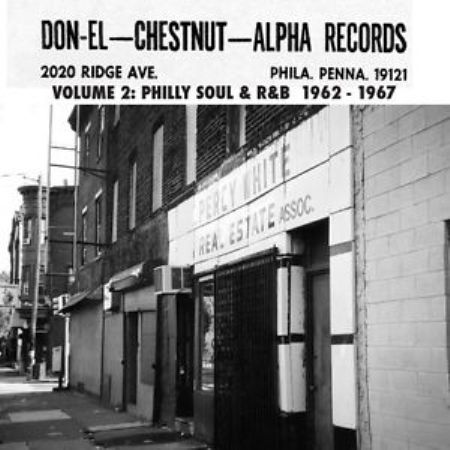
Our stroll will begin at the legendary Blue Note. We walk around the corner and stop at the Nite Cap. We then head north up Ridge Avenue, stopping at the Bird Cage Lounge and Don-El Records.

Don-El Records - 2020 Ridge Avenue

Moving along, we check out the Hotel LaSalle which was listed in the “Green Book” and advertised in the NAACP’s Crisis magazine.

Hotel LasSalle Collage - 4.30.17

We then stop by V-Tone Records, the LaSalle Beauty Parlor and Butler’s Paradise Café (listed in the “Green Book”).

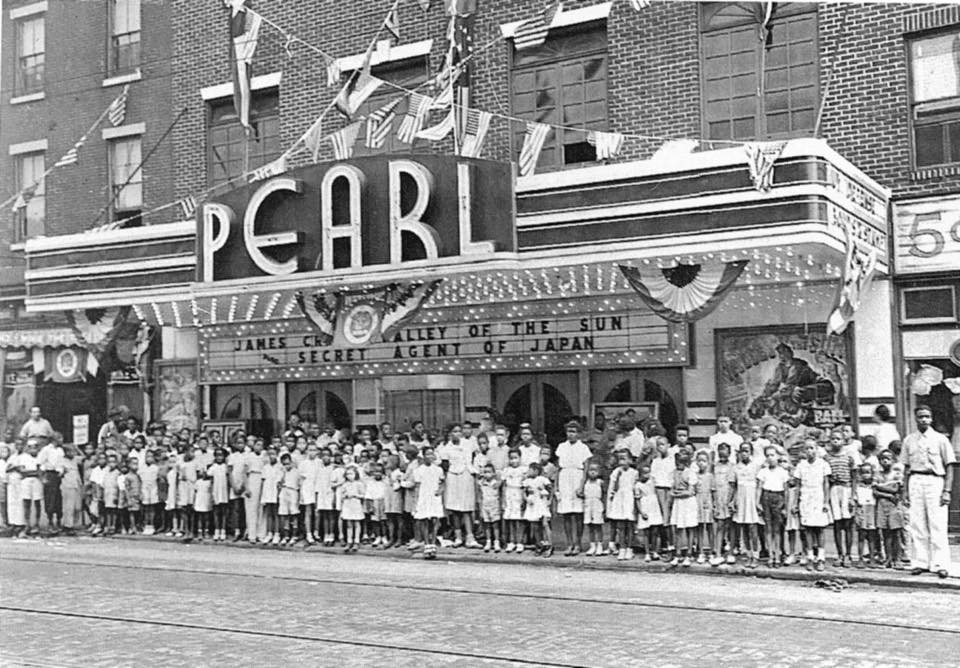
Next stops: Ridge Cotton Club (listed in the “Green Book”) and the Pearl Theatre.

Pearl Theater

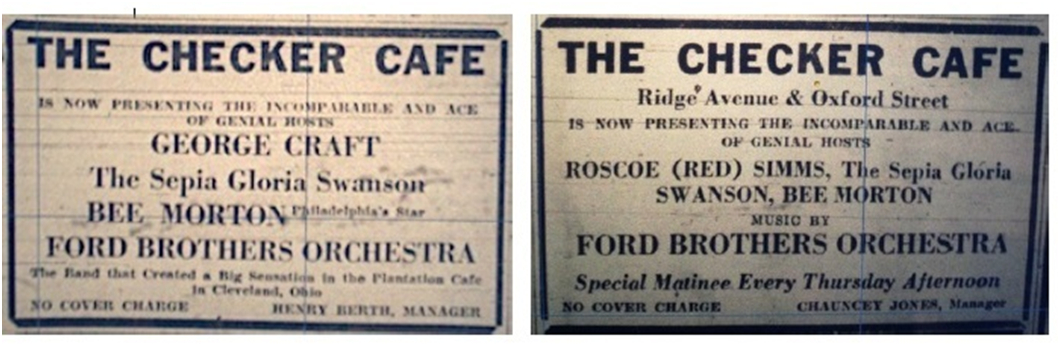
The highlight of the walk is the Checker Café, one of the last vestiges of the Ridge Avenue entertainment district.

2125 Ridge Avenue - 2007

We end our stroll at Mr. Chip’s Bar and Irene’s Café (listed in the “Green Book”).

Mr. Chip's Bar - Irene's Cafe Collage

We will walk the streets where future jazz legends such as Pearl Bailey, Clifford Brown, Cab Calloway, John Coltrane, Miles Davis, Duke Ellington, Dizzy Gillespie, Billie Holiday, Philly Joe Jones, Lee Morgan, Charlie Parker and Nancy Wilson once roamed. For more information, contact Faye at greenbookphl@gmail.com.

Historic Preservation and Social Justice

Two years ago I launched All That Philly Jazz, a place-based public history project that is telling the story of Philadelphia’s golden age of jazz. In documenting the places where jazz history unfolded, I am also contextualizing the impact of jazz musicians and the jazz culture on the struggle for social justice.

Fact is, the jazz culture was about “intersectionality” before the term was coined . As Philadelphia Inquirer architecture critic Inga Saffron notes in her column, “Ridge Avenue’s last standing jazz club,” gay performers such as the “Sepia Gloria Swanson” were an integral part of the scene.

Checker Cafe Ads

In a piece for PlanPhilly, I wrote about why historic preservation matters:

1409 Lombard Street helps tell the story of artistic greats like Lady Day, Ray Charles, John Coltrane, Miles Davis, Nina Simone and McCoy Tyner. It also tells the story of disruption and defiance. In remarks to the 1964 Berlin Jazz Festival, Dr. Martin Luther King Jr. said jazz is “triumphant music.” If walls could talk, they would tell how the jazz culture broke down social barriers. The first racially integrated nightspot in Center City was a jazz club, the Downbeat. For the first time, blacks and whites mixed on an equal basis. Jazz musicians created a cultural identity that was “a steppingstone” to the Civil Rights Movement.

At its core, historic preservation is about storytelling. The question then becomes: Who decides what gets saved and whose story gets told? The built environment reflects racial inequalities. Given African Americans’ socioeconomic status, few of the buildings associated with black history meet preservation standards regarding architectural significance. Although unadorned, they are places that tell a more complete American story. The stories of faith, resistance, and triumph are relevant to today’s social justice activists.

Read More

Women in Jazz Month

March is Women in Jazz Month, a time to celebrate the contributions of women to jazz.

As a lifelong activist, I want to celebrate the role that women in jazz played in paving the way for the Civil Rights Movement. While Billie Holiday’s “Strange Fruit” is well-documented, Ethel Waters’ “Supper Time” is not well-known. Written by Irving Berlin especially for Waters, the song is about a wife’s grief over the lynching of her husband.

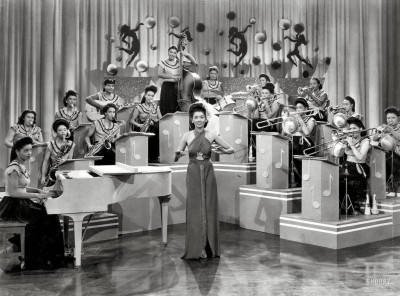
I also want to celebrate the pioneering women of the International Sweethearts of Rhythm, the first racially-integrated all-female big band. The 17-piece band was led by vocalist Anna Mae Winburn.

international-sweethearts-of-rhythm-e1425870519326

The Sweethearts were popular in the 1940s. Indeed, they were one of the top swing bands, appearing on radio broadcasts, and touring the U.S. and Europe.

The group disbanded in 1949.

All That Philly Jazz Named One of the Best Jazz Blogs on the Planet

All That Philly Jazz was named one of the top 50 jazz blogs and websites for jazz musicians, teachers and students. We came in at #41. The list includes JazzWax and Jazz at Lincoln Center.

Way to go!

Top 50 Jazz Award - 2.9.17

For more news and mentions, check out ICYMI: All That Philly Jazz in the News.

#APeoplesJourney

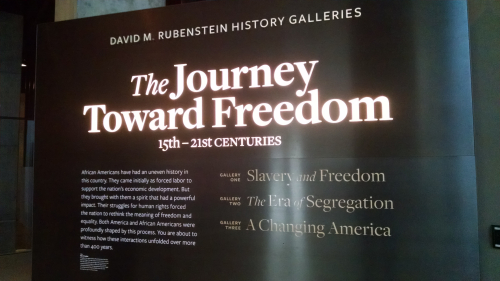
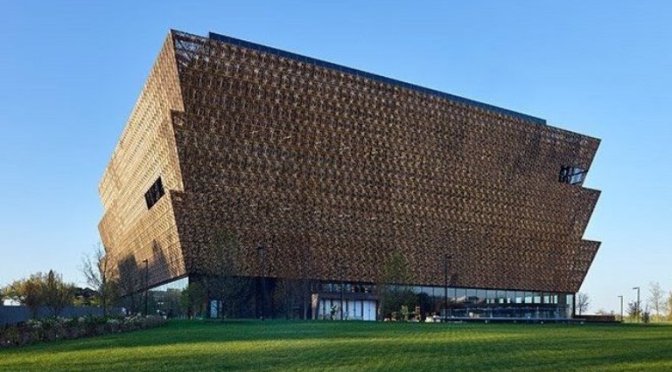
The newly opened National Museum of African American History and Culture was 100 years in the making  The dream of black Civil War veterans was fulfilled on September 24, 2016. With the ringing of the First Baptist Church Freedom Bell, President Barack Obama opened the doors to a view of African American history and culture through an African American lens.

I was in DC for the grand opening ceremonies.

I did not visit the Museum because I did not want my first visit to be rushed (I have tickets for October and November). So I spent the weekend reveling in the Freedom Sounds Festival. It was comforting to see the ancestors presiding over the community celebration.

By the way, Ray Charles’ “Lonely Avenue” was remixed into a freedom song, “Fighting for My Rights.”

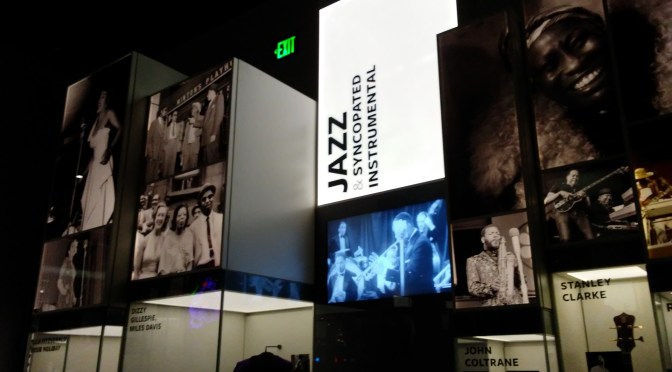
On my visit to the Museum on October 3rd, my first stop will be the Slavery gallery. If time permits, I’ll check out the Music collection. My plan is to check out one gallery on each visit.

Are you ready to visit? Admission is free, but you need a timed pass. You’ll have to plan ahead because Museum tickets are sold out for the rest of the year. Passes for Museum admission between January and March 2017  will be available online starting Oct. 3 at 9 a.m.

For more info, check out Top 10 Things To Know About Visiting the Museum.

Jazz 100 Celebrates Four Icons

This year marks the centennial birthdays of Ella Fitzgerald, Mongo Santamaría, Thelonious Monk and Dizzy Gillespie. The jazz visionaries will be celebrated on Friday, September 30 at 8:00 p.m. at the Merriam Theater.

jazz100

Anne Ewers, President & CEO of the Kimmel Center for the Performing Art, said in a statement:

Philadelphia is a revered jazz city and this presentation gives us a one-of-a-kind opportunity to celebrate the music of four jazz icons in their centennial year. Touting artists from around the world, Jazz 100 will showcase the unifying fibers of this genre.

Over the course of their careers, the jazz legends performed in clubs and venues in Philadelphia.

Jazz 100 Collage

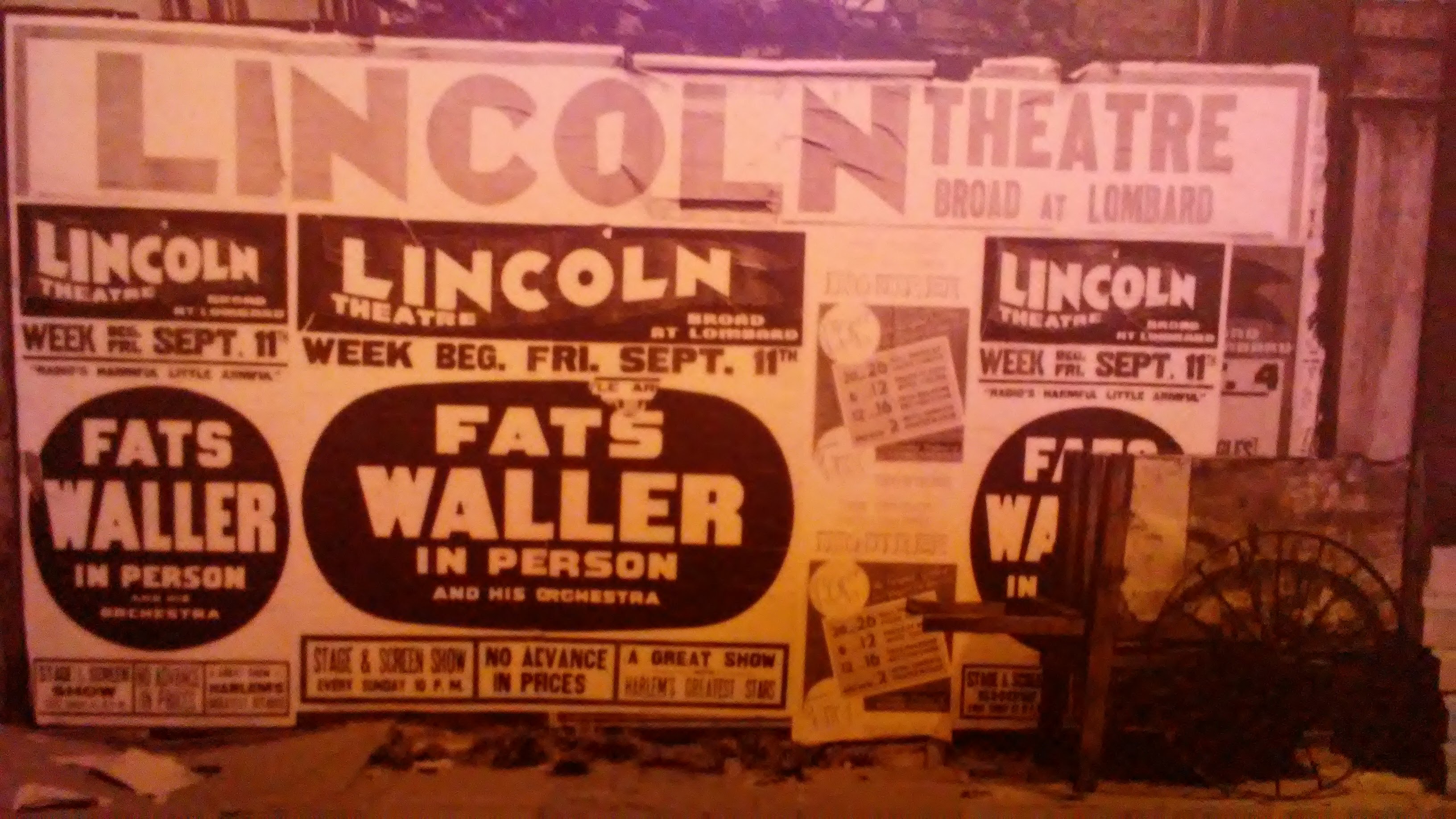
Dizzy’s Philly roots are deep. Born in South Carolina, his family was part of the Great Migration. For a time, he lived at 637 Pine Street. He was a member of the house band at the Earle Theater. After a tiff with management, Dizzy became a regular at the Downbeat Club, which was located within shouting distance of the Earle Theater.

Downbeat Club Collage

Dizzy was a founding member of Union Local 274. The black musicians union was located at 912 S. Broad Street.

An iconic television commercial is one of my earliest memories of “The First Lady of Song.”

One of my most memorable experiences was attending Thelonious Monk’s funeral in 1982 at Saint Peter’s Church in New York City. Musicians paid loving tribute to Monk with version-after-version of “Round Midnight.”

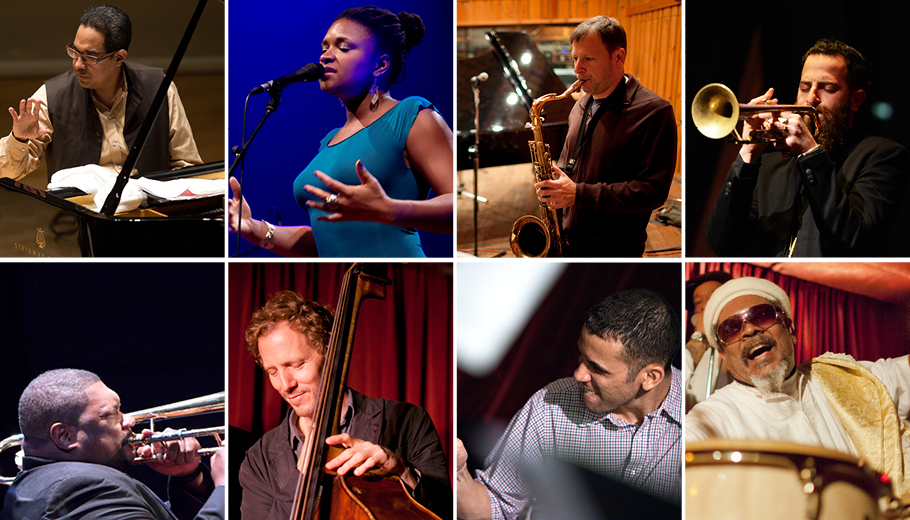
Jazz 100 brings together an all-star ensemble of musicians, including Lizz Wright (vocals), Avishai Cohen (trumpet), Wycliffe Gordon (trombone, vocals) and Chris Potter (saxophone, woodwinds).

Jazz100 Musicians

The tribute concert “showcases the individual artistry of each icon and the powerful unifying threads between them.” Tickets can be purchased at the Kimmel Center Box Office or online at kimmelcenter.org (save over $45 with promo code “Dizzy”).

Chasing Trane

September 23rd marked the 90th anniversary of John Coltrane’s birthday. The milestone was celebrated across the country.

The documentary, Chasing Trane, may be coming to a theater near you. From the Hollywood Reporter:

A music titan gets his cinematic due in Chasing Trane, a comprehensive, engrossing and, it’s tempting to say, worshipful account of the life of John Coltrane, the alto sax player and composer most aficionados would agree deserves a spot on the jazz equivalent of Mount Rushmore. Smartly shaped and vigorously told by prolific documentarian John Scheinfeld (Who Is Harry Nilsson, The U.S. vs. John Lennon), the film bulges with insights offered by everyone from family members and close collaborators to the likes of Cornel West and Bill Clinton. The incessant rush of the innovator’s music should spike the interest of younger viewers insufficiently exposed to the man’s short career, pointing to an extensive life in all markets, domestic and international, wherever interest in great jazz still flourishes.

Read More