Tag Archives: #BlackCultureMatters

Rendezvous Room

The Rendezvous Room was located on the first floor of the Hotel Senator. It was operated by Irvin Wolf from 1947 to 1955.

RendezVous Room - Featured Image

In a piece for the Tri-state Jazz Society, Rabbi Lou Kaplan wrote:

Located at 915 Walnut Street in the Hotel Senator, the Rendezvous was owned by jazz enthusiast Lee Guber. It opened January 22, 1947. After entering, one saw a long U-shaped bar on the right, behind which the bandstand was situated. To the left were tables for customers. More tables were available in the back of the room than in the narrow front section. A large photomural blowup of Pablo Picasso’s Three Musicians painting dominated a corner wall.

Many singers who later became big names made their first or an early start in the Rendezvous: Rosemary Clooney, Eydie Gorme, Joni James, Patti Page, to list a few. Later came such well-known vocalists as Thelma Carpenter, Ella Fitzgerald, Ella Mae Morse, Maxine Sullivan, Sarah Vaughan, and Lee Wiley. (I recall marveling one night at how Billie Holiday’s relaxed, syncopated phrasing reshaped each number.) Booked, too, were folk singers Harry Belafonte, Burl Ives, and Josh White; actor John Carradine; musicians Earl Hines, Gene Krupa, Meade Lux Lewis, Charlie Parker, and Artie Shaw; and many other “greats.”

While the Rendezvous engaged various types of entertainment, most prominent was Dixieland jazz. The number one jazz attraction was Bechet, who, for instance, was featured four times in one 12- month period, each for a minimum of two weeks. Actress Tallulah Bankhead, a Bechet devotee and friend, came to the club whenever possible if he was playing. One night she asked Guber, “Would you like to sell twice as much whiskey?” After the owner’s obvious reply, Bankhead, in her husky baritone voice, laughingly advised, “Well, try filling up the glasses!”

READ MORE

Ridge on the Rise

Back in the day, Ridge Avenue was a vibrant commercial corridor. The heart and soul of North Philadelphia was also an entertainment district. The Blue Note was at 15th Street and Ridge Avenue.

Blue Note

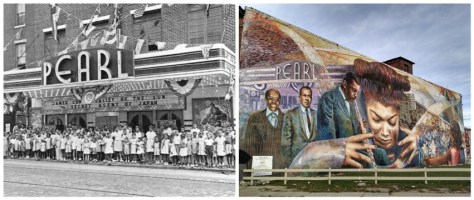
The Bird Cage Lounge was one block up at Ridge and 16th Street. I don’t know whether it was named after him, but Charlie “Bird” Parker played there. The legendary Pearl Bailey began her singing and dancing career at the Pearl Theater, which was at Ridge and 21st Street.

Pearl Theater Collage

Some of the jazz giants who roamed Ridge Avenue likely stayed at the Hotel LaSalle, which was close to the Pearl Theater. The hotel was listed in the The Negro Motorist Green Book. The Crossroads Bar at Ridge and Columbia Avenue (now Cecil B. Moore Avenue) was at the western tip of the storied “Golden Strip.”

Ridge began its steep decline in the aftermath of the 1964 Columbia Avenue race riots and construction of the Norman Blumberg Apartments public housing. Fast forward 50 years, Ridge is on the rise.

In 2014, the Philadelphia Housing Authority announced that transformation of the Blumberg/Sharswood neighborhood was its top priority. The Sharswood Blumberg Choice Neighborhoods Transformation Plan is a massive $500 million project that would, among other things, revitalize the Ridge Avenue corridor.

In an op-ed piece published in the Philadelphia Inquirer, PHA President and CEO Kelvin A. Jeremiah wrote:

The redevelopment of a community is about turning ideas into public policy and putting policy into action.

PHA’s revitalization efforts are a targeted, coordinated development model designed to maximize the economic benefits of neighborhood revitalization, not the piecemeal dispersed development model of the past. To transform communities into neighborhoods of choice, there must be good schools for every child, quality affordable housing for all families, and a vibrant small business commercial corridor. The challenge is turning the ideas and rhetoric into policy and practice.

In remarks before the National Trust for Historic Preservation’s recent conference, Marion Mollegen McFadden, Deputy Assistant Secretary for Grant Programs, U.S. Department of Housing and Urban Development, noted a community has both tangible and intangible assets:

I see preservation’s efforts to recognize and honor the cultural heritage of minority and ethnic groups as a valuable component of strong communities, in particular many of the communities that HUD serves. And I don’t just mean preservation of buildings and places, but also of diverse cultural ties and traditions, the intangible dimensions of heritage that together enrich us as a nation.

McFadden concluded with a quote from HUD Secretary Julián Castro:

History isn’t just a subject for books and documentaries. It’s alive and well in buildings, sites, and structures that shape our communities. They tell us who we are and where we come from – and it’s critical that we protect our past for present and future generations.

The Sharswood/Blumberg Choice Neighborhoods Transformation Plan raises the question: Does PHA value the area’s tangible and intangible assets that give the neighborhood its identity? If so, will a transformed Ridge Avenue preserve the neighborhood’s cultural heritage for current and future generations?

The Girls in the Band

“The Girls in the Band” is a documentary that tells untold or stories of female jazz and big band instrumentalists, including Mary Lou Williams and the International Sweethearts of Rhythm. Originally released in 2013, the Collector’s Edition DVD is now available.

For more information, go here.

Shirley Scott: Queen of the Organ

From NPR’s Jazz Night in America:

Known as the “queen of the organ,” Shirley Scott was one of several Philadelphians who developed the electric Hammond B-3 into a viable instrument for a soulful, bluesy style of jazz. With dozens of recordings to her name, she was already a major voice when she became the leader of the house band at Ortlieb’s Jazzhaus. Among the young players who timidly found their way onto the stage at Ortlieb’s were Warfield and Stafford — and, in doing so, they got a lot more than they bargained for.

READ MORE

Blue Horizon

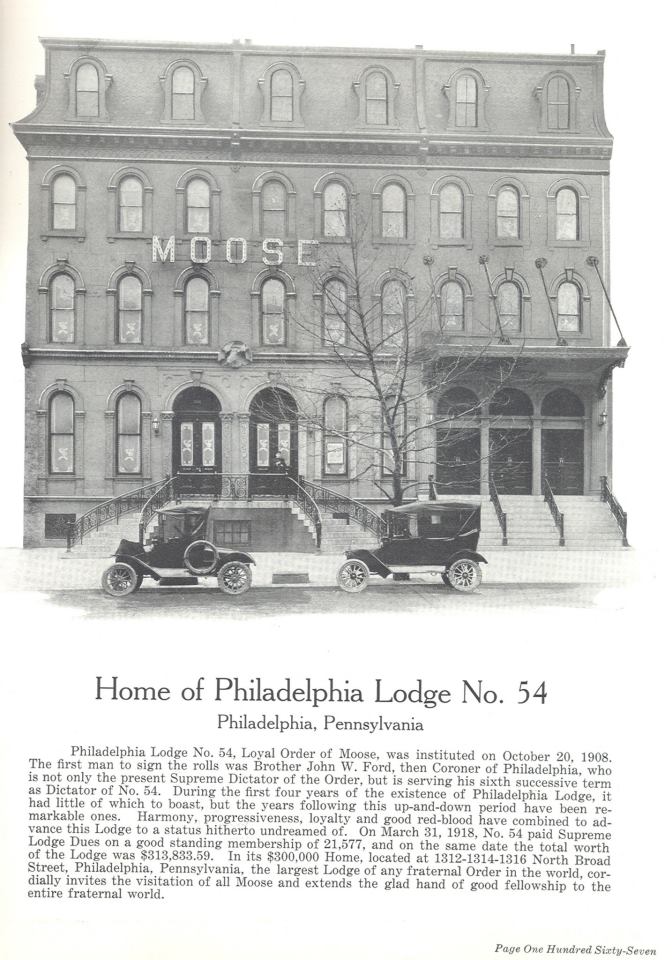
The Blue Horizon was located in the former Loyal Order of Moose Lodge 54.

Blue Horizon - Moose Lodge

The property ceased operations as an active Moose lodge shortly after World War II. It remained under the organization’s ownership through the 1950s.

In 1961, Jimmy Toppi Sr. purchased the property for $85,000. He renamed it after the song “Beyond the Blue Horizon” from the 1930 film “Monte Carlo.” Its limited seating capacity meant big box office fights took place elsewhere –- at the Arena and Convention Hall in West Philly and the Spectrum in South Philly.

Blue Horizon - Vintage

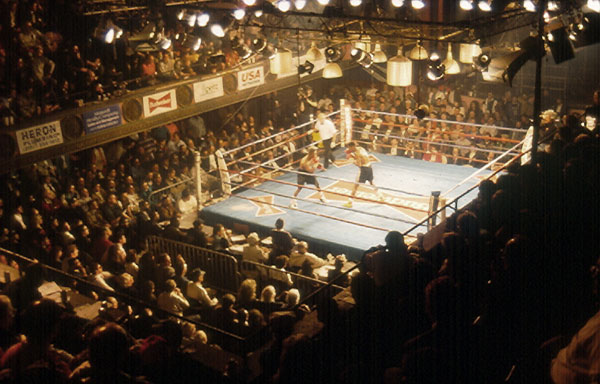
The Ring magazine voted the Blue Horizon the #1 boxing venue in the world; Sports Illustrated called it “the last great boxing venue in the country.”

Blue Horizon

The Blue Horizon closed in June 2010.

Billie Holiday Inducted into Philadelphia Walk of Fame

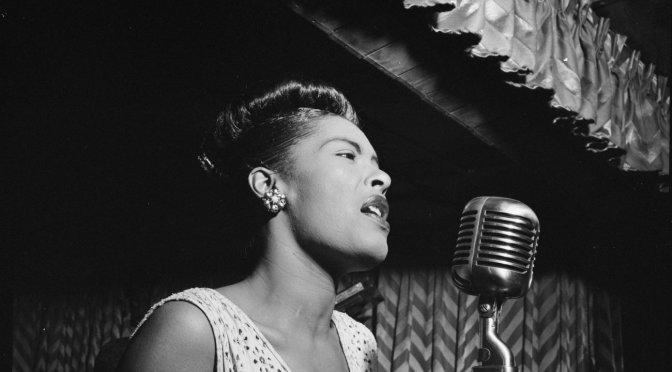
Billie Holiday was born in West Philly 100 years ago. This morning, her star will be reborn as Lady Day is inducted into the Philadelphia Walk of Fame.

I am proud to have played a role in making this happen.

Billie Holiday Joins Walk of Fame

For me, it was personal. After a failed romance when I was in college, I started my day by playing “Good Morning Heartache.” My best friend would ask me, “Why are you always listening to that junkie?” I ignored him. We now know Lady Day was an early victim of racial profiling.

Billie helped me get through a rough patch. It will be my pleasure to help keep her bronze plaque clean.

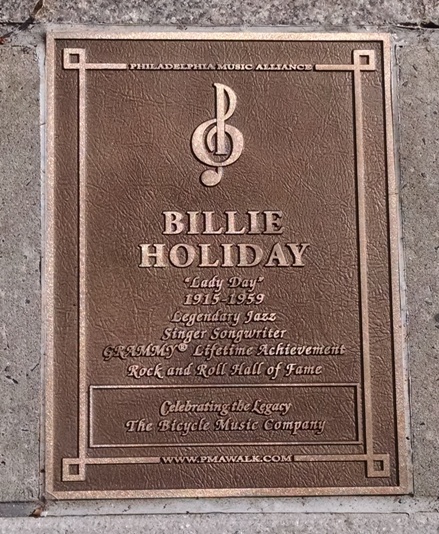
UPDATE: Billie Holiday’s Walk of Fame plaque unveiled. It’s located in front of the Kimmel Center.

Billie Holiday - Walk of Fame Plaque - 10.26.15

John Coltrane and Cultural Heritage Preservation

Jazz legend John Coltrane personified cool.

John Coltrane

Coltrane was into cultural heritage preservation before it was cool. His composition, “Alabama” was in response to the Sept. 15, 1963, bombing of the 16th Street Baptist Church that killed four young girls. His mournful tribute captured the zeitgeist of the Civil Rights Movement.

Philadelphia shaped and nurtured Coltrane. On June 5, 1945, the Dizzy Gillespie Quartet, featuring Charlie Parker, performed at the Academy of Music. Coltrane and Benny Golson were seated in the next-to-last row. In an interview with the Smithsonian Jazz Oral History Project, NEA Jazz Master Golson recalled:

When we heard – John and I – when we first heard Charlie Parker and Dizzy Gillespie – I told you he was sounding like Johnny Hodges – our lives changed that night. We had never heard any music like that. Never. We were screaming like these Beatles groupies, when they used to hear the Beatles.

Coltrane kicked his heroin habit at his home in Strawberry Mansion, a neighborhood in North Central Philly. The Mural Arts Program, in collaboration with the community, honored a former neighbor. On or about Sept. 15, 2014, Pennrose Company demolished the Tribute to John Coltrane mural.

John Coltrane Mural - Resized

Pennrose has not contributed a dime to replace the tribute to an American icon. The cultural resource was paid for, in part, by taxpayers. After being called out, a company rep lied about “ongoing discussions.”

I know they lied because I was part of the only discussion that has taken place. At the March 10, 2015, meeting with Mural Arts, Lopa Kolluri, Pennrose’s Vice President of Operations, asked for a “menu of options.” Mural Arts sent a proposal and several follow-up emails to which Pennrose has yet to respond.

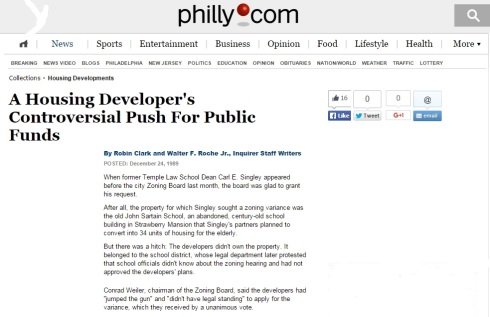
Pennrose’s arrogance is particularly galling given the company has feasted on public subsidies seasoned with political donations for nearly 40 years. In 1989, a Philadelphia Inquirer story noted the company’s reliance on government subsidies.

Pennrose doesn’t think our stories matter, but we do. It’s our responsibility to remember the ancestors and preserve their legacy for present and future generations.

3rd Annual Philadelphia United Jazz Festival

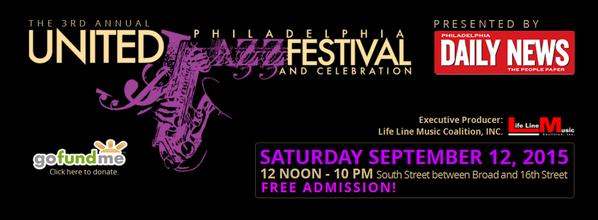
The 3rd Annual Philadelphia United Jazz Festival will be held on Saturday, Sept. 12, 2015, from noon to 10pm. The free festival will be held on South Street, between Broad and 16th streets.

3rd Annual Philadelphia Unified Jazz Festival

The festival features an exciting lineup of talent, including Odean Pope, Sam Reed, Jamaaladeen Tacuma, Warren Oree, Bobby Zankel, Arpeggio Jazz Ensemble, and the U.S. Army Jazz Big Band.

For more information, visit Philadelphia United Jazz Festival.