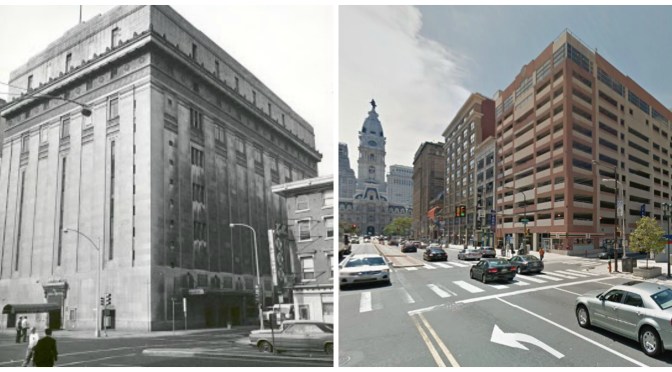
Town Hall

Located in Center City at Broad and Race, the Scottish Rite Temple, also known as Town Hall, was built in 1926. The 1,692 seat auditorium played host to jazz and blues greats, including Count Basie, Lester Young and Jimmy Rushing.
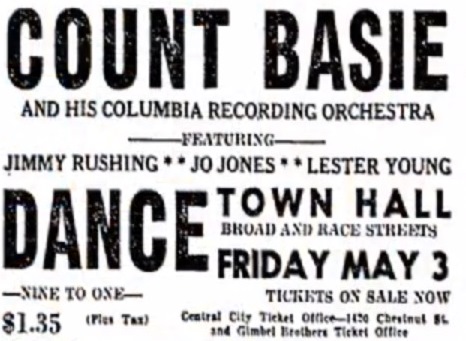
Town Hall - Count Basie - 7.5.15

On Nov. 17, 1955, Ray Charles and his entire band were arrested on drug charges.

Town Hall - Ray Charles

Check out this account from the Ray Charles Video Museum:

Town Hall was divided into two sections; the theater and the cabaret. The Ray Charles show was scheduled for the cabaret. Excited about appearing with a major star like Charles, the Sensations settled into their dressing room and began preparing for the show. All of the sudden, the dressing room door burst open and Ray Charles entered with his entourage including band members David “Fathead” Newman, Jay Dennis, James Sheffield, William Peoples, John Willis, Joseph Bridgewater, Tommy Brown and vocalist Mary Ann Fisher. The Ray Charles band informed the Sensations that this was to be their dressing room and the Sensations must leave. While somewhat in awe of Ray Charles, the Sensations would not back down and give up their dressing room. They were Kae Williams’ group and Kae was producing and MC’ing the show.

If Kae wanted them to have the dressing room, they were staying put! In the middle of the ensuing argument, Kae Williams walked in.

“You don’t understand, I’m Ray Charles!” the famous entertainer proclaimed. Kae Williams had broken into radio a decade before, at a time when blacks were not welcomed in the business. His feisty nature had allowed him to fight back at prejudice and discrimination in the entertainment field. Where weaker men had been driven from radio, Kae had a reputation for not taking crap from anyone. “I don’t care who the @!*# you are!” snapped the fiery dee jay defiantly. “I’m Kae Williams!”

The argument continued for a short while with much shouting. Ray Charles and his band succeeded in getting Kae and his group out of the dressing room and locked the door. Alphonso and the group watched as Kae Williams went to the hallway pay phone and made a call. Shortly thereafter, another commotion ensued. A team of Philadelphia police officers were banging on the door to Ray Charles’ dressing room, looking for drugs. People in the entertainment field knew that members of Ray Charles’ group had at times indulged in the use of illegal substances. But then, drug use was rampant in the business. According to the Philadelphia Tribune, the police found a burnt spoon, a needle and syringe, and a small quantity of marijuana in the dressing room. In addition, Charles and three of the band members were reported to have fresh needle marks in their arms. Ray and his band members were promptly placed under arrest. Fearing a riot, the police consented to allow the show to go on. But through the entire show, the stage was encircled with cops.

After the show, Ray and his entire band were taken downtown and arraigned. Ray Charles made the $2000 bail. The rest were jailed overnight. The Sensations, who had only wine in their possession, were not arrested. Ray Charles, who recalled the incident in his autobiography, Brother Ray, denied the reefer even belonged to his band. The newspapers promptly ran the headlines, “Disc Jockey Had Own Dance Raided For Dope.” After going through a lengthy legal process, the charges were finally dropped. Ray Charles vowed never again to perform in Philadelphia. But Kae Williams further enhanced his reputation that night as a person not to be messed with. And this Kae loved.”

The landmark was demolished in 1983 and replaced with Parkway Corporation’s headquarters and parking garage.
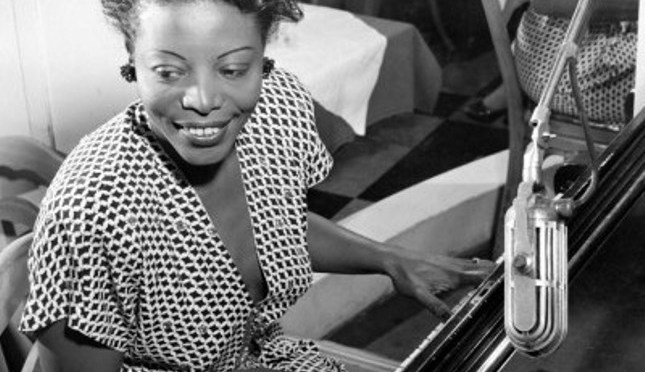
Mary Lou Williams, Jazz Icon

This year marks the 115th anniversary of the birth of Mary Lou Williams. Since 1995, the John F. Kennedy Center for the Performing Arts has paid tribute to the legendary pianist and composer with the Mary Lou Williams Jazz Festival.

Williams is the subject of a new documentary, Mary Lou Williams: The Lady Who Swings the Band. The film premiered on public television on April 1.

Missed it? If you’re in the Philly area, you’re in luck. There will be a screening of the documentary on Tuesday, July 14, at the International House. Hosted by the Scribe Video Center, the screening and conversation with director Carol Bash is co-sponsored by the Leeway Foundation, Philadelphia Jazz Project, Ars Nova Workshop and Reelblack.

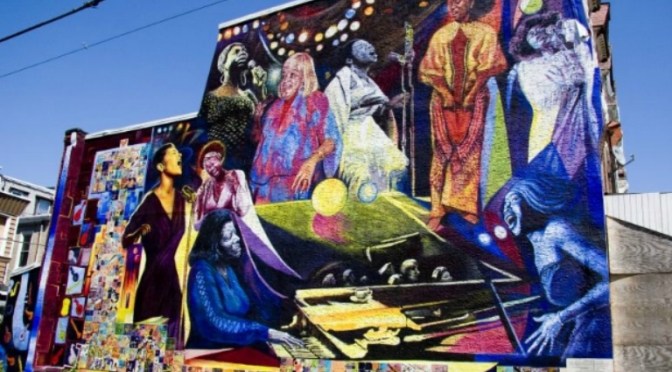
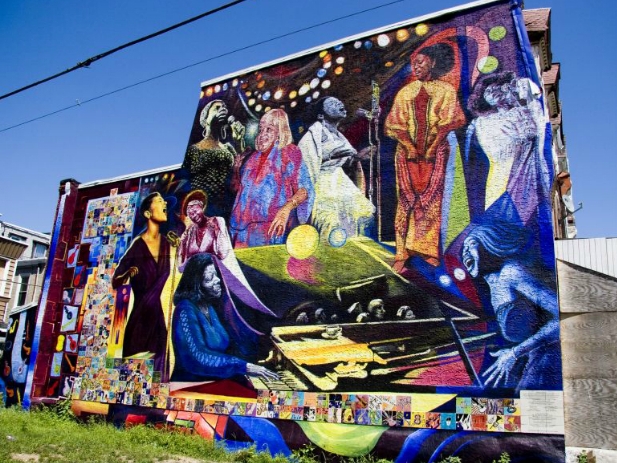
Sadly, luck is running out on the Women of Jazz mural, which depicts jazz icons including Williams, Billie Holiday and Nina Simone. This cultural asset is on the Philadelphia Housing Authority’s chopping block.

Women of Jazz Mural

On June 1, I provided public comment before the Philadelphia City Council Committee on Housing, Neighborhood Development and the Homeless, which is chaired by Councilwoman Jannie Blackwell. I brought to Blackwell’s attention the Philadelphia Housing Authority plans to demolish the mural. I made it clear the goal of increasing the availability of affordable housing and preserving the City’s jazz heritage is not mutually exclusive.

COUNCILWOMAN BLACKWELL: Thank you very much. So you’re saying they’re slated to tear down the mural?
MS. ANDERSON: Yes. The Women of Jazz mural at 3200 [block] of Arlington. It will be torn down sometime this year. The date to be determined.
COUNCILWOMAN BLACKWELL: All right. I’m happy to work on that.

The complete transcript is available here. Clap along if you’re happy.

We Remember Clifford Brown

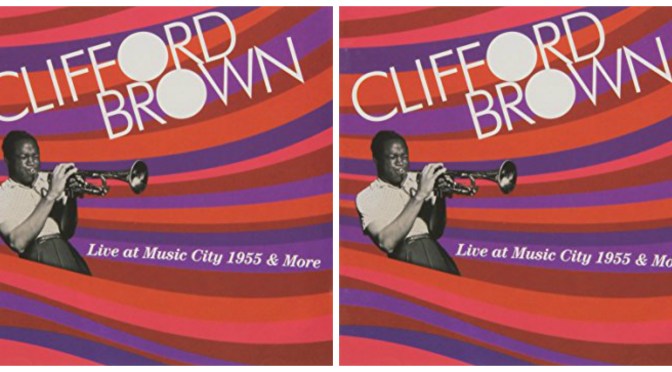
Trumpeter Clifford Brown was only 25 when he died in a car crash in 1956. His last performance was at Philadelphia’s famed Music City.

Although his life was cut short, Brown left an indelible impact. There are 334 versions of Philly native and NEA Jazz Master Benny Golson’s composition, “I Remember Clifford.”

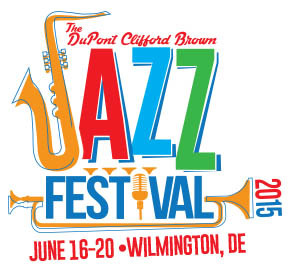
Since 1988, his hometown of Wilmington, Delaware, has held the Clifford Brown Jazz Festival to honor his memory. Fittingly, it’s the largest free jazz festival on the East Coast. This year’s lineup includes Norman Conners, Leela James and Pieces of a Dream.

clifford-brown-jazz-festival-2015
For the complete schedule, visit www.cliffordbrownjazzfest.org.

Music City

In 1947, drummer Ellis Tollin and his business partner William E. Welsh opened Music City, an instrument store located on the second floor of the Wurlitzer Building.

Tollin transformed the third floor into a 250-seat performance space, Music City Swing Club, where top jazz musicians, including Charlie Parker, Dizzy Gillespie, Miles Davis, Art Blakey and Buddy Rich held jam sessions and mentored young musicians like Bobby Timmons, Archie Shepp and Lee Morgan (circled).

Trumpeter Ted Curson recalled:

It was like the scene in Philadelphia for young cats and old cats. They would bring guys in from New York to play and they would have the young guys sit in with them. If you played pretty good you always ended up with some kind of gig.

Jazz legend Clifford Brown gave his last performance at Music City. He left directly from here for a gig in Chicago. He never made it. He was killed in a car accident on the Pennsylvania Turnpike on June 26, 1956.

In a piece for Hidden City Philadelphia, archivist and Philadelphia music historian Jack McCarthy wrote:

On Tuesday evenings in the mid 1950s, young jazz enthusiasts from all over the city would gather inside the popular music store, Music City, at what is now 1033 Chestnut Street. Some came to jam, while others sat back and listened to intimate performances by major players of the era. It was an especially fertile period in Philly jazz when the city hummed with lively clubs and was home to many of the genre’s important instrumentalists. For aspiring teenage musicians who were too young to get into the clubs, Music City was a place to trade notes with fellow young players and even to play with their musical heroes if they were lucky. Many emerging Philly jazz performers of the 1950s cut their teeth there.

[…]

[Clifford] Brown had established himself as one of the top trumpeters in jazz by the mid1950s. He was living in Philadelphia during this period and was a frequent, featured guest at Music City. As the original story went, Brown performed at the store on the evening of June 26, 1956, accompanied by Ellis Tollin on drums and several other Philly musicians, and left directly from there to drive to a gig in Chicago. With him on the trip were the pianist Richie Powell and his wife, Nancy, who did the driving. On the Pennsylvania Turnpike between Harrisburg and Pittsburgh, the car ran off the road and crashed, killing all three.

Read more

Is Jazz Black Music?

On June 7, 1979, President Jimmy Carter recognized June as Black Music Month. A resolution recognizing the importance of African American music was introduced by Congressman Chaka Fattah in 2000. Passed unanimously by the House of Representatives, House Resolution 509 proclaimed:

Whereas African-American genres of music such as gospel, blues, jazz, rhythm and blues, rap, and hip-hop have their roots in the African-American experience.

Incredibly, some question whether jazz is black music. That was the subject of a panel discussion at Lincoln Center a few years ago. Jazz critic Nat Hentoff wrote:

We wouldn’t have been at Lincoln Center for that discussion had it not been for black field hollers, ring games, call and response church music and the blues. So it’s indisputable that jazz began as black music.

That 2008 discussion wasn’t the first time the roots of jazz were questioned. A 1959 documentary, Cry of Jazz sparked controversy when one of the characters asserted that “jazz is merely the Negro’s cry of joy and suffering.” The character, Alex, explained that “the Negro was the only one with the necessary musical and human history to create jazz.”

Cry of Jazz - Alex

In 2010, Cry of Jazz was added to the National Film Registry of the Library of Congress. The films selected are considered “culturally, historically or aesthetically significant, to be preserved for all time. These films are not selected as the ‘best’ American films of all time, but rather as works of enduring significance to American culture.”

Black culture matters.

Why Public Art Matters

June is Black Music Month. First observed in 1979 at the White House, I’m kicking off the celebration at City Hall where I will offer public comments at a hearing on the Philadelphia Housing Trust Fund. Some background.

Last year, Pennrose Company demolished the John Coltrane mural in Strawberry Mansion. Pennrose has been feeding at the public trough of government subsidies for decades. But in an instant, the company erased a tribute to an American cultural icon.

John Coltrane Collage

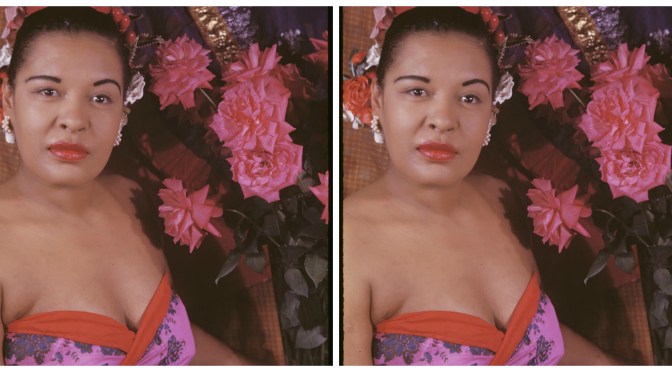
While the nation celebrates the centennial of the birth of Billie Holiday and  Mary Lou Williams, the Philadelphia Housing Authority plans to demolish the Women of Jazz mural.

Women of Jazz Mural

Now, you might be wondering what is the connection between murals and affordable housing? Kelvin Jeremiah, President and CEO of PHA, said it best in his remarks before the City Council Committee on Housing, Neighborhood Development and The Homeless on April 27:

It is my view that the affordable housing crisis that confronts this great city is also an issue of deep-seated structural poverty. … Solving the poverty problem will go a long way to solve the affordable housing crisis.

Philadelphia is the poorest big city in the nation. A whopping 40 percent of school-aged children live in poverty. There is a correlation between education and poverty. If the educational achievement of poor children is increased, fewer will end up on PHA’s 10-year waiting list for public housing.

A growing body of evidence shows that students with access to arts education perform better on standardized tests. In addition to improved student achievement, arts education contributes to the development of cognitive and social skills, nurtures a motivation to learn, increases student attendance and fosters a positive school environment. At-risk students cite their participation in the arts as a reason for staying in school.

Students involved in arts instruction report less boredom in school. Ask students why they dropped out of school, they will say they were bored.

The School District of Philadelphia has drastically cut arts and music programs; 25 percent of schools offer no music instruction. In the absence of arts education, murals may be poor students’ only exposure to the arts.

At the opening of the new Whitney Museum, First Lady Michelle Obama said the arts “could inspire a young person to rise above the circumstances of their life and reach for something better.”

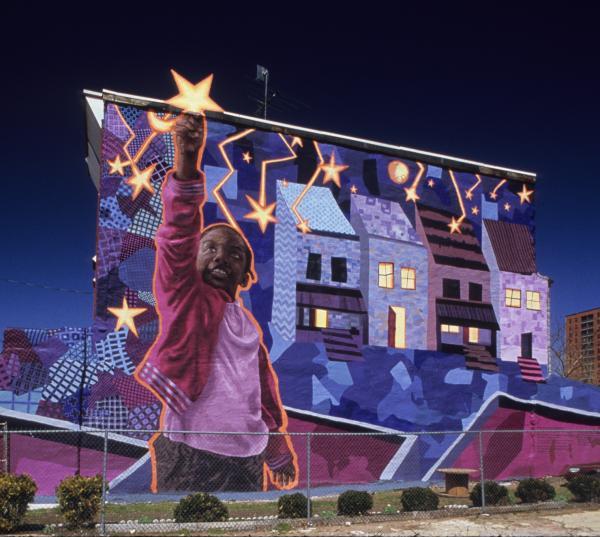
Community-based public art inspires young people to reach for their star.

Reach for Your Star

To be clear, it’s not about preserving brick-and-mortar. Instead, it’s about the transformative power of the arts to engage, motivate and keep students in schools.

It’s also not about money. Through digital and mobile technology, a mural can be recreated at a fraction of its original cost. Indeed, the cost of preserving this great city’s cultural heritage would be far less than, say, Pennrose’s hundreds of thousands of dollars in political contributions.

Billie Holiday Will Be Inducted into Walk of Fame

It’s been 100 years in the making, but Billie Holiday is finally getting a plaque on the Walk of Fame. The announcement was made by the Philadelphia Music Alliance earlier this week.

The induction ceremony will be held on October 26. For updates, follow @PhillyJazzApp on Twitter. Billie loved her man and we love Billie.


The 2nd Fret

Owned and operated by Manny Rubin in the 1960s, the 2nd Fret was located in the heart of the Rittenhouse Square coffeehouse scene. The building is still there.

2nd Fret - Arrow v1

What happened behind the then-red door was magical. Jamil Overton knows. He was there and used to perform at the folk club:

There were poets and folk singers. It was the spot. Jazz was the center of everything that happened there. It was a transition from beatniks to hippies.

Philly’s premier folk club, the 2nd Fret played host to folk singers and jazz artists who went on to greatness. Musicians like Arlo Guthrie, Norman Connors, Alfie Pollit, Brownie McGhee & Sonny Terry, and Richie Havens. A former habitué said artists returned to the small club over and over because they wanted to make sure it survived.

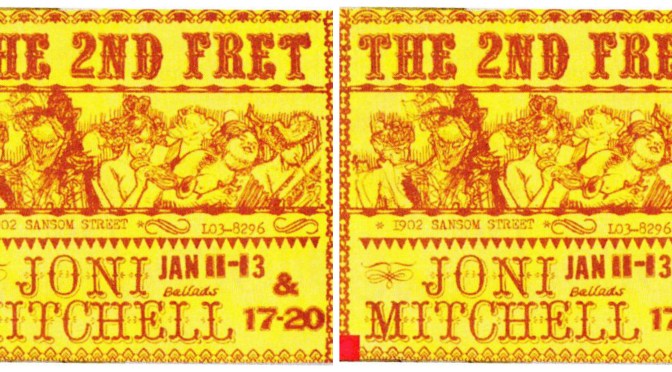
Joni Mitchell performed there many times, recording live at the 2nd Fret in 1967. Joni’s legacy includes collaborations with Herbie Hancock and Weather Report whose members included Philly natives Alphonso Johnson and Victor Bailey. This month she will be presented the SFJAZZ Lifetime Achievement Award by Wayne Shorter:

Ms. Mitchell’s extensive collaborations with jazz artists are a hallmark of her far ranging vision and iconic sensibilities. In the final project before his death, bassist Charles Mingus wrote six pieces for Joni Mitchell. Those compositions featuring lyrics by Ms. Mitchell are captured on the 1979 classic Mingus featuring jazz legends Wayne Shorter and Herbie Hancock (both previous recipients of the SFJAZZ Lifetime Achievement Award). Her work with other groundbreaking artists including Jaco Pastorius, Tom Scott, Tony Williams, Pat Metheny, and Michael Brecker has led to a legacy that transcends pop and jazz music.

2nd Fret - Thank You Joni Mitchell

Joni is recovering from an undisclosed medical condition. For updates, follow #ThankYouJoni on Twitter.