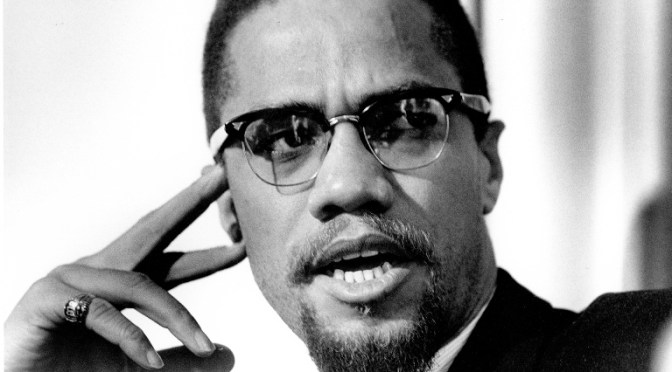
Malcolm X and Historic Preservation

Before his awakening, Malcolm X was known as “Detroit Red,” a fixture on the jazz scene in Harlem. In 1948 while incarcerated in the Norfolk State Colony in Massachusetts, Malcolm joined the Nation of Islam. In 1954, Elijah Muhammad sent him to Philadelphia to expand Temple No. 12.

Until recently, there was confusion about where Malcolm X resided during his time in Philadelphia. Eyewitness and videotaped firsthand accounts have confirmed his address in Sharswood. So All That Philly Jazz is sponsoring the nomination of 2503 W. Oxford Street for listing in the Philadelphia Register of Historic Places.

In a Q&A with Hidden City Philadelphia’s Mike Bixler, All That Philly Jazz Director Faye Anderson talks about Malcolm X, jazz and historic preservation:

Michael Bixler: The FBI files from 1954 have Malcolm X at living at 1522 N. 26th Street, but you have discovered otherwise. How did you confirm that 2503 Oxford Street was his correct address?

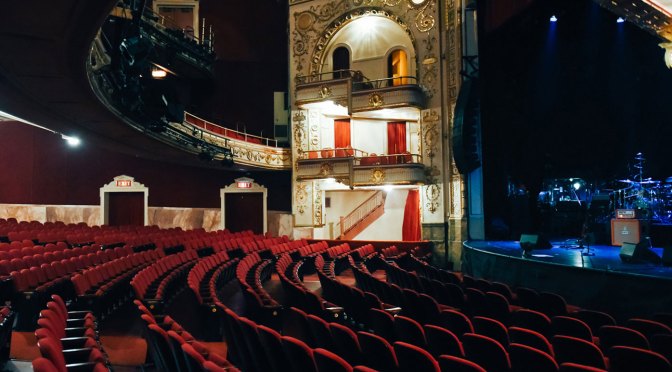
Faye Anderson: On January 16, the Pennsylvania Legislative Black Caucus held a screening of civil rights documentaries at the Pearl Theater. One of the films screened was “Seeds of Awakening: The Early Nation of Islam in Philadelphia,” which included first-hand accounts of Malcolm X’s time in the city. In the film Brother Richard Hassan recalled:

We would sit up all night. When Malcolm was here, we’d sit up all night talking. We had a Unity House, a Fruit House, on 2503 Oxford Street. A big house. That’s where Malcolm would stay and all the brothers would come.

The documentary was produced by the New Africa Center, part of the Scribe Video Center’s Muslim Voices of Philadelphia community history project. I have since spoken with Abdul Rahim Muhammad, executive director of the New Africa Center, who confirmed the address with Brother Hassan. While Hassan no longer lives in the Philadelphia area, I have his phone number so I will be able to get an affidavit from him if necessary. I also have contact information for Malcolm’s former press secretary and photographer.

MB: What are the next steps to getting an historical marker placed?

FA: Architectural historian Oscar Beisert and I are preparing the form to nominate 2503 W. Oxford Street for historic designation by the Philadelphia Historical Commission and the Pennsylvania Historical and Museum Commission. We will submit the nomination on or about February 21, 2016, the 51st anniversary of the assassination of El-Hajj Malik Shabazz [Malcolm X].

MB: Why is it important to you to have an historical marker placed there?

FA: The historical marker is important because 2503 W. Oxford Street is a place where history happened. Malcolm X lived there for about six months in 1954. To be clear, the house does not meet architectural standards for historic properties. Instead, the building has significance in the cultural characteristics of Philadelphia and is associated with a person significant in the past. The building also exemplifies the political, social and cultural heritage of the African American community. What happened at 2503 W. Oxford Street laid the foundation for what is now one of the largest populations of African-American Muslims in the country.

The historical marker will tell a more complete story about the Sharswood neighborhood. Sharswood is about more than concentrated poverty and race riots. It’s a community that provided safe havens from the indignities of segregation. Jazz giants roamed Ridge Avenue and iconic leaders like Malcolm X and Charles W. Bowser resided there.

READ MORE

Barney Gordon’s Saloon

Barney Gordon’s was located in South Philly. In her autobiography, Philadelphia Walk of Famer Ethel Waters wrote:

Barney hired me, and after I’d sung two nights at his place he offered me a steady job at fifteen dollars a week. I sang there six nights a week and on Thursday afternoons. Servant girls and houseworkers had that afternoon off, and they’d come to Barney Gordon’s to drink and relax. We called them “the Thursday girls.”

[…]

Barney Gordon’s saloon was on the ground floor. We entertained, though, in a big room upstairs where the customers sat at tables. There was only a two-piece band. Toots Moore, the drummer, and a piano player who could play only in two keys.

Ethel Waters’ autobiography, His Eye is on the Sparrow, is available at Amazon.com.

Little Rathskeller

Kaliner’s Little Rathskeller was popular in the 1940s. The Ink Spots were a club favorite.

In 1993, former press agent Sam Bushman recalled:

The Ink Spots were just starting. Their record “If I Didn’t Care” made them superstars overnight. But they were committed to come back to the Rathskeller several times more at their old price.

Little Rathskeller was located at the corner of Broad and Spruce.

Black History Month 2016

Here at All That Philly Jazz, we celebrate black history 365. Outside the African American community, black history is recognized, if at all, in February, the shortest month.

For the first time, the New York Times is sharing unpublished photos from its archives:

Hundreds of stunning images from black history, drawn from old negatives, have long been buried in the musty envelopes and crowded bins of the New York Times archives.

None of them were published by The Times until now.

Were the photos — or the people in them — not deemed newsworthy enough? Did the images not arrive in time for publication? Were they pushed aside by words here at an institution long known as the Gray Lady?

[…]

Photographers for The Times captured all of these scenes, but then the pictures and negatives were filed in our archives, where they sat for decades.

This month, we present a robust selection for the very first time.

Every day during Black History Month, we will publish at least one of these photographs online, illuminating stories that were never told in our pages and others that have been mostly forgotten.

It’s better late than never.

For more information, visit Unpublished Black History.

Pep’s Musical Bar

Pep Restaurant opened in the 1930s. Pep’s Musical Bar opened in 1951 under the ownership of William “Bill” Gerson. Jack Goldenberg purchased Pep’s in 1957.

Pep’s was one of Philadelphia’s most celebrated jazz clubs. Goldenberg brought in national jazz, blues, R&B and soul greats, including Jimmy Rushing, Quincy Jones, Dinah Washington and Yusef Lateef.

Pep's Collage
Pep's - Yuseef Lateef

Philly favorite John Coltrane frequently performed at Pep’s, including on September 18, 1964.

G. Bruce Boyer, a journalist and former editor for Town & Country, shared the night he saw Nina Simone at the club:

I remember seeing the great pianist-chanteuse Nina Simone at Pep’s Showbar at the corner of Broad and South Streets in South Philly in the early 60s. At that point the club had already been one of the great East Coast haunts for jazz performers and aficionados for two decades or more. Nat King Cole had played there, and so had Count Basie and Duke Ellington, Lester Young and Billie Holiday, Dinah Washington, Nancy Wilson, Thelonious Monk, and Jimmy Smith. Going to Pep’s was a jazz pilgrimage.

[…]

She was an incomparable artist and played much of that wonderful mix of music at her Pep’s engagement. Starting off with an extended version of the great blues “Trouble in Mind”, followed by a stirring, elegiac jazz/classical version of “You’d be so Nice to Come Home to.” Then some Ellington and more blues. The audience knew it would all lead up to “Porgy” for a grand finale.

About a half hour or so into the show she had gently just begun to swing into “My Baby Just Cares for Me”, when she suddenly stopped playing. Just stopped, her high-coiffed head bent over the keys and the sidemen trailing off. The place got quieter and quieter ’til you couldn’t even hear an ice cube clink in a glass; there was complete silence … except for two thugs at a table in the corner who had been talking. Another 30 seconds in that vacuum and they looked up too, and found Miss Simone glaring straight at them.

Read more

Strand Ballroom

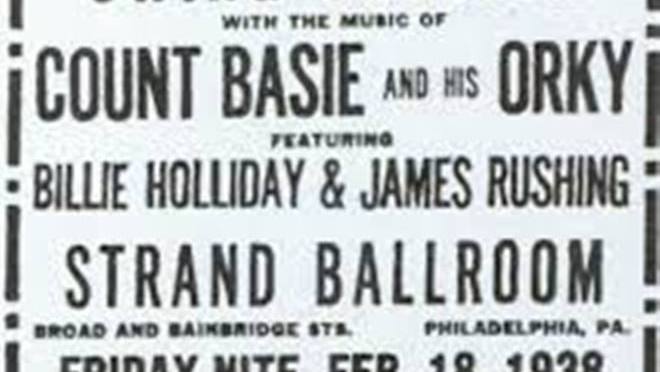
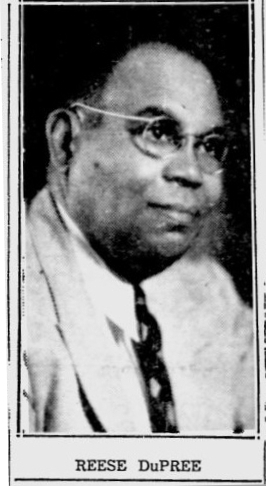
Located at Broad and Bainbridge Streets, the Strand Ballroom was managed by legendary dance promoter Reese DuPree in the 1930s and ‘40s.

Created with GIMP

In 1938, Bill Doggett and his orchestra played here every Tuesday to Saturday.

The Mark of Jazz

From the Broadcast Pioneers of Philadelphia:

From 1965 to 1975, Broadcast Pioneers member Sid Mark hosted a widely acclaimed television show, first carried by Philadelphia’s Channel 17, WPHL-TV and then later aired by WHYY-TV, Channel 12. “The Mark of Jazz” was THE broadcast of that era for jazz.

In an interview with All About Jazz, Sid Mark talked about Nina Simone:

SM: And one of the people I was actually responsible for when it came to her success was Nina Simone.

AAJ: I know that Nina spent some time in Philadelphia.

SM: She started her career in Philadelphia. In her autobiography, she said the reason for her success was a white Jewish disc jockey, Sid Mark. She said, “If I knew him today, I don’t know if I’d kiss him or smack him in the mouth!” (laughter.) That’s a quote. We had a hell of a relationship! By the way, did the tribute concert by her daughter ever take place?

AAJ: It was performed at Town Hall last year. From what I understand, it was extremely successful.

SM: I love that picture of the two of them together.

AAJ: She’s been very active in promoting Nina’s legacy.

SM: Nina was something else. We had hours of discussions on the numerous radio and TV shows we did together. When I discovered her, she was just playing piano at a little joint in Philly at 22nd and Chestnut. It was a bar, and she wasn’t singing, just playing the piano.

READ MORE

Elate Ballroom

The Elate Ballroom was located on the second floor of 711 S. Broad Street. The Elate Club Ballroom was on the ground floor.

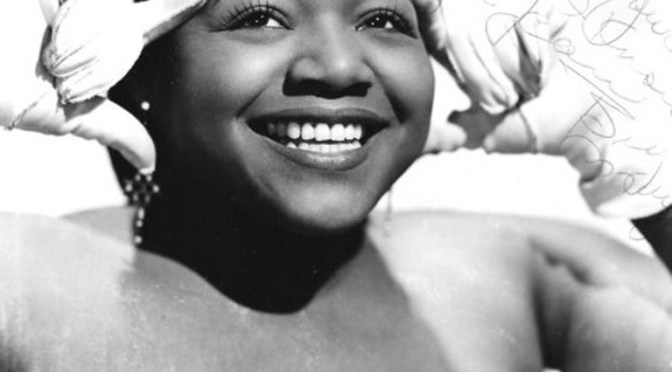
Joe Webb and his Decca Recording Orchestra featuring Big Maybelle played here at the “Shine on the Harvest Moon Dance” presented by legendary dance promoter Reese DuPree.

Elate Ballroom - Reese DuPree v2

John Coltrane biographer Lewis Porter wrote:

Coltrane was hired when [Joe] Webb played for dancers in Philadelphia’s Elate Ballroom at 711 South Broad Street on Friday, September 13, 1946. Cal Massey (1928-72), a trumpeter from Pittsburgh, called “Folks” after his mother’s maiden name, happened to walk by when the band was playing and he ended up in the trumpet’s section. A lifelong friendship between Massey and Coltrane began as the two toured the country with the Webb band.

Porter, Lewis. John Coltrane: His Life and Music. Michigan: The University of Michigan Press, 1998.