Ridge Avenue Stroll through Philly’s Jazz History

All That Philly Jazz Director Faye Anderson leads a walking tour, “Ridge Avenue Stroll through Philly’s Jazz History.”

Ridge Avenue Stroll Cover

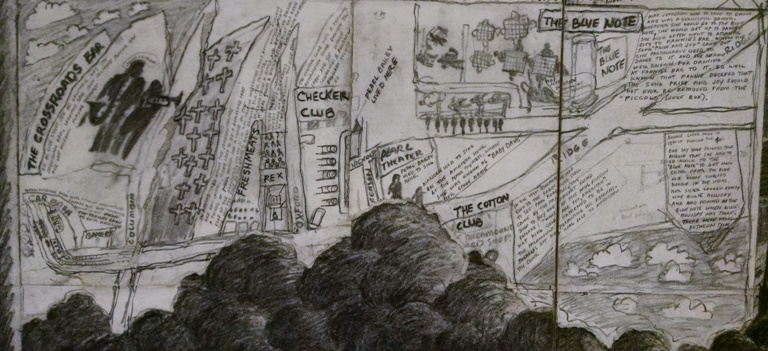
In the wake of the Great Migration, the demographics of North Philadelphia’s Sharswood neighborhood changed. The new residents fueled the growth of commercial establishments along Ridge Avenue that catered to African Americans. From the Blue Note (15th Street) to the Crossroads Bar (23rd Street), Ridge Avenue was a jazz corridor and entertainment district.

Ridge Avenue Entertainment District - Satellite

Ridge Avenue was also a safe haven from the indignities of racial discrimination. African American entertainers performed in Center City at places such as the Earle Theater and Ciro’s, but they were not allowed to stay in downtown hotels. The Negro Motorist Green Book helped black travelers navigate Jim Crow laws in the South and racial segregation in the North.

Published from 1936 to 1966, the “Green Book” listed hotels, restaurants, night clubs, beauty parlors and other services that enabled African Americans to “vacation without aggravation.”

Green Book - NMAAHC

Our stroll will begin at the legendary Blue Note. We walk around the corner and stop at the Nite Cap. We then head north up Ridge Avenue, stopping at the Bird Cage Lounge and Don-El Records.
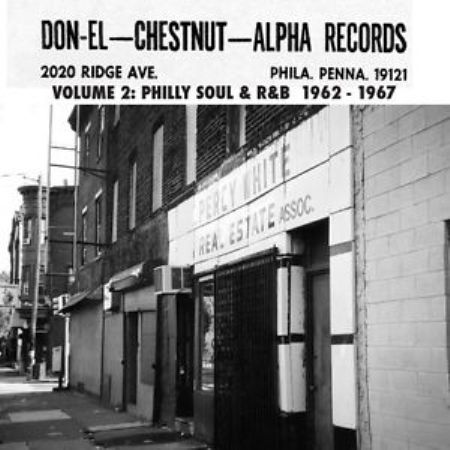
Don-El Records - 2020 Ridge Avenue

Moving along, we check out the Hotel LaSalle which was listed in the “Green Book” and advertised in the NAACP’s Crisis magazine.

Hotel LasSalle Collage - 4.30.17

We then stop by V-Tone Records, the LaSalle Beauty Parlor and Butler’s Paradise Café (listed in the “Green Book”).

Next stops: Ridge Cotton Club (listed in the “Green Book”) and the Pearl Theatre.
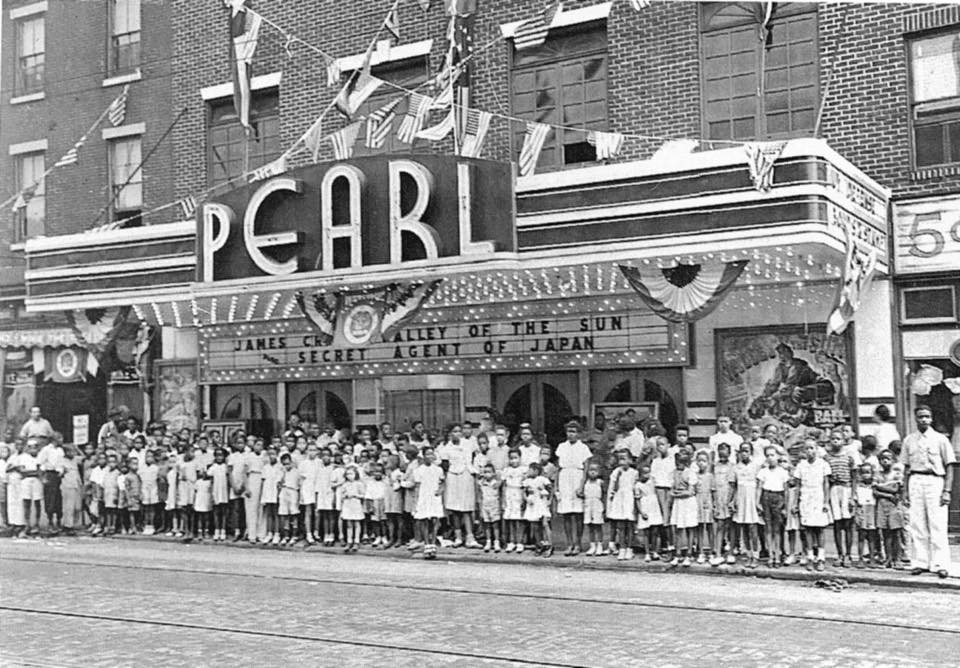
Pearl Theater

The highlight of the walk is the Checker Café, one of the last vestiges of the Ridge Avenue entertainment district.

2125 Ridge Avenue - 2007

We end our stroll at Mr. Chip’s Bar and Irene’s Café (listed in the “Green Book”).

Mr. Chip's Bar - Irene's Cafe Collage

We will walk the streets where future jazz legends such as Pearl Bailey, Clifford Brown, Cab Calloway, John Coltrane, Miles Davis, Duke Ellington, Dizzy Gillespie, Billie Holiday, Philly Joe Jones, Lee Morgan, Charlie Parker and Nancy Wilson once roamed. For more information, contact Faye at greenbookphl@gmail.com.

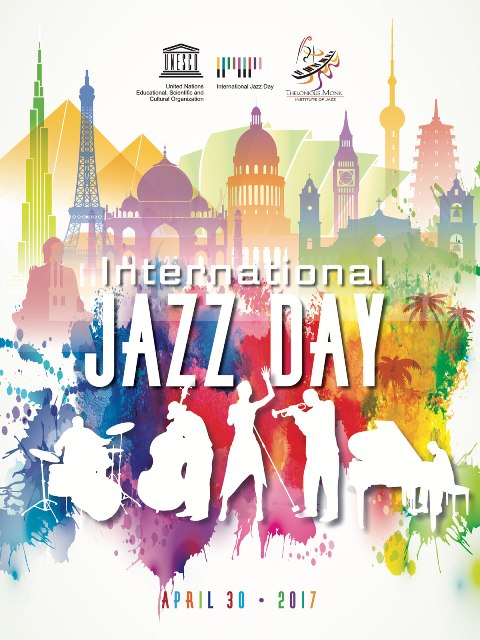
International Jazz Day 2017

In November 2011, the United Nations Educational, Scientific and Cultural Organization (UNESCO) designated April 30 as International Jazz Day “in order to highlight jazz and its diplomatic role of uniting people in all corners of the globe”:

International Jazz Day brings together communities, schools, artists, historians, academics and jazz enthusiasts all over the world to celebrate and learn about jazz and its roots, future and impact; raise awareness of the need for intercultural dialogue and mutual understanding; and reinforce international cooperation and communication. Every year on April 30, this international art form is recognized for fostering gender equality and for promoting individual expression, peace, dialogue among cultures, diversity, respect for human dignity, and the eradication of discrimination.

International Jazz Day 2017 - Resized

The first International Jazz Day was observed in 2012 at the United Nations General Assembly Hall in New York. Last year, President Barack Obama and First Lady Michelle Obama hosted the celebration. Havana, Cuba is the International Jazz Day 2017 Global Host City. The All-Star Global Concert will be held in the historic Gran Teatro de la Habana Alicia Alonso, the oldest theater in Latin America.

International Jazz Day 2017 - Havana Venue

Herbie Hancock and Chucho Valdés are the artistic directors for the All-Star Global Concert which will feature more than two dozen renowned artists representing 14 countries. Artists from the United States will include Regina Carter, Kenny Garrett, Quincy Jones, Marcus Miller, Esperanza Spalding and Cassandra Wilson. The complete lineup is available here.

For information about the International Jazz Day 2017 live stream, visit www.jazzday.com.

To find an International Jazz Day event near you, go here.

#NEAJazz17 Recap

The 2017 Jazz Masters are in the history book. With threats to its funding, will the National Endowment for the Arts itself be history? First, a recap of #NEAJazz17.

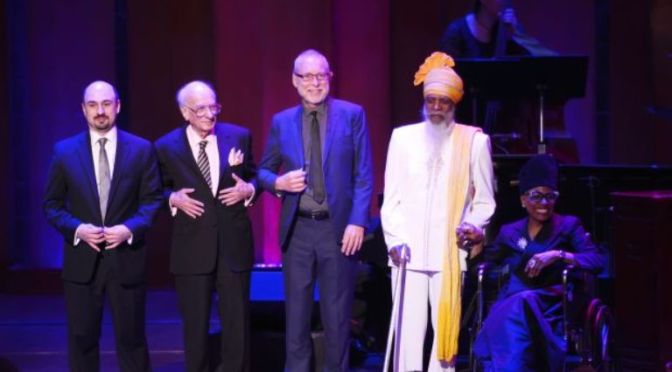
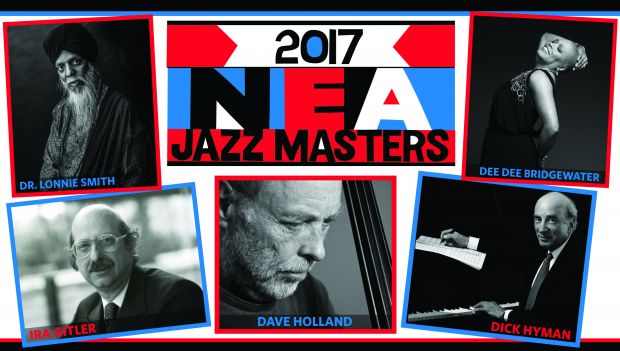
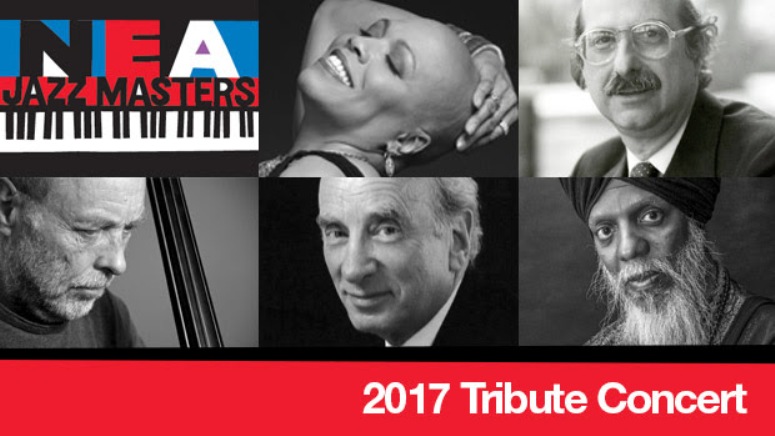
The NEA conferred the NEA Jazz Master award, the nation’s highest honor in jazz, on Dee Dee Bridgewater, Ira Gitler, Dave Holland, Dick Hyman and Dr. Lonnie Smith.

NEA Jazz Masters - Resize
2017 NEA Jazz Masters Dave Holland, Dick Hyman, Dee Dee Bridgewater, and Dr. Lonnie Smith (not pictured: Ira Gitler) at the 2017 NEA Jazz Masters Awards Dinner, sponsored by BMI, on April 2, 2017. Photo by Yassine El Mansouri

The celebration kicked off with the NEA Jazz Masters Listening Party at NPR, moderated by Jason Moran. The Jazz Masters and Fitz Gitler (representing his father) were joined in conversation by musicians whose lives they have influenced. They generously – and humorously – shared stories about their musical journey.

NPR Listening Party Collage

On April 3, the NEA held a tribute concert in the Jazz Masters’ honor at the John F. Kennedy Center for the Performing Arts.

While joy filled the air, there are some discordant notes. If the NEA is defunded, the Class of 2017 may be the last Jazz Masters. The New York Times reported:

President Trump’s budget proposal last month called for eliminating the endowment entirely — the first time any president has proposed such a step. While some members of Congress in his own Republican Party have opposed the move, it is a reminder of the agency’s vulnerability.

[…]

Created in 1965, the endowment provides funding to arts organizations, including jazz projects that are supported with dozens of grants each year. It also sends nearly half of its funding budget to regional arts organizations that disperse funds themselves.

The NEA can’t advocate for its own survival. So, as jazz and film critic Gary Giddins noted, it’s “jazz advocacy of the hip, by the hip and for the hip shall not perish from the Earth.”

Truth is, NEA is about more than jazz.

#SavetheNEA

The arts matter. Art transforms lives and communities. The arts are also an economic driver. So let’s make some noise. Here’s what you can do in two minutes to help #SavetheNEA.

The Checker Café opened in 1934. Located at 2125 Ridge Avenue, it was in the heart of the Ridge Avenue Entertainment District.

Ridge Avenue Cultural District

The Checker Café was a place to see and be seen. On May 23, 1935, Philadelphia Tribune columnist, “the Negro Councilman,” wrote:

When the show has nearly ended you will then see no other than our own sepia Gloria Swanson, who is direct from the Grand Terrace in Chicago and then you can tell the world that you have seen a real show.

As with many jazz venues, the Checker Café was about “intersectionality” before it became a thing. The “sepia Gloria Swanson” was a female impersonator.

In the 1980s under new ownership, the nightspot was renamed the Checker Club.

2125 Ridge Avenue - Checker Club Sign

Trumpeter Cullen Knight is the recipient of the 2015 Philadelphia Clef Club of Jazz and Performing Arts “Living Legend” Award. Knight shared some memories with Philadelphia Inquirer architecture critic Inga Saffron:

It’s a bit ironic that the Checker is the only one of those Ridge Avenue joints to survive. It wasn’t the biggest or best known of the venues that lined the avenue during North Philadelphia’s jazz heyday in the mid-20th century. That distinction was probably held by the Pearl Theater on the next block, where Bailey and her sister Jura worked as ushers, and brother Bill tended the candy counter.

Trumpeter Cullen Knight, who grew up a block away, says the Checker was where musicians hung out before and after the shows, partly because the food and the house trio were equally reliable. Its motto was “Good Food. Good Cooks. Good Service.” Among those providing service was Pearl Bailey, who did a stint as a singing waitress and is now immortalized by a mural on the building’s south side. In the ’30s, a gay singer known as the “Sepia Gloria Swanson” was also a regular.

While some clubs, like Ridge Cotton Club and Blue Note, took their inspiration from famous Harlem venues, the Checker got its name from the black-and-white pattern painted on the ground floor. Its horseshoe-shaped bar had just enough space in its curve for a small band. Tables occupied the rest of the room.

Read more

2017 NEA Jazz Masters

Since 1982, the National Endowment for the Arts has conferred the NEA Jazz Master award, the nation’s highest honor in jazz. The 2017 NEA Jazz Masters are Dee Dee Bridgewater, Ira Gitler, Dave Holland, Dick Hyman and  Dr. Lonnie Smith.

2017 NEA Jazz Masters

In collaboration with the John F. Kennedy Center for the Performing Arts, the NEA will celebrate the 2017 NEA Jazz Masters at a tribute concert on Monday, April 3. The event will be live-streamed beginning at 7:30 p.m. ET at arts.gov and Kennedy-Center.org. The concert will be broadcast live on SiriusXM Channel 67, Real Jazz.

2017 NEA Jazz Masters Tribute Concert

On April 3, 2017, the John F. Kennedy Center for the Performing Arts and the National Endowment for the Arts will celebrate the 2017 NEA Jazz MastersDee Dee Bridgewater, Ira Gitler, Dave Holland, Dick Hyman and  Dr. Lonnie Smith.

NEA Jazz Masters Tribute Concert

The celebration will be moderated by Kennedy Center Artistic Director for Jazz Jason Moran, who said in a statement:

This will be another special celebration for people who have been integral to the ever evolving stage of jazz. From the journalist, to the innovator, each of the honorees has demonstrated a timeless devotion to jazz ethics. Each honoree arrives at the music from a different avenue and helps focus the audience’s vision of as the music continues to evolve. Kudos to the NEA for continuing to honor artists who have devoted their livelihoods to contributing to the cultural fabric of America.

The tribute concert will feature conversations with the 2017 NEA Jazz Masters alongside musicians whose lives they have influenced. The performers will include NEA Jazz Masters Paquito D’Rivera and Lee Konitz; National Medal of Arts recipient and Kennedy Center Honoree Jessye Norman; vocalist Dianne Reeves; multi-instrumentalist Booker T. Jones; Sherrie Maricle and the Diva Jazz Orchestra; and Hammond B-3 artist Matthew Whitaker, a 15-year-old protégé of Dr. Lonnie Smith.

The free concert is “sold out.” You can view a live-stream of the event beginning at 7:30 p.m. ET at arts.gov, Kennedy-Center.org and NPR.org/Music. The concert will be broadcast live on SiriusXM Channel 67, Real Jazz.

Jazz Appreciation Month 2017

Founded by the National Museum of American History in 2002, April is Jazz Appreciation Month.

JAM Collage

The Smithsonian kicks off its celebration with a loving tribute to Ella Fitzgerald, the “First Lady of Song.”

The First Lady of Song - Ella Fitzgerald at 100

To find new ways to celebrate Jazz Appreciation Month, visit Smithsonian Jazz.

Philly Celebrates Jazz

April is Jazz Appreciation Month. The destruction of the Royal Theater, and John Coltrane and Women of Jazz murals gives one reason to believe otherwise, but Philly celebrates jazz.

Philly-Celebrates-Jazz

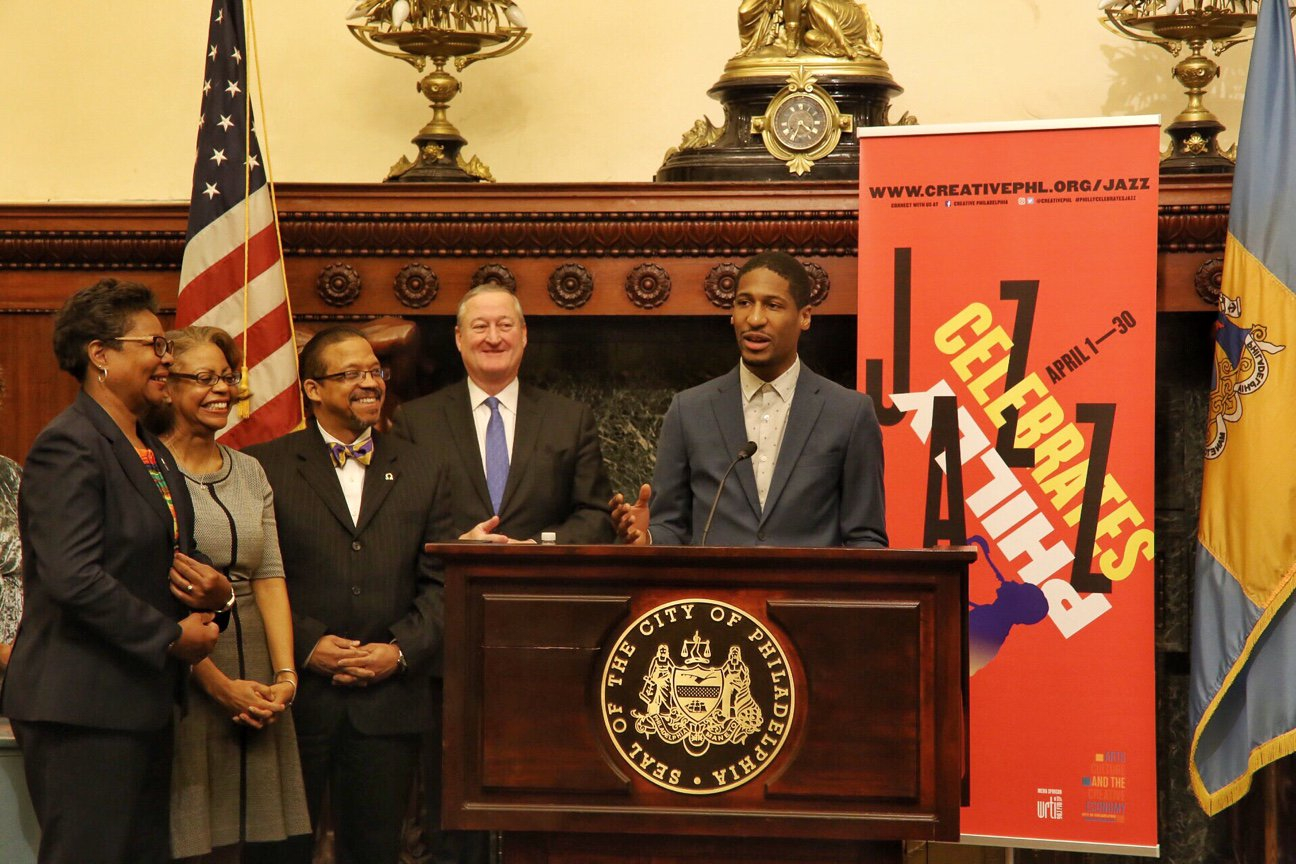
Mayor Jim Kenney kicked off the celebration by presenting the Benny Golson Award to multi-instrumentalist and “Late Show with Stephen Colbert” bandleader Jon Batiste.

Philly Loves Jazz - Jon Baptiste

Kenney said:

I am honored to present the first Benny Golson Award to Jon Batiste, who exemplifies what can be accomplished in using your talents in educating our youth in the importance of the arts and culture. As I have said many times, arts education is not a luxury, it is a necessity and one of the most effective ways of helping our children grow and develop into not only more creative, but also open-minded and compassionate people.

The Office of Arts, Culture and the Creative Economy organizes the month-long Philly Celebrates Jazz. Over 200 events are scheduled, including a photo exhibition, “Live Philly Jazz Vol. 2.

The WRTI Jazz Listening Sessions will be hosted by Jeff Duperon. The hour-long conversations will be held before a live audience in the Art Gallery @ City Hall. The listening sessions are free but space is limited. Seating is first come, first serve and you must register.

Over the course of Philadelphia’s jazz heyday, roughly 1940s to 1960s, there were jazz spots from the Aqua Lounge to Zanzibar Blue.

All That Philly Jazz - Aqua Lounge to Zanzibar Blue

The “Philly Celebrates Jazz Community Series” harkens back to the time when the joints were jumping in every neighborhood, including  “The Golden Strip,” Ridge Avenue and “The Strip.”

Philadelphia Celebrates Jazz Community Series

A complete calendar listing of Philly Celebrates Jazz events is available here.

Aqua Lounge

Paul Myers opened the Aqua Lounge circa 1965. It was one of Philadelphia’s premier jazz clubs. The Aqua Lounge was the first jazz venue on “the Strip.”

Aqua Lounge headliners included Roy Ayers, George Benson, Art Blakey, Dave Burrell, Betty Carter, Ron Carter, Johnny Coles, Charles Earland, Dizzy Gillespie, Dexter Gordon, Herbie Hancock, Jimmy Heath, Joe Henderson, Freddie Hubbard, Rahsaan Roland Kirk, Gloria Lynne, Hugh Masekela, Thelonious Monk, Lee Morgan, Irene Reid, Max Roach, Pharoah Sanders, Shirley Scott, Gil Scott-Heron, Archie Shepp, Horace Silver, Jimmy Smith, Dakota Staton, McCoy Tyner, and Jimmy Witherspoon.

In an interview with the University of Pennsylvania School of Arts and Sciences’ West Philadelphia Music Project, jazz drummer Lucky Thompson shared his memories of the Aqua Lounge:

And right along 52nd street, there was a club called the Aqua Lounge, it used to bring a lot of famous musicians through there, like Miles, Max [unclear], and I mean they would come out and stand in one of the corners smoking a cigarette, and Philly Joe Jones, and umm, a lot of Shirley Scott, a lot of famous musicians. Called the Aqua Lounge. That was one of the clubs known for being on the Strip.

Gil Scott-Heron name-checks the Aqua Lounge in “Is That Jazz?”

Lee Morgan had a week-long engagement at the Aqua Lounge in October 1971. It was his last hometown appearance before his tragic death four months later.

The Aqua Lounge closed around 1975. It is now the home of the African Cultural Art Forum.

Lee Morgan’s historical marker was unveiled in front of the Aqua Lounge/African Cultural Art Forum on International Jazz Day 2024.

The Aqua Lounge is a stop on the walking tour, 52nd Street Stroll.