Category Archives: Jazz Venues

On Vacation

In September, I will lead a walking tour of Green Book sites in Philadelphia. The stops include the Douglass Hotel which offered transportation to Atlantic City, or more accurately, to Chicken Bone Beach.

Douglass Hotel Bus Depot

After complaints from white bathers, African Americans were restricted to a stretch of the Atlantic City beach near Convention Hall. The segregated area became known as Chicken Bone Beach.
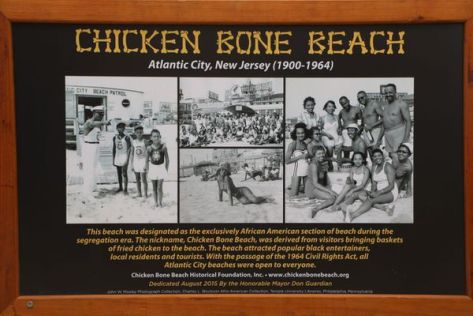
Chicken Bone Beach Plaque2

This two-part audio doc provides an overview of Chicken Bone Beach and the entertainment district that became a magnet for black vacationers, day-trippers and luminaries such as Martin Luther King Jr., Louis Armstrong, Nina Simone, Duke Ellington, Count Basie and Sammy Davis Jr.

For more info, visit Chicken Bone Beach.
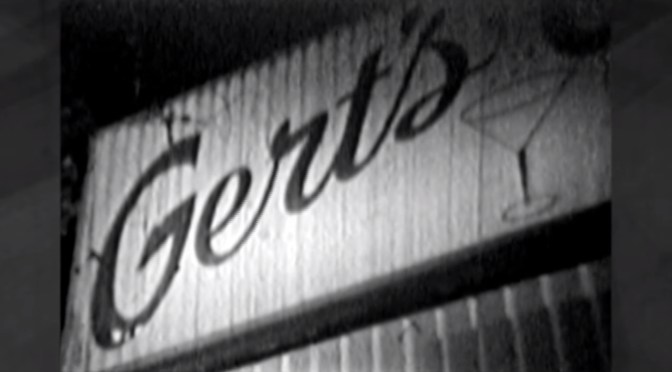
Gert’s Lounge

Gert’s Lounge was located on the 1400 block of South Street. Drummer Philly Joe Jones and saxophonist Hank Mobley were regulars. The house band featured:

Shirley Scott: organ
Johnny Williams: drums
Jesse Morrison: sax
Bob “The Boxer” Gibson: sax

In 1980, Rich Brotman and H. Scott Bayer filmed a Monday Night Jam Session.

For more information, contact Rich Brotman.

Club Alabam

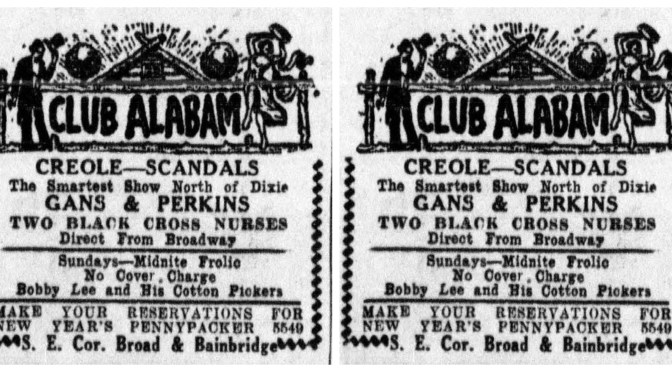
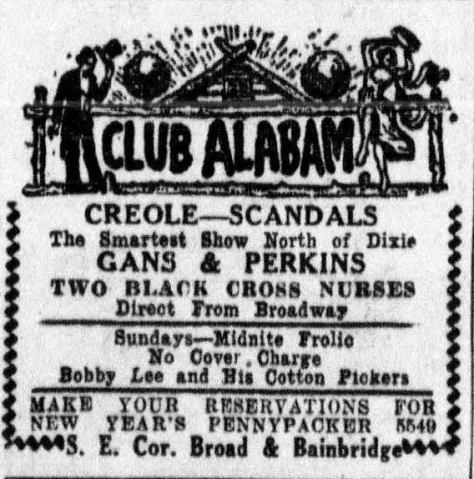
Located on the southeast corner of Broad and Bainbridge, Club Alabam opened in 1925 during the Jazz Age.

Club Alabam

Like the famed Harlem nightspots after which it was fashioned, Club Alabam was racially segregated. Black performers played for white audiences; Black patrons were barred.

The club was in business during Prohibition. Also like the Harlem gangsters who owned nightclubs, the owners had repeated brushes with Philadelphia police for liquor law violations.

Club Alabam closed in 1928.

Sahara Hotel Supper Club

The Desert Room was located in the Sahara Hotel, a Green Book site.

Sahara Club - Sahara Hotel

The jazz spot featured local favorites, including Jimmy Heath and Bootsie Barnes. Billy Paul met Kenny Gamble while performing at the Desert Room. Paul recalled:

I was singing in a jazz club called the Sahara. He had a record shop right round the corner and I was singing with a trio at the Sahara club on Friday, Saturday, and Sunday. He came over and said, “I am starting a record company and I would like to sign you.” Low and behold I took all the material I sung every weekend and I did an album in three and a half hours — a whole album. I had this album, and I produced it — me and my wife.

And we gave him this album called “Feelin’ Good at the Cadillac Club” to help start the record company and that was the album that helped start it up. I was singing totally jazz then, but when I heard The Beatles and heard the gospel influence and everything I just said I can make jazz with R&B.

Gamble and Leon Huff wrote and produced “Me and Mrs. Jones” for Billy Paul. And the rest is history.

Queen Mary Room

The Queen Mary Room was located in the Rittenhouse Hotel.

Rittenhouse Hotel - Philly Records

In the spring of 1957, agent Jerry Field signed Nina Simone to perform here for $100 a week, later increased to $175. Circa December 1957, the legend-in-the-making recorded her debut album with Bethlehem Records, “Little Girl Blue.” The album tracks include “My Baby Just Cares for Me.”

Web Bar

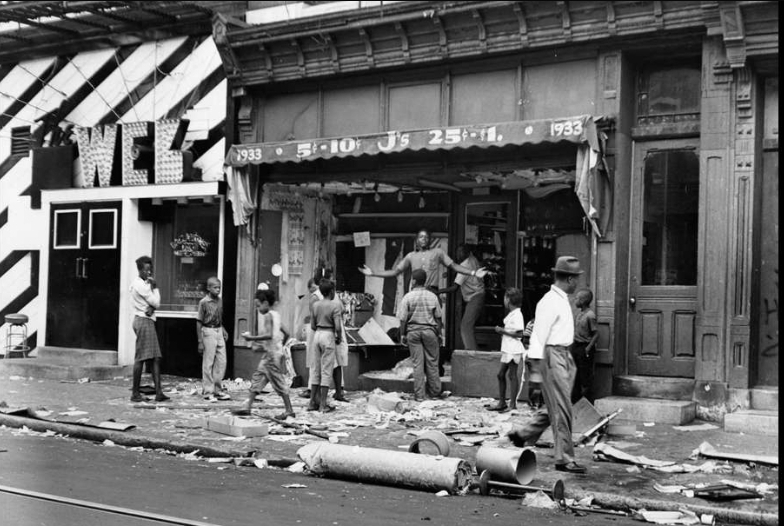
The Web Bar was located in North Philly on Columbia Avenue (renamed Cecil B. Moore Avenue). Like all the jazz spots along “The Golden Strip,” the Web fell victim to the 1964 race riot.

The Web Bar - 1964 Race Riot

The building was demolished in 2006. For information about the Golden Strip, go here.

Congo Café

The Congo Café was located in North Philly at Ridge and Sedgley. In a December 6, 1959 conversation with celebrated jazz journalist Ralph J. Gleason, Philly Joe Jones shared memories of the jazz spot:

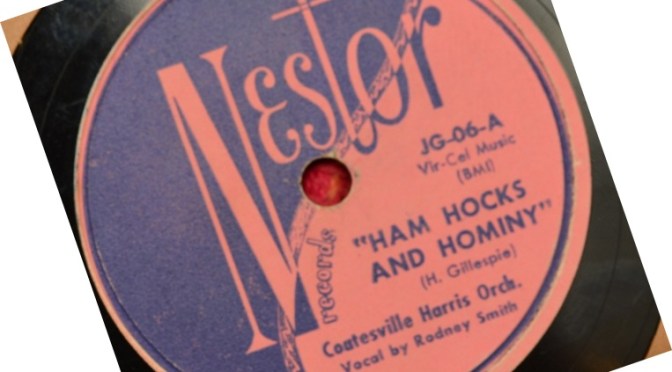
In 1945 I came home, I was just out of the service and I wanted to play and I knew about the drums, I actually knew about the drums in 1939, an old fellow in Philadelphia who’s still there playin’, he’s playin’ every night, named Coatsville [James “Coatsville” Harris], and he used to help me, he used to teach me how to play the drums. I used to sit underneath the bandstand in the club because I was too young to be there. I wasn’t supposed to be there but he’d sneak me in and I’d be underneath the bandstand. It was an ex-bank and they made a nightclub out of it and they had a floor show and I used to watch the dancers and the chorus and three, four girls in the line and this drummer. I just idolized him and he’s still one of the swingingest older cats I’ve met, and I wanted to play so that he used to help me.

In the 1950s, Coatsville led an orchestra that featured a tenor saxophonist thought to be John Coltrane.

Conversations in Jazz: The Ralph J. Gleason Interviews is available on Amazon.com.

Lennox Grill

The Lennox Grill was located in North Philly across from drummer Philly Joe Jones’ childhood home on N. 19th Street between Columbia Avenue (now Cecil B. Moore Avenue) and Montgomery Street.

In a December 6, 1959 conversation with celebrated jazz journalist Ralph J. Gleason, Philly Joe shared memories of the Lennox Grill:

I lived across the street from a place called the Lennox Grill in Philadelphia and I used to peek through the windows in the back of the club, and they had bars on the windows, so I used to always stand there and peek and look at this drummer. This man used to kill me, he had a pipe in his mouth and a regular old setup of drums, you know, no high hat, nothing like that, just a bass drum and a little cymbal. Cymbals were small then, but he was swinging like I don’t know what and I used to like to go there. My brother used to come around the corner and look up and see me peeking in the window and say, “Come on now!” and I’d go home—I only lived across the street. I used to sneak out of the house sometimes at night because they’d be playin’ after my bedtime, I had to go to school, but I used to sneak out of the house and run across the street, 10:30 and 11 o’clock at night I used to sneak out of the house and run across the street and peek in that window and listen to him playin’ drums.

Conversations in Jazz: The Ralph J. Gleason Interviews is available on Amazon.com.

The Rendezvous was located in the basement of the Douglass Hotel.

Douglass Hotel

In a May 11, 1959 conversation with celebrated jazz journalist Ralph J. Gleason, trumpeter Dizzy Gillespie shared an anecdote:

… in Philly, I had an interesting experience with Roy [Eldridge]. All the bands used to come to Philly. When I got to Philly in ’35, Roy was with Teddy Hill and Chu [Berry], and they used to jam downstairs in the Rendezvous up under the Douglas Hotel where the Showboat is now. Well, those guys used to play and I wouldn’t dare play, you know. I’d just go and listen to those guys. So one time, I remember, Rex Stewart, Duke Ellington, and Teddy Hill were there at the same time and they had a session downstairs and Roy was down there that night. And Rex, you know, Rex was Roy’s idol. Roy tells now about the time he first heard Rex play that high B flat. Roy finally found that B flat. I guess, ‘cause when he come to Philadelphia that night they was jammin’ round there and Roy started playing. Damn, Rex started crying and just tightened up and left ‘cause Roy was in rare form that night. I didn’t meet Roy until way later. I met him there, but he didn’t remember me.

Conversations in Jazz: The Ralph J. Gleason Interviews is available on Amazon.com.

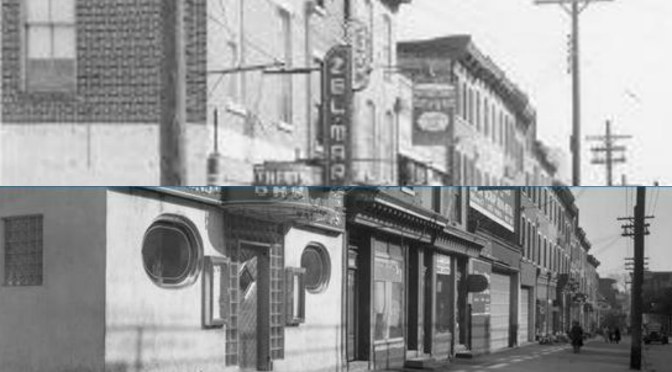
Club Zel-mar

Opened in 1947, Club Zel-Mar was located in West Philly. In April 1947, the “ultra modern” club played host to Three B’s and A Honey.

The “Home of the Mambo” welcomed José Curbelo who popularized the Mambo and the Cha-cha-cha in the 1950s.

Club Zel-Mar Flyer

Bill Carney’s Hi-Tones had a weeklong engagement here, February 28-March 5, 1955. The group was comprised of Bill “Mr. C” Carney, Al “Tootie” Heath, Shirley Scott and John Coltrane.

Hi-Tones - Club Zel-Mar