
Reynolds Hall was located in North Philly’s Mercantile Hall. Billboard reported that Jimmie Lunceford and his band played a one-night stand here on August 20, 1948.
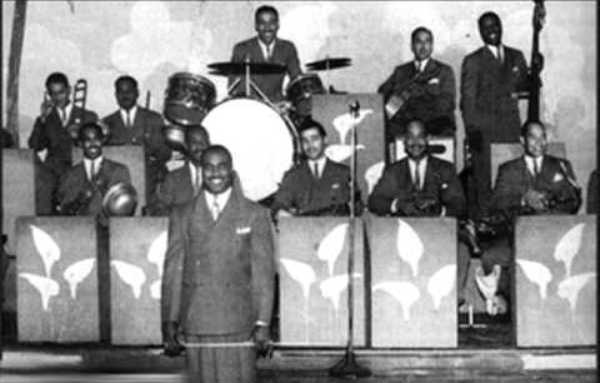

Reynolds Hall was located in North Philly’s Mercantile Hall. Billboard reported that Jimmie Lunceford and his band played a one-night stand here on August 20, 1948.
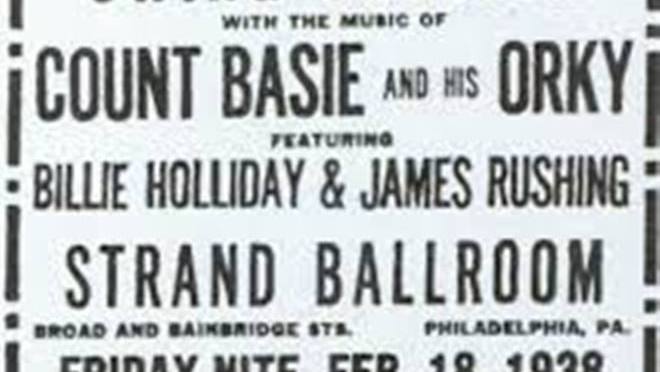
Located at Broad and Bainbridge Streets, the Strand Ballroom was managed by legendary dance promoter Reese DuPree in the 1930s and ‘40s.
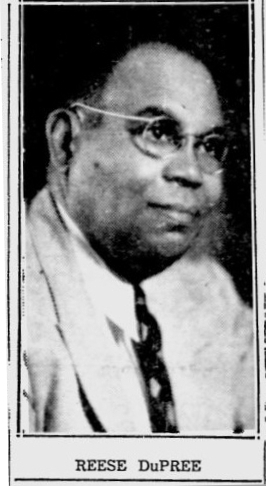
In 1938, Bill Doggett and his orchestra played here every Tuesday to Saturday.
The Elate Ballroom was located on the second floor of 711 S. Broad Street. The Elate Club Ballroom was on the ground floor.
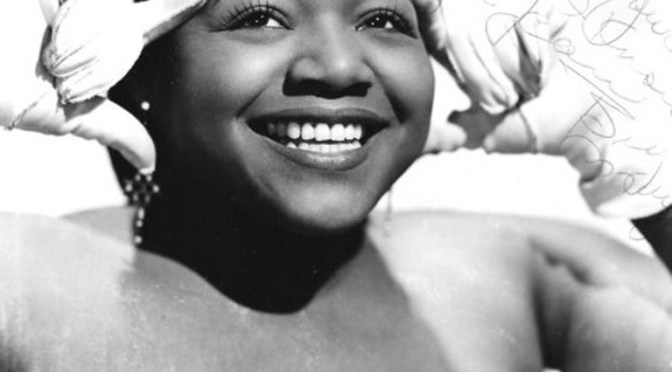
Joe Webb and his Decca Recording Orchestra featuring Big Maybelle played here at the “Shine on the Harvest Moon Dance” presented by legendary dance promoter Reese DuPree.

John Coltrane biographer Lewis Porter wrote:
Coltrane was hired when [Joe] Webb played for dancers in Philadelphia’s Elate Ballroom at 711 South Broad Street on Friday, September 13, 1946. Cal Massey (1928-72), a trumpeter from Pittsburgh, called “Folks” after his mother’s maiden name, happened to walk by when the band was playing and he ended up in the trumpet’s section. A lifelong friendship between Massey and Coltrane began as the two toured the country with the Webb band.
Porter, Lewis. John Coltrane: His Life and Music. Michigan: The University of Michigan Press, 1998.
Opened in 1919. the Philadelphia Tribune described the Palais Royal as “the finest colored ball room in America.”

On May 4, 1937, the Chick Webb Orchestra, featuring Ella Fitzgerald, played a dance here.

In the 1940s, the Palais Royal was the home of the Elate Ballroom, the Elate Club and the Sydney King School of Dance.
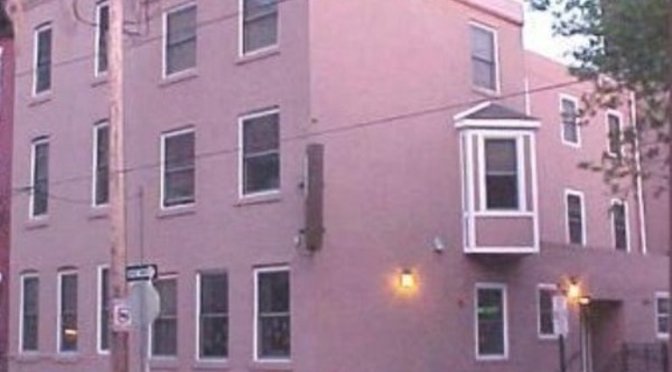
The Blue Horizon was located in the former Loyal Order of Moose Lodge 54.
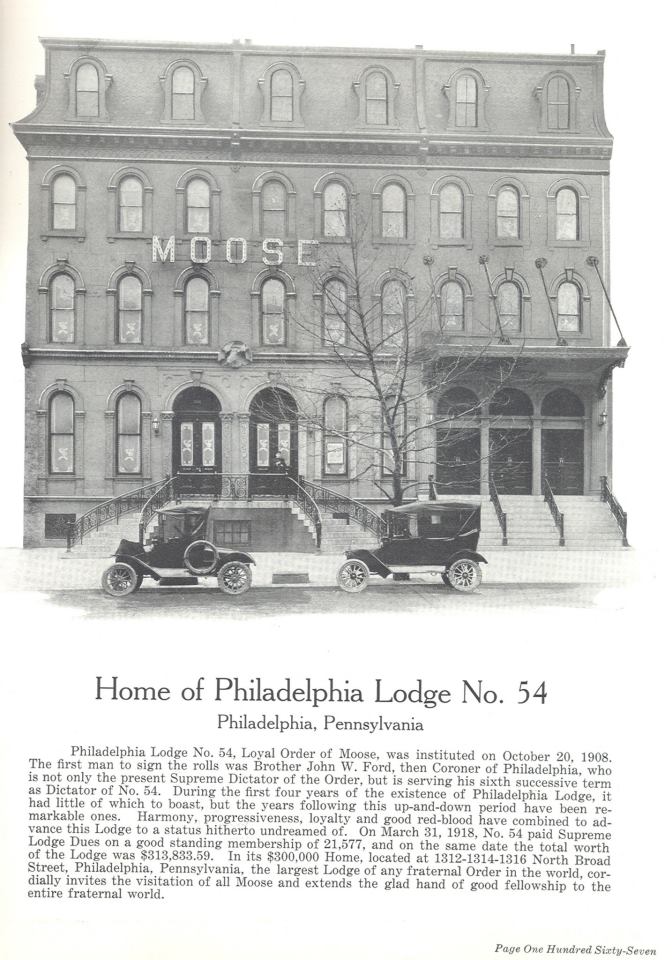
The property ceased operations as an active Moose lodge shortly after World War II. It remained under the organization’s ownership through the 1950s.
In 1961, Jimmy Toppi Sr. purchased the property for $85,000. He renamed it after the song “Beyond the Blue Horizon” from the 1930 film “Monte Carlo.” Its limited seating capacity meant big box office fights took place elsewhere –- at the Arena and Convention Hall in West Philly and the Spectrum in South Philly.

The Ring magazine voted the Blue Horizon the #1 boxing venue in the world; Sports Illustrated called it “the last great boxing venue in the country.”
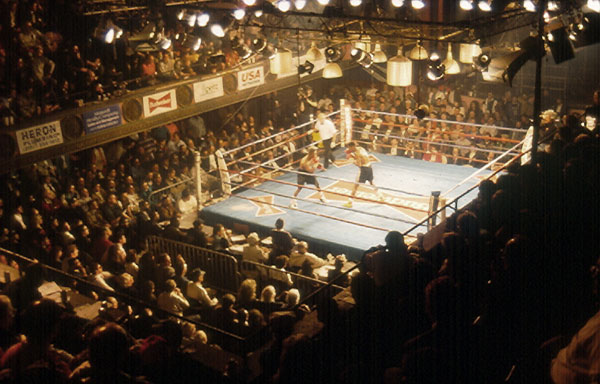
The Blue Horizon closed in June 2010.
The Curtis Institute of Music is a conservatory located in Rittenhouse Square. According to U.S. News & World Report, it has the lowest acceptance rate of any college or university (3.2%), making it the most selective institution of higher education in the United States.
The Institute’s most celebrated rejected applicant is Nina Simone who was denied admission even though she had given classical piano recitals since age 10. Jazz.com reported:
At the age of seventeen, Simone moved to New York to take classes at the Juilliard School of Music in New York. She then moved with her family to Philadelphia, where she auditioned for the city’s prestigious Curtis Institute, a conservatory of classical music.
Simone sought the help of a private instructor to help her audition for the Curtis Institute, but was ultimately denied after a supposedly excellent audition. Simone said she later found out from an insider at Curtis that she was denied entry because she was black. This heightened her anger over the racism which was pervasive in the United States during this period.
NB: The Curtis Institute awarded Nina Simone an Honorary Doctor in Music and Humanities two days before her death in 2003.
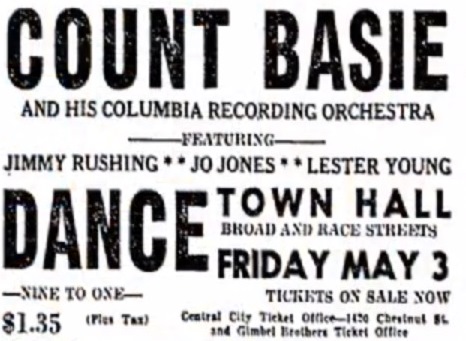
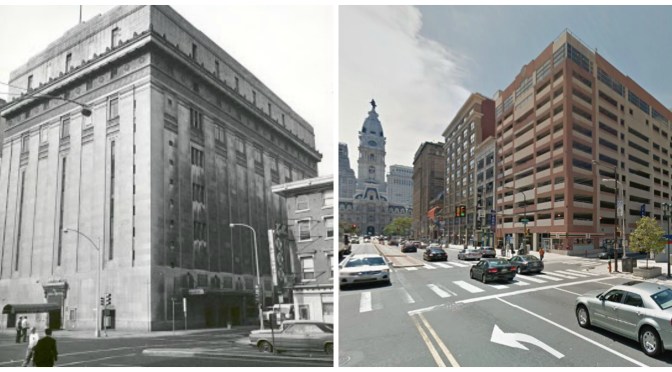
Located in Center City at Broad and Race, the Scottish Rite Temple, also known as Town Hall, was built in 1926. The 1,692 seat auditorium played host to jazz and blues greats, including Count Basie, Lester Young and Jimmy Rushing.
On Nov. 17, 1955, Ray Charles and his entire band were arrested on drug charges.

Check out this account from the Ray Charles Video Museum:
Town Hall was divided into two sections; the theater and the cabaret. The Ray Charles show was scheduled for the cabaret. Excited about appearing with a major star like Charles, the Sensations settled into their dressing room and began preparing for the show. All of the sudden, the dressing room door burst open and Ray Charles entered with his entourage including band members David “Fathead” Newman, Jay Dennis, James Sheffield, William Peoples, John Willis, Joseph Bridgewater, Tommy Brown and vocalist Mary Ann Fisher. The Ray Charles band informed the Sensations that this was to be their dressing room and the Sensations must leave. While somewhat in awe of Ray Charles, the Sensations would not back down and give up their dressing room. They were Kae Williams’ group and Kae was producing and MC’ing the show.
If Kae wanted them to have the dressing room, they were staying put! In the middle of the ensuing argument, Kae Williams walked in.
“You don’t understand, I’m Ray Charles!” the famous entertainer proclaimed. Kae Williams had broken into radio a decade before, at a time when blacks were not welcomed in the business. His feisty nature had allowed him to fight back at prejudice and discrimination in the entertainment field. Where weaker men had been driven from radio, Kae had a reputation for not taking crap from anyone. “I don’t care who the @!*# you are!” snapped the fiery dee jay defiantly. “I’m Kae Williams!”
The argument continued for a short while with much shouting. Ray Charles and his band succeeded in getting Kae and his group out of the dressing room and locked the door. Alphonso and the group watched as Kae Williams went to the hallway pay phone and made a call. Shortly thereafter, another commotion ensued. A team of Philadelphia police officers were banging on the door to Ray Charles’ dressing room, looking for drugs. People in the entertainment field knew that members of Ray Charles’ group had at times indulged in the use of illegal substances. But then, drug use was rampant in the business. According to the Philadelphia Tribune, the police found a burnt spoon, a needle and syringe, and a small quantity of marijuana in the dressing room. In addition, Charles and three of the band members were reported to have fresh needle marks in their arms. Ray and his band members were promptly placed under arrest. Fearing a riot, the police consented to allow the show to go on. But through the entire show, the stage was encircled with cops.
After the show, Ray and his entire band were taken downtown and arraigned. Ray Charles made the $2000 bail. The rest were jailed overnight. The Sensations, who had only wine in their possession, were not arrested. Ray Charles, who recalled the incident in his autobiography, Brother Ray, denied the reefer even belonged to his band. The newspapers promptly ran the headlines, “Disc Jockey Had Own Dance Raided For Dope.” After going through a lengthy legal process, the charges were finally dropped. Ray Charles vowed never again to perform in Philadelphia. But Kae Williams further enhanced his reputation that night as a person not to be messed with. And this Kae loved.”
The landmark was demolished in 1983 and replaced with Parkway Corporation’s headquarters and parking garage.
In 1947, drummer Ellis Tollin and his business partner William E. Welsh opened Music City, an instrument store located on the second floor of the Wurlitzer Building.

Tollin transformed the third floor into a 250-seat performance space, Music City Swing Club, where top jazz musicians, including Charlie Parker, Dizzy Gillespie, Miles Davis, Art Blakey and Buddy Rich held jam sessions and mentored young musicians like Bobby Timmons, Archie Shepp and Lee Morgan (circled).

Trumpeter Ted Curson recalled:
It was like the scene in Philadelphia for young cats and old cats. They would bring guys in from New York to play and they would have the young guys sit in with them. If you played pretty good you always ended up with some kind of gig.
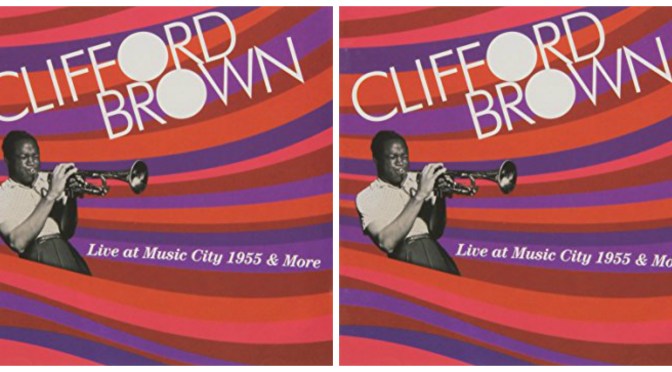
Jazz legend Clifford Brown gave his last performance at Music City. He left directly from here for a gig in Chicago. He never made it. He was killed in a car accident on the Pennsylvania Turnpike on June 26, 1956.
In a piece for Hidden City Philadelphia, archivist and Philadelphia music historian Jack McCarthy wrote:
On Tuesday evenings in the mid 1950s, young jazz enthusiasts from all over the city would gather inside the popular music store, Music City, at what is now 1033 Chestnut Street. Some came to jam, while others sat back and listened to intimate performances by major players of the era. It was an especially fertile period in Philly jazz when the city hummed with lively clubs and was home to many of the genre’s important instrumentalists. For aspiring teenage musicians who were too young to get into the clubs, Music City was a place to trade notes with fellow young players and even to play with their musical heroes if they were lucky. Many emerging Philly jazz performers of the 1950s cut their teeth there.
[…]
[Clifford] Brown had established himself as one of the top trumpeters in jazz by the mid1950s. He was living in Philadelphia during this period and was a frequent, featured guest at Music City. As the original story went, Brown performed at the store on the evening of June 26, 1956, accompanied by Ellis Tollin on drums and several other Philly musicians, and left directly from there to drive to a gig in Chicago. With him on the trip were the pianist Richie Powell and his wife, Nancy, who did the driving. On the Pennsylvania Turnpike between Harrisburg and Pittsburgh, the car ran off the road and crashed, killing all three.

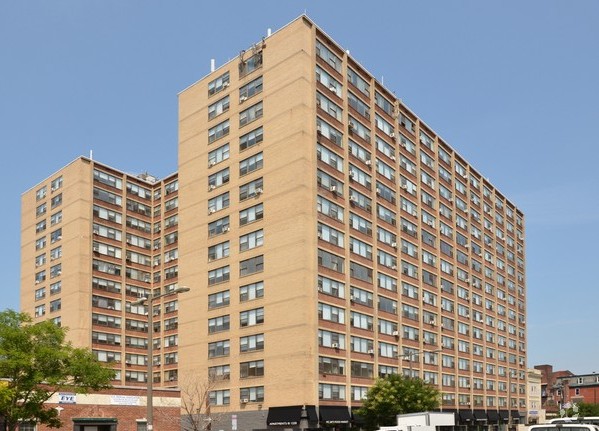
Opened in 1950, the Flamingo Apartments was the first interracial apartment building in Philadelphia.
The complex was one block from the Blue Horizon and Mercantile Hall which played host to jazz legends, including Duke Ellington, Cliff Brown and Fats Navarro, and a short walk to the legendary Golden Strip.
In an interview with All About Jazz, WRTI Jazz Host Bob Perkins recalled:
A year ago, I did a short documentary on Bird (Charlie Parker), and found out about the apartment he lived in at Broad and Stiles near Girard Avenue.
[…]
Curiously, I lived in the same building 30 years later. Bird was there in 1952 to 1953. I lived there in 1980, between marriages. And, believe it or not, Dave Brubeck also lived there! He told me that, personally. It was called the Flamingo apartments—a hot place to live at the time. Arthur Prysock lived there.
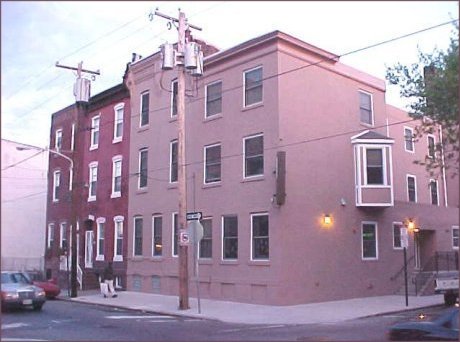
Named after Crispus Attucks, the first patriot to die in the Boston Massacre, the Attucks Hotel was popular with Black entertainers and athletes who were not allowed to stay at Philadelphia hotels that catered to whites. Guests included Hank Aaron, Roy Campanella, Ella Fitzgerald, Redd Foxx, Satchel Paige, Bill “Bojangles” Robinson and Billie Holiday.
John Timpane of the Philadelphia Inquirer wrote:
The year 1947 was a year of betrayal for [Billie] Holiday. She was at the peak of her career, earning upward of $60,000 a year, but hooked on heroin and opium. After a show at the Earle, her room at the Attucks Hotel was raided, and she was arrested on charges of narcotics possession.
From Monrovia Sound Studio:
Jelly Roll Morton and members of his orchestra would have had just a short drive of about 5 miles from the Attucks Hotel … to the R.C.A. studios in Camden, N.J. to carry out a contracted recording assignment. The route would have taken them across the Delaware River via the Delaware River Bridge (formally the Benjamin Franklin Bridge).

The Attucks Hotel is now home to Universal Institute Charter School.The school is part of Universal Companies, founded and chaired by legendary producer, songwriter, and Rock and Roll Hall of Famer Kenny Gamble.



 All That Philly Jazz