Category Archives: Cultural Heritage

Jazz Appreciation Month 2017

Founded by the National Museum of American History in 2002, April is Jazz Appreciation Month.

JAM Collage

The Smithsonian kicks off its celebration with a loving tribute to Ella Fitzgerald, the “First Lady of Song.”

The First Lady of Song - Ella Fitzgerald at 100

To find new ways to celebrate Jazz Appreciation Month, visit Smithsonian Jazz.

Philly Celebrates Jazz

April is Jazz Appreciation Month. The destruction of the Royal Theater, and John Coltrane and Women of Jazz murals gives one reason to believe otherwise, but Philly celebrates jazz.

Philly-Celebrates-Jazz

Mayor Jim Kenney kicked off the celebration by presenting the Benny Golson Award to multi-instrumentalist and “Late Show with Stephen Colbert” bandleader Jon Batiste.

Philly Loves Jazz - Jon Baptiste

Kenney said:

I am honored to present the first Benny Golson Award to Jon Batiste, who exemplifies what can be accomplished in using your talents in educating our youth in the importance of the arts and culture. As I have said many times, arts education is not a luxury, it is a necessity and one of the most effective ways of helping our children grow and develop into not only more creative, but also open-minded and compassionate people.

The Office of Arts, Culture and the Creative Economy organizes the month-long Philly Celebrates Jazz. Over 200 events are scheduled, including a photo exhibition, “Live Philly Jazz Vol. 2.

The WRTI Jazz Listening Sessions will be hosted by Jeff Duperon. The hour-long conversations will be held before a live audience in the Art Gallery @ City Hall. The listening sessions are free but space is limited. Seating is first come, first serve and you must register.

Over the course of Philadelphia’s jazz heyday, roughly 1940s to 1960s, there were jazz spots from the Aqua Lounge to Zanzibar Blue.

All That Philly Jazz - Aqua Lounge to Zanzibar Blue

The “Philly Celebrates Jazz Community Series” harkens back to the time when the joints were jumping in every neighborhood, including  “The Golden Strip,” Ridge Avenue and “The Strip.”

Philadelphia Celebrates Jazz Community Series

A complete calendar listing of Philly Celebrates Jazz events is available here.

Ella Fitzgerald@100

March is “Women in Jazz Month.” It’s also “Women’s History Month.” As the National Museum of American History notes, Ella Fitzgerald was about intersectionality before the term was coined:

Fitzgerald succeeded in the male-dominated field of jazz. By overcoming the odds, breaking barriers, and setting precedents, she paved the way for other women to follow her inspiring example.

The centennial of the “First Lady of Song” is being celebrated from the Apollo Theater to the Smithsonian’s National Museum of American History.

First Lady of Song - Ella Fitzgerald at 100

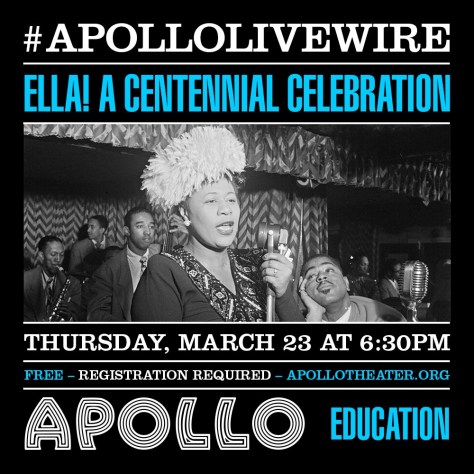
On March 23, the Apollo Theater, where Ella made her debut on an Amateur Night in 1934, is hosting “Ella! A Centennial Celebration.” The community event features a panel discussion and musical reflection by the author and star of “Me & Ella,” Andrea Frierson, and her trio.

Ella - Apollo Theater

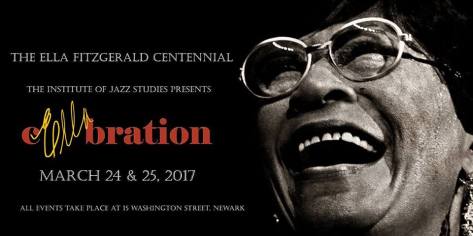
From March 24-25, the Institute of Jazz Studies at Rutgers University will present CELLABRATION, a two-day symposium to celebrate the most influential vocalist in jazz history.

Ella Fitzgerald - Institute of Jazz Studies

A phenomenal woman, Ella Fitzgerald will be celebrated for generations to come.

Historic Preservation and Social Justice

Two years ago I launched All That Philly Jazz, a place-based public history project that is telling the story of Philadelphia’s golden age of jazz. In documenting the places where jazz history unfolded, I am also contextualizing the impact of jazz musicians and the jazz culture on the struggle for social justice.

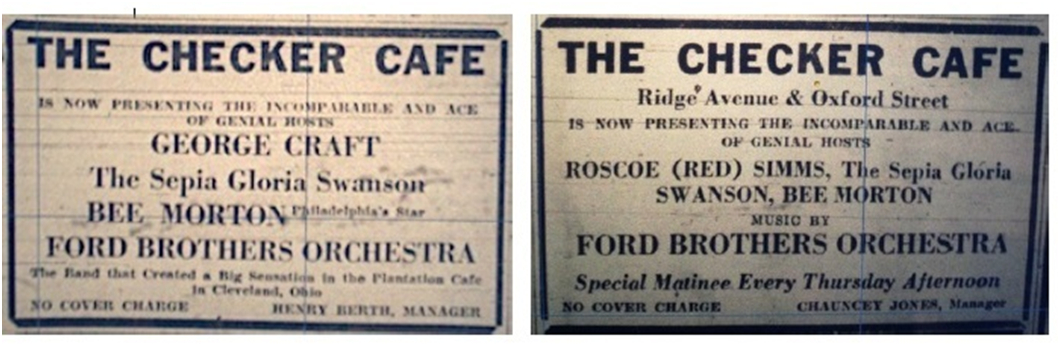
Fact is, the jazz culture was about “intersectionality” before the term was coined . As Philadelphia Inquirer architecture critic Inga Saffron notes in her column, “Ridge Avenue’s last standing jazz club,” gay performers such as the “Sepia Gloria Swanson” were an integral part of the scene.

Checker Cafe Ads

In a piece for PlanPhilly, I wrote about why historic preservation matters:

1409 Lombard Street helps tell the story of artistic greats like Lady Day, Ray Charles, John Coltrane, Miles Davis, Nina Simone and McCoy Tyner. It also tells the story of disruption and defiance. In remarks to the 1964 Berlin Jazz Festival, Dr. Martin Luther King Jr. said jazz is “triumphant music.” If walls could talk, they would tell how the jazz culture broke down social barriers. The first racially integrated nightspot in Center City was a jazz club, the Downbeat. For the first time, blacks and whites mixed on an equal basis. Jazz musicians created a cultural identity that was “a steppingstone” to the Civil Rights Movement.

At its core, historic preservation is about storytelling. The question then becomes: Who decides what gets saved and whose story gets told? The built environment reflects racial inequalities. Given African Americans’ socioeconomic status, few of the buildings associated with black history meet preservation standards regarding architectural significance. Although unadorned, they are places that tell a more complete American story. The stories of faith, resistance, and triumph are relevant to today’s social justice activists.

Read More

U.S. Postal Service Tribute to Sarah Vaughan

On March 29, 2016, at the Sarah Vaughan Concert Hall at Newark Symphony Hall, the United States Postal Service released the Sarah Vaughan Forever Stamp.

Sarah Vaughan - Available Now

Deputy Postmaster General Ronald Stroman dedicated the stamp:

As one of the most compelling vocalists in American history, Sarah Vaughan was renowned for her artistic eloquence. Her dynamic vocal range, iconic vibrato, and innovative phrasing helped to transform jazz and popular music. The Postal Service is proud to honor Sarah Vaughan. Let this stamp serve as a lasting tribute to her legacy.

Trumpeter Wynton Marsalis, who played with Miss Vaughan when he was 21 years old, sent a video tribute:

It’s only fitting that Sarah Vaughan is being memorialized with a forever stamp. She was great on so many levels. In honoring her, we honor ourselves. And her talent is truly forever.

The Sarah Vaughan Forever stamp is available at local post offices or online.

Marion Cuyjet, A Black Swan

Black Swan Theory—The black swan theory or theory of black swan events is a metaphor that describes an event that comes as a surprise, has a major effect, and is often inappropriately rationalized after the fact with the benefit of hindsight.
—Wikipedia

Born in 1920 in Philadelphia, Marion Cuyjet was “light, bright and damn near white.” Cuyjet took advantage of her skin tone to take classes with the prestigious Littlefield Ballet. The company was surprised to discover that she was a black swan.
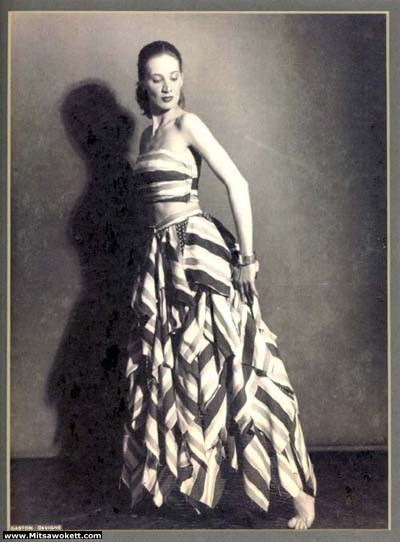
CuyjetMarionHDurham2 copy

In an interview with Brenda Dixon Gottschild, author of Joan Myers Brown & the Audacious Hope of the Black Ballerina, Cuyjet recalled:

MC: It was obvious someone had seen me, and I didn’t know it—somebody black! So in another performance they came in a little group, my friends from the YWCA club and from church. They came backstage to say hello.

[…]

BDG: So did the Littlefields know you were black?

MC: They didn’t know before the girls came, but [then] it was easy for them to believe it.

BDG: What happened once they found out?

MC: Out! Out! Out! Definitely out! And don’t come back! It was a lady who worked at the desk who takes the money and answers the telephone.

BDG: Did she say why?

MC: No, but I knew what she meant.

On Sept. 21, 1948, Cuyjet incorporated the Judimar School of Dance where she passed on what she had learned. She trained and mentored generations of black swans, including Joan Myers Brown, Founder and Artistic Director of PHILADANCO! and recipient of the 2012 National Medal of Arts, and Judith Jamison, Artistic Director Emerita of the Alvin Alley American Dance Theater. Jamison performed her first dance recital at the age of six at the Judimar Studio (where the tailoring shop is now located).

Mary Cuyjet - Judimar School of Dance

Cuyjet was the first African American woman to rent space in racially segregated Center City. However when the landlord found out she was a black swan, she was evicted. In her autobiography, Dancing Spirits, Jamison wrote:

She looked Caucasian and rented studio space that landlords would not rent to a person they thought was black. ‘She broke the color barrier and was constantly evicted once black children were discovered on the premises; she had to move her school seven times.

At age 14, Delores Browne won a scholarship to study with Miss Marion, as she was affectionately called. Brenda Dixon Gottschild, an author and dance historian, observed:

She recognized Delores Browne’s talent and Miss Cuyjet had this agenda. Her agenda was through the vehicle of Delores Browne to develop the first black ballerina to dance in a white ballet company.

Browne went on to audition for the School of American Ballet, the official school of the New York City Ballet. She became one of only six black students.

Cuyjet was a visionary whose determination and commitment to social justice changed the face of classical ballet. Misty Copeland, the first African American female principal with the American Ballet Theatre, stands on Miss Marion’s shoulders.
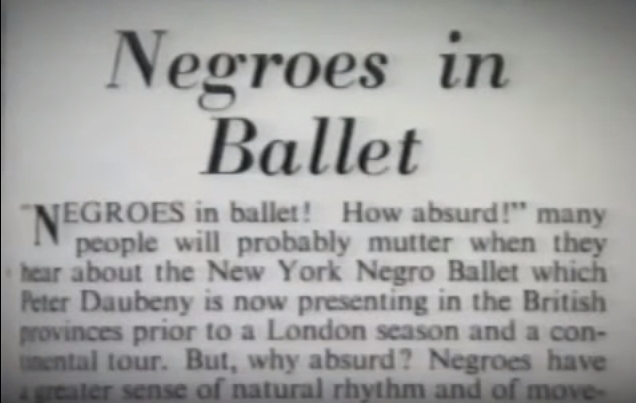
Negroes in Ballet

Today, Philly’s development boom is erasing African Americans’ cultural heritage. So while we are still here, we must preserve the legacy of those who cleared the path. Marion Cuyjet beat the odds and had a major effect on the cultural heritage of Philadelphia and the nation. If we don’t tell the story of those who came before, who will?

NB The Judimar School of Dance was located directly across the street from the famed Latin Casino.

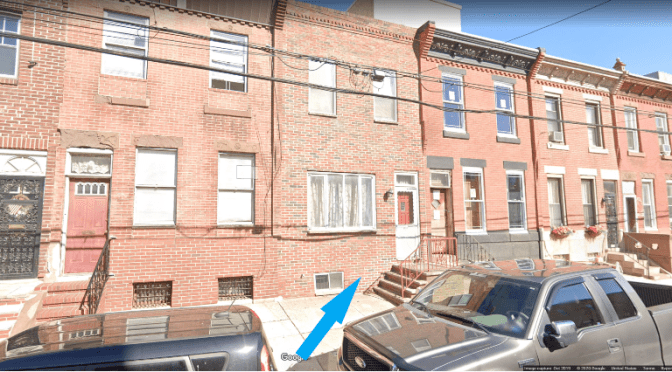
Heath Brothers’ Family Home

In his autobiography, “I Walked with Giants,” Jimmy Heath lovingly recalled the jam sessions in his parents’ basement that attracted the likes of Dizzy Gillespie, Charlie Parker and John Coltrane.

Heath Family Home - Feature

Benny Golson recounted:

Enough cannot be said about Mr. and Mrs. Heath, his mother and father, who continuously put up with all of us who used to come to their home in South Philadelphia, remove all of the furniture in the living and dining room, then begin our rehearsal. No matter what we did, how much noise (music) we made or how late we did it, they were always our champions. It was their support that, in part, enabled us to grow. And grow we did.

And grow they did. Both Heath and Golson are NEA Jazz Masters.