I am director of All That Philly Jazz, a place-based public history project that is documenting and contextualizing Philadelphia’s golden age of jazz. The project is at the intersection of art, public policy, and cultural heritage preservation.
The Philadelphia Clef Club dates back to the golden age of Philly jazz. In 1966, it was formally organized as the social arm of Union Local 274, the black musicians union, whose members included Dizzy Gillespie, John Coltrane, Benny Golson, Bill Doggett, the Heath Brothers, Jimmy Smith and Nina Simone.
Over the years, the Clef Club has had five locations, including Broad and Carpenter Streets, and 13th Street and Washington Avenue. The Philadelphia Clef Club of Jazz and Performing Arts moved into its current location on the Avenue of the Arts in 1995. This construction fence told part of the story of the house that jazz built.
For information about the 20th anniversary schedule of events, visit www.clefclubofjazz.org.
First Nighter was owned by Sonny Driver, founder and publisher of SCOOP USA.
In a news column, Elmer Gibson recalled Herbie Hancock playing at the supper club:
Back in Philadelphia during the early seventies, Herbie’s sextet was appearing at a supper club called “Sonny Driver’s First Nighter.” As a member of Al Grey’s quartet who played the club weekly, I had backstage access and overheard the owner complain to Herbie after the first set that the audience wasn’t enjoying the esoteric style of music he was offering; he told him to play something recognizable like “Maiden Voyage.” Things became a little heated for a moment but while it was evident that Herbie was annoyed, he agreed to follow the man’s orders because, after all, the man was Sonny Driver. The next set started off with “Maiden Voyage” and continued through his major hits of the day, and while he satisfied the owner’s request, every song was re-arranged, in different keys and with chord substitutions. I was blown away because it took me a moment to recognize the songs myself, and there were five other musicians participating with him who probably had no better idea of what he was going to do than I did. Yet they created a seemingly flawless performance.
Morton Emerson opened Emerson’s in 1934. The nightspot was listed in The Negro Motorist Travel Guide. According to The John Coltrane Reference, John Coltrane and Percy Heath stopped by Emerson’s to see saxophonist Lester Young on June 17, 1948.
Billie Holiday’s gig at the South Philly jazz club on March 14, 1959 — four months before her death — is the setting for the Broadway play, “Lady Day at Emerson’s Bar and Grill.”
Audra McDonald won the 2014 Tony Award for Best Performance by an Actress in a Leading Role in a Play.
Also known as Emerson’s Café and Emerson’s Sunset Grille, Emerson’s closed circa 1960.
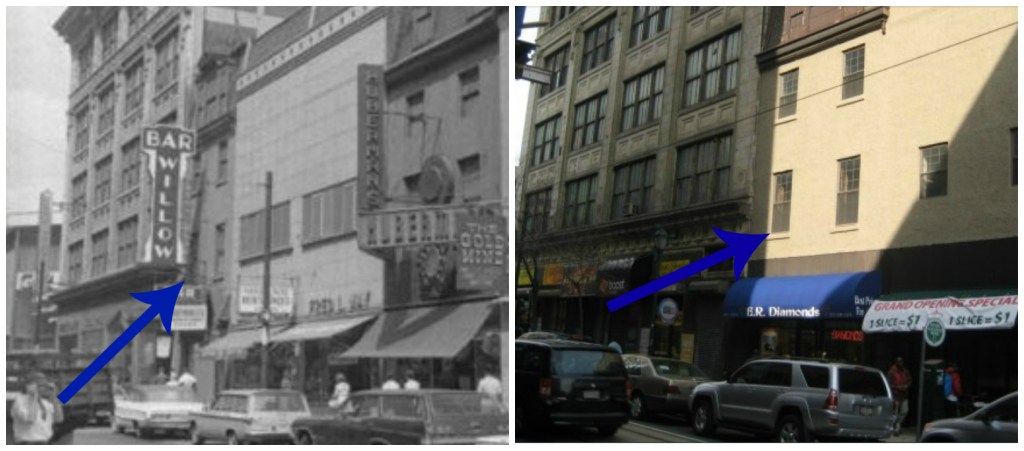
Located on the second floor above the Willow Bar, the Down Beat Swing Room was the first racially integrated jazz club in Center City. The building in which the Down Beat was located is still there.
The Down Beat was owned by jazz impresario Nat Segall. It was open from 1939 to circa 1948. Charlie Parker came in from New York City “every other week or so.” He was paid $25 a night to jam with Dizzy Gillespie and other jazz greats-in-the-making.
Jazz musicians would hang out at the Down Beat between shows at the Earle Theater.
In his autobiography, You Only Rock Once, Jerry Blavat, “the Geator with the Heator,” recounted:
Nat had owned a club called Downbeat around the corner from the Earle Theater, where Billie Holiday, Charlie Parker, and other giants of jazz performed. After Holiday was busted for narcotics one night, the police started raiding the place on a regular basis, and Nat was forced to close it down—but not before he and Bob [Horn] produced a series of jazz shows at the Academy of Music.
In a Smithsonian jazz oral history interview, National Endowment for the Arts Jazz Master and Philly native Benny Golson shared a story about the Downbeat and drummer Philly Joe Jones:
For a while they had a policeman on every street car, stand up at the front with his gun and stuff. It was so bad. During that time – because they said, you don’t have any black motormen and conductors on the streetcar. Philly Joe got a job.
Do you remember that? He got a job as a motorman, driving a streetcar. Route number 23. The longest route in Philadelphia, from south Philadelphia, all the way through north Philadelphia, all the way through Germantown. Max Roach used to come over and ride a route with him, and talk.
Philly Joe’s route came right up 11th Street, where the Down Beat Club was, on 11th Street. Philly came up one night, stopped the car in front of the Down Beat, opened the doors, got off, and went up, and took a club. Now all the people on the streetcar, they’re going crazy. He goes up into the – no, he’s not going to stay and hear a set, but he went up to do something. When he came back, boy, they were irate. He got on the streetcar and started up like he did – never heard it – like this was a matter – who would do something like that? Stop a streetcar and get off and go into a club, and everybody’s on the streetcar, waiting. Only Philly Joe would have done something like that. Only Philly would have done that.
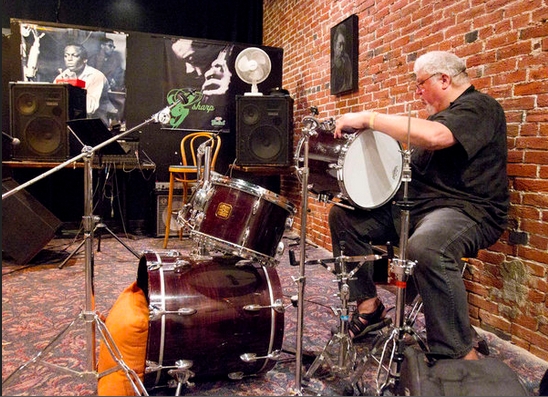
The 23rd Street Café has been featuring jam sessions since 1988. Mace Thompson, the owner, opens his establishment only on Tuesday evenings, 7:30pm to 11:30pm. There is no cover charge.
After 25 years and more than 1,300 Tuesday-night jazz jam sessions at Center City’s 23rd Street Cafe, the horns, drums, basses, guitars, violins, harmonicas, and singers will soon be silenced for good. The property at 223 N. 23d Street will be demolished this summer, likely to make way for condominiums.
But all is not lost. The jam sessions will resume on Tuesday, August 4th at the Manayunk Brewery.
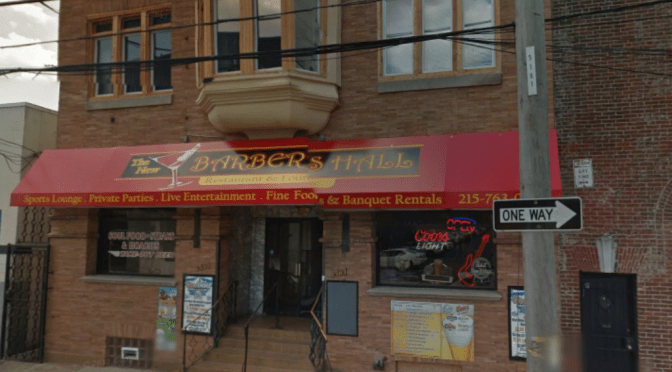
New Barber’s Hall dates back to Philadelphia’s golden age of jazz.
Mel Melvin’s Orchestra was a jazz-oriented R&B band which featured some of Philly’s best musicians, including the Heath Brothers and John Coltrane. NEA Jazz Master Kenny Barron played with the orchestra when he was a teenager.
Jacob “Jake” Adams has owned New Barber’s Hall since 1979. The music venue played host to such legendary musicians as Robert “Bootsie” Barnes, Boyz II Men, Miles Davis, Isaac Hayes, Patti LaBelle, Billy Paul, Odean Pope, Archie Shepp, Dottie Smith, the Temptations and Grover Washington, Jr.
Charlotte Adams — Ms. Charlotte — has been serving drinks here for more than 30 years.
New Barber’s Hall is located in the former home of the Quaker City Wheelmen bicycle club. In a piece for Hidden City Philadelphia, GroJLart wrote:
In 1953, a group of four African American barbershop owners formed the National Barber’s Sunshine Club, a trade organization for local barbers, and purchased the building for their headquarters, which was colloquially renamed Barber’s Hall. In addition to hosting the Sunshine Club, the building also became a music venue and event space. Jazz musicians staying at the Chesterfield Hotel next door would often drop by to play at the club between gigs.
Located in the historic Bourse Building, the Blue Moon Jazz Club played host to Johnny DeFrancesco, Norman Connors and his Starship band, guitarist Paul Jackson Jr., Nnenna Freelon, Kim Waters, Jean Carne, Frank Morgan, Dexter Wansel and Pieces of a Dream, among others.
Philadelphia’s longest active jazz club, Chris’ Jazz Café produces over 500 live shows a year. They present shows Monday through Saturday (closed Sunday). Student discounts for cover charges are available. You can buy tickets online.
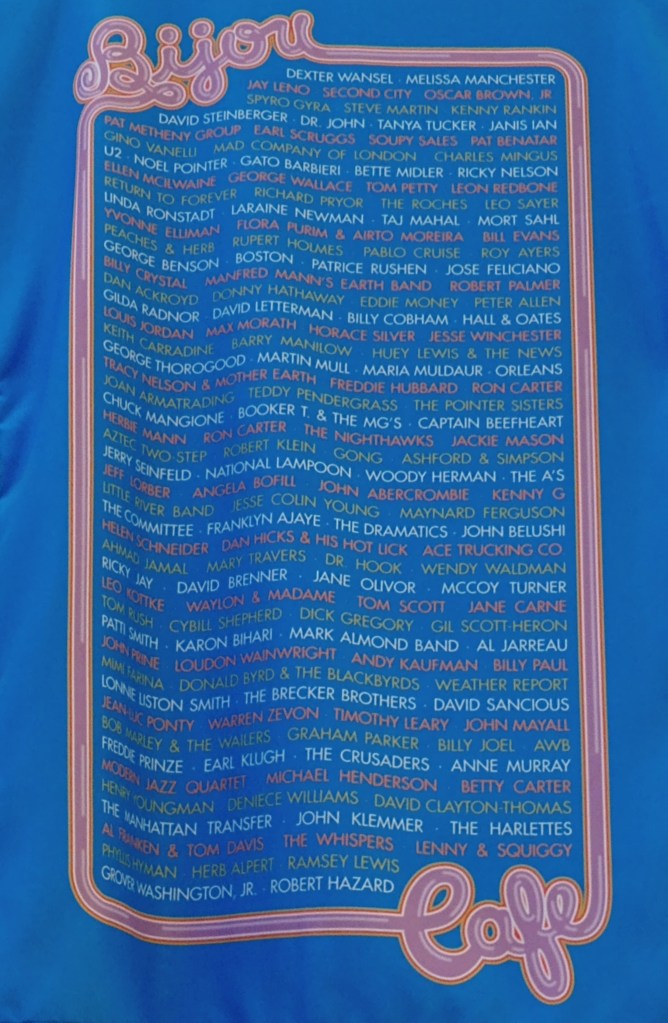
The Bijou Cafe opened on October 4, 1972. The club was in the former location of the legendary Showboat. The Bijou hosted luminaries including Miles Davis, Charles Mingus, Bill Evans, Jon Lucien, Phoebe Snow, Gil Scott-Heron, Deniece Williams, Art Blakey and the Jazz Messengers, Bobby Womack, Ramsey Lewis, Bobby “Blue” Bland, Billy Paul, Sun Ra, Richard Pryor, Dick Gregory, Horace Silver, and Herbie Hancock.
Grover Washington, Jr. recorded “Live at the Bijou” in May 1977.
In the 1970s and early ‘80s, the Bijou was Philadelphia’s premier showcase for up-and-coming artists, including Barry Manilow, Angela Bofill and U2.
Longtime radio personality T. Morgan recalled:
The jazz lineups were nothing short of spectacular and the comedy was even better! The National Lampoon Show with future superstars John Belushi, Chevy Chase, Gilda Radner and Lorraine Newman all appeared together. Another comedy troupe, Firesign Theater also appeared. Billy Crystal was an opening act four times and a headliners three times. His impersonation of Muhammad Ali was a big crowd favorite. Albert Brooks, Richard Pryor, Martin Mull and his Fabulous Furniture, Steve Martin, Jerry Seinfeld and Dick Gregory all keep the audiences amused.
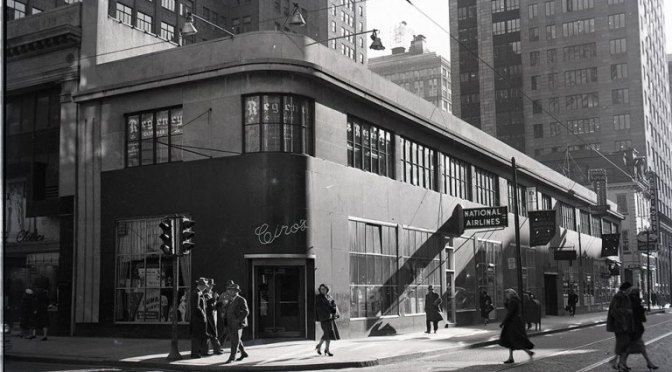
Ciro’s was one of a string of nightclubs owned by Frank Palumbo, a restaurateur, humanitarian, and power broker.
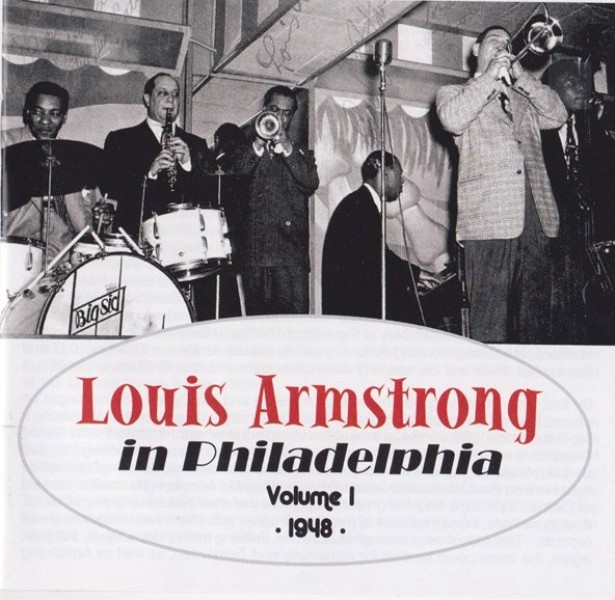
In 1948, Louis Armstrong’s All Stars — featuring Barney Bigard, Sid Catlett, Earl Hines, Velma Middleton and Jack Teagarden — recorded a series of radio broadcasts at Ciro’s.









 All That Philly Jazz