
Tag Archives: Race
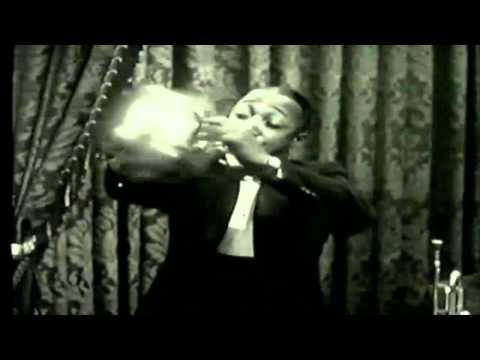

Happy Presidents’ Day
In 1964, Dizzy Gillespie threw his beret into the ring and ran for President of the United States.
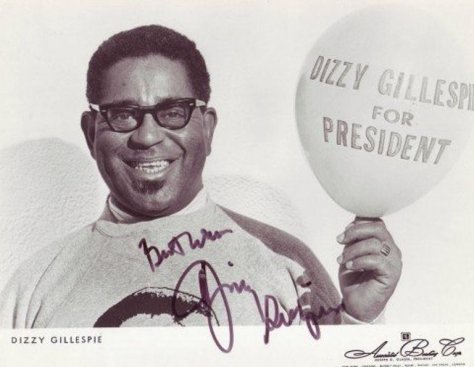
In a piece for Al Jazeera America, Tom Maxwell wrote:
It started as a joke, as so many serious things do. His booking agency had some “Dizzy Gillespie for president” buttons made around 1960, because, you see, it’s funny. Somebody even asked Gillespie why a black jazzman — a permanent member of the underclass if there ever was one — would even think of trying for the job. “Because we need one,” he said.
“Anybody coulda made a better President than the ones we had in those times, dillydallying about protecting blacks in the exercise of their civil and human rights and carrying on secret wars against people around the world,” Gillespie wrote in his autobiography “To Be, or Not … to Bop.” “I was the only choice for a thinking man.”
Vote Dizzy!

Philadelphia Clef Club Celebrates 20 Years on Avenue of the Arts
The Philadelphia Clef Club dates back to the golden age of Philly jazz. In 1966, it was formally organized as the social arm of Union Local 274, the black musicians union, whose members included Dizzy Gillespie, John Coltrane, Benny Golson, Bill Doggett, the Heath Brothers, Jimmy Smith and Nina Simone.
Over the years, the Clef Club has had five locations, including Broad and Carpenter Streets, and 13th Street and Washington Avenue. The Philadelphia Clef Club of Jazz and Performing Arts moved into its current location on the Avenue of the Arts in 1995. This construction fence told part of the story of the house that jazz built.

For information about the 20th anniversary schedule of events, visit www.clefclubofjazz.org.
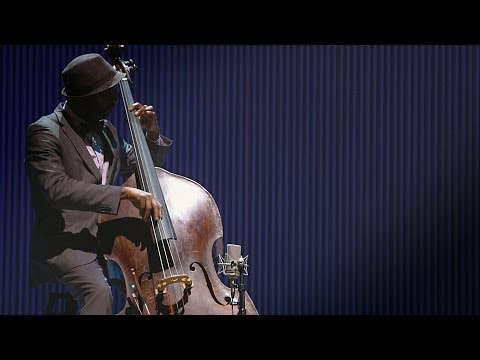
Freedom’s Message in the Music
Marcus Shelby is a perennial Bay Area jazz favorite who’s compositions explore the African American experience. Shelby finds deeper meaning for his work sharing the music he loves and its history with young people in schools and juvenile halls. Learn more about Marcus Shelby.

The Hunting of Billie Holiday
In a new book, “Chasing the Scream: The First and Last Days of the War on Drugs,” Johann Hari writes how Billie Holiday was targeted by the Federal Bureau of Narcotics after she refused to be silent about racism:
One night, in 1939, Billie Holiday stood on stage in New York City and sang a song that was unlike anything anyone had heard before. ‘Strange Fruit’ was a musical lament against lynching. It imagined black bodies hanging from trees as a dark fruit native to the South. Here was a black woman, before a mixed audience, grieving for the racist murders in the United States. Immediately after, Billie Holiday received her first threat from the Federal Bureau of Narcotics.
Harry had heard whispers that she was using heroin, and—after she flatly refused to be silent about racism—he assigned an agent named Jimmy Fletcher to track her every move. Harry hated to hire black agents, but if he sent white guys into Harlem and Baltimore, they stood out straight away. Jimmy Fletcher was the answer. His job was to bust his own people, but Anslinger was insistent that no black man in his Bureau could ever become a white man’s boss. Jimmy was allowed through the door at the Bureau, but never up the stairs. He was and would remain an “archive man”—a street agent whose job was to figure out who was selling, who was supplying and who should be busted. He would carry large amounts of drugs with him, and he was allowed to deal drugs himself so he could gain the confidence of the people he was secretly plotting to arrest.
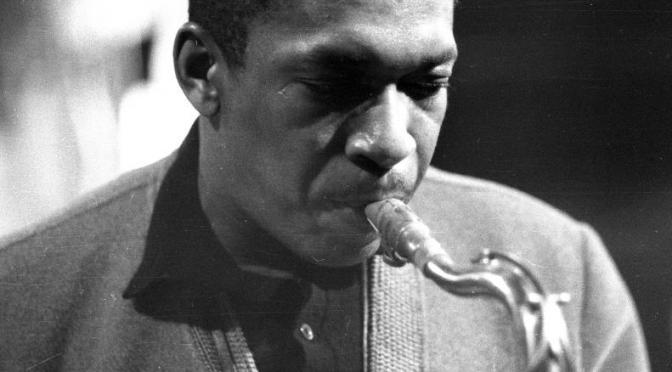
John Coltrane
John Coltrane was the son of John R. Coltrane, a tailor and amateur musician, and Alice (Blair) Coltrane. Two months after his birth, his maternal grandfather, the Reverend William Blair, was promoted to presiding elder in the A.M.E. Zion Church and moved his family, including his infant grandson, to High Point, NC, where Coltrane grew up. Shortly after he graduated from grammar school in 1939, his father, his grandparents, and his uncle died, leaving him to be raised in a family consisting of his mother, his aunt, and his cousin. His mother worked as a domestic to support the family. The same year, he joined a community band in which he played clarinet and E flat alto horn; he took up the alto saxophone in his high school band. During World War II, his mother, aunt, and cousin moved north to New Jersey to seek work, leaving him with family friends; in 1943, when he graduated from high school, he too headed north, settling in Philadelphia. Eventually, the family was reunited there.

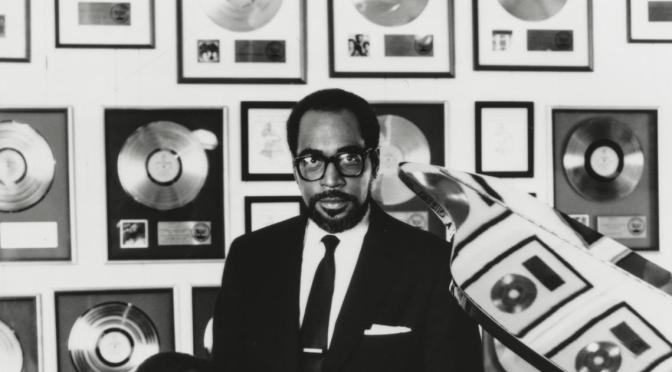
Kenneth Gamble
In tandem with his partner Leon Huff, producer and songwriter Kenny Gamble was the principal architect behind the lush and seductive Philly Soul sound, one of the most popular and influential musical developments of the 1970s.
Native Philadelphian Kenny Gamble first teamed with Leon Huff during the late ’50s while a member of the harmony group the Romeos, a unit which also included another aspiring area musician named Thom Bell, who would become crucial to Gamble’s later success. “The 81,” a 1964 single by the little-known Candy & the Kisses, was the inaugural Gamble-Huff co-production, and three years later the duo scored their first Top Five pop hit with the Soul Survivors’ “Expressway to Your Heart.” Soon recruiting Thom Bell as arranger, they subsequently scored with smashes including Archie Bell & the Drells’ “I Can’t Stop Dancing” and Jerry Butler’s “Only the Strong Survive,” gradually forging their own distinctive sound.


Billie Holiday
Billie Holiday was a true artist of her day and rose as a social phenomenon in the 1950s. Her soulful, unique singing voice and her ability to boldly turn any material that she confronted into her own music made her a superstar of her time. Today, Holiday is remembered for her masterpieces, creativity and vivacity, as many of Holiday’s songs are as well known today as they were decades ago. Holiday’s poignant voice is still considered to be one of the greatest jazz voices of all time.
Holiday began working with Lester Young in 1936, who pegged her with her now-famous nickname of “Lady Day.” When Holiday joined Count Basie in 1937 and then Artie Shaw in 1938, she became one of the very first black women to work with a white orchestra, an impressive accomplishment of her time. In the 1930s, when Holiday was working with Columbia Records, she was first introduced to the poem “Strange Fruit,” an emotional piece about the lynching of a black man. Though Columbia would not allow her to record the piece due to subject matter, Holiday went on to record the song with an alternate label, Commodore, and the song eventually became one of Holiday’s classics.


Leon Huff
In tandem with his partner Leon Huff, producer and songwriter Kenny Gamble was the principal architect behind the lush and seductive Philly Soul sound, one of the most popular and influential musical developments of the 1970s.
Leon Huff started his musical career as a session pianist, and played on sessions for Phil Spector, the Ronettes, and Carole King in New York City before moving to Philadelphia. He formed the Locomotions, and did sessions for Cameo and Swan. Huff earned his first hit as a composer writing “Mixed-Up Shook-Up Girl” for Patty & the Emblems in 1964.
Native Philadelphian Kenny Gamble first teamed with Huff during the late ’50s while a member of the harmony group the Romeos, a unit which also included another aspiring area musician named Thom Bell, who would become crucial to Gamble’s later success. “The 81,” a 1964 single by the little-known Candy & the Kisses, was the inaugural Gamble-Huff co-production, and three years later the duo scored their first Top Five pop hit with the Soul Survivors’ “Expressway to Your Heart.” Soon recruiting Thom Bell as arranger, they subsequently scored with smashes including Archie Bell & the Drells’ “I Can’t Stop Dancing” and Jerry Butler’s “Only the Strong Survive,” gradually forging their own distinctive sound.


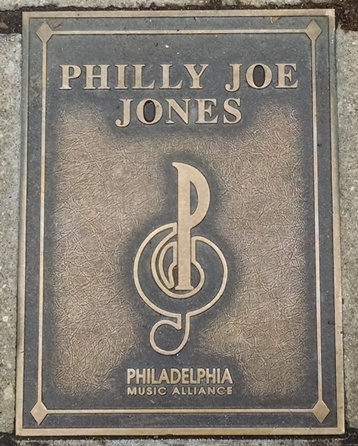
Philly Joe Jones
Philly Joe Jones, an innovator of modern jazz drum technique, was the drummer of choice for jazz giants Miles Davis, John Coltrane, Tadd Dameron, Gil Evans and others. Born Joseph Rudolph Jones, Philly Joe Jones was an exciting, explosive drummer and his influence on modern jazz is legendary.
Philly Joe was one of the first African American trolley car drivers in Philadelphia (Philly Joe is on the far left).
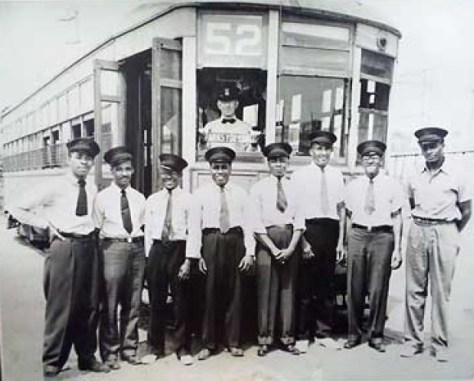
He left his hometown to hook into the New York jazz scene in 1952, where he worked with Tadd Dameron and then achieved critical and popular acclaim with the Miles Davis Quintet. He was prolific in his recordings, appearing as a leader on Blues for Dracula (1958), Drum Songs (1978), and others, and as a sideman with Miles Davis on Round Midnight (1955), Cookin’ (1956), Milestones (1958), and more.
 All That Philly Jazz