Tag Archives: Race

Whose Murals Get Saved?

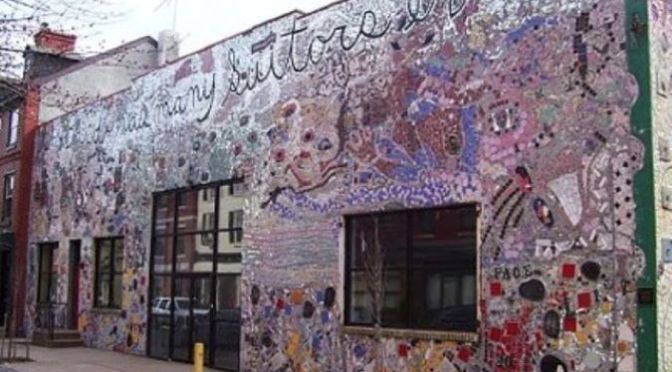
They say that “blues ain’t nothing but a botheration on your mind.” It’s bothersome that developers are erasing African Americans’ cultural heritage. In Philadelphia, developers routinely – and without notice – demolish or cover up murals that are paid for in part by City taxpayers.

John Coltrane Collage

Murals are part of Philadelphia’s cultural landscape. The Mural Arts Program creates murals that engage the community. They reflect a community’s history, identity, hopes and dreams.

Women of Jazz Mural

City Council members can use Councilmanic Prerogative to require that developers of publicly-subsidized projects replace murals of social or cultural significance. Who will determine which mural meets that threshold? Let’s stipulate that murals that tell stories about events or persons who are the subject of books, songs, documentaries, national holiday, or City and congressional resolutions are culturally significant.

City Council Resolution - June 2001

The how of replacement is negotiable. What is non-negotiable is that developers can erase African Americans’ cultural heritage because, to borrow a phrase from Al Gore, there is “no controlling legal authority.” A district Council member is the controlling legal authority in his or her district. He or she decides which projects go forward and which ones go nowhere. While developers view murals as disposable, district Council members must exercise their prerogative and demand that they respect that which came before.

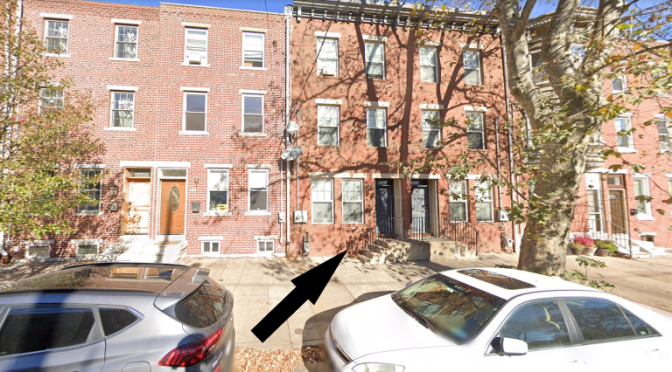
Bessie Smith House

Bessie Smith moved to Philadelphia circa 1922. After her marriage to Jack Gee on June 7, 1923, she lived on Christian Street in South Philly.

The “Empress of the Blues” died in an auto accident in Mississippi on September 26, 1937. Her funeral was held in Philadelphia on October 4, 1937.

Bessie Smith2

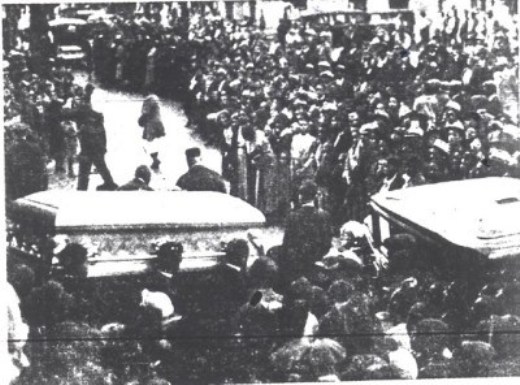
The funeral was moved from Upshur’s Funeral Home to O.V. Catto Elks Lodge to accommodate the 30,000 mourners who filed pass her casket.

bessie-smith-funeral-procession-e1426130630576

Bessie’s casket was taken on a slow tour of her South Philly neighborhood, briefly stopping at the Standard Theater where she regularly performed.

Two Bit Club

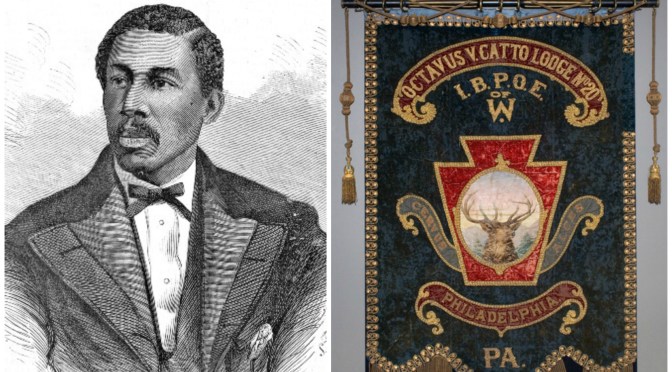
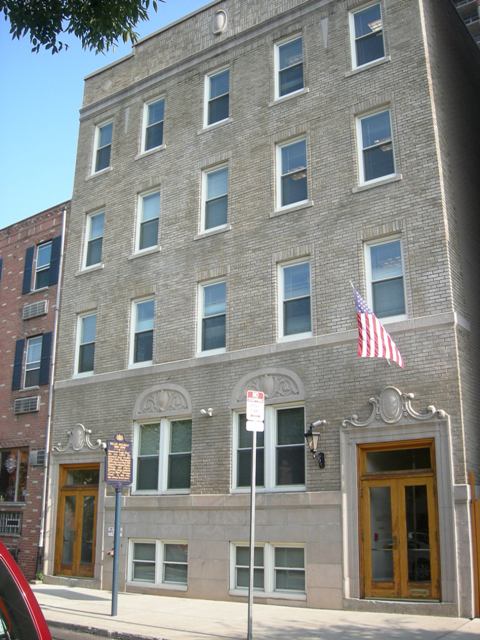
The Two Bit Club was located on the top floor of the O.V. Catto Elks Lodge, a cultural center for the African American community. The building was demolished in 1994.

O.V. Catto Lodge - Special Collections Research Center, Temple University Libraries

From a 1994 Philadelphia Inquirer article lamenting the loss of this landmark:

Lois Fernandez, who lives a few blocks away, was one of the mourners who stopped by last week to see the wrecking ball at work.

“Damn, we’re losing a big part of our history and nobody cares,” said Fernandez, co-founder and director of Odunde, the annual African American festival on South Street.

Back in the 1950s, when Fernandez was a teenager, the “O.V.,” as she called it, was the late-night place to be.

After dinner at the former Postal Card, at 15th and South, and drinks and jazz at the former Pep’s, at Broad and South, young African Americans told each other, “Meet you at the Two Bit” after all the other clubs had closed at 2 a.m.

They were referring to the nightclub that once was located on the top floor of the old Elks Lodge.

On weekend nights until 5 a.m., couples danced the stroll, the strand and the Philly bop. The men wore their hair in the close-cropped “hustler” style and dressed in suits of silk and sharkskin. And their dates did their hair in pageboys or poodle cuts and wore long flared dresses over crinoline slips, accompanied by high heels and white gloves.

It was at the Two Bit Club that then-19-year-old Fernandez held her breath as she waited to get past the man at the door. Once inside, she ordered a Tom Collins or a Canadian Club and ginger ale, and let it sit all night until it turned to water.

“You felt so adult when you went to the Two Bit Club,” Fernandez said. ”You were always trying to act so sophisticated.”

It was at the Two Bit Club that Fernandez listened to jazz bands and saw tap dancers, her first shake dance and her first striptease.

READ MORE

Royal Theater

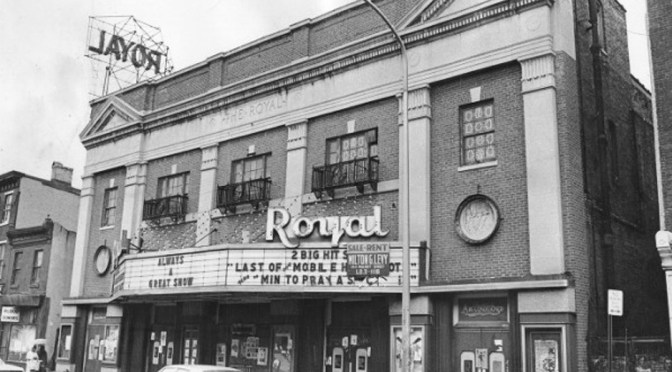
Opened in 1920, the Royal Theater was advertised as “America’s Finest Colored Photoplay House.” The all-black staff formed the nucleus of the Colored Motion Picture Operators Union.

The 1,200-seat theater showed movies by African American film pioneer Oscar Micheaux. The small stage played host to luminaries such as Fats Waller, Bessie Smith, Pearl Bailey, Della Reese and Cab Calloway.

South Philly residents were the Royal’s most loyal patrons and participated in talent shows and radio broadcasts. Business owners received increased foot traffic after Royal shows. But by the 1960s, the threat of the construction of an expressway in the neighborhood (that never materialized) and civil rights legislation which allowed blacks to move freely and patronize other entertainment venues, decimated the Royal’s neighborhood and attendance.

The Royal closed its doors in 1970. It is listed on the Philadelphia Register (1976) and National Register of Historic Places (1980).

Royal Theater Mural


The Royal Theater and adjacent parcels were purchased by music mogul Kenny Gamble from the Preservation Alliance of Greater Philadelphia in 2000 for $250,000.

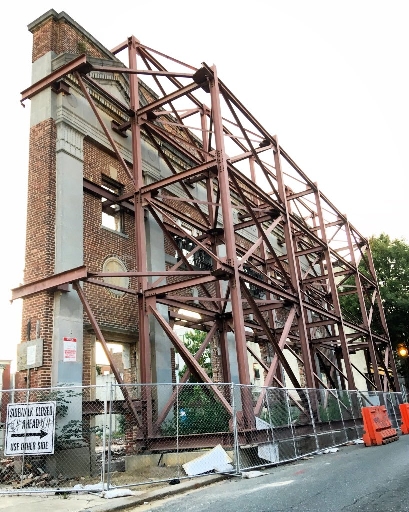
In 2016, Kenny Gamble’s Universal Companies sold the Royal Theater. The facade is all that remains of the historic landmark. It, too, would have been demolished but the Preservation Alliance of Greater Philadelphia holds an easement.

Royal Theater Facadectomy

The Royal Theater is a stop on the Green Book walking tour which will be held on Saturday, November 9, 2024, 10am to 12pm. Tickets are $25 per person.

Buy Tickets

Earle Theater

The Earle Theater was a stop on the “Chitlin’ Circuit.” It was the most expensive theater ever built in Philadelphia. The Earle had an ornate interior and exterior and seating for 2,700. It was demolished in July 1953.

Earle Theater

In an interview with the Smithsonian Oral History Project, Philly native and NEA Jazz Master Benny Golson talked about how he was inspired to master the saxophone after seeing Lionel Hampton and Arnett Cobb at the Earle Theater:

I guess they usually went until 9 or 10 at night, which meant that they had about three or four shows a day. It was an ongoing thing. Week after week they’d have whatever band was popular. Benny Goodman, Woody Herman, anything. Charlie Spivak, Claude Thornhill, Tommy Dorsey. Any band that was popular, they would bring there. It was an ongoing thing. Count Basie, Duke Ellington. They all came there.

The reason I went is because I was in high school – Benjamin Franklin High School. The kids were coming back and says, “Oh man. You got to go to the Earle Theater and hear Lionel Hampton. You got to hear him play Flying Home.” Blah blah blah blah. So one day I didn’t go to school. I went there. That’s when I heard him. That’s when my life changed. That’s when I heard Arnett Cobb. Incidentally, years later – many years later – it must have been 50 years later – I happened to see him in Nice, France. I said, “You’re the reason that I play the saxophone.” He says, “I never knew that. Really?” I said, “Yes.” He had tears in his eyes, because he knew who I was. I said, “I hear you play, and that’s when my life changed.”

Read more

Painted Bride Art Center

Founded in 1969 by a group of visual artists, Painted Bride Art Center was part of the Alternative Space movement of the 1960s and ’70s. In an era when underrepresented artists—women, gays and lesbians, people of color, the disabled, etc.—struggled to gain recognition from commercial institutions, the Alternative Space movement was dedicated to maximizing cultural diversity and visibility in the arts. Within a small network of organizations, Painted Bride Art Center strove to grant artists of every stripe full control over their work and a platform for their vision.

Its name derives from its original location, a former bridal shop on South Street.

Painted Bride - South Street

The Bride began as an effort to challenge modern assumptions about art and give every artist the platform they deserved. Today, the nonprofit is an innovative, internationally-lauded arts institution that remains strongly rooted in its mission and the needs of Philadelphia’s creative communities.

45 years later, the Bride remains an artist-centered space, fully committed to the creative process, the artist’s role in the community and artistic diversity.

For information on jazz concerts and other events, join the Painted Bride Art Center mailing list.

Jazz in Philadelphia!

Directed by Steven Berry, the documentary “Jazz in Philadelphia” came about as a result of conversations Berry had with WRTI Jazz Host Harrison “Yes Indeedy” Ridley, Jr.

A jazz educator and historian, Ridley had a lifelong dedication to what he called “the positive music.” He hosted a Sunday night show on WRTI for more than 30 years. Jazz in Philadelphia? Yes indeedy!

Blue Note

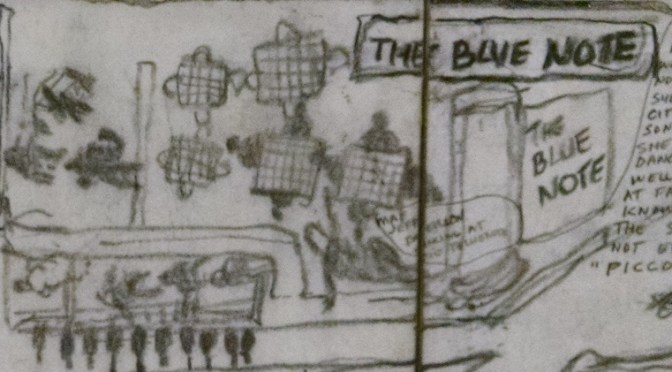
Open from 1949 to 1956, the Blue Note was located at 15th Street and Ridge Avenue. The house band, led by Ray Bryant, backed, among others, Miles Davis, John Coltrane, Lester Young, Dizzy Gillespie, Charlie Parker, Dave Brubeck, Clifford Brown, Mary Lou Williams, Buddy Rich, Chico Hamilton and Oscar Peterson.

Owner Jack Fields brought in Billie Holiday three or four times a year. Fields said, “She packed them in just to look at her.”

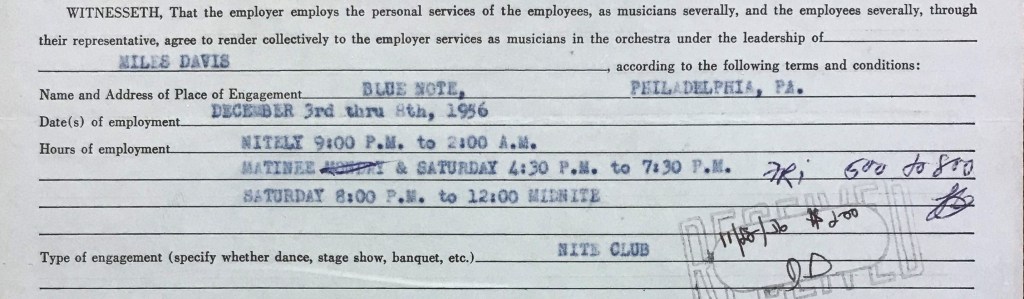
The Miles Davis Quintet, featuring John Coltrane (tenor saxophone), Red Garland (piano), Paul Chambers (bass) and Philly Joe Jones (drums), appeared at the Blue Note on December 3-8, 1956.

The performance was broadcast live on Mutual Network’s Bandstand USA. In his closing remarks, the announcer, Guy Wallace, said:

A great sound — the great sound by Miles Davis and his horn, from Lou Church’s Blue Note, 15th and Ridge Avenue down in Philadelphia. A truly fine place to go if you’re driving around down in that Philadelphia area and you want to hear some real cool jazz.

Miles Davis is the boy that can do it, because he’s one of the real great exponents of that cool sound in cool jazz. I don’t know, uh, as an observer (and more than just interested observer), I find it a pretty controversial thing to talk about cool jazz and other types of jazz, because those of you who are listening who like the clinical sound of cool jazz, really like it, and when we make any comment about it, we’re usually deluged with letters.

We hope you liked it, however, and we hope that you continue to listen to our Bandstand here on Saturday nights on Mutual as we present all types of jazz, from New Orleans to Chicago to Kansas City to the cool clinical sound of modern jazz. You’re listening to Bandstand USA on Mutual Network.

Read more