Tag Archives: Race

Hot Jazz and Cold War

In his opening remarks at the International Jazz Day global concert at the White House, President Barack Obama said:

Jazz is perhaps the most honest reflection of who we are as a nation. Because after all, has there ever been any greater improvisation than America itself? We do it in our own way. We move forward even when the road ahead is uncertain, stubbornly insistent that we’ll get to somewhere better, and confident that we’ve got all the right notes up our sleeve.

That “honest reflection of who we are as a nation” became an instrument of cultural diplomacy during the Cold War. Jazz musicians-turned-cultural ambassadors toured in more than 35 countries in Africa, Asia, Eastern Europe, Latin America and the Middle East. Jazz diplomacy was intended to win hearts and minds and promote a positive view of America as the land of freedom.

The irony of being ambassadors of freedom was not lost on jazz musicians who were treated as second-class citizens at home and subject to racial segregation.

As part of Jazz Appreciation Month, the USC Center on Public Diplomacy, the Public Diplomacy Council and the DC Jazz Festival presented a program on jazz and public diplomacy.

Dizzy Gillespie was the first Jazz Ambassador. The legendary Adam Clayton Powell Jr. was the catalyst behind the tour. His son, Adam Clayton Powell III, President of the Public Diplomacy Council, recently wrote:

Americans underestimate the impact of jazz on audiences around the world. And in a way that contributes to the power of international tours by U.S. jazz musicians, including and especially tours sponsored by the U.S. State Department.

[…]

During the Cold War, America’s most prominent “jazz ambassadors” included Dizzy Gillespie and Louis Armstrong – at a time when segregation was the law of the land in much of the U.S. and the civil rights movement was at its peak. And that created a conflict for many of musicians.

“You had people being hosed down with fire hoses and dogs sicced on them, and you had these reports going out across the world,” said [Willard] Jenkins. “So it did create a real issue for many of the African American musicians who were selected to make those tours.”

Then Jenkins read from instructions given to musicians by the State Department: “‘Remember who you are and what you represent. Always be a credit to your government.’”

READ MORE

2016 NEA Jazz Master Archie Shepp

The 2016 NEA Jazz Masters were honored at a tribute concert at the John F. Kennedy Center for the Performing Arts.

This year’s class includes Archie Shepp who grew up in West Philadelphia. During an NEA interview, Shepp talked about jazz and Philadelphia:

The music that we call jazz has always been important in the African American community, especially in the poorer neighborhoods.

There was a lot of racism and prejudice, but a lot of music, a lot of blues and some good times. Music was all over Philadelphia. You could go down to North Philadelphia and hear young John Coltrane or Johnny Coles, Jimmy Oliver, Jimmy Heath. I suppose that’s what jazz is all about, suffering and good times, and somehow making the best of all of that.

At the tribute concert for Benny Carter, I got a chance to spend some time with Shepp during the break. He reminisced about the jam sessions at the Heath Brothers’ Family Home. He shared that he learned how to play chords from Coltrane and Lee Morgan.

Truth be told, Philadelphia’s contribution to jazz is mostly an untold story. We must capture stories about Philly’s jazz scene while those who know the history are still here.

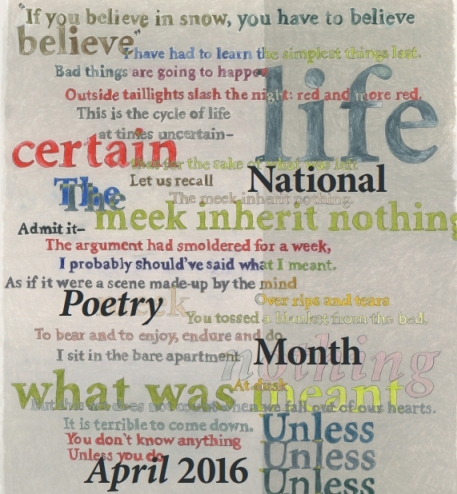
April is National Poetry Month

April is Jazz Appreciation Month. It’s also National Poetry Month.

National Poetry Month 2016

It’s probably no coincidence the two art forms are celebrated during the same month. After all, the Harlem Renaissance gave birth to jazz poetry. The most celebrated jazz poet is Langston Hughes who collaborated with jazz musicians, including Charles Mingus and Thelonious Monk.

In his 1926 essay, “The Negro Artist and the Racial Mountain,” Hughes wrote:

But jazz to me is one of the inherent expressions of Negro life in America; the eternal tom-tom beating in the Negro soul—the tom-tom of revolt against weariness in a white world, a world of subway trains, and work, work, work; the tom-tom of joy and laughter, and pain swallowed in a smile.

In 1958, Hughes recorded his poem, “The Weary Blues,” over jazz composed by Mingus and Leonard Feather.

Also, check out a reading of “The Weary Blues” by Rev. Dr. Allen Dwight Callahan, a Philly native and former professor at Harvard Divinity School.

U.S. Postal Service Tribute to Sarah Vaughan

On March 29, 2016, at the Sarah Vaughan Concert Hall at Newark Symphony Hall, the United States Postal Service released the Sarah Vaughan Forever Stamp.

Sarah Vaughan - Available Now

Deputy Postmaster General Ronald Stroman dedicated the stamp:

As one of the most compelling vocalists in American history, Sarah Vaughan was renowned for her artistic eloquence. Her dynamic vocal range, iconic vibrato, and innovative phrasing helped to transform jazz and popular music. The Postal Service is proud to honor Sarah Vaughan. Let this stamp serve as a lasting tribute to her legacy.

Trumpeter Wynton Marsalis, who played with Miss Vaughan when he was 21 years old, sent a video tribute:

It’s only fitting that Sarah Vaughan is being memorialized with a forever stamp. She was great on so many levels. In honoring her, we honor ourselves. And her talent is truly forever.

The Sarah Vaughan Forever stamp is available at local post offices or online.

Philly Celebrates Jazz 2016

April is Jazz Appreciation Month. The City of Brotherly Love and Sisterly Affection got the party started early with the Philly Celebrates Jazz kickoff on March 28th.

#PhillyJazzMonth Banner

Mayor Jim Kenney proclaimed April as Philadelphia Jazz Appreciation Month. He also honored Philly native and Grammy Award-winning bassist and composer Christian McBride who was given an inscribed Liberty Bell, the equivalent of the key to the city.

Mayor Kenney - Christian McBride

Kenney said:

Christian McBride is an ambassador of Philadelphia to the world, not only through his music, but also through his work as an educator and advocate for music education. Christian’s story and accomplishments demonstrates the power of arts education, in our schools and communities, and the impact it can have on a person’s life and how we can encourage and build the next generation of musicians, artists, and creative thinkers.

The Philadelphia Clef Club of Jazz and Performing Arts was also recognized on its 50th anniversary. The Clef Club was the social arm of Union Local 274, the black musicians union.

David Oh - Derek Green - Don Gardner - Lovett Hines - Proclamation

Philly Celebrates Jazz includes live performances, film screenings and art exhibitions. Now on view at City Hall are two photography exhibitions, Live Philly Jazz – Through the Photographic Lens and The Clef Club at 50, a retrospective curated by Don Gardner, Managing Director of the Philadelphia Clef Club, and Artistic Director Lovett Hines.

Art Exhibition

For a full calendar of Philly Celebrates Jazz events, visit http://bit.ly/PhillyJazzMonth.

Marion Cuyjet, A Black Swan

Black Swan Theory—The black swan theory or theory of black swan events is a metaphor that describes an event that comes as a surprise, has a major effect, and is often inappropriately rationalized after the fact with the benefit of hindsight.
—Wikipedia

Born in 1920 in Philadelphia, Marion Cuyjet was “light, bright and damn near white.” Cuyjet took advantage of her skin tone to take classes with the prestigious Littlefield Ballet. The company was surprised to discover that she was a black swan.

CuyjetMarionHDurham2 copy

In an interview with Brenda Dixon Gottschild, author of Joan Myers Brown & the Audacious Hope of the Black Ballerina, Cuyjet recalled:

MC: It was obvious someone had seen me, and I didn’t know it—somebody black! So in another performance they came in a little group, my friends from the YWCA club and from church. They came backstage to say hello.

[…]

BDG: So did the Littlefields know you were black?

MC: They didn’t know before the girls came, but [then] it was easy for them to believe it.

BDG: What happened once they found out?

MC: Out! Out! Out! Definitely out! And don’t come back! It was a lady who worked at the desk who takes the money and answers the telephone.

BDG: Did she say why?

MC: No, but I knew what she meant.

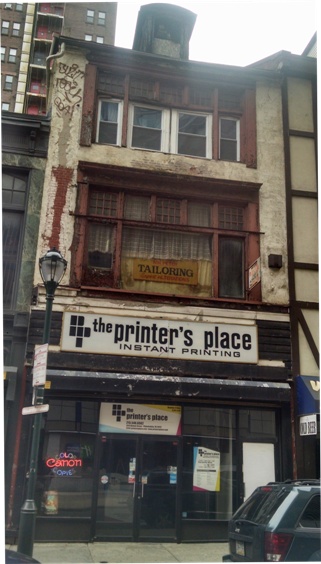
On Sept. 21, 1948, Cuyjet incorporated the Judimar School of Dance where she passed on what she had learned. She trained and mentored generations of black swans, including Joan Myers Brown, Founder and Artistic Director of PHILADANCO! and recipient of the 2012 National Medal of Arts, and Judith Jamison, Artistic Director Emerita of the Alvin Alley American Dance Theater. Jamison performed her first dance recital at the age of six at the Judimar Studio (where the tailoring shop is now located).

Mary Cuyjet - Judimar School of Dance

Cuyjet was the first African American woman to rent space in racially segregated Center City. However when the landlord found out she was a black swan, she was evicted. In her autobiography, Dancing Spirits, Jamison wrote:

She looked Caucasian and rented studio space that landlords would not rent to a person they thought was black. ‘She broke the color barrier and was constantly evicted once black children were discovered on the premises; she had to move her school seven times.

At age 14, Delores Browne won a scholarship to study with Miss Marion, as she was affectionately called. Brenda Dixon Gottschild, an author and dance historian, observed:

She recognized Delores Browne’s talent and Miss Cuyjet had this agenda. Her agenda was through the vehicle of Delores Browne to develop the first black ballerina to dance in a white ballet company.

Browne went on to audition for the School of American Ballet, the official school of the New York City Ballet. She became one of only six black students.

Cuyjet was a visionary whose determination and commitment to social justice changed the face of classical ballet. Misty Copeland, the first African American female principal with the American Ballet Theatre, stands on Miss Marion’s shoulders.

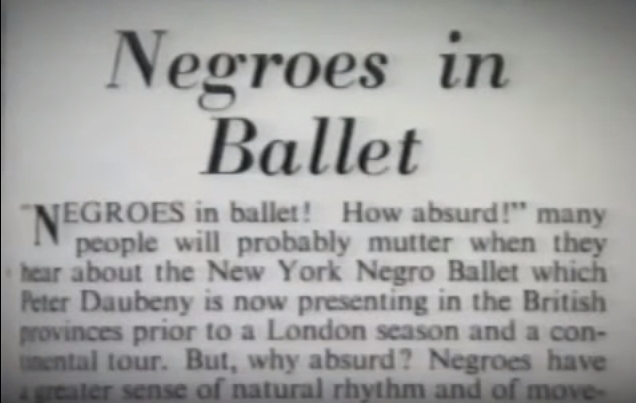
Negroes in Ballet

Today, Philly’s development boom is erasing African Americans’ cultural heritage. So while we are still here, we must preserve the legacy of those who cleared the path. Marion Cuyjet beat the odds and had a major effect on the cultural heritage of Philadelphia and the nation. If we don’t tell the story of those who came before, who will?

NB The Judimar School of Dance was located directly across the street from the famed Latin Casino.

Malcolm X and Historic Preservation

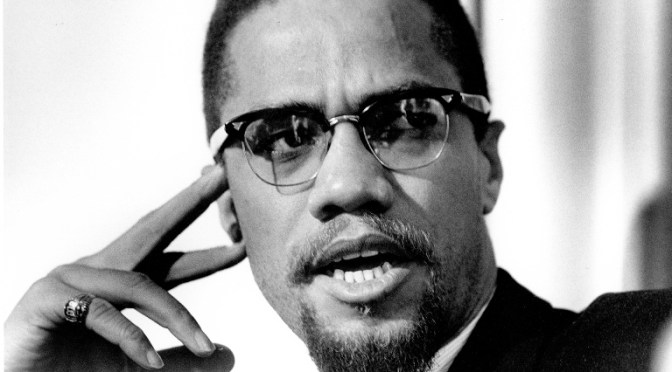
Before his awakening, Malcolm X was known as “Detroit Red,” a fixture on the jazz scene in Harlem. In 1948 while incarcerated in the Norfolk State Colony in Massachusetts, Malcolm joined the Nation of Islam. In 1954, Elijah Muhammad sent him to Philadelphia to expand Temple No. 12.

Until recently, there was confusion about where Malcolm X resided during his time in Philadelphia. Eyewitness and videotaped firsthand accounts have confirmed his address in Sharswood. So All That Philly Jazz is sponsoring the nomination of 2503 W. Oxford Street for listing in the Philadelphia Register of Historic Places.

In a Q&A with Hidden City Philadelphia’s Mike Bixler, All That Philly Jazz Director Faye Anderson talks about Malcolm X, jazz and historic preservation:

Michael Bixler: The FBI files from 1954 have Malcolm X at living at 1522 N. 26th Street, but you have discovered otherwise. How did you confirm that 2503 Oxford Street was his correct address?

Faye Anderson: On January 16, the Pennsylvania Legislative Black Caucus held a screening of civil rights documentaries at the Pearl Theater. One of the films screened was “Seeds of Awakening: The Early Nation of Islam in Philadelphia,” which included first-hand accounts of Malcolm X’s time in the city. In the film Brother Richard Hassan recalled:

We would sit up all night. When Malcolm was here, we’d sit up all night talking. We had a Unity House, a Fruit House, on 2503 Oxford Street. A big house. That’s where Malcolm would stay and all the brothers would come.

The documentary was produced by the New Africa Center, part of the Scribe Video Center’s Muslim Voices of Philadelphia community history project. I have since spoken with Abdul Rahim Muhammad, executive director of the New Africa Center, who confirmed the address with Brother Hassan. While Hassan no longer lives in the Philadelphia area, I have his phone number so I will be able to get an affidavit from him if necessary. I also have contact information for Malcolm’s former press secretary and photographer.

MB: What are the next steps to getting an historical marker placed?

FA: Architectural historian Oscar Beisert and I are preparing the form to nominate 2503 W. Oxford Street for historic designation by the Philadelphia Historical Commission and the Pennsylvania Historical and Museum Commission. We will submit the nomination on or about February 21, 2016, the 51st anniversary of the assassination of El-Hajj Malik Shabazz [Malcolm X].

MB: Why is it important to you to have an historical marker placed there?

FA: The historical marker is important because 2503 W. Oxford Street is a place where history happened. Malcolm X lived there for about six months in 1954. To be clear, the house does not meet architectural standards for historic properties. Instead, the building has significance in the cultural characteristics of Philadelphia and is associated with a person significant in the past. The building also exemplifies the political, social and cultural heritage of the African American community. What happened at 2503 W. Oxford Street laid the foundation for what is now one of the largest populations of African-American Muslims in the country.

The historical marker will tell a more complete story about the Sharswood neighborhood. Sharswood is about more than concentrated poverty and race riots. It’s a community that provided safe havens from the indignities of segregation. Jazz giants roamed Ridge Avenue and iconic leaders like Malcolm X and Charles W. Bowser resided there.

READ MORE

Barney Gordon’s Saloon

Barney Gordon’s was located in South Philly. In her autobiography, Philadelphia Walk of Famer Ethel Waters wrote:

Barney hired me, and after I’d sung two nights at his place he offered me a steady job at fifteen dollars a week. I sang there six nights a week and on Thursday afternoons. Servant girls and houseworkers had that afternoon off, and they’d come to Barney Gordon’s to drink and relax. We called them “the Thursday girls.”

[…]

Barney Gordon’s saloon was on the ground floor. We entertained, though, in a big room upstairs where the customers sat at tables. There was only a two-piece band. Toots Moore, the drummer, and a piano player who could play only in two keys.

Ethel Waters’ autobiography, His Eye is on the Sparrow, is available at Amazon.com.

Little Rathskeller

Kaliner’s Little Rathskeller was popular in the 1940s. The Ink Spots were a club favorite.

In 1993, former press agent Sam Bushman recalled:

The Ink Spots were just starting. Their record “If I Didn’t Care” made them superstars overnight. But they were committed to come back to the Rathskeller several times more at their old price.

Little Rathskeller was located at the corner of Broad and Spruce.