Tag Archives: Jazz

Before 1964, Jazz Musicians Traveled While Black

Philadelphia Jazz Appreciation Month is in full swing. In a recent interview, I noted that jazz musicians performed in nightclubs where they could not sit and hotels where they could not stay. The jazz legends whose music paved the way for the Civil Rights movement were subjected to racial discrimination as they traveled while black.

In 1936, Victor H. Green, a postal worker and civil rights activist, published the first edition of The Negro Motorist Green Book, a travel guide to navigate Jim Crow laws in the South and de facto segregation in the North.

The “Green Book,” as it was called, lists hotels, tourist homes, restaurants, nightclubs, beauty parlors, barber shops and other services. Philadelphia hotels in the 1949 edition include the Attucks, Chesterfield and Douglass.

Douglass Hotel Bus Ad - Cropped

The list of clubs includes Emerson’s Tavern, the setting for the Tony Award-winning play, “Lady Day at Emerson’s Bar and Grill,” Café Society and Watts’ Zanzibar.

Cafe Society - Watts' Zanzibar

In the wake of the landmark 1964 Civil Rights Act which outlawed racial discrimination, the last edition of the “Green Book” was published in 1966-67.

UPDATE:  A documentary, “The Green Book Chronicles,” co-produced by Calvin Alexander Ramsey and Becky Wible Searles, is in production.

In an interview with NBCBLK, Ramsey said:

There was no Internet back then to get the Green Book, this was put together with love from black people for each other to keep each other safe. The Green Book to me was a love letter of sorts. There was a time when we loved each other so much that we would open our homes just to keep another black person safe. You could be a superstar, a singer, an artist and in those days still have no place to stay, eat or bathe while on the road, so this book was about the love and ability to preserve our dignity.

Show Ramsey and his team some love and make a donation to help them complete “The Green Book Chronicles.”

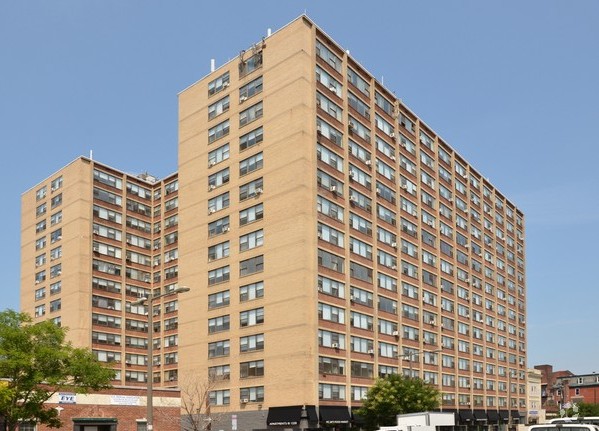
Flamingo Apartments

Opened in 1950, the Flamingo Apartments was the first interracial apartment building in Philadelphia.

The complex was one block from the Blue Horizon and Mercantile Hall which played host to jazz legends, including Duke Ellington, Cliff Brown and Fats Navarro, and a short walk to the legendary Golden Strip.

 In an interview with All About Jazz, WRTI Jazz Host Bob Perkins recalled:

A year ago, I did a short documentary on Bird (Charlie Parker), and found out about the apartment he lived in at Broad and Stiles near Girard Avenue.

[…]

Curiously, I lived in the same building 30 years later. Bird was there in 1952 to 1953. I lived there in 1980, between marriages. And, believe it or not, Dave Brubeck also lived there! He told me that, personally. It was called the Flamingo apartments—a hot place to live at the time. Arthur Prysock lived there.

Read more

Billie Holiday@100

Today is the centennial of the birth of Billie Holiday. Contrary to popular belief, she was not born in Baltimore. Lady Day was born on April 7, 1915 at Philadelphia General Hospital.

The misapprehension about Holiday’s place of birth may account for why she hasn’t been inducted into the Walk of Fame. Despite her arrests and conviction in Philadelphia, she had love for her hometown. It was, after all, the place where she could work in the nightclubs. After her conviction, she lost her New York City cabaret card and could not work in places where alcohol was sold. So she could perform at a sold-out Carnegie Hall, but couldn’t get a gig at a hole-in-the-wall in Harlem.

Parenthetically, Holiday was inducted into the Apollo Theater’s Walk of Fame yesterday.

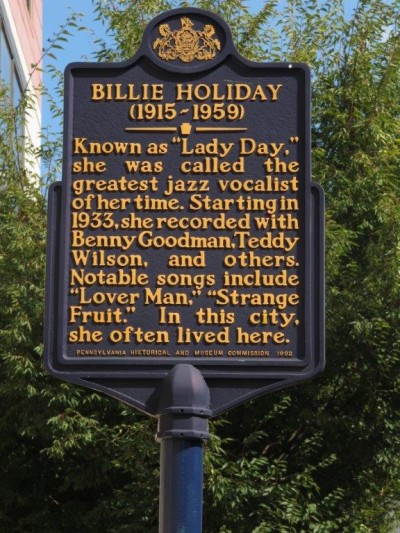
Yes, there’s a historical marker noting that when Lady Day was in town, she often lived at the Douglass Hotel.

Billie Holiday Historical Marker

Holiday is depicted in the Women of Jazz mural in Strawberry Mansion. But the mural is scheduled to be demolished by the Philadelphia Housing Authority.

Women of Jazz Mural Collage - 4.5.15

The Walk of Fame plaque is the highest honor Philadelphia bestows on a musician:

The Music Alliance is best known for the Walk of Fame along Broad Street’s Avenue of the Arts. This series of over 100 bronze commemorative plaques honors Philadelphia area musicians and music professionals who have made a significant contribution to the world of music. The Walk of Fame is the City’s most impressive public monument to the people who have made Philadelphia a great music city.

It’s never too late to do the right thing. So I nominated Billie Holiday for induction into the Walk of Fame.

Billie Holiday - PMA

Happy birthday, Lady Day. We love you more than you’ll ever know.

UPDATE: The Philadelphia Music Alliance announced that “as a special birthday gift,” Billie Holiday is the newest inductee into the Walk of Fame. In a statement, Chairman Alan Rubens said:

The Philadelphia Music Alliance wanted to present what we think is a ‘perfect’ birthday gift to an extraordinary vocalist, Billie Holiday, and announce her induction on her 100th birthday. It will be an absolute pleasure to be able to walk down Broad Street and see her name where it rightfully belongs, on the Philadelphia Music Walk of Fame, with other homegrown jazz giants like John Coltrane, Dizzy Gillespie, McCoy Tyner, and Grover Washington, Jr.

Again, it’s never too late to do the right thing.

In Philadelphia, Jazz Lives

The 5th Annual Philadelphia Jazz Appreciation Month celebration is underway.

Jazz Lives - McCoy Tyner

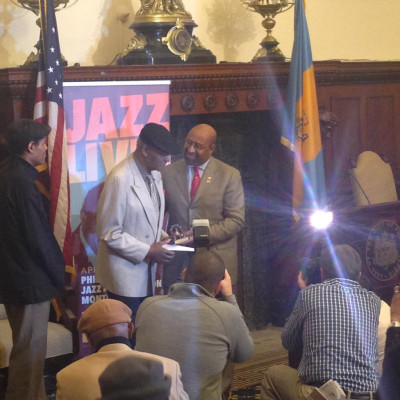
The 2015 Philadelphia Jazz Honoree is West Philly native McCoy Tyner, a four-time Grammy winner and NEA Jazz Master. Mayor Michael A. Nutter gave Tyner an inscribed Liberty Bell, the equivalent of the keys to the city.

McCoy Tyner - 4.1.15

Tyner said his Philly roots are deep:

It’s wonderful to be back home in Philadelphia. I would like to thank the Mayor and the people of this great city for making this possible for me. No matter where I am in the world, Philadelphia always has a special place in my heart.

For information about Philadelphia Jazz Appreciation Month events, visit www.creativephl.org/jazz.

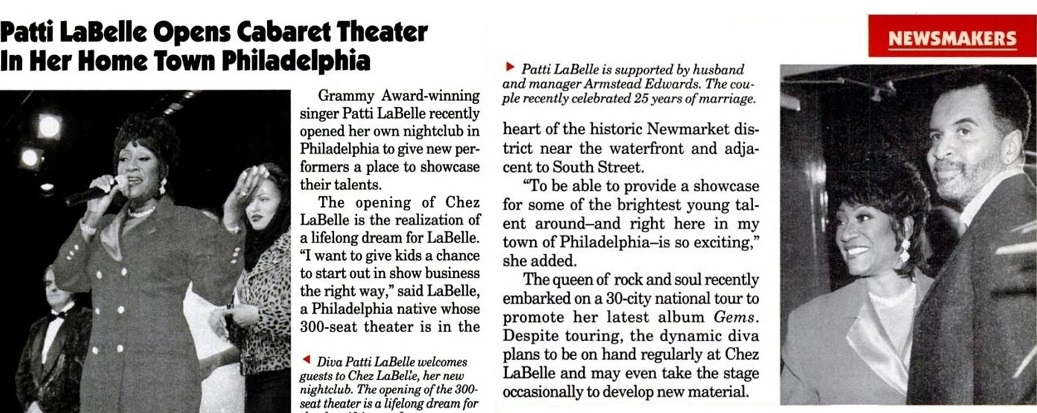
Chez LaBelle

Pianist Orrin Evans played gigs at Chez LaBelle during the spring. From the Oct. 31, 1994 issue of Jet Magazine:

Jet Magazine - 10.31.1994

Women in Jazz: Vi Redd

Elvira “Vi” Redd (born September 20, 1928) is an American jazz alto saxophone player, vocalist and educator. She has been active since the early 1950s and is known primarily for playing in the bebop, hard bop and post-bop styles. She is highly regarded as an accomplished veteran who personally knew Dizzy Gillespie and has performed with such stars as Count Basie, Rahsaan Roland Kirk, Linda Hopkins and Marian McPartland.

READ MORE

Whose Murals Get Saved?

They say that “blues ain’t nothing but a botheration on your mind.” It’s bothersome that developers are erasing African Americans’ cultural heritage. In Philadelphia, developers routinely – and without notice – demolish or cover up murals that are paid for in part by City taxpayers.

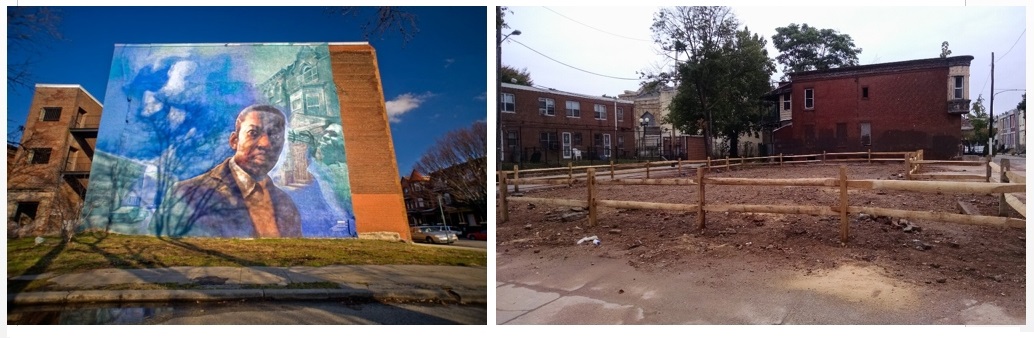
John Coltrane Collage

Murals are part of Philadelphia’s cultural landscape. The Mural Arts Program creates murals that engage the community. They reflect a community’s history, identity, hopes and dreams.

Women of Jazz Mural

City Council members can use Councilmanic Prerogative to require that developers of publicly-subsidized projects replace murals of social or cultural significance. Who will determine which mural meets that threshold? Let’s stipulate that murals that tell stories about events or persons who are the subject of books, songs, documentaries, national holiday, or City and congressional resolutions are culturally significant.

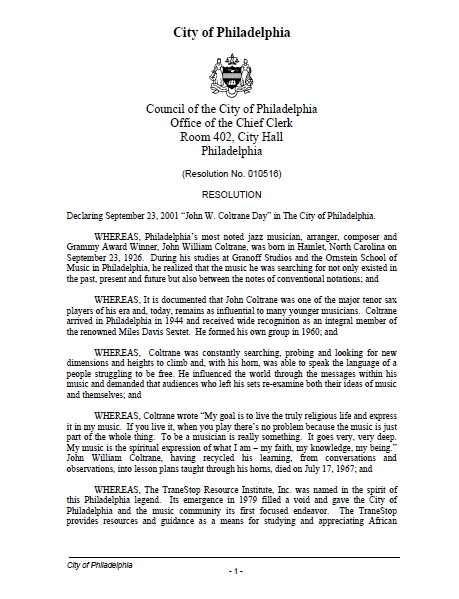
City Council Resolution - June 2001

The how of replacement is negotiable. What is non-negotiable is that developers can erase African Americans’ cultural heritage because, to borrow a phrase from Al Gore, there is “no controlling legal authority.” A district Council member is the controlling legal authority in his or her district. He or she decides which projects go forward and which ones go nowhere. While developers view murals as disposable, district Council members must exercise their prerogative and demand that they respect that which came before.

Sun Ra Arkestra House

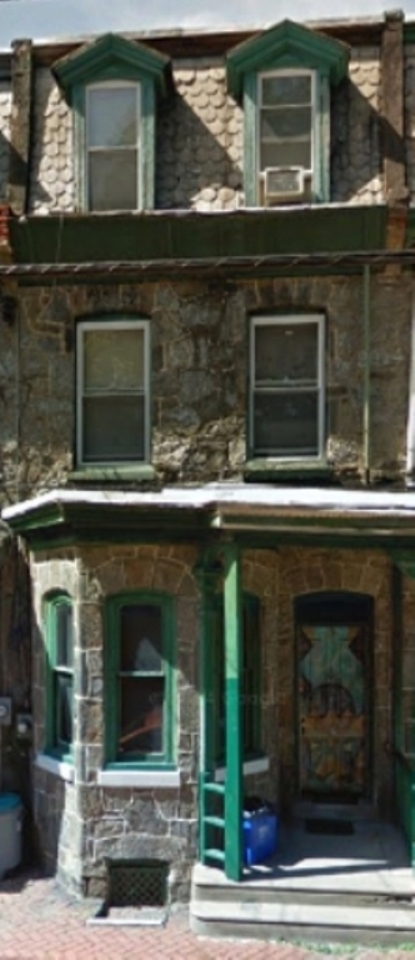
The three-story rowhouse in Germantown has been home to the Arkestra since 1969. Sun Ra Arkestra Director Marshall Allen still lives and plays here.

Sun Ra Arkestra House

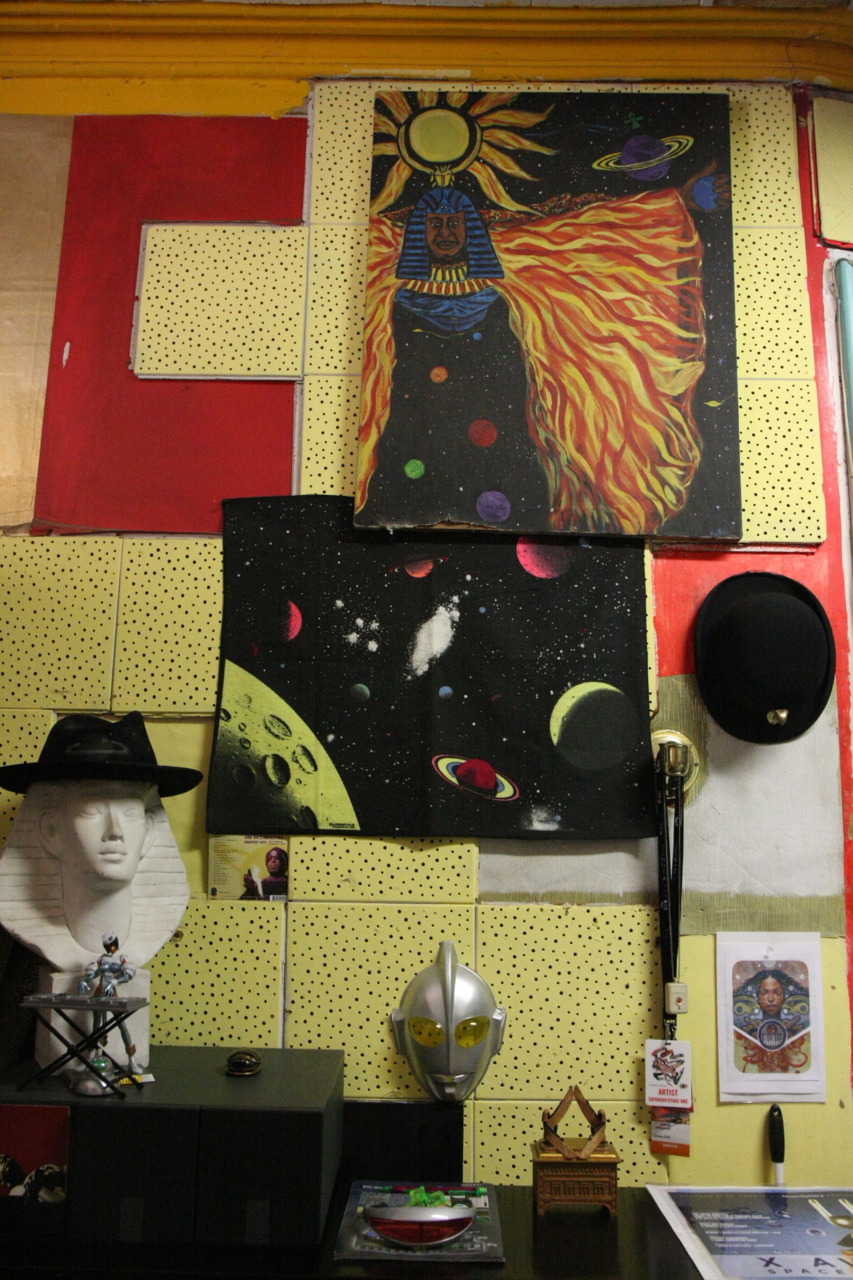
Today the house is a living museum, full of paintings, sheet music and concert posters, dedicated to keeping the spirit of Sun Ra alive.

Sun Ra House Interior

Memories from jazz educator and musician Paul Combs:

One thing about having Sun Ra as a neighbor was the possibility of running into him in everyday situations, like shopping at the supermarket. One day a friend of mine and I did just this. Sun Ra and John Gilmore, the great tenor saxophonist and Ra’s right-hand man, were taking care of the shopping for their household (many of the Arkestra members lived in a big house together with their leader). I have always had the impression that life was one big cosmic game for these folks, one that involved serious dedication and a deep sense of humor.

Both musicians were wearing robes, although less elaborate ones than they would wear on stage. Gilmore had a small, brimless North African cap on, and Ra a small turban. Gilmore pushed the cart, and Ra followed behind directing him to the various things they needed. My friend and I followed them at a respectful distance. Finally they got to the meat counter. This was a small neighborhood supermarket and it was customary to have a butcher on duty behind the counter in those days. As they parked themselves in front of the counter Sun Ra said, “John, tell the butcher that Sun Ra would like five pounds of hamburger,” and, although the butcher could hear Ra at least as well as we could, Gilmore relayed the request. The butcher served up the meat with a straight face, as if he were either in on the play or it was a normal scene to him.

I may be wrong, but I have always had the feeling that once the two of them got home they sat down and had a good laugh. My friend and I sure did, and we wished we had thought of this little piece of theater ourselves.

Read more