On Saturday, Aug. 15, 2015, Beech Community Services will present the 9th Annual “Jazz on the Ave.” The free community festival will stretch along four blocks on Cecil B. Moore Avenue, between Broad and 17th Streets.
Ken Scott, president of the Beech Companies, said:
Each year, this concert continues to grow with thousands attending from the Tristate area and beyond. From local celebrities, like Bernard Hopkins, to longtime community members, this concert continues to be one of the must attend summer concerts of the year.
During Philly’s jazz heyday, the “Ave” was known as Columbia Avenue. The four blocks were part of “The Golden Strip,” which stretched from 8th Street to 23rd Street. Columbia Avenue was chock-a-block with jazz joints, including such legendary spots as Cafe Society, Watts’ Zanzibar and the Web.
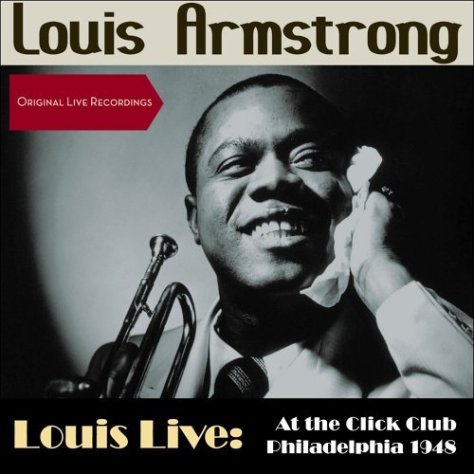
Frank Palumbo was a South Philly-based restaurateur and philanthropist. He owned a number of night clubs, including the legendary Palumbo’s in South Philly and Center City’s Click Club, where Louis Armstrong recorded a live album in 1948.
In a 2005 interview with West Philadelphia Music, a project of the School of Arts and Sciences of the University of Pennsylvania, jazz vocalist George Townes recalled:
And then on the corner at 16th and Market there was a club, they had a revolving stage upstairs, that’s no more there either. Big bands used to go in there too. They called it “The Click.”
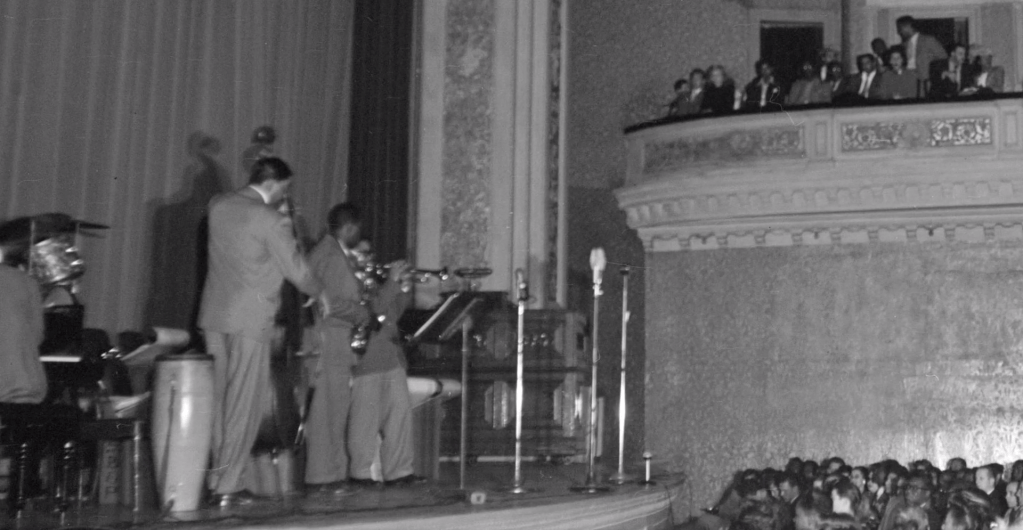
Opened in 1857, the Academy of Music is the country’s oldest concert hall and opera house. The “Grand Old Lady of Broad Street” has welcomed jazz, blues and R&B legends, including Duke Ellington, Billie Holiday, Lee Morgan, Count Basie, Louis Armstrong, Miles Davis, Shirley Horn, Ray Charles, Aretha Franklin and James Brown.
On June 5, 1945, the Dizzy Gillespie Quartet, featuring Charlie Parker, was in the house. Seated in the next-to-last row were Benny Golson and John Coltrane.
When we heard – John and I, when we first heard Charlie Parker and Dizzy Gillespie] – I told you he was sounding like Johnny Hodges – our lives changed that night. We had never heard any music like that. Never. We were screaming like these Beatles groupies, when they used to hear the Beatles. They played this Latin tune. We never heard any Latin tune like that in our lives. The Latin tunes that we played were like Lady of Spain, the stock arrangements, My Shawl. But this Latin thing, we had never heard it. Then they played an interlude, and they made a break, and Charlie Parker made a pickup by himself. Usually it was two bars, but he did it four bars, double-time. We were going crazy. We almost – of course we were up there with the cheap seats – we almost fell over the balcony. It was A Night in Tunisia. We never heard that before. Oh my goodness.
Golson expounded on that fateful night in his autobiography, Whisper Not: The Autobiography of Benny Golson:
The concert was staged at the Academy of Music, home of the Philadelphia Orchestra. We took our places, greatly excited, in the cheap seats in the uppermost level. Diz’s band kicked off with the strangest Latin-sounding tune we had ever heard. John thought it sounded “like snake charmer’s music”: Dizzy’s “A Night in Tunisia” was weirder than anything we had heard before, but intriguing. The band moved through the melody, dove into an interlude, then opened into a bravura set of riffs, or glissandi, a sustained high-octane break by the alto player, Charlie Parker. To us, the sound was way out there. Parker was dressed in a double-breasted suit with all of the buttons closed. He looked like an adult stuffed into his grade school graduation suit. …
We both nearly fell over the balcony rail, all the cells and nerves in our bodies wild with abandon. Their music was crazy and we went into an exuberant delirium, doubtless a form of higher awareness and pure joy. John tried to crawl up my gyrating body while I was grabbing onto him with barely contained amazement. We were both screaming like schoolgirls. We had heard strong performances in our young lives, but nothing like this. This was beyond “good.” It was completely new, innovative, and profound. We were drunk with happiness and bewilderment. I felt like crying. We didn’t know then, but our musical world changed that night.
Published by Temple University Press, Golson’s autobiography is available for purchase here.
Formerly the Moonglow, owners Ernie and Evelyn Harris renamed it the Second Office because “it was a visited by Center City office workers after five-thirty.”
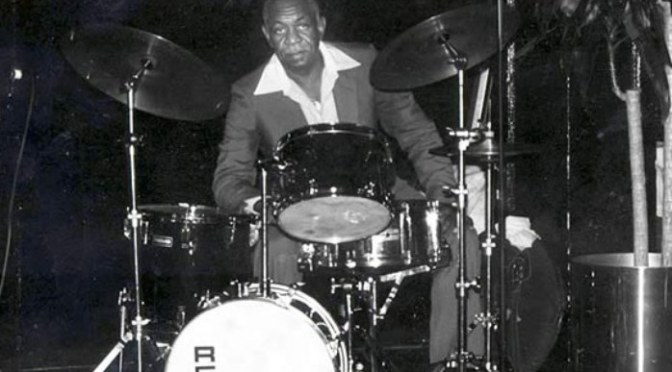
Dizzy Gillespie’s favorite drummer, Philly native Mickey Roker, played here. In 1980, the jazz spot hosted a luncheon for then-First Lady Rosalind Carter.
In 1964, Dizzy Gillespie threw his beret into the ring and ran for President of the United States.
In a piece for Al Jazeera America, Tom Maxwell wrote:
It started as a joke, as so many serious things do. His booking agency had some “Dizzy Gillespie for president” buttons made around 1960, because, you see, it’s funny. Somebody even asked Gillespie why a black jazzman — a permanent member of the underclass if there ever was one — would even think of trying for the job. “Because we need one,” he said.
“Anybody coulda made a better President than the ones we had in those times, dillydallying about protecting blacks in the exercise of their civil and human rights and carrying on secret wars against people around the world,” Gillespie wrote in his autobiography “To Be, or Not … to Bop.” “I was the only choice for a thinking man.”
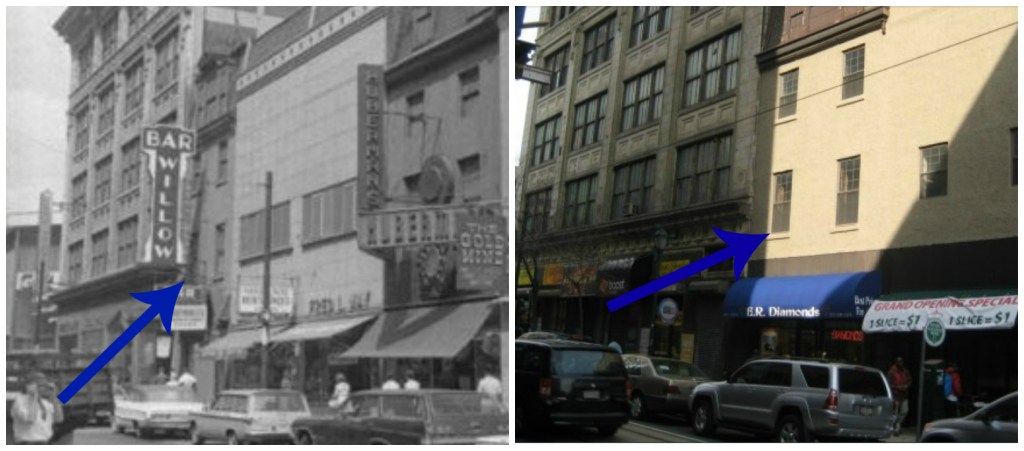
Located on the second floor above the Willow Bar, the Down Beat Swing Room was the first racially integrated jazz club in Center City. The building in which the Down Beat was located is still there.
The Down Beat was owned by jazz impresario Nat Segall. It was open from 1939 to circa 1948. Charlie Parker came in from New York City “every other week or so.” He was paid $25 a night to jam with Dizzy Gillespie and other jazz greats-in-the-making.
Jazz musicians would hang out at the Down Beat between shows at the Earle Theater.
In his autobiography, You Only Rock Once, Jerry Blavat, “the Geator with the Heator,” recounted:
Nat had owned a club called Downbeat around the corner from the Earle Theater, where Billie Holiday, Charlie Parker, and other giants of jazz performed. After Holiday was busted for narcotics one night, the police started raiding the place on a regular basis, and Nat was forced to close it down—but not before he and Bob [Horn] produced a series of jazz shows at the Academy of Music.
In a Smithsonian jazz oral history interview, National Endowment for the Arts Jazz Master and Philly native Benny Golson shared a story about the Downbeat and drummer Philly Joe Jones:
For a while they had a policeman on every street car, stand up at the front with his gun and stuff. It was so bad. During that time – because they said, you don’t have any black motormen and conductors on the streetcar. Philly Joe got a job.
Do you remember that? He got a job as a motorman, driving a streetcar. Route number 23. The longest route in Philadelphia, from south Philadelphia, all the way through north Philadelphia, all the way through Germantown. Max Roach used to come over and ride a route with him, and talk.
Philly Joe’s route came right up 11th Street, where the Down Beat Club was, on 11th Street. Philly came up one night, stopped the car in front of the Down Beat, opened the doors, got off, and went up, and took a club. Now all the people on the streetcar, they’re going crazy. He goes up into the – no, he’s not going to stay and hear a set, but he went up to do something. When he came back, boy, they were irate. He got on the streetcar and started up like he did – never heard it – like this was a matter – who would do something like that? Stop a streetcar and get off and go into a club, and everybody’s on the streetcar, waiting. Only Philly Joe would have done something like that. Only Philly would have done that.







 All That Philly Jazz