3rd Annual Philadelphia United Jazz Festival

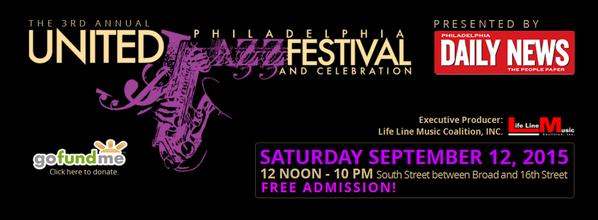
The 3rd Annual Philadelphia United Jazz Festival will be held on Saturday, Sept. 12, 2015, from noon to 10pm. The free festival will be held on South Street, between Broad and 16th streets.

3rd Annual Philadelphia Unified Jazz Festival

The festival features an exciting lineup of talent, including Odean Pope, Sam Reed, Jamaaladeen Tacuma, Warren Oree, Bobby Zankel, Arpeggio Jazz Ensemble, and the U.S. Army Jazz Big Band.

For more information, visit Philadelphia United Jazz Festival.

Sarah Vaughan Forever Stamp Will Be Issued in 2016

The U.S. Postal Service announced that the Sarah Vaughan forever stamp will be issued in 2016:

Jazz and pop singer Sarah Vaughan (1924-90) will be commemorated on a forever stamp in the Music Icons series, with 16 stamps in the full pane.

The Divine One will join fellow Union Local 274 members Count Basie, John Coltrane, Duke Ellington and Ella Fitzgerald who also have been accorded this honor.

Shout, Sister Rosetta Tharpe, Shout!

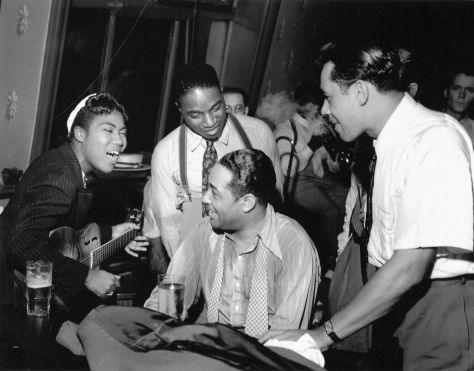
The story of Sister Rosetta Tharpe is coming to the stage on Broadway. The guitar virtuoso played with jazz greats, including Cab Calloway, Count Basie, Benny Goodman, Lucky Millinder and Duke Ellington.

Sister-Rosetta-Tharpe-Duke-Ellington-and-Cab-Calloway

BroadwayWorld reports:

Shout, Sister, Shout! is the story of the trailblazing performer Sister Rosetta Tharpe who influenced scores of popular musicians, from Elvis Presley, Johnny Cash, Little Richard, Eric Clapton and Etta James. Rosetta Tharpe was gospel music’s first superstar. A guitar virtuoso with a clear, ringing voice, she took the rich musical traditions of Black Pentecostal churches and made music for the world to enjoy. Audiences adored her and said she played guitar “like a man” — even though men learned a thing or two from her.

Before we had the phrase “women in rock,” Rosetta rocked churches, tent-meetings, revivals, dance clubs, stadiums, and concert halls — from Carnegie Hall to the Grand Ole Opry. Her remarkable journey–from Cotton Plant, Arkansas to an acknowledged influence on Elvis Presley, Johnny Cash, and a generation of British rockers–shows how a black female gospel musician was an essential player in the development of rock-and-roll. She is a pioneer and considered by many to be “The Mother of Rock and Roll.”

READ MORE

Frank Palumbo’s Click Club

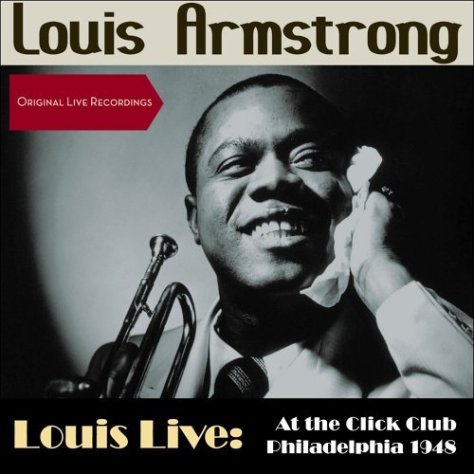
Frank Palumbo was a South Philly-based restaurateur and philanthropist. He owned a number of night clubs, including the legendary Palumbo’s in South Philly and Center City’s Click Club, where Louis Armstrong recorded a live album in 1948.

Click Club - Louis Armstrong

In a 2005 interview with West Philadelphia Music, a project of the School of Arts and Sciences of the University of Pennsylvania, jazz vocalist George Townes recalled:

And then on the corner at 16th and Market there was a club, they had a revolving stage upstairs, that’s no more there either. Big bands used to go in there too. They called it “The Click.”

Read more

2015 BlackStar Film Festival

The 4th annual BlackStar Film Festival gets underway on Thursday, July 30.

BlackStar Film Festival Logo

The four-day film fest is “a celebration of cinema focused on work by and about people of African descent in a global context. BlackStar highlights films that are often overlooked from emerging, established, and mid-career directors, writers and producers working in narrative, documentary, experimental and music video filmmaking.” The program also includes panel discussions and workshops.

I am particularly looking forward to “Virtuosity,” a collection of shorts, including University of Pennsylvania music professor Guthrie Ramsey’s documentary, “Amazing: The Tests and Triumph of Bud Powell.” The film is based on Ramsey’s 2013 book, The Amazing Bud Powell: Black Genius, Jazz History and the Challenge of Bebop.

Powell had frequent gigs in Philly in the 1940s and ‘50s. He performed in such legendary jazz spots as Watts’ Zanzibar, Downbeat and The Point. While in town, Powell shared his genius with young musicians, including Lee Morgan, at the Heritage House Jazz Workshop.

The festival runs from July 30 to Aug. 2. For the full schedule and ticket information, visit BlackStar Film Fest.

National Dance Day 2015

National Dance Day was first celebrated in the District of Columbia and Los Angeles in 2010.

In 2012 and every year since, Congresswoman Eleanor Holmes Norton has introduced a congressional resolution to designate the last Saturday in July as National Dance Day:

National Dance Day has become a grassroots movement when Americans across the country host local events celebrating dance for fun and exercise. The contribution of National Dance Day to healthy lifestyles makes dance do double duty in a nation that wants to be fit and loves to dance.

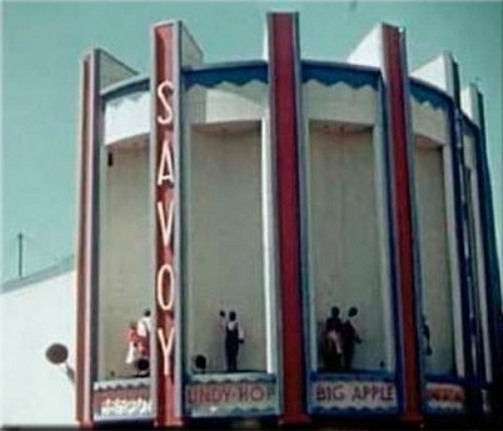
Americans’ have a longstanding fascination with black dance. Indeed, Harlem’s legendary Savoy Ballroom was a featured exhibit at the 1939 World’s Fair.

Savoy Ballroom - 1939 World's Fair

The Savoy Ballroom was the first integrated ballroom in the country. Like jazz, swing dancing helped paved the way for the Civil Rights Movement. The jazz culture allowed black and white people to see each other and dance together. More important, blacks were social peers. For a good read on the history of swing, check out “Queen of Swing” Norma Miller’s biography Swingin’ at the Savoy: A Memoir of a Jazz Dancer.

Now 96, the grande dame of swing is scheduled to perform at the Charlie Parker Jazz Festival on Aug. 22, 2015.

Race, Jazz and American Tradition

Trumpeter and Lincoln Center artistic director of jazz Wynton Marsalis spoke and performed in the closing session of the 2015 Aspen Ideas Festival. Marsalis observed:

In our country the greatest challenge is for all of us to be together in spite of our history, and not only in spite of it, but because of our history.

Marsalis was joined by multi-instrumentalist Jon Batiste, bandleader on the forthcoming “The Late Show with Stephen Colbert” on CBS.

Curtis Institute of Music

The Curtis Institute of Music is a conservatory located in Rittenhouse Square. According to U.S. News & World Report, it has the lowest acceptance rate of any college or university (3.2%), making it the most selective institution of higher education in the United States.

The Institute’s most celebrated rejected applicant is Nina Simone who was denied admission even though she had given classical piano recitals since age 10. Jazz.com reported:

At the age of seventeen, Simone moved to New York to take classes at the Juilliard School of Music in New York. She then moved with her family to Philadelphia, where she auditioned for the city’s prestigious Curtis Institute, a conservatory of classical music.

Simone sought the help of a private instructor to help her audition for the Curtis Institute, but was ultimately denied after a supposedly excellent audition. Simone said she later found out from an insider at Curtis that she was denied entry because she was black. This heightened her anger over the racism which was pervasive in the United States during this period.

READ MORE

NB: The Curtis Institute awarded Nina Simone an Honorary Doctor in Music and Humanities two days before her death in 2003.

The Mitch Thomas Show

The Mitch Thomas Show debuted on August 13, 1955. It was one of the first televised dance shows for black teenagers. During its three-year run, Mitch Thomas brought black rock and roll stars to television, including Little Richard, the Moonglows, Frankie Lymon and the Teenagers, and Ray Charles.

Mitch Thomas - Ray Charles - 7.5.15

The Mitch Thomas Show was broadcast from a studio atop Suburban Station in Center City. Across town in West Philly, Bandstand, excluded black dancers and audience members:

In a typical dissemination process [read: cultural appropriation], dances seen on Bandstand were often picked up at school dances or local dance hops and brought back to the show where they were presented by mostly white adolescents. In fact, many dances derived from The Mitch Thomas Show, the popular all-black teen show in Philadelphia, from which they were copied by white teens and then seen on Bandstand.

On August 5, 1957, Dick Clark made his debut as host of Bandstand. Clark’s claim that he integrated the show before it left Philadelphia has been debunked

More than fifty years after the show first broadcast, American Bandstand’s representations of youth culture remain closely linked both to the show’s legacy and to larger questions about popular culture, race, segregation, and civil rights. Billboard magazine journalist Fred Bronson, for example, argues that American Bandstand was a “force for social good.” Bronson bases this claim on Dick Clark’s memory that he integrated the show’s studio audience when he became the host in 1957. “I don’t think of myself as a hero or civil rights activist for integrating the show,” Clark contends, “it was simply the right thing to do.”

In the context of local and national mobilization in favor of segregation, underscored by widespread anti-black racism, integrating American Bandstand would have been a bold move and a powerful symbol. Broadcasting daily evidence of Philadelphia’s vibrant interracial teenage culture would have offered viewers images of black and white teens interacting as peers at a time when such images were extremely rare. Clark and American Bandstand, however, did not memory of integration. Rather than being a fully integrated program that welcomed black youth, American Bandstand continued to discriminate against black teens throughout the show’s Philadelphia years.

READ MORE