All posts by Faye Anderson

I am director of All That Philly Jazz, a place-based public history project that is documenting and contextualizing Philadelphia’s golden age of jazz. The project is at the intersection of art, public policy, and cultural heritage preservation.

Billie Holiday

Billie Holiday was a true artist of her day and rose as a social phenomenon in the 1950s. Her soulful, unique singing voice and her ability to boldly turn any material that she confronted into her own music made her a superstar of her time. Today, Holiday is remembered for her masterpieces, creativity and vivacity, as many of Holiday’s songs are as well known today as they were decades ago. Holiday’s poignant voice is still considered to be one of the greatest jazz voices of all time.

Holiday began working with Lester Young in 1936, who pegged her with her now-famous nickname of “Lady Day.” When Holiday joined Count Basie in 1937 and then Artie Shaw in 1938, she became one of the very first black women to work with a white orchestra, an impressive accomplishment of her time. In the 1930s, when Holiday was working with Columbia Records, she was first introduced to the poem “Strange Fruit,” an emotional piece about the lynching of a black man. Though Columbia would not allow her to record the piece due to subject matter, Holiday went on to record the song with an alternate label, Commodore, and the song eventually became one of Holiday’s classics.

READ MORE

Billie Holiday Plaque

Leon Huff

In tandem with his partner Leon Huff, producer and songwriter Kenny Gamble was the principal architect behind the lush and seductive Philly Soul sound, one of the most popular and influential musical developments of the 1970s.

Leon Huff started his musical career as a session pianist, and played on sessions for Phil Spector, the Ronettes, and Carole King in New York City before moving to Philadelphia. He formed the Locomotions, and did sessions for Cameo and Swan. Huff earned his first hit as a composer writing “Mixed-Up Shook-Up Girl” for Patty & the Emblems in 1964.

Native Philadelphian Kenny Gamble first teamed with Huff during the late ’50s while a member of the harmony group the Romeos, a unit which also included another aspiring area musician named Thom Bell, who would become crucial to Gamble’s later success. “The 81,” a 1964 single by the little-known Candy & the Kisses, was the inaugural Gamble-Huff co-production, and three years later the duo scored their first Top Five pop hit with the Soul Survivors’ “Expressway to Your Heart.” Soon recruiting Thom Bell as arranger, they subsequently scored with smashes including Archie Bell & the Drells’ “I Can’t Stop Dancing” and Jerry Butler’s “Only the Strong Survive,” gradually forging their own distinctive sound.

READ MORE

Leon Huff Plaque

Philly Joe Jones

Philly Joe Jones, an innovator of modern jazz drum technique, was the drummer of choice for jazz giants Miles Davis, John Coltrane, Tadd Dameron, Gil Evans and others. Born Joseph Rudolph Jones, Philly Joe Jones was an exciting, explosive drummer and his influence on modern jazz is legendary.

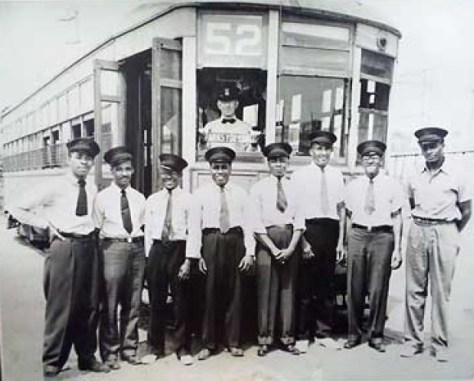
Philly Joe  was one of the first African American trolley car drivers in Philadelphia (Philly Joe is on the far left).

Philly Joe Jones - Trolley Car

He left his hometown to hook into the New York jazz scene in 1952, where he worked with Tadd Dameron and then achieved critical and popular acclaim with the Miles Davis Quintet. He was prolific in his recordings, appearing as a leader on Blues for Dracula (1958), Drum Songs (1978), and others, and as a sideman with Miles Davis on Round Midnight (1955), Cookin’ (1956), Milestones (1958), and more.

READ MORE

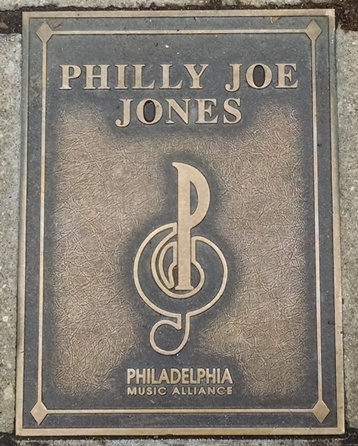
Philly Joe Jones Plaque

Eddie Lang

The first jazz guitar virtuoso, Eddie Lang, born Salvator Massaro, was everywhere in the late ’20s; all of his fellow musicians knew that he was the best. A boyhood friend of Joe Venuti, Lang took violin lessons for 11 years but switched to guitar before he turned professional. In 1924 he debuted with the Mound City Blue Blowers and was soon in great demand for recording dates, both in the jazz world and in commercial settings.

Lang’s sophisticated chord patterns made him a superior accompanist who uplifted everyone else’s music, and Lang was also a fine single-note soloist. He often teamed up with violinist Venuti (including some classic duets) and played with Red Nichols’s Five Pennies, Frankie Trumbauer and Bix Beiderbecke (most memorably on “Singing the Blues”), the orchestras of Roger Wolfe Kahn, Jean Goldkette and Paul Whiteman (appearing on one short number with Venuti in Whiteman’s 1930 film The King of Jazz) and anyone else who could hire him.

READMORE

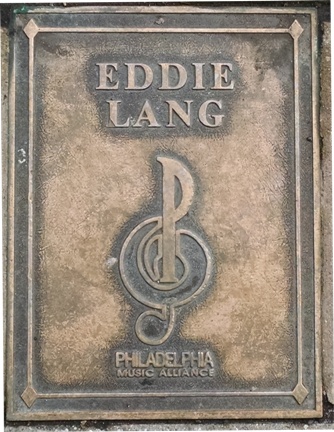
Eddie Lang Plaque

MFSB Orchestra

The MFSB Orchestra was comprised of musicians handpicked by producers Kenny Gamble, Leon Huff and Thom Bell to be the house band for their recordings. It was the band that recorded the music tracks for the likes of Harold Melvin & the Blue Notes, the O’Jays, the Stylistics, the Spinners, Lou Rawls, Billy Paul and a host of others. A well-oiled machine with talent and enthusiasm so special that the group had to be given its own opportunity in the spotlight. Gamble & Huff did just that in 1973 by officially making the MFSB (Mother Father Sister Brother) Orchestra recording artists in their own right. The MFSB Orchestra quickly became an exciting melodic hybrid of swing, classical, jazz and R&B that went on to Grammy winning gold and platinum success.

MFSB Orchestra Plaque

Gerry Mulligan

The most famous and probably greatest jazz baritonist of all time, Gerry Mulligan was a giant. A flexible soloist who was always ready to jam with anyone from Dixielanders to the most advanced boppers, Mulligan brought a somewhat revolutionary light sound to his potentially awkward and brutal horn and played with the speed and dexterity of an altoist.

Mulligan started on the piano before learning clarinet and the various saxophones. His initial reputation was as an arranger. In 1944 he wrote charts for Johnny Warrington’s radio band and soon was making contributions to the books of Tommy Tucker and George Paxton. He moved to New York in 1946 and joined Gene Krupa’s Orchestra as a staff arranger; his most notable chart was “Disc Jockey Jump.” The rare times he played with Krupa’s band was on alto and the same situation existed when he was with Claude Thornhill in 1948.

READ MORE

Gerry Mulligan Plaque

Jaco Pastorius

Inducted: 2016

Jaco Pastorius, the man who revolutionized how the bass guitar is played and who is, for many, the best and most influential bass guitarist ever, didn’t start his musical life on the instrument. Instead, the man who would be the master of the fretless electric bass was a drummer.

A drummer, just like his dad, Jack Pastorius, a big band player and singer. Jaco was the first of three children born to Jack and his wife, Stephanie. He arrived on Dec. 1, 1951 in Norristown, Pennsylvania, near Philadelphia. John Francis Anthony Pastorius III was quickly given a nickname by his parents – “Jocko,” which transformed into “Jaco” in the early 1970s when a French-born musician friend and neighbor, Alex Darqui, spelled it that way by mistake. Jaco liked the alternate spelling, and kept it.

When Jaco was almost eight years old, his family moved to Oakland Park, Florida, near Fort Lauderdale. Jaco was a sweet, competitive kid, who loved to play games, including football. As the son of a musician, he was interested in music, too, and bought a small drum kit with money earned as a newspaper delivery boy. His two interests collided in 1964 during a youth league football practice in which Jaco’s wrist was badly injured, so much so that it eventually required corrective surgery. Jaco continued to play drums after that, but it was far more difficult that it had been prior to that hit in practice.

Read More

Jaco Pastorius Plaque

Billy Paul

On December 1, 1934 in North Philadelphia, Paul Williams was born to sing. Becoming far better known as Billy Paul, at the age of twelve he was appearing on radio shows in his hometown. By age fifteen, Billy was sharing the stage with legends Charlie Parker and John Coltrane as a jazz vocalist. Briefly he served as a stand-in for one of Harold Melvin and the Blue Notes. More than twenty artful albums and a coveted Grammy award later, Billy Paul is still setting worldwide audiences afire, both live and on record.

Billy Paul has developed into a widely respected vocal virtuoso uniquely blending traces of jazz, R&B and pop. As a testament to his versatility, Billy’s talent has been internationally showcased on stages shared with the likes of Stevie Wonder, Miles Davis, James Brown and Gloria Estefan.

READ MORE

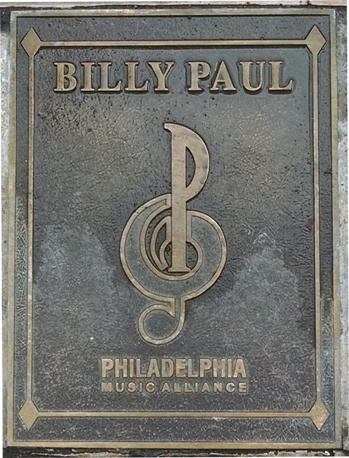
Billy Paul Plaque

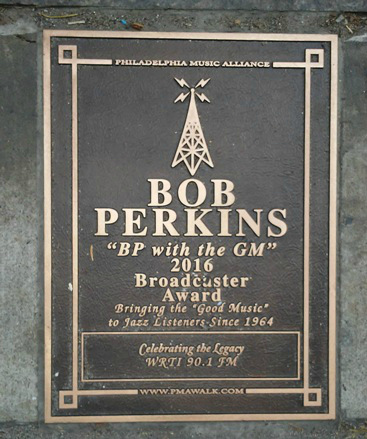
Bob Perkins

Inducted: 2016

Also known as “BP with the GM,” (translation: “Bob Perkins with the Good Music”), Perkins has been in the broadcasting industry for more than four decades as an on-air host, and is now commonly referred to as a Philadelphia jazz radio legend.

BP broke into the radio business in 1964 when he landed an on-air job in Detroit. In 1969, his hometown of Philadelphia beckoned him back with a gig at rhythm-and-blues station WDAS, where he worked for the next 19 years. He joined WRTI in 1997. In addition to his job as jazz host, BP writes numerous columns and commentaries on jazz for local publications. He also hosts concerts at jazz clubs and at regional festivals.

BP was awarded the 2002 Mellon Jazz Community Award. In 2007, he was honored with a proclamation for his outstanding contributions to Philadelphia’s jazz community by Mayor John Street, Philadelphia City Council, and the House of Representatives in Harrisburg. Wait two seconds and you’ll hear about yet another award bestowed on “Ol’ BP,” as he calls himself.

Hear Perkins on Monday through Thursday evenings from 6 to 9 pm, and on Sundays from 9 am to 1 pm on WRTI, 90.1 FM.

Bob Perkins Plaque - Feature

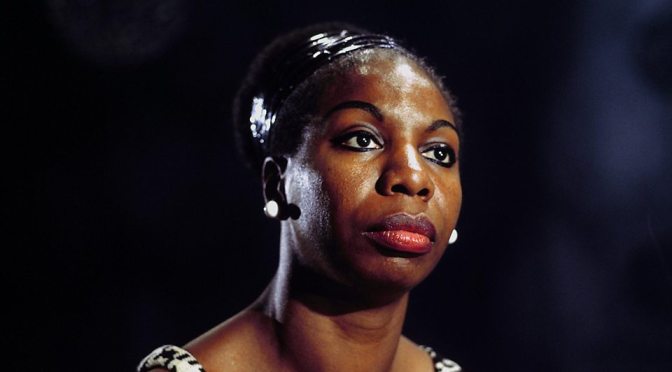
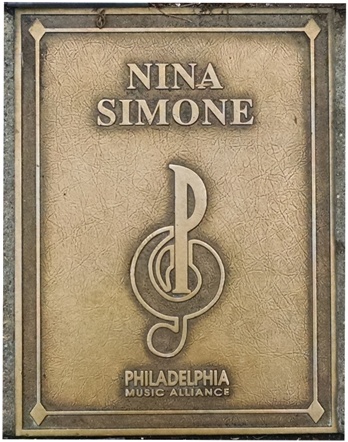
Nina Simone

Of all the major singers of the late 20th century, Nina Simone was one of the hardest to classify. She recorded extensively in the soul, jazz, and pop idioms, often over the course of the same album; she was also comfortable with blues, gospel, and Broadway. It’s perhaps most accurate to label her as a “soul” singer in terms of emotion, rather than form. Simone was an eclectic who brought soulful qualities to whatever material she interpreted. These qualities were among her strongest virtues; paradoxically, they also may have kept her from attaining a truly mass audience. The same could be said of her stage persona; admired for her forthright honesty and individualism, she was also known for feisty feuding with audiences and promoters alike.

READ MORE

Nina Simone Plaque