Tag Archives: Civil Rights

Marion Cuyjet, A Black Swan

Black Swan Theory—The black swan theory or theory of black swan events is a metaphor that describes an event that comes as a surprise, has a major effect, and is often inappropriately rationalized after the fact with the benefit of hindsight.
—Wikipedia

Born in 1920 in Philadelphia, Marion Cuyjet was “light, bright and damn near white.” Cuyjet took advantage of her skin tone to take classes with the prestigious Littlefield Ballet. The company was surprised to discover that she was a black swan.

CuyjetMarionHDurham2 copy

In an interview with Brenda Dixon Gottschild, author of Joan Myers Brown & the Audacious Hope of the Black Ballerina, Cuyjet recalled:

MC: It was obvious someone had seen me, and I didn’t know it—somebody black! So in another performance they came in a little group, my friends from the YWCA club and from church. They came backstage to say hello.

[…]

BDG: So did the Littlefields know you were black?

MC: They didn’t know before the girls came, but [then] it was easy for them to believe it.

BDG: What happened once they found out?

MC: Out! Out! Out! Definitely out! And don’t come back! It was a lady who worked at the desk who takes the money and answers the telephone.

BDG: Did she say why?

MC: No, but I knew what she meant.

On Sept. 21, 1948, Cuyjet incorporated the Judimar School of Dance where she passed on what she had learned. She trained and mentored generations of black swans, including Joan Myers Brown, Founder and Artistic Director of PHILADANCO! and recipient of the 2012 National Medal of Arts, and Judith Jamison, Artistic Director Emerita of the Alvin Alley American Dance Theater. Jamison performed her first dance recital at the age of six at the Judimar Studio (where the tailoring shop is now located).
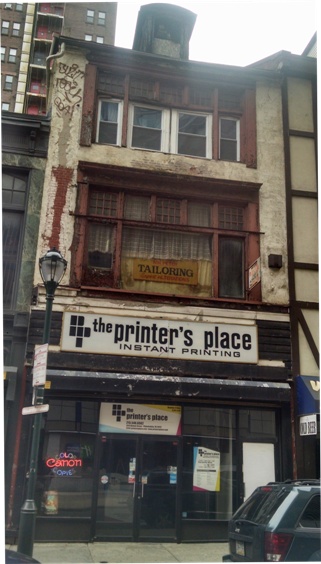
Mary Cuyjet - Judimar School of Dance

Cuyjet was the first African American woman to rent space in racially segregated Center City. However when the landlord found out she was a black swan, she was evicted. In her autobiography, Dancing Spirits, Jamison wrote:

She looked Caucasian and rented studio space that landlords would not rent to a person they thought was black. ‘She broke the color barrier and was constantly evicted once black children were discovered on the premises; she had to move her school seven times.

At age 14, Delores Browne won a scholarship to study with Miss Marion, as she was affectionately called. Brenda Dixon Gottschild, an author and dance historian, observed:

She recognized Delores Browne’s talent and Miss Cuyjet had this agenda. Her agenda was through the vehicle of Delores Browne to develop the first black ballerina to dance in a white ballet company.

Browne went on to audition for the School of American Ballet, the official school of the New York City Ballet. She became one of only six black students.

Cuyjet was a visionary whose determination and commitment to social justice changed the face of classical ballet. Misty Copeland, the first African American female principal with the American Ballet Theatre, stands on Miss Marion’s shoulders.
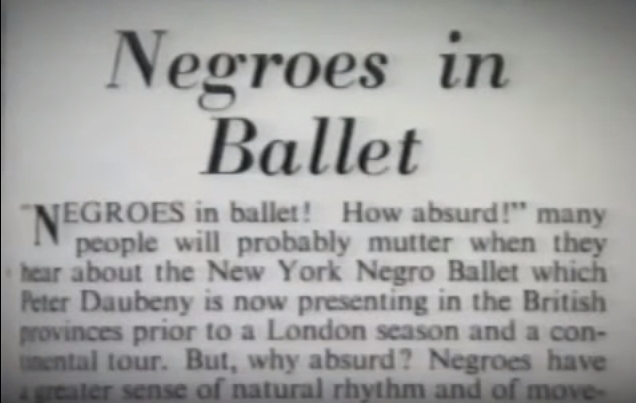
Negroes in Ballet

Today, Philly’s development boom is erasing African Americans’ cultural heritage. So while we are still here, we must preserve the legacy of those who cleared the path. Marion Cuyjet beat the odds and had a major effect on the cultural heritage of Philadelphia and the nation. If we don’t tell the story of those who came before, who will?

NB The Judimar School of Dance was located directly across the street from the famed Latin Casino.
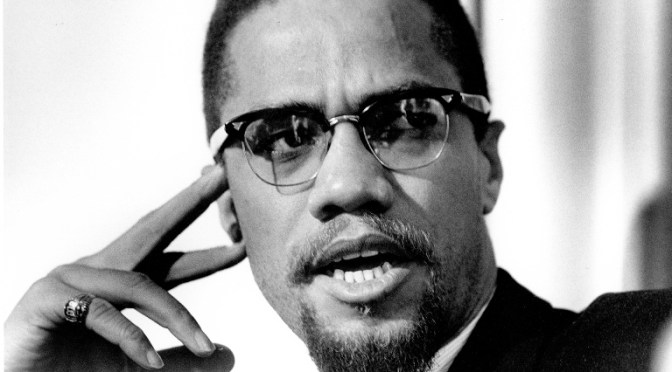
Malcolm X and Historic Preservation

Before his awakening, Malcolm X was known as “Detroit Red,” a fixture on the jazz scene in Harlem. In 1948 while incarcerated in the Norfolk State Colony in Massachusetts, Malcolm joined the Nation of Islam. In 1954, Elijah Muhammad sent him to Philadelphia to expand Temple No. 12.

Until recently, there was confusion about where Malcolm X resided during his time in Philadelphia. Eyewitness and videotaped firsthand accounts have confirmed his address in Sharswood. So All That Philly Jazz is sponsoring the nomination of 2503 W. Oxford Street for listing in the Philadelphia Register of Historic Places.

In a Q&A with Hidden City Philadelphia’s Mike Bixler, All That Philly Jazz Director Faye Anderson talks about Malcolm X, jazz and historic preservation:

Michael Bixler: The FBI files from 1954 have Malcolm X at living at 1522 N. 26th Street, but you have discovered otherwise. How did you confirm that 2503 Oxford Street was his correct address?

Faye Anderson: On January 16, the Pennsylvania Legislative Black Caucus held a screening of civil rights documentaries at the Pearl Theater. One of the films screened was “Seeds of Awakening: The Early Nation of Islam in Philadelphia,” which included first-hand accounts of Malcolm X’s time in the city. In the film Brother Richard Hassan recalled:

We would sit up all night. When Malcolm was here, we’d sit up all night talking. We had a Unity House, a Fruit House, on 2503 Oxford Street. A big house. That’s where Malcolm would stay and all the brothers would come.

The documentary was produced by the New Africa Center, part of the Scribe Video Center’s Muslim Voices of Philadelphia community history project. I have since spoken with Abdul Rahim Muhammad, executive director of the New Africa Center, who confirmed the address with Brother Hassan. While Hassan no longer lives in the Philadelphia area, I have his phone number so I will be able to get an affidavit from him if necessary. I also have contact information for Malcolm’s former press secretary and photographer.

MB: What are the next steps to getting an historical marker placed?

FA: Architectural historian Oscar Beisert and I are preparing the form to nominate 2503 W. Oxford Street for historic designation by the Philadelphia Historical Commission and the Pennsylvania Historical and Museum Commission. We will submit the nomination on or about February 21, 2016, the 51st anniversary of the assassination of El-Hajj Malik Shabazz [Malcolm X].

MB: Why is it important to you to have an historical marker placed there?

FA: The historical marker is important because 2503 W. Oxford Street is a place where history happened. Malcolm X lived there for about six months in 1954. To be clear, the house does not meet architectural standards for historic properties. Instead, the building has significance in the cultural characteristics of Philadelphia and is associated with a person significant in the past. The building also exemplifies the political, social and cultural heritage of the African American community. What happened at 2503 W. Oxford Street laid the foundation for what is now one of the largest populations of African-American Muslims in the country.

The historical marker will tell a more complete story about the Sharswood neighborhood. Sharswood is about more than concentrated poverty and race riots. It’s a community that provided safe havens from the indignities of segregation. Jazz giants roamed Ridge Avenue and iconic leaders like Malcolm X and Charles W. Bowser resided there.

READ MORE

Black History Month 2016

Here at All That Philly Jazz, we celebrate black history 365. Outside the African American community, black history is recognized, if at all, in February, the shortest month.

For the first time, the New York Times is sharing unpublished photos from its archives:

Hundreds of stunning images from black history, drawn from old negatives, have long been buried in the musty envelopes and crowded bins of the New York Times archives.

None of them were published by The Times until now.

Were the photos — or the people in them — not deemed newsworthy enough? Did the images not arrive in time for publication? Were they pushed aside by words here at an institution long known as the Gray Lady?

[…]

Photographers for The Times captured all of these scenes, but then the pictures and negatives were filed in our archives, where they sat for decades.

This month, we present a robust selection for the very first time.

Every day during Black History Month, we will publish at least one of these photographs online, illuminating stories that were never told in our pages and others that have been mostly forgotten.

It’s better late than never.

For more information, visit Unpublished Black History.

The Mark of Jazz

From the Broadcast Pioneers of Philadelphia:

From 1965 to 1975, Broadcast Pioneers member Sid Mark hosted a widely acclaimed television show, first carried by Philadelphia’s Channel 17, WPHL-TV and then later aired by WHYY-TV, Channel 12. “The Mark of Jazz” was THE broadcast of that era for jazz.

In an interview with All About Jazz, Sid Mark talked about Nina Simone:

SM: And one of the people I was actually responsible for when it came to her success was Nina Simone.

AAJ: I know that Nina spent some time in Philadelphia.

SM: She started her career in Philadelphia. In her autobiography, she said the reason for her success was a white Jewish disc jockey, Sid Mark. She said, “If I knew him today, I don’t know if I’d kiss him or smack him in the mouth!” (laughter.) That’s a quote. We had a hell of a relationship! By the way, did the tribute concert by her daughter ever take place?

AAJ: It was performed at Town Hall last year. From what I understand, it was extremely successful.

SM: I love that picture of the two of them together.

AAJ: She’s been very active in promoting Nina’s legacy.

SM: Nina was something else. We had hours of discussions on the numerous radio and TV shows we did together. When I discovered her, she was just playing piano at a little joint in Philly at 22nd and Chestnut. It was a bar, and she wasn’t singing, just playing the piano.

READ MORE

The Girls in the Band

“The Girls in the Band” is a documentary that tells untold or stories of female jazz and big band instrumentalists, including Mary Lou Williams and the International Sweethearts of Rhythm. Originally released in 2013, the Collector’s Edition DVD is now available.

For more information, go here.

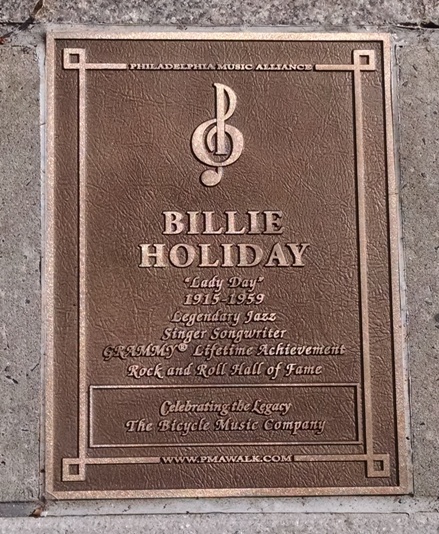
Billie Holiday Inducted into Philadelphia Walk of Fame

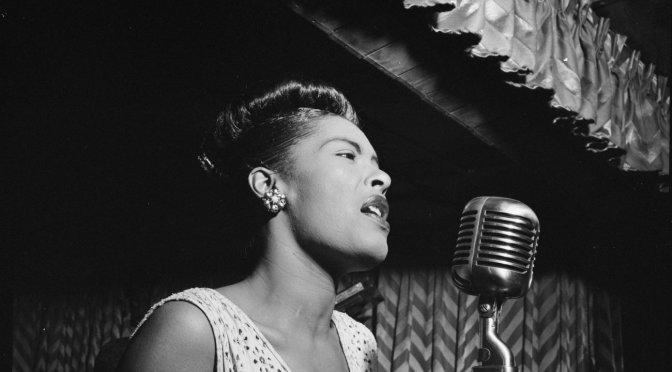
Billie Holiday was born in West Philly 100 years ago. This morning, her star will be reborn as Lady Day is inducted into the Philadelphia Walk of Fame.

I am proud to have played a role in making this happen.

Billie Holiday Joins Walk of Fame

For me, it was personal. After a failed romance when I was in college, I started my day by playing “Good Morning Heartache.” My best friend would ask me, “Why are you always listening to that junkie?” I ignored him. We now know Lady Day was an early victim of racial profiling.

Billie helped me get through a rough patch. It will be my pleasure to help keep her bronze plaque clean.

UPDATE: Billie Holiday’s Walk of Fame plaque unveiled. It’s located in front of the Kimmel Center.

Billie Holiday - Walk of Fame Plaque - 10.26.15