Tag Archives: Civil Rights

Must-See TV: ‘The Sit-In’

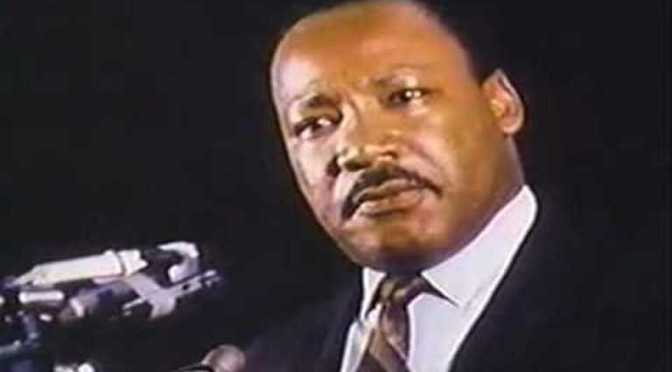
For one week in February 1968, Harry Belafonte hosted “The Tonight Show,” then the highest-rated late night television show. Belafonte’s guests included Robert F. Kennedy, Bill Cosby, Lena Horne, Nipsey Russell, Paul Newman, Wilt Chamberlain, Buffy Sainte-Marie, Dionne Warwick, Aretha Franklin, Sidney Poitier and Dr. Martin Luther King Jr.

A documentary about that magical week of interviews and performances, “The Sit-In: Harry Belafonte Hosts the Tonight Show,” was scheduled to be screened at the 2020 Tribeca Film Festival. But along came the coronavirus. Variety reports:

It was 1968, war was raging and racial tensions in America were at a boiling point, dividing the nation. In February, Harry Belafonte stepped in for Johnny Carson to host “The Tonight Show.” It was a monumental moment in which an African American would be the frontman of the most dominant program in late night — and perhaps all of TV — for an entire week. Guests included Lena Horne, Paul Newman, Aretha Franklin, Martin Luther King Jr. and Robert F. Kennedy.

The doc was scheduled to screen in April at the Tribeca Film Festival, not far from where “The Tonight Show” was filmed in the ’60s, with an after-film discussion that was to have included Belafonte’s daughter, Gina. “We were so excited,” says Richen. “It’s a New York story, and I’m a New Yorker.”

But as with many eagerly anticipated independent films this year, the movie’s launchpad disappeared when the festival was canceled due to the coronavirus, making it a work about the events of yesterday informing today — trumped by the health crisis of the moment.

Read more

Blackfishing Marian Anderson

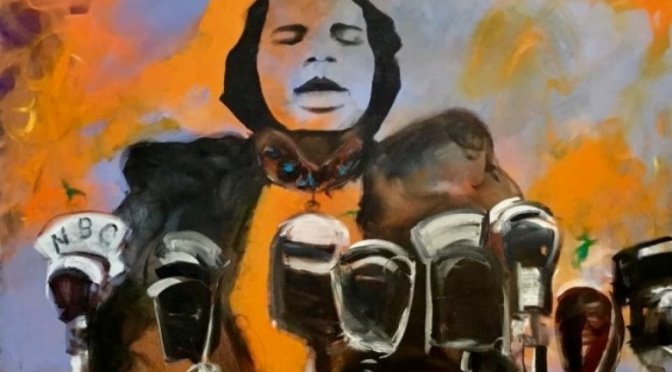
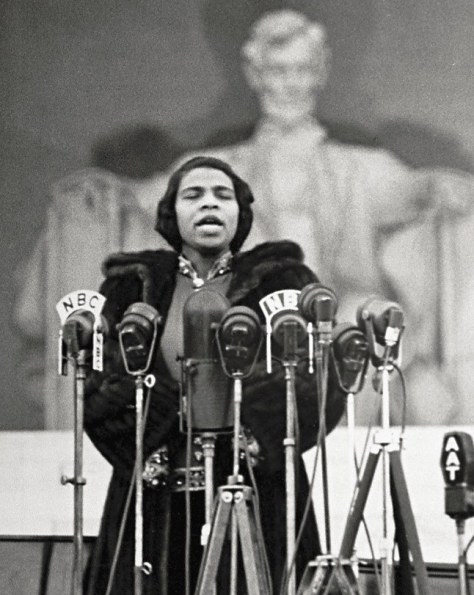
Easter Sunday marked the 81st anniversary of Marian Anderson’s performance at the Lincoln Memorial before an audience of 75,000. She sang outdoors because the Daughters of the American Revolution, an organization of white descendants of Revolutionary War veterans, banned African Americans from performing at Constitution Hall which DAR owns.

Marian Anderson - Lincoln Memorial

Five days earlier, the National Endowment for the Humanities announced $22.2 million in new grants including $650,000 for a documentary about Marian Anderson. Michael Kantor, executive producer of American Masters, is the project director.

I was thrilled the civil rights icon was finally getting the American Masters treatment. The thrill was gone when I found out the Marian Anderson Museum & Historical Society is not included in the grant.

NEH - No Funding

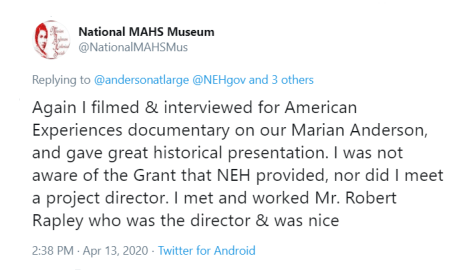
Jillian Patricia Pirtle, CEO and President of the Marian Anderson Museum & Historical Society, was interviewed by Robert Rapley, a producer and writer for The American Experience. It is ironic the producer of The Abolitionists thinks it’s cool to pick a black woman’s brain for free.

NEH - Robert Rapley

This is Kantor’s second helping of taxpayers’ money for the same project. In 2018, NEH awarded him $75,000 for the “development of a script and trailer for a sixty-minute documentary film on the popular singer Marian Anderson.” This video is the grant product.

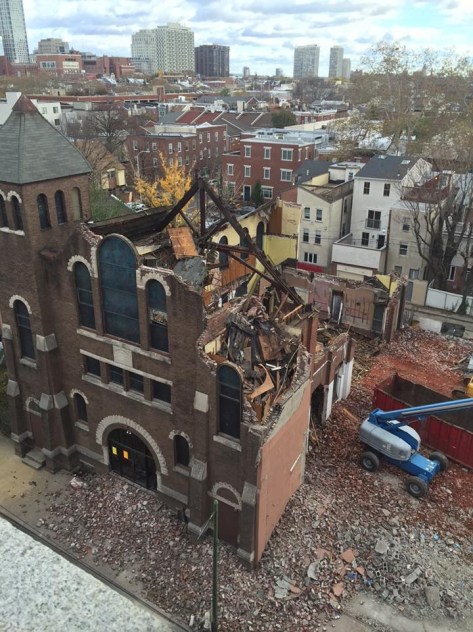
Marian Anderson was born and nurtured in Philadelphia. She first performed at Union Baptist Church. When her family couldn’t afford private lessons, members of the congregation pitched in and raised money for a voice teacher. I spoke up in support of preservationist Oscar Beisert’s effort to save the church. In 2015, the historic church was demolished to make way for luxury condos for gentrifiers.

Marian Anderson Church - 7.11.16

I spoke up when residents of Graduate Hospital, the most gentrified neighborhood in Philadelphia, floated the idea of renaming their community “Marian Anderson Village.” African Americans have been displaced but gentrifiers want the cultural cachet of the internationally renowned contralto without the people who look like her.

Graduate Hospital - Marian Anderson Village

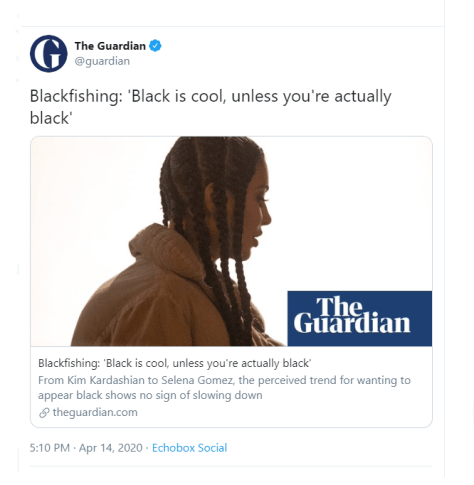
Cultural appropriation or blackfishing has no bounds. Karen Attiah, global opinions editor for The Washington Post, observed, “It’s America’s obsession with blackness, and black culture – without black people.”

Blackfishing - Karen Attiah

Michael Kantor is awarded $725,000 for a documentary. Meanwhile, the cultural institution that preserved Marian Anderson’s South Philly rowhouse and keeps her story in public memory is starving for resources.

NEH - No Funding2

Legendary conductor Arturo Toscanini once said, “Hers is a voice heard once in a hundred years.” Sadly, blackfishing Marian Anderson is an all too common occurrence.


Jump for Joy: Duke Ellington and Social Change

Legendary composer, bandleader and pianist Duke Ellington was not an outspoken activist. His activism was expressed in benefit concerts, non-segregation clause in his contract and his music. In the 1960s, Ellington was asked when he was going to compose a civil rights piece. His reply, “I did my piece more than 20 years ago when I wrote Jump for Joy.”

Duke Ellington-Jump-For-Joy

Debuted on July 10, 1941, at the Mayan Theater in Los Angeles, the musical addressed African American identity and representation. For Ellington, showcasing black excellence was an act of resistance to racial caricatures. Although Jump for Joy received rave reviews, it ran for only 122 performances. The musical never made it to Broadway. The “Great White Way” was not ready for Ellington’s unapologetic blackness.

Nearly 80 years later, audiences still jump for joy when they hear songs from the musical, including “I’ve Got It Bad (and That Ain’t Good) and “Rocks in My Bed.”

https://www.youtube.com/watch?v=NP2b5VLIhVM

Marvin Gaye Forever

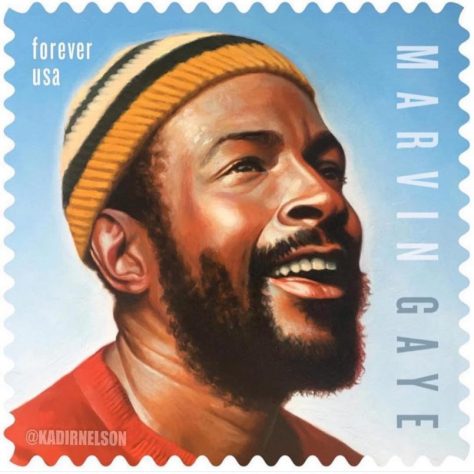
Motown legend Marvin Gaye was born on April 2, 1939. To celebrate what would have been the 80th birthday of the “Prince of Soul,” the United States Postal Service will release the Marvin Gaye Commemorative Forever® Stamp.

Marvin Gaye - Forever Stamp2

In a Facebook post, USPS wrote:

Dear Music Fans,

We’re honoring the life, legend and sound of Marvin Gaye (1939 – 1984) with the newest stamp in our Music Icons series. Pictured here in front of Washington D.C.’s @howardtheatre, where he graced the stage, our stamp features a portrait of Gaye inspired by historic photographs.

With hits like “Ain’t Nothing Like the Real Thing,” “I Heard It Through the Grapevine,” and “Too Busy Thinking About My Baby,” Gaye helped shape the buoyant sound of the Motown record label in the 1960s. Released in 1971, his expansive masterwork, “What’s Going On,” is widely considered one of the greatest recordings in the history of American popular music.

Gaye’s presence and unique sound will live on forever through his music and now through the mail. Send some soul by including the Marvin Gaye stamp on your envelope.

The Marvin Gaye Commemorative Forever® Stamp will be unveiled at the Greek Theatre in Los Angeles. You can watch the dedication ceremony on the USPS Facebook page at www.facebook.com/USPS on Tuesday, April 2, 2019 at 11 a.m. PDT.

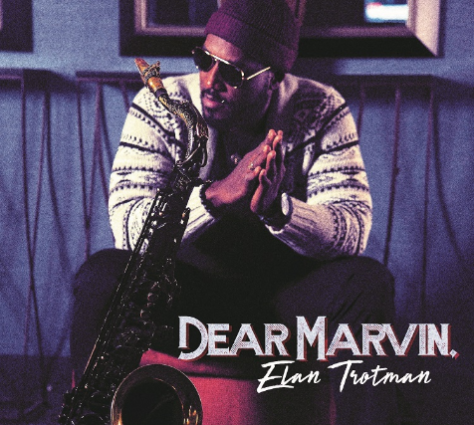
Jazz saxophonist Elan Trotman will be present at the celebration. Later that day, he will drop a tribute album, “Dear Marvin,” a collection of ten of the iconic crooner’s best songs.

Marvin Gaye - Elan Trotman

Trotman told JazzCorner.com:

It’s been an honor to be able to share my interpretations of some of Marvin’s classics. As with all cover projects, I made an extra effort to learn lyrics and storylines for each composition in order to truly understand his interpretations and performances on each song.

You’ve got to give it up for Marvin Gaye who is forever stamped in our hearts and minds.

Women in Jazz Month 2019

March is Women in Jazz Month, a time to celebrate and recognize the contributions of women to jazz. As a lifelong activist, I want to celebrate women who used music as a platform for social change.

Billie Holiday’s “Strange Fruit” is well-known.

Ethel Waters’ “Supper Time” is not as well-known. Written by Irving Berlin especially for Waters, the song is about a wife’s grief over the lynching of her husband.

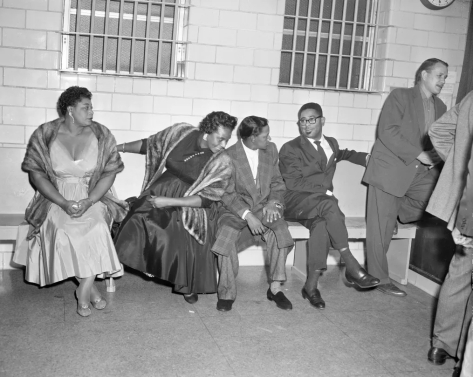
Ella Fitzgerald broke down racial barriers. On October 7, 1955, the “First Lady of Song” performed with the Jazz at the Philharmonic in Houston. The concert tour was produced by her manager Norman Granz, an ally in the fight for racial justice. The Music Hall had “Negro” and “White” labels on the bathroom doors. Shortly before the show, Granz removed the labels.

Houston’s segregationists were angry about Granz’s attempt to integrate the show by refusing to pre-sell tickets. Some whites asked for a refund rather than sit next to an African American. After the first show, the police stormed Fitzgerald’s dressing room and arrested her, trumpeter Dizzy Gillespie, saxophonist Illinois Jacquet and other musicians on trumped-up charges.

Ella Fitgzerald - Arrested - October 1955

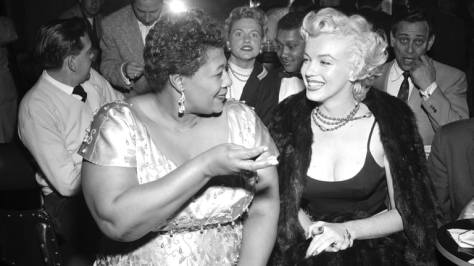
With the intervention of her friend, actress Marilyn Monroe, Fitzgerald was the first African American to perform at the legendary Mocambo nightclub.

Ella Fitzgerald - Marilyn Monroe

Nina Simone’s outrage over the bombing of the 16th Street Baptist Church emboldened civil rights activists.

Simone’s celebration of black excellence inspired a new generation of civil rights activists, including the writer.

Remembering Marian Anderson

Given the givens, some folks have called for a “do-over” of Black History Month 2019. I want to close out February on a high note by remembering Marian Anderson.

The name Marian Anderson has been part of my life from Day One. An older-now-deceased sister was named Marian. As a schoolgirl, I was puzzled when I would hear my teachers say her name. Of course I would later learn they were referring to the world-renowned contralto who inspired a generation of civil rights activists, including Dr. Martin Luther King Jr.

Marian Anderson - Lincoln Memorial

In a high school essay, 15-year-old Martin wrote:

Black America still wears chains. The finest Negro is at the mercy of the meanest white man. Even winners of our highest honors face the class color bar. Look at a few of the paradoxes that mark daily life in America. Marian Anderson was barred from singing in the Constitution Hall, ironically enough, by the professional daughters of the very men who founded this nation for liberty and equality. But this tale had a different ending. The nation rose in protest, and gave a stunning rebuke to the Daughters of the American Revolution and a tremendous ovation to the artist, Marian Anderson, who sang in Washington on Easter Sunday and fittingly, before the Lincoln Memorial. Ranking cabinet members and a justice of the Supreme Court were seated about her. Seventy-five thousand people stood patiently for hours to hear a great artist at a historic moment. She sang as never before with tears in her eyes. When the words of “America” and “Nobody Knows De Trouble I Seen” rang out over that great gathering, there was a hush on the sea of uplifted faces, black and white, and a new baptism of liberty, equality and fraternity. That was a touching tribute, but Miss Anderson may not as yet spend the night in any good hotel in America. Recently she was again signally honored by being given the Bok reward as the most distinguished resident of Philadelphia. Yet she cannot be served in many of the public restaurants of her home city, even after it has declared her to be its best citizen.

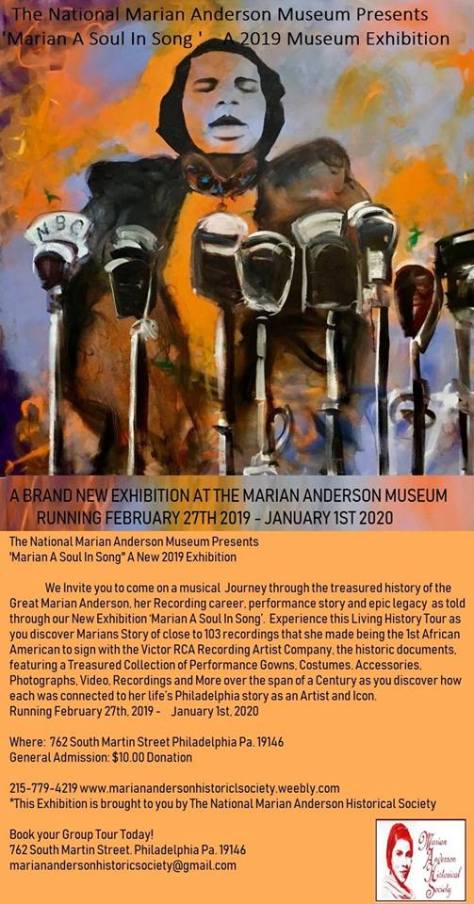
That was then. Ms. Anderson is now an American icon who will be celebrated in her home city with a new exhibition, “Marian: A Soul In Song,” presented by the National Marian Anderson Historical Society.

Marian Anderson Exhibit

The exhibition features a collection of the opera singer’s performance gowns, costumes and accessories, photographs, video and recordings. The exhibition runs from February 27, 2019 to January 1, 2020. For more information and tickets, visit the Marian Anderson Museum & Historical Society.

Citizen Salon

I am an advocate for the arts. I believe in the power of art to transform lives and ignite social change. Last summer, the Arthur Ross Gallery invited citizens to select an artwork from the University of Pennsylvania Art Collection to be included in a crowdsourced installation, Citizen Salon.

Citizen Salon

I was among 600+ people who responded. The citizen curators included art historians, Penn faculty, artists, scientists and ordinary citizens. I selected a portrait of Marian Anderson, the first African American soloist to perform with the New York Metropolitan Opera. The top 50 picks are now on view, including Robert Savon Pious’ portrait of the world-renowned contralto.

Marian Anderson - Faye Anderson - Citizen Curator

I was asked to provide commentary for the label and audio tour which you can listen to here.

Citizen Salon will be on view at the Arthur Ross Gallery through March 24, 2019.

UPDATE: I’m the featured citizen curator on the Arthur Ross Gallery blog.