Tag Archives: #Blues

Ridge on the Rise

Back in the day, Ridge Avenue was a vibrant commercial corridor. The heart and soul of North Philadelphia was also an entertainment district. The Blue Note was at 15th Street and Ridge Avenue.

Blue Note

The Bird Cage Lounge was one block up at Ridge and 16th Street. I don’t know whether it was named after him, but Charlie “Bird” Parker played there. The legendary Pearl Bailey began her singing and dancing career at the Pearl Theater, which was at Ridge and 21st Street.
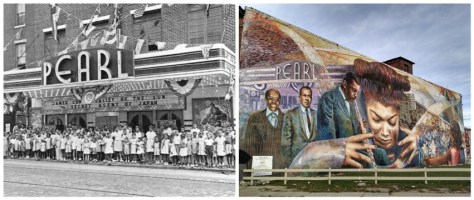
Pearl Theater Collage

Some of the jazz giants who roamed Ridge Avenue likely stayed at the Hotel LaSalle, which was close to the Pearl Theater. The hotel was listed in the The Negro Motorist Green Book. The Crossroads Bar at Ridge and Columbia Avenue (now Cecil B. Moore Avenue) was at the western tip of the storied “Golden Strip.”

Ridge began its steep decline in the aftermath of the 1964 Columbia Avenue race riots and construction of the Norman Blumberg Apartments public housing. Fast forward 50 years, Ridge is on the rise.

In 2014, the Philadelphia Housing Authority announced that transformation of the Blumberg/Sharswood neighborhood was its top priority. The Sharswood Blumberg Choice Neighborhoods Transformation Plan is a massive $500 million project that would, among other things, revitalize the Ridge Avenue corridor.

In an op-ed piece published in the Philadelphia Inquirer, PHA President and CEO Kelvin A. Jeremiah wrote:

The redevelopment of a community is about turning ideas into public policy and putting policy into action.

PHA’s revitalization efforts are a targeted, coordinated development model designed to maximize the economic benefits of neighborhood revitalization, not the piecemeal dispersed development model of the past. To transform communities into neighborhoods of choice, there must be good schools for every child, quality affordable housing for all families, and a vibrant small business commercial corridor. The challenge is turning the ideas and rhetoric into policy and practice.

In remarks before the National Trust for Historic Preservation’s recent conference, Marion Mollegen McFadden, Deputy Assistant Secretary for Grant Programs, U.S. Department of Housing and Urban Development, noted a community has both tangible and intangible assets:

I see preservation’s efforts to recognize and honor the cultural heritage of minority and ethnic groups as a valuable component of strong communities, in particular many of the communities that HUD serves. And I don’t just mean preservation of buildings and places, but also of diverse cultural ties and traditions, the intangible dimensions of heritage that together enrich us as a nation.

McFadden concluded with a quote from HUD Secretary Julián Castro:

History isn’t just a subject for books and documentaries. It’s alive and well in buildings, sites, and structures that shape our communities. They tell us who we are and where we come from – and it’s critical that we protect our past for present and future generations.

The Sharswood/Blumberg Choice Neighborhoods Transformation Plan raises the question: Does PHA value the area’s tangible and intangible assets that give the neighborhood its identity? If so, will a transformed Ridge Avenue preserve the neighborhood’s cultural heritage for current and future generations?
The Girls in the Band

“The Girls in the Band” is a documentary that tells untold or stories of female jazz and big band instrumentalists, including Mary Lou Williams and the International Sweethearts of Rhythm. Originally released in 2013, the Collector’s Edition DVD is now available.

For more information, go here.

Shirley Scott: Queen of the Organ

From NPR’s Jazz Night in America:

Known as the “queen of the organ,” Shirley Scott was one of several Philadelphians who developed the electric Hammond B-3 into a viable instrument for a soulful, bluesy style of jazz. With dozens of recordings to her name, she was already a major voice when she became the leader of the house band at Ortlieb’s Jazzhaus. Among the young players who timidly found their way onto the stage at Ortlieb’s were Warfield and Stafford — and, in doing so, they got a lot more than they bargained for.

READ MORE

Billie Holiday Inducted into Philadelphia Walk of Fame

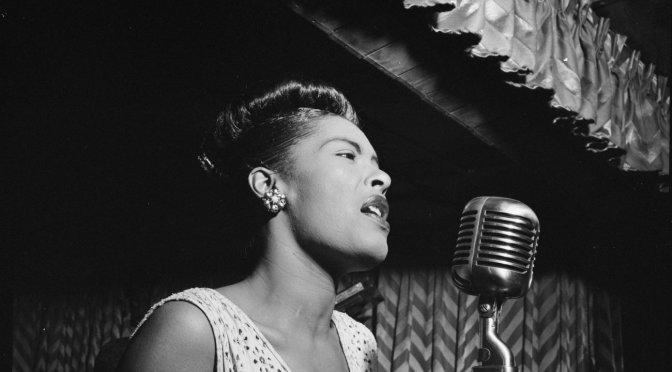
Billie Holiday was born in West Philly 100 years ago. This morning, her star will be reborn as Lady Day is inducted into the Philadelphia Walk of Fame.

I am proud to have played a role in making this happen.

Billie Holiday Joins Walk of Fame

For me, it was personal. After a failed romance when I was in college, I started my day by playing “Good Morning Heartache.” My best friend would ask me, “Why are you always listening to that junkie?” I ignored him. We now know Lady Day was an early victim of racial profiling.

Billie helped me get through a rough patch. It will be my pleasure to help keep her bronze plaque clean.

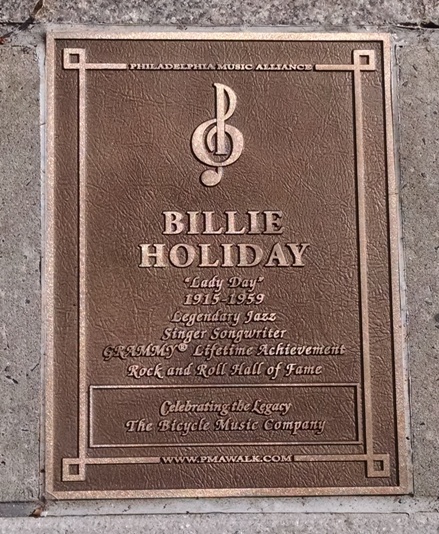
UPDATE: Billie Holiday’s Walk of Fame plaque unveiled. It’s located in front of the Kimmel Center.

Billie Holiday - Walk of Fame Plaque - 10.26.15

3rd Annual Philadelphia United Jazz Festival

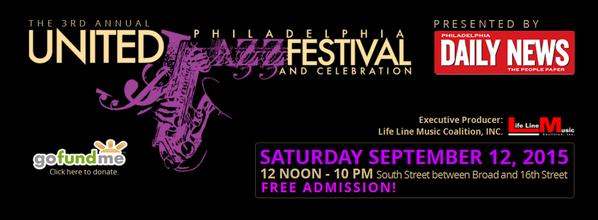
The 3rd Annual Philadelphia United Jazz Festival will be held on Saturday, Sept. 12, 2015, from noon to 10pm. The free festival will be held on South Street, between Broad and 16th streets.

3rd Annual Philadelphia Unified Jazz Festival

The festival features an exciting lineup of talent, including Odean Pope, Sam Reed, Jamaaladeen Tacuma, Warren Oree, Bobby Zankel, Arpeggio Jazz Ensemble, and the U.S. Army Jazz Big Band.

For more information, visit Philadelphia United Jazz Festival.

2015 BlackStar Film Festival

The 4th annual BlackStar Film Festival gets underway on Thursday, July 30.

BlackStar Film Festival Logo

The four-day film fest is “a celebration of cinema focused on work by and about people of African descent in a global context. BlackStar highlights films that are often overlooked from emerging, established, and mid-career directors, writers and producers working in narrative, documentary, experimental and music video filmmaking.” The program also includes panel discussions and workshops.

I am particularly looking forward to “Virtuosity,” a collection of shorts, including University of Pennsylvania music professor Guthrie Ramsey’s documentary, “Amazing: The Tests and Triumph of Bud Powell.” The film is based on Ramsey’s 2013 book, The Amazing Bud Powell: Black Genius, Jazz History and the Challenge of Bebop.

Powell had frequent gigs in Philly in the 1940s and ‘50s. He performed in such legendary jazz spots as Watts’ Zanzibar, Downbeat and The Point. While in town, Powell shared his genius with young musicians, including Lee Morgan, at the Heritage House Jazz Workshop.

The festival runs from July 30 to Aug. 2. For the full schedule and ticket information, visit BlackStar Film Fest.

Race, Jazz and American Tradition

Trumpeter and Lincoln Center artistic director of jazz Wynton Marsalis spoke and performed in the closing session of the 2015 Aspen Ideas Festival. Marsalis observed:

In our country the greatest challenge is for all of us to be together in spite of our history, and not only in spite of it, but because of our history.

Marsalis was joined by multi-instrumentalist Jon Batiste, bandleader on the forthcoming “The Late Show with Stephen Colbert” on CBS.

Curtis Institute of Music

The Curtis Institute of Music is a conservatory located in Rittenhouse Square. According to U.S. News & World Report, it has the lowest acceptance rate of any college or university (3.2%), making it the most selective institution of higher education in the United States.

The Institute’s most celebrated rejected applicant is Nina Simone who was denied admission even though she had given classical piano recitals since age 10. Jazz.com reported:

At the age of seventeen, Simone moved to New York to take classes at the Juilliard School of Music in New York. She then moved with her family to Philadelphia, where she auditioned for the city’s prestigious Curtis Institute, a conservatory of classical music.

Simone sought the help of a private instructor to help her audition for the Curtis Institute, but was ultimately denied after a supposedly excellent audition. Simone said she later found out from an insider at Curtis that she was denied entry because she was black. This heightened her anger over the racism which was pervasive in the United States during this period.

READ MORE

NB: The Curtis Institute awarded Nina Simone an Honorary Doctor in Music and Humanities two days before her death in 2003.