Tag Archives: #BlackCultureMatters

Philly Joe Jones

Philly Joe Jones, an innovator of modern jazz drum technique, was the drummer of choice for jazz giants Miles Davis, John Coltrane, Tadd Dameron, Gil Evans and others. Born Joseph Rudolph Jones, Philly Joe Jones was an exciting, explosive drummer and his influence on modern jazz is legendary.

Philly Joe  was one of the first African American trolley car drivers in Philadelphia (Philly Joe is on the far left).
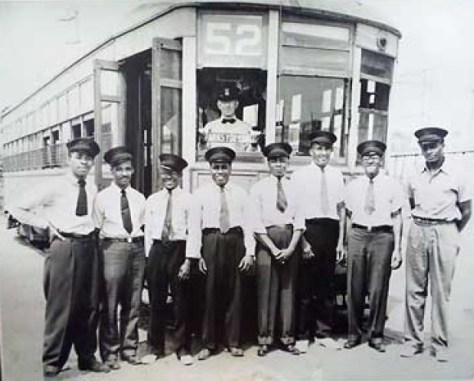
Philly Joe Jones - Trolley Car

He left his hometown to hook into the New York jazz scene in 1952, where he worked with Tadd Dameron and then achieved critical and popular acclaim with the Miles Davis Quintet. He was prolific in his recordings, appearing as a leader on Blues for Dracula (1958), Drum Songs (1978), and others, and as a sideman with Miles Davis on Round Midnight (1955), Cookin’ (1956), Milestones (1958), and more.
READ MORE

Philly Joe Jones Plaque

MFSB Orchestra

The MFSB Orchestra was comprised of musicians handpicked by producers Kenny Gamble, Leon Huff and Thom Bell to be the house band for their recordings. It was the band that recorded the music tracks for the likes of Harold Melvin & the Blue Notes, the O’Jays, the Stylistics, the Spinners, Lou Rawls, Billy Paul and a host of others. A well-oiled machine with talent and enthusiasm so special that the group had to be given its own opportunity in the spotlight. Gamble & Huff did just that in 1973 by officially making the MFSB (Mother Father Sister Brother) Orchestra recording artists in their own right. The MFSB Orchestra quickly became an exciting melodic hybrid of swing, classical, jazz and R&B that went on to Grammy winning gold and platinum success.

MFSB Orchestra Plaque

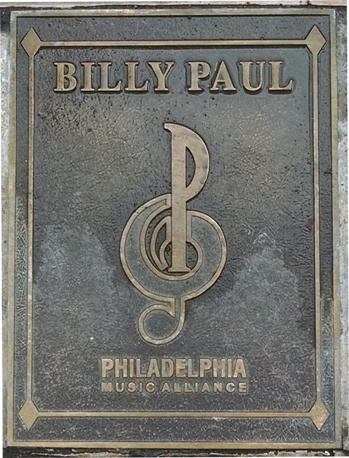
Billy Paul

On December 1, 1934 in North Philadelphia, Paul Williams was born to sing. Becoming far better known as Billy Paul, at the age of twelve he was appearing on radio shows in his hometown. By age fifteen, Billy was sharing the stage with legends Charlie Parker and John Coltrane as a jazz vocalist. Briefly he served as a stand-in for one of Harold Melvin and the Blue Notes. More than twenty artful albums and a coveted Grammy award later, Billy Paul is still setting worldwide audiences afire, both live and on record.

Billy Paul has developed into a widely respected vocal virtuoso uniquely blending traces of jazz, R&B and pop. As a testament to his versatility, Billy’s talent has been internationally showcased on stages shared with the likes of Stevie Wonder, Miles Davis, James Brown and Gloria Estefan.

READ MORE

Billy Paul Plaque

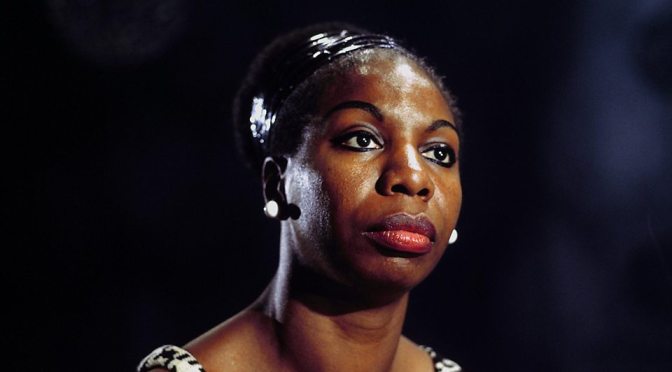
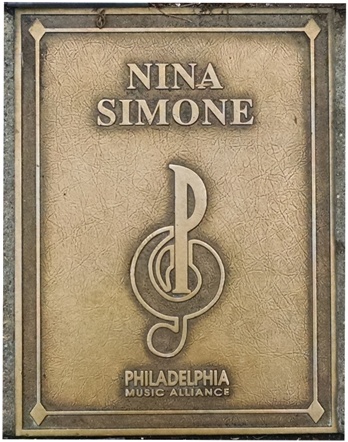
Nina Simone

Of all the major singers of the late 20th century, Nina Simone was one of the hardest to classify. She recorded extensively in the soul, jazz, and pop idioms, often over the course of the same album; she was also comfortable with blues, gospel, and Broadway. It’s perhaps most accurate to label her as a “soul” singer in terms of emotion, rather than form. Simone was an eclectic who brought soulful qualities to whatever material she interpreted. These qualities were among her strongest virtues; paradoxically, they also may have kept her from attaining a truly mass audience. The same could be said of her stage persona; admired for her forthright honesty and individualism, she was also known for feisty feuding with audiences and promoters alike.

READ MORE

Nina Simone Plaque

Bessie Smith

The first major blues and jazz singer on record and one of the most powerful of all time, Bessie Smith rightly earned the title of “The Empress of the Blues.” Even on her first records in 1923, her passionate voice overcame the primitive recording quality of the day and still communicates easily to today’s listeners (which is not true of any other singer from that early period). At a time when the blues were in and most vocalists (particularly vaudevillians) were being dubbed “blues singers,” Bessie Smith simply had no competition.

Back in 1912, Bessie Smith sang in the same show as Ma Rainey, who took her under her wing and coached her. Although Rainey would achieve a measure of fame throughout her career, she was soon surpassed by her protégée. She perfected her powerful delivery in the cabarets of Philadelphia and Atlantic City where she was a frequent attraction. In 1920, Smith had her own show in Atlantic City and, in 1923, she moved to New York. She was soon signed by Columbia and her first recording (Alberta Hunter’s “Downhearted Blues”) made her famous.

READ MORE

Bessie Smith - 1.15.15

McCoy Tyner

It is to McCoy Tyner’s great credit that his career after John Coltrane has been far from anti-climatic. Along with Bill Evans, Tyner has been the most influential pianist in jazz of the past 50 years, with his chord voicings being adopted and utilized by virtually every younger pianist. A powerful virtuoso and a true original (compare his playing in the early ’60s with anyone else from the time), Tyner (like Thelonious Monk) has not altered his style all that much from his early days but he has continued to grow and become even stronger.

McCoy Tyner grew up in Philadelphia where Bud Powell and Richie Powell were neighbors. As a teenager he gigged locally and met John Coltrane. He made his recording debut with the Art Farmer-Benny Golson Jazztet, but after six months left the group to join Coltrane in what (with bassist Jimmy Garrison and drummer Elvin Jones) would become the classic quartet. Few other pianists of the period had both the power and the complementary open-minded style to inspire Coltrane, but Tyner was never overshadowed by the innovative saxophonist. During the Coltrane years (1960-1965), the pianist also led his own record dates for Impulse.

READ MORE

McCoy Tyner Plaque

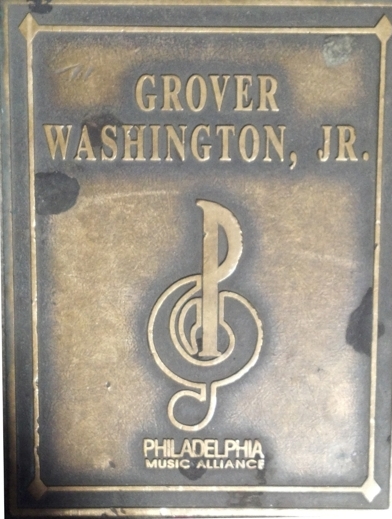
Grover Washington Jr.

One of the most popular saxophonists of all time (even his off records had impressive sales), Grover Washington, Jr. was long the pacesetter in his field. His roots were in R&B and soul-jazz organ combos, but he also fared very well on the infrequent occasions when he played straight-ahead jazz. A highly influential player, Washington was sometimes blamed for the faults of his followers; Kenny G. largely based his soprano sound on Grover’s tone. However, most of the time (except when relying on long hit medleys), Washington pushed himself with the spontaneity and chance taking of a masterful jazz musician.

Grover Washington, Jr., whose father also played saxophone, started playing music when he was ten and within two years was working in clubs. He picked up experience touring with the Four Clefs from 1959-1963 and freelancing during the next two years, before spending a couple years in the Army. He moved to Philadelphia in 1967, becoming closely identified with the city from then on, and worked with several organists, including Charles Earland and Johnny Hammond Smith, recording as a sideman for the Prestige label. His biggest break occurred in 1971, when Hank Crawford could not make it to a recording date; Washington was picked as his replacement, and the result was Inner City Blues, a big seller. From then on he became a major name, particularly after recording 1975’s Mister Magic and 1980’s Winelight; the latter included the Bill Withers hit “Just the Two of Us.”

READ MORE

Grover Washington Jr. Plaque

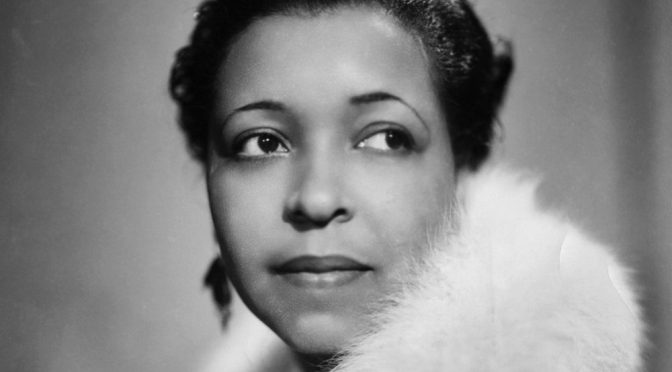
Ethel Waters

Ethel Waters had a long and varied career, and was one of the first true jazz singers to record. Defying racism with her talent and bravery, Waters became a stage and movie star in the 1930s and ’40s without leaving the U.S. She grew up near Philadelphia and, unlike many of her contemporaries, developed a clear and easily understandable diction. Originally classified as a blues singer (and she could sing the blues almost on the level of a Bessie Smith), Waters’ jazz-oriented recordings of 1921-1928 swung before that term was even coined.

A star early on at theaters and nightclubs, Waters introduced such songs as “Dinah,” “Am I Blue” (in a 1929 movie), and “Stormy Weather.” She made a smooth transition from jazz singer of the 1920s to a pop music star of the ’30s, and she was a strong influence on many vocalists including Mildred Bailey, Lee Wiley, and Connee Boswell. Waters spent the latter half of the 1930s touring with a group headed by her husband-trumpeter Eddie Mallory, and appeared on Broadway in 1939 in Mamba’s Daughter and in the 1943 film Cabin in the Sky; in the latter she introduced “Taking a Chance on Love,” “Good for Nothing Joe,” and the title cut.

In later years Waters was seen in nonmusical dramatic roles, and after 1960 she mostly confined her performances to religious work for the evangelist Billy Graham. The European Classics label has reissued all of Ethel Waters’ prime recordings and they still sound fresh and lively today.

Ethel Waters Plaque

Georgie Woods

Georgie Woods has improved, enhanced and inspired the lives of many throughout his multi-faceted career of entertainment and public service.

As “The Guy with the Goods,” Georgie Woods has entertained for five full decades on radio stations WHAT and WDAS. In 1960, Georgie became active in the civil rights movement as Vice President of the NAACP. Georgie became an outspoken advocate of equal opportunity and equal treatment for African Americans and joined the Reverend Doctor Martin Luther King, Jr. and Cecil B. Moore in an ongoing campaign that took Woods from Washington, D.C., to Selma, Alabama. His other humanitarian efforts included a 17-day tour of Vietnam, as the first African American to entertain the troops.

READ MORE

Georgie Woods Plaque

Bob & Barbara’s

Bob & Barbara’s Lounge has been serving cold beer, cocktails and live entertainment since 1969. Robert Porter, Owner, and Barbara Carter, Manager, were the original Bob and Barbara.

Bob & Barbara's Lounge - Original Owners - 1.25.15

In 1994, after Barbara Carter passed away and Robert Porter retired, the current owners took over the operation of the bar. For many years, Bob & Barbara’s was the clubhouse for the Philadelphia Cartoonist Society. Naturally, they drew cartoons of the house band, the Crowd Pleasers.

Bob and Barbara's House Band - the Crowd Pleasers