Tag Archives: #BlackCultureMatters

Church of the Advocate

The Church of the Advocate became a center of activism for the Civil Rights Movement embracing the cause of African American and women’s rights. It was the site of several nationally significant events, including the National Conference of Black Power (1968) and the Black Panther Convention (1970).

In the 1960s, Father Paul Washington invited musicians to come to the church for jam sessions which were held weekly on Tuesday. Tenor saxophonist Bootsie Barnes said the Church of the Advocate would be packed.

A collection of murals records the “stations” of the Civil Rights Movement.

Church of the Advocate Mural

These murals draw on Old Testament verses to dramatically illuminate parallels in African American history. Together, the medieval revival presentation of the building and the modern murals document the critical social role played by America’s inner city churches.

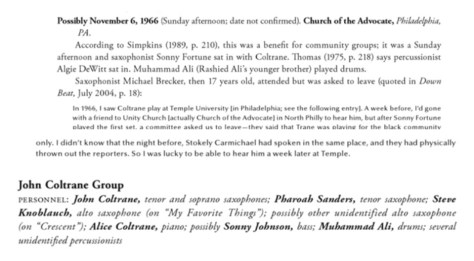
John Coltrane’s next-to-last performance in Philadelphia was held here on November 6, 1966. In an interview with DownBeat, Michael Brecker said he was asked to leave because the concert was for the black community.
Church of the Advocate - Michael Brecker Collage

For more information, visit Church of the Advocate.

Church of the Adocate Historical Marker

Geno’s Empty Foxhole

Web Christman opened Geno’s Empty Foxhole on Christmas Day 1970 in the lower level of the parish hall of St. Mary’s Church, Hamilton Village, on the campus of the University of Pennsylvania. The name came from the title of an Ornette Coleman album.

The small space played host to Sun Ra and his Arkestra, Rufus Harley, Charles Mingus, Rahsaan Roland Kirk, Cecil Taylor, the Art Ensemble of Chicago, among others.

Geno's Empty Foxhole Ad

Larry Robin, director of Moonstone Arts Center, shared that he took his now-wife Sandy here on their first date. It was Christmas 1976; Betty Carter was performing.

In a 2005 interview with the University of Pennsylvania School of Arts and Sciences’ West Philadelphia Music Project, Christman recalled:

No, just, um my amazement at the hugeness of the crowd for Sun Ra, and later for Rufus Harley those are the two nights when the, there’s a little courtyard and then there’s the Parish hole and then there’s Irving Street which is one of those alley type streets that Philadelphia people were lined up all the way down Irving Street all the way to 40th street waiting to get in.

Read more

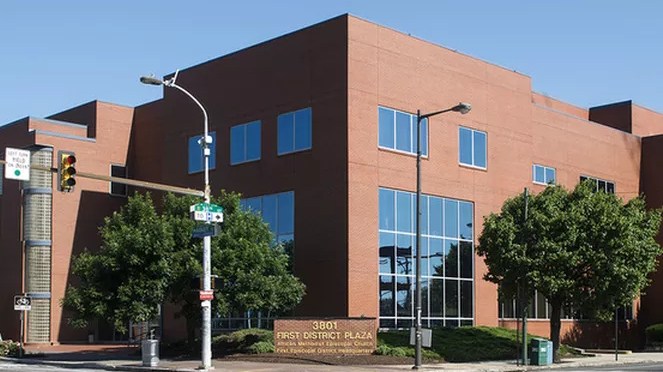
First District Plaza

Mellon PSFS Jazz Festival “Third Annual Philadelphia All-Star Organ Jam” featuring Joey DeFrancesco, Bill Doggett, Charles Earland, Jack McDuff and Trudy Pitts was held here on June 21, 1992.

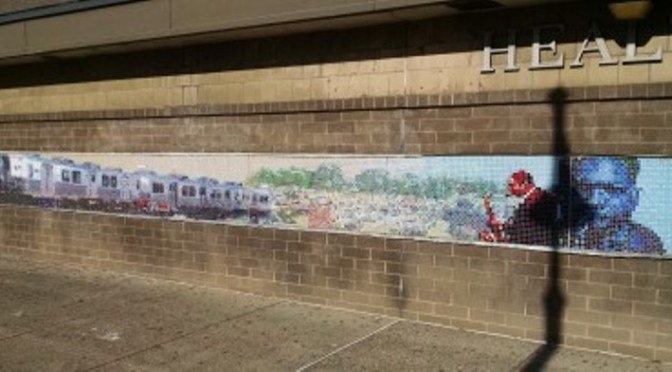
Health Care Center 6 Blue Train

The Health Centers of the Philadelphia Department of Public Health provide a full range of health services for Philadelphia’s underserved communities.

Every block tells a story about Philadelphia’s jazz heritage.

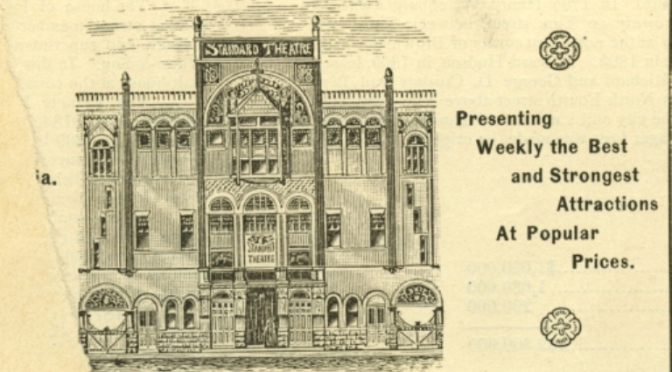
Standard Theater

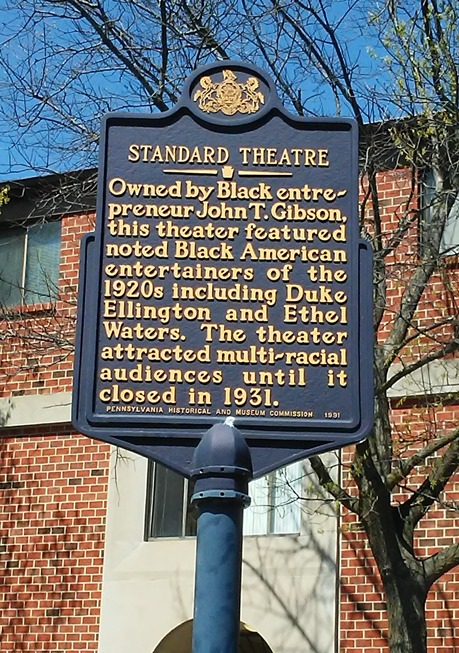
A stop on the “Chitlin Circuit,” the Standard Theater was owned by African American entrepreneur John T. Gibson.

Standard Theater - Feature

Standard Theatre

From ExplorePAHistory.com

In 1914, Gibson bought the Standard Theatre on the 1100 block of South Street. His timing couldn’t have been better, for in the following years, tens of thousands of southern blacks would pour into the city of Philadelphia as part of the Great Migration unleashed by the First World War.

Young men and women, with good jobs and money in their pockets, flocked to Gibson’s Standard Theatre to see a fare of “High Class and Meritorious Vaudeville,” stage shows, and popular music. The Standard became a regular stop for Black performers on their national tours: comedians Bylow and Ashes, singers Bessie Smith and Ethel Waters, Erma C. Miller’s Brown Skinned Models, popularly known as the “Black Rockettes,” and jazz bands led by Louis Armstrong and Duke Ellington.

READ MORE

Giant Steps Mosaic

Giant Steps depicts seven key album covers, tracing John Coltrane’s career from his work with Miles Davis to his own compositions, and his great masterpiece A Love Supreme. Each mosaic was preceded by a multimedia educational program presented by the John Coltrane Cultural Society.

John Coltrane Apartment

From Hidden City Philadelphia:

When 18 year old John Coltrane moved to Philadelphia, in 1943 the nation’s third largest city, he entered a fundamentally different world from his hometown of High Point, N.C. Like many African-Americans who migrated to major cities of the North, Coltrane joined older family members and friends already settled there. They lived in an apartment at 1450 N. 12th Street between Jefferson and Master Streets in an area since demolished for the Yorktown Urban Renewal project.

READ MORE

John Coltrane House

In 1952, at the age of twenty-six, with the benefit of a G.I. loan, John Coltrane bought for himself, his mother, his aunt and his first cousin the North 33rd Street property. Coltrane lived here from 1952 until 1958. It was a big, rowhouse, built for a well-to-do middle class at the turn of the 19th century and a huge step up from the cramped quarters in a deteriorating area of town where the family had been living. Coltrane owned and lived in this home longer than any other during his legendary career as a composer and saxophonist.

In 1999, the John Coltrane House was designated a National Historic Landmark, a recognition accorded to places that have “exceptional value or quality in illustrating or interpreting the heritage of the United States.”

John Coltrane Historical Marker

The recognition attests to the value of the house. The building is structurally sound but it needs some repairs. Money is needed to preserve the John Coltrane House for current and future generations.

For information on how you can help, contact the John Coltrane House.

Mitten Hall

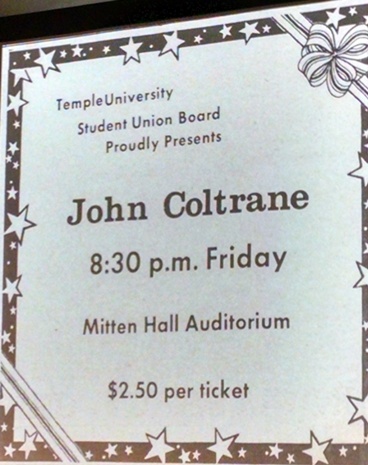
Yasuhiro Fujioka, founder of the John Coltrane House of Osaka, uncovered the long lost audiotape of John Coltrane’s last performance in Philadelphia. The November 11, 1966 concert was aired live on WRTI, Temple University’s then-student run radio station.

Mitten Hall Ticket

To purchase the album, go here.