Tag Archives: Benny Golson

Joe Pitts’ Musical Bar

Joe Pitts’ Musical Bar was located in his “hostelry,” the Pitts Hotel. Joe Pitts’ and Watts’ Zanzibar were mentioned in the August 24, 1946 issue of Billboard.

Joe Pitts' Musical Bar

From Jazz.com:

Ray Bryant and [Benny] Golson played regularly in late 1946 with bassist Gordon “Bass” Ashford. They performed one night a week at Joe Pitt’s Musical Bar, and weekends at the Caravan Republican Club, for as long as six months at a stretch.

Read more

John Coltrane and Cultural Heritage Preservation

Jazz legend John Coltrane personified cool.

John Coltrane

Coltrane was into cultural heritage preservation before it was cool. His composition, “Alabama” was in response to the Sept. 15, 1963, bombing of the 16th Street Baptist Church that killed four young girls. His mournful tribute captured the zeitgeist of the Civil Rights Movement.

Philadelphia shaped and nurtured Coltrane. On June 5, 1945, the Dizzy Gillespie Quartet, featuring Charlie Parker, performed at the Academy of Music. Coltrane and Benny Golson were seated in the next-to-last row. In an interview with the Smithsonian Jazz Oral History Project, NEA Jazz Master Golson recalled:

When we heard – John and I – when we first heard Charlie Parker and Dizzy Gillespie – I told you he was sounding like Johnny Hodges – our lives changed that night. We had never heard any music like that. Never. We were screaming like these Beatles groupies, when they used to hear the Beatles.

Coltrane kicked his heroin habit at his home in Strawberry Mansion, a neighborhood in North Central Philly. The Mural Arts Program, in collaboration with the community, honored a former neighbor. On or about Sept. 15, 2014, Pennrose Company demolished the Tribute to John Coltrane mural.

John Coltrane Mural - Resized

Pennrose has not contributed a dime to replace the tribute to an American icon. The cultural resource was paid for, in part, by taxpayers. After being called out, a company rep lied about “ongoing discussions.”

I know they lied because I was part of the only discussion that has taken place. At the March 10, 2015, meeting with Mural Arts, Lopa Kolluri, Pennrose’s Vice President of Operations, asked for a “menu of options.” Mural Arts sent a proposal and several follow-up emails to which Pennrose has yet to respond.

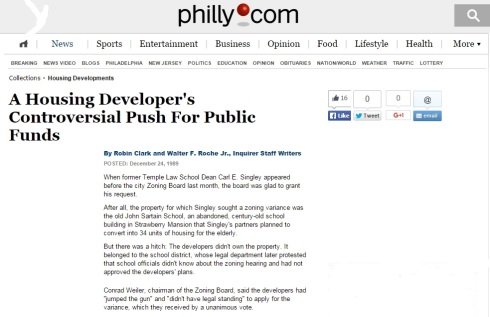
Pennrose’s arrogance is particularly galling given the company has feasted on public subsidies seasoned with political donations for nearly 40 years. In 1989, a Philadelphia Inquirer story noted the company’s reliance on government subsidies.

Pennrose doesn’t think our stories matter, but we do. It’s our responsibility to remember the ancestors and preserve their legacy for present and future generations.

We Remember Clifford Brown

Trumpeter Clifford Brown was only 25 when he died in a car crash in 1956. His last performance was at Philadelphia’s famed Music City.

Although his life was cut short, Brown left an indelible impact. There are 334 versions of Philly native and NEA Jazz Master Benny Golson’s composition, “I Remember Clifford.”

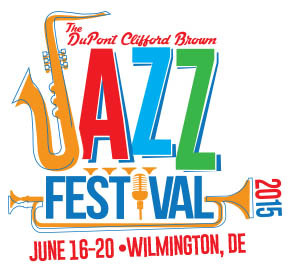
Since 1988, his hometown of Wilmington, Delaware, has held the Clifford Brown Jazz Festival to honor his memory. Fittingly, it’s the largest free jazz festival on the East Coast. This year’s lineup includes Norman Conners, Leela James and Pieces of a Dream.

clifford-brown-jazz-festival-2015
For the complete schedule, visit www.cliffordbrownjazzfest.org.

Earle Theater

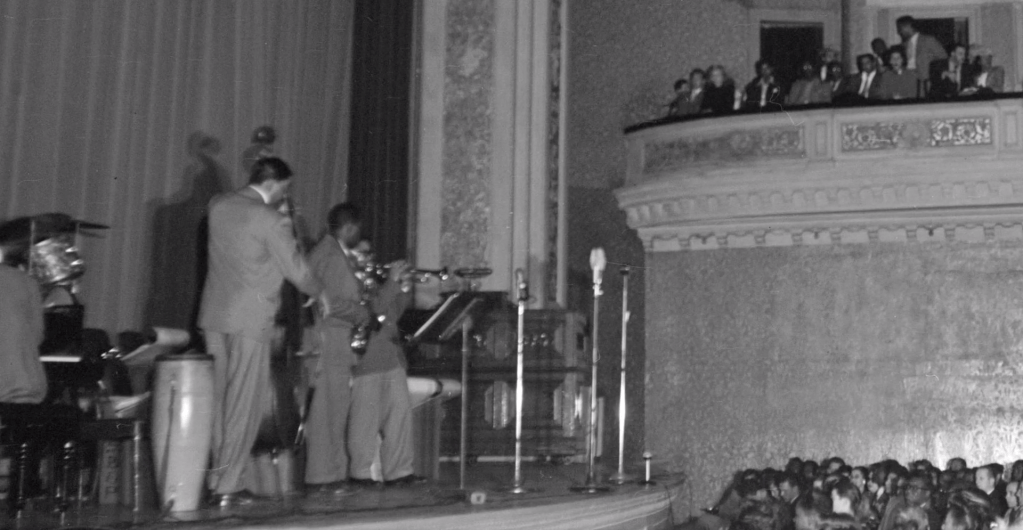
The Earle Theater was a stop on the “Chitlin’ Circuit.” It was the most expensive theater ever built in Philadelphia. The Earle had an ornate interior and exterior and seating for 2,700. It was demolished in July 1953.

Earle Theater

In an interview with the Smithsonian Oral History Project, Philly native and NEA Jazz Master Benny Golson talked about how he was inspired to master the saxophone after seeing Lionel Hampton and Arnett Cobb at the Earle Theater:

I guess they usually went until 9 or 10 at night, which meant that they had about three or four shows a day. It was an ongoing thing. Week after week they’d have whatever band was popular. Benny Goodman, Woody Herman, anything. Charlie Spivak, Claude Thornhill, Tommy Dorsey. Any band that was popular, they would bring there. It was an ongoing thing. Count Basie, Duke Ellington. They all came there.

The reason I went is because I was in high school – Benjamin Franklin High School. The kids were coming back and says, “Oh man. You got to go to the Earle Theater and hear Lionel Hampton. You got to hear him play Flying Home.” Blah blah blah blah. So one day I didn’t go to school. I went there. That’s when I heard him. That’s when my life changed. That’s when I heard Arnett Cobb. Incidentally, years later – many years later – it must have been 50 years later – I happened to see him in Nice, France. I said, “You’re the reason that I play the saxophone.” He says, “I never knew that. Really?” I said, “Yes.” He had tears in his eyes, because he knew who I was. I said, “I hear you play, and that’s when my life changed.”

Read more

Academy of Music

Opened in 1857, the Academy of Music is the country’s oldest concert hall and opera house. The “Grand Old Lady of Broad Street” has welcomed jazz, blues and R&B legends, including Duke Ellington, Billie Holiday, Lee Morgan, Count Basie, Louis Armstrong, Miles Davis, Shirley Horn, Ray Charles, Aretha Franklin and James Brown.

On June 5, 1945, the Dizzy Gillespie Quartet, featuring Charlie Parker, was in the house. Seated in the next-to-last row were Benny Golson and John Coltrane.

In an interview with the Smithsonian Jazz Oral History Project, NEA Jazz Master Benny Golson recalled:

When we heard – John and I, when we first heard Charlie Parker and Dizzy Gillespie] – I told you he was sounding like Johnny Hodges – our lives changed that night. We had never heard any music like that. Never. We were screaming like these Beatles groupies, when they used to hear the Beatles. They played this Latin tune. We never heard any Latin tune like that in our lives. The Latin tunes that we played were like Lady of Spain, the stock arrangements, My Shawl. But this Latin thing, we had never heard it. Then they played an interlude, and they made a break, and Charlie Parker made a pickup by himself. Usually it was two bars, but he did it four bars, double-time. We were going crazy. We almost – of course we were up there with the cheap seats – we almost fell over the balcony. It was A Night in Tunisia. We never heard that before. Oh my goodness.

Golson expounded on that fateful night in his autobiography, Whisper Not: The Autobiography of Benny Golson:

The concert was staged at the Academy of Music, home of the Philadelphia Orchestra. We took our places, greatly excited, in the cheap seats in the uppermost level. Diz’s band kicked off with the strangest Latin-sounding tune we had ever heard. John thought it sounded “like snake charmer’s music”: Dizzy’s “A Night in Tunisia” was weirder than anything we had heard before, but intriguing. The band moved through the melody, dove into an interlude, then opened into a bravura set of riffs, or glissandi, a sustained high-octane break by the alto player, Charlie Parker. To us, the sound was way out there. Parker was dressed in a double-breasted suit with all of the buttons closed. He looked like an adult stuffed into his grade school graduation suit. …

We both nearly fell over the balcony rail, all the cells and nerves in our bodies wild with abandon. Their music was crazy and we went into an exuberant delirium, doubtless a form of higher awareness and pure joy. John tried to crawl up my gyrating body while I was grabbing onto him with barely contained amazement. We were both screaming like schoolgirls. We had heard strong performances in our young lives, but nothing like this. This was beyond “good.” It was completely new, innovative, and profound. We were drunk with happiness and bewilderment. I felt like crying. We didn’t know then, but our musical world changed that night.

Published by Temple University Press, Golson’s autobiography is available for purchase here.

Heath Brothers’ Family Home

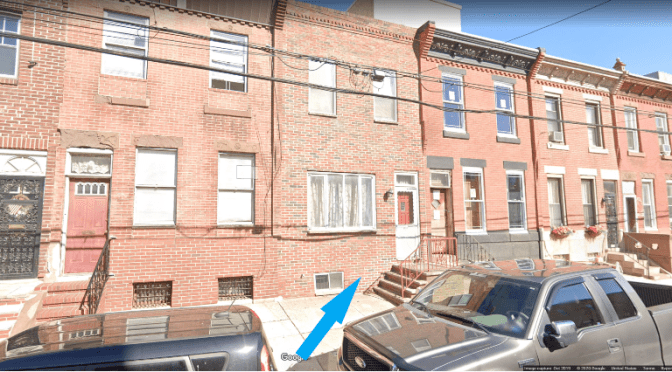
In his autobiography, “I Walked with Giants,” Jimmy Heath lovingly recalled the jam sessions in his parents’ basement that attracted the likes of Dizzy Gillespie, Charlie Parker and John Coltrane.

Heath Family Home - Feature

Benny Golson recounted:

Enough cannot be said about Mr. and Mrs. Heath, his mother and father, who continuously put up with all of us who used to come to their home in South Philadelphia, remove all of the furniture in the living and dining room, then begin our rehearsal. No matter what we did, how much noise (music) we made or how late we did it, they were always our champions. It was their support that, in part, enabled us to grow. And grow we did.

And grow they did. Both Heath and Golson are NEA Jazz Masters.

Caravan Republican Club

From Jazz.com:

Ray Bryant and [Benny] Golson played regularly in late 1946 with bassist Gordon “Bass” Ashford. They performed one night a week at Joe Pitt’s Musical Bar, and weekends at the Caravan Republican Club, for as long as six months at a stretch.

READ MORE

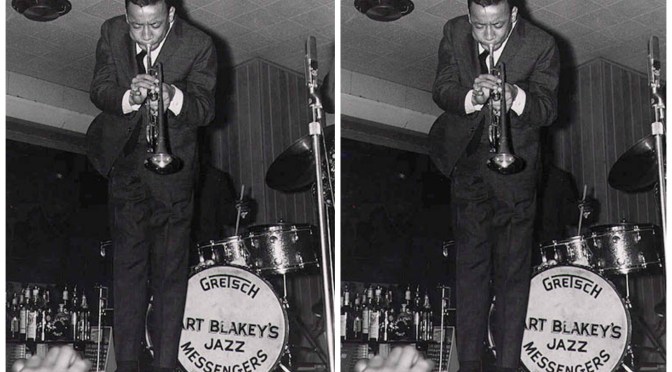
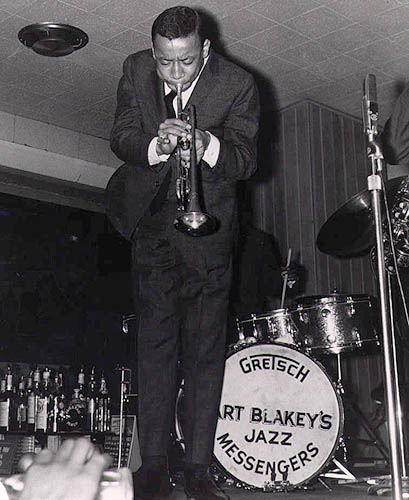
Lee Morgan ‘Walking the Bar’

Back in the day, musicians used to “walk the bar.” Philly native Lee Morgan was among those “honking and stepping.”

Lee-Morgan-Walking-the-Bar

In an interview with the Smithsonian Jazz Oral History Project, NEA Jazz Master and Philly native Benny Golson said: “I caught my boy John Coltrane on the bar.” In a 2009 piece, jazz critic Marc Myers also shared the story:

In 1954, Coltrane’s expanding heroin and alcohol addiction cost him playing jobs, most notably a significant one with alto saxophonist Johnny Hodges. After moving back to Philadelphia, Coltrane was forced to play with local R&B bands to make ends meet. In some of these bands, he had to honk away on the tenor while walking along the bar. One night, he saw childhood friend and tenor saxophonist Benny Golson enter the club. Mortified, Coltrane climbed off the bar and walked out for good.

The Smithsonian interviewer asked Golson where the tradition was started:

I don’t know where it started. It didn’t start with the jazz artists, per se. It started with one of the entertainers. An entertainer’s plot is to do or to second-guess what the audience wants to hear. Yeah, I got involved in that. I did some crazy stuff when I was doing all that stuff. You do what you think is going to entertain them. It’s going to bring acclaim to what you’re doing. Yeah, what’s more ridiculous than getting up on the bar where the drinks are and start playing your low B-flats no matter what key you’re in, just honking. We call that honking and stepping. They’re applauding. Ain’t nothing happening. Stepping over those drinks.

Read More

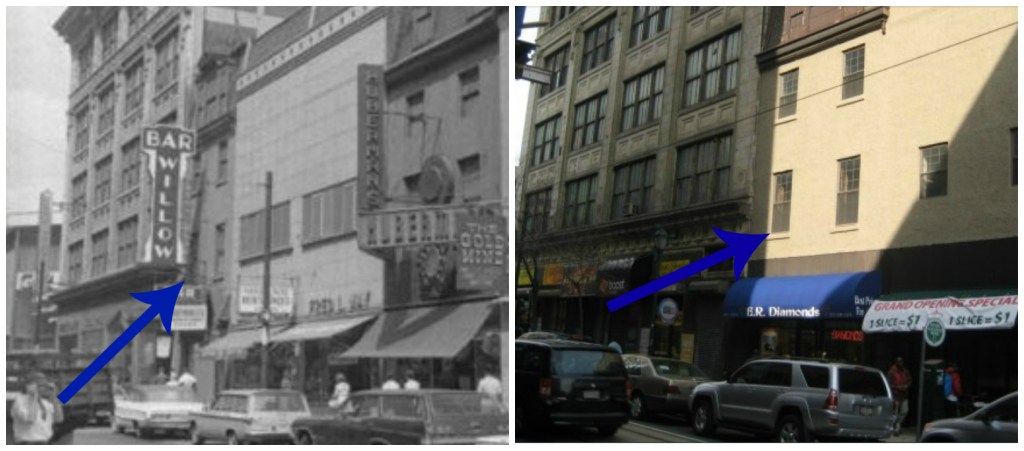
Down Beat Swing Room

Located on the second floor above the Willow Bar, the Down Beat Swing Room was the first racially integrated jazz club in Center City. The building in which the Down Beat was located is still there.

The Down Beat was owned by jazz impresario Nat Segall. It was open from 1939 to circa 1948. Charlie Parker came in from New York City “every other week or so.” He was paid $25 a night to jam with Dizzy Gillespie and other jazz greats-in-the-making.

Jazz musicians would hang out at the Down Beat between shows at the Earle Theater.

Earle Theater

In his autobiography, You Only Rock Once, Jerry Blavat, “the Geator with the Heator,” recounted:

Nat had owned a club called Downbeat around the corner from the Earle Theater, where Billie Holiday, Charlie Parker, and other giants of jazz performed. After Holiday was busted for narcotics one night, the police started raiding the place on a regular basis, and Nat was forced to close it down—but not before he and Bob [Horn] produced a series of jazz shows at the Academy of Music.

In a Smithsonian jazz oral history interview, National Endowment for the Arts Jazz Master and Philly native Benny Golson shared a story about the Downbeat and drummer Philly Joe Jones:

For a while they had a policeman on every street car, stand up at the front with his gun and stuff. It was so bad. During that time – because they said, you don’t have any black motormen and conductors on the streetcar. Philly Joe got a job.

Do you remember that? He got a job as a motorman, driving a streetcar. Route number 23. The longest route in Philadelphia, from south Philadelphia, all the way through north Philadelphia, all the way through Germantown. Max Roach used to come over and ride a route with him, and talk.

Philly Joe’s route came right up 11th Street, where the Down Beat Club was, on 11th Street. Philly came up one night, stopped the car in front of the Down Beat, opened the doors, got off, and went up, and took a club. Now all the people on the streetcar, they’re going crazy. He goes up into the – no, he’s not going to stay and hear a set, but he went up to do something. When he came back, boy, they were irate. He got on the streetcar and started up like he did – never heard it – like this was a matter – who would do something like that? Stop a streetcar and get off and go into a club, and everybody’s on the streetcar, waiting. Only Philly Joe would have done something like that. Only Philly would have done that.

Read more

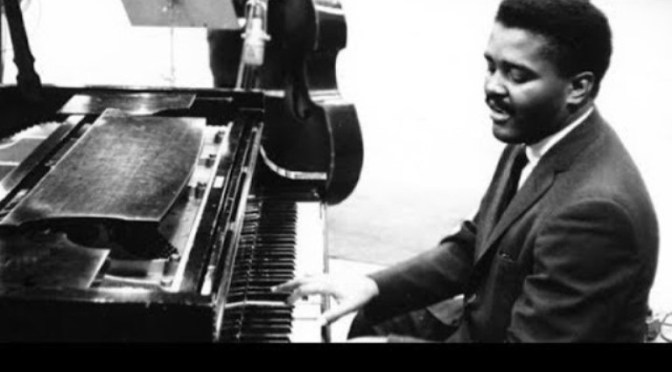
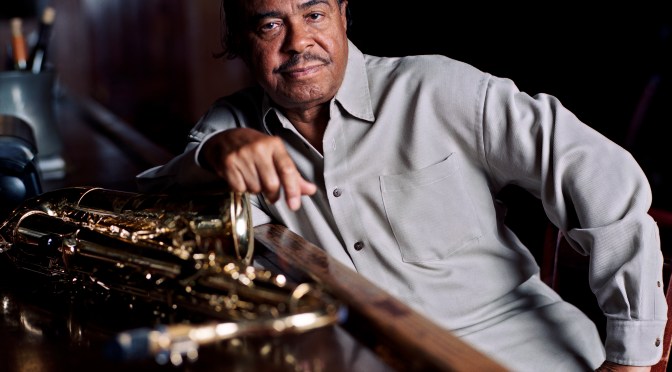
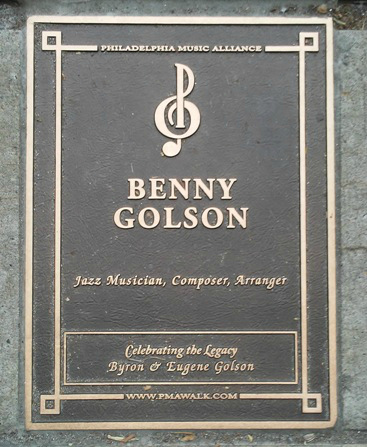
Benny Golson

Inducted: 2016

Multitalented and internationally famous jazz legend, – a composer, arranger, lyricist, producer – and tenor saxophonist of world note, Benny Golson was born in Philadelphia, PA on January 25, 1929.

Raised with an impeccable musical pedigree, Golson has played in the bands of world famous Benny Goodman, Dizzy Gillespie, Lionel Hampton, Earl Bostic and Art Blakey.

Few jazz musicians can claim to be true innovators and even fewer can boast of a performing and recording career that literally redefines the term “jazz”. Benny Golson has made major contributions to the world of jazz with such jazz standards as: Killer Joe, I Remember Clifford, Along Came Betty, Stablemates, Whisper Not, Blues March, Five Spot After Dark, Are you Real?

Benny Golson is the only living jazz artist to have written 8 standards for jazz repertoire.

These jazz standards have found their way into countless recordings internationally over the years and are still being recorded.

He has recorded over 30 albums for many recording companies in the United States and Europe under his own name and innumerable ones with other major artists. A prodigious writer, Golson has written well over 300 compositions. For more than 60 years, Golson has enjoyed an illustrious, musical career in which he has not only made scores of recordings but has also composed and arranged music for: Count Basie, John Coltrane, Miles Davis, Sammy Davis Jr., Mama Cass Elliott, Ella Fitzgerald, Dizzy Gillespie, Benny Goodman, Lionel Hampton, Shirley Horn, David Jones and the Monkees, Quincy Jones, Peggy Lee, Carmen McRae, Anita O’Day, Itzhak Perlman, Oscar Peterson, Lou Rawls, Mickey Rooney, Diana Ross, The Animals (Eric Burden), Mel Torme, George Shearing, Dusty Springfield.

His prolific writing includes scores for hit TV series and films: M*A*S*H, Mannix, Mission Impossible, Mod Squad, Room 222, Run for Your Life, The Partridge Family, The Academy Awards, The Karen Valentine Show, Television specials for ABC, CBS and NBC. Television specials for BBC in London and Copenhagen, Denmark. Theme for Bill Cosby’s last TV show, A french film ‘Des Femmes Disparaissent” (Paris).

Read More
Benny Golson Plaque