Category Archives: Jazz Landmarks

Academy of Music

Opened in 1857, the Academy of Music is the country’s oldest concert hall and opera house. The “Grand Old Lady of Broad Street” has welcomed jazz, blues and R&B legends, including Duke Ellington, Billie Holiday, Lee Morgan, Count Basie, Louis Armstrong, Miles Davis, Shirley Horn, Ray Charles, Aretha Franklin and James Brown.

On June 5, 1945, the Dizzy Gillespie Quartet, featuring Charlie Parker, was in the house. Seated in the next-to-last row were Benny Golson and John Coltrane.
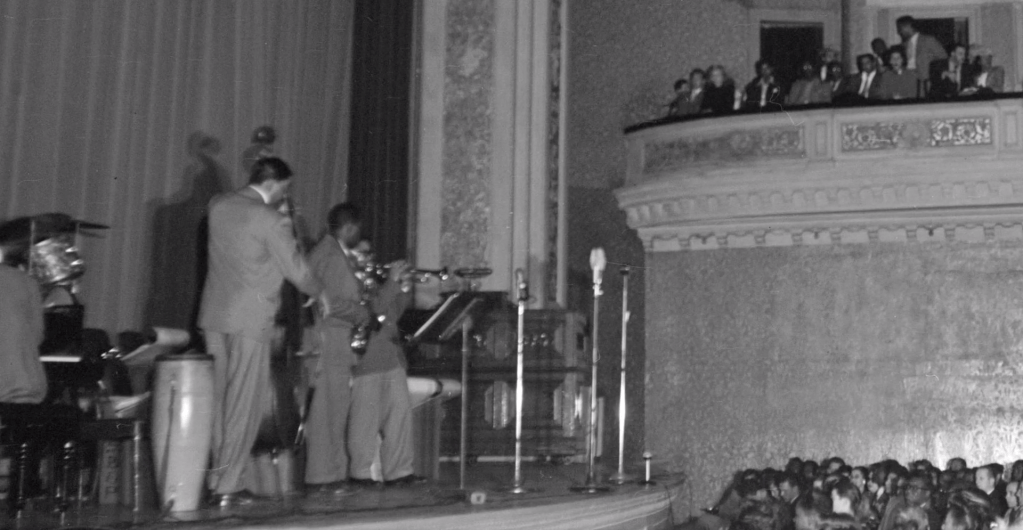
In an interview with the Smithsonian Jazz Oral History Project, NEA Jazz Master Benny Golson recalled:

When we heard – John and I, when we first heard Charlie Parker and Dizzy Gillespie] – I told you he was sounding like Johnny Hodges – our lives changed that night. We had never heard any music like that. Never. We were screaming like these Beatles groupies, when they used to hear the Beatles. They played this Latin tune. We never heard any Latin tune like that in our lives. The Latin tunes that we played were like Lady of Spain, the stock arrangements, My Shawl. But this Latin thing, we had never heard it. Then they played an interlude, and they made a break, and Charlie Parker made a pickup by himself. Usually it was two bars, but he did it four bars, double-time. We were going crazy. We almost – of course we were up there with the cheap seats – we almost fell over the balcony. It was A Night in Tunisia. We never heard that before. Oh my goodness.

Golson expounded on that fateful night in his autobiography, Whisper Not: The Autobiography of Benny Golson:

The concert was staged at the Academy of Music, home of the Philadelphia Orchestra. We took our places, greatly excited, in the cheap seats in the uppermost level. Diz’s band kicked off with the strangest Latin-sounding tune we had ever heard. John thought it sounded “like snake charmer’s music”: Dizzy’s “A Night in Tunisia” was weirder than anything we had heard before, but intriguing. The band moved through the melody, dove into an interlude, then opened into a bravura set of riffs, or glissandi, a sustained high-octane break by the alto player, Charlie Parker. To us, the sound was way out there. Parker was dressed in a double-breasted suit with all of the buttons closed. He looked like an adult stuffed into his grade school graduation suit. …

We both nearly fell over the balcony rail, all the cells and nerves in our bodies wild with abandon. Their music was crazy and we went into an exuberant delirium, doubtless a form of higher awareness and pure joy. John tried to crawl up my gyrating body while I was grabbing onto him with barely contained amazement. We were both screaming like schoolgirls. We had heard strong performances in our young lives, but nothing like this. This was beyond “good.” It was completely new, innovative, and profound. We were drunk with happiness and bewilderment. I felt like crying. We didn’t know then, but our musical world changed that night.

Published by Temple University Press, Golson’s autobiography is available for purchase here.
21 Key Club

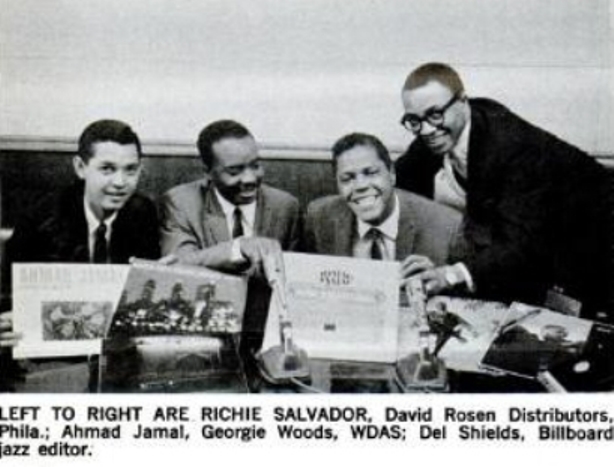
A private late-night club, it was a favorite hangout of Del Shields, Billboard jazz editor and host of “Modern Music” on WDAS-FM.

21 Key Club - Del Shields

Johnny Hartman performed here.

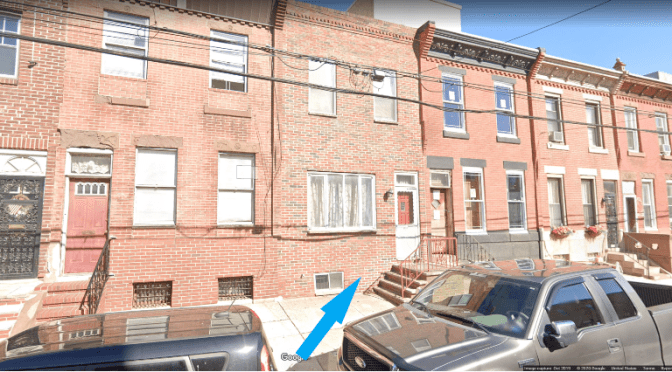
Heath Brothers’ Family Home

In his autobiography, “I Walked with Giants,” Jimmy Heath lovingly recalled the jam sessions in his parents’ basement that attracted the likes of Dizzy Gillespie, Charlie Parker and John Coltrane.

Heath Family Home - Feature

Benny Golson recounted:

Enough cannot be said about Mr. and Mrs. Heath, his mother and father, who continuously put up with all of us who used to come to their home in South Philadelphia, remove all of the furniture in the living and dining room, then begin our rehearsal. No matter what we did, how much noise (music) we made or how late we did it, they were always our champions. It was their support that, in part, enabled us to grow. And grow we did.

And grow they did. Both Heath and Golson are NEA Jazz Masters.

Union Local 274

African Americans were barred from joining the American Federation of Musicians. So across the country, Black musicians formed their own local.

Union Local 274 , the second largest black American Federation of Musicians local, was chartered in 1935.  Members included James Adams, Bill “Mr. C” Carney, Trudy Pitts, Duke Ellington, Benny Golson, Count Basie, Jimmy Smith, Sonny Stitt, Art Blakey, Sarah Vaughan, Max Roach, Clifford Brown, Shirley Scott, Philly Joe Jones, Jimmy and Percy Heath, Jimmy Oliver, John Coltrane, Dizzy Gillespie, Lee Morgan, Bill Doggett, Jimmy McGriff and Nina Simone.

According to Local 274 member Wes Norton, union members were “Clef Club members by default.” The Clef Club was Local 274’s social arm. It was the place for weekend jam sessions. The bar and performance space were open to jazz musicians and the public.

In his autobiography, I Was Not Asked, noted educator and music scholar Dr. George E. Allen wrote:

Many Philadelphia African American jazz musicians attributed their success to the atmosphere and fellowship at Black Local 274. For aspiring musicians, the Local was a training ground for developing their reputation and experimenting with new musical concepts. Local 274 was also a place where African American musicians sought refuge from racial prejudice and discrimination. In the union club during the jam sessions, musicians were encouraged to pursue musical careers through the applause of grassroots Philadelphia African Americans who loved and respected them and the visiting jazz musicians who were playing in the local clubs. Many members of Local 274 joined because of these benefits. The atmosphere inspired both African American and white musicians. They learned by listening to the music performed at the Union and socializing with the many musicians who congregated there.

Local 274 resisted forced amalgamation, or integration, with Local 77. As a result, the American Federation of Musicians cancelled its charter in 1971. But the story didn’t end there. Historian and archivist Diane Turner wrote her dissertation on Local 274. In an interview with ExplorePA.com, Dr. Turner said:

Local 274 saw what was happening to other black Locals and refused to join 77. But she says Jimmy Adams…the local’s president at the time…realized a merger might be unavoidable:

Do we want 77 to have control over what we built? It took us years to build through dues, our property and so forth. So he came up with the idea to start a cultural wing of Local 274 and incorporate it, and transfer all of their assets and property into the Philadelphia Clef Club.

In 1966, Adams incorporated the Philadelphia Clef Club. All Union Local 274 assets, including the union hall, were transferred to the Philadelphia Clef Club for $1.00.

Union Local 274 Headquarters

The Philadelphia Clef Club for Jazz and the Performing Arts celebrated its 50th anniversary in 2016.

Foo Foo’s Steak House

After a night out on “the Strip,” folks would stop by Foo Foo’s Steak House to pick up a Mammer Jammer sandwich to eat on the way home.

In his autobiography, You Only Rock Once, Jerry Blavat, “the Geator with the Heater,” shared memories of Sammy Davis Jr.:

I remembered how he would call me every time he appeared at the Latin [Casino] and ask if I would go to Foo-Foo’s in West Philadelphia and get his “mammajamma” sandwiches.

James “Foo Foo” Ragan, a numbers banker (illegal street lottery) and nightlife king, opened his eponymous restaurant in 1963. Foo Foo was featured on Gilbey’s Gin billboards in Philadelphia.

From Black Brothers Inc.: The Violent Rise and Fall of Philadelphia’s Black Mafia:

Notwithstanding Ragan’s criminal history, he soon found himself as an extension of the Black Mafia’s racket. “The older heads like [Gus] Lacy and Ragan were given a choice: come in out of the rain or stay out there in the cold,” said one informer. “They hadn’t salted any money away and they were too old to take on the opposition, so they fell into line. The old saying used to be, “You can’t fight City Hall.” Now the saying is, “You can’t buck the system, and this is the system.”

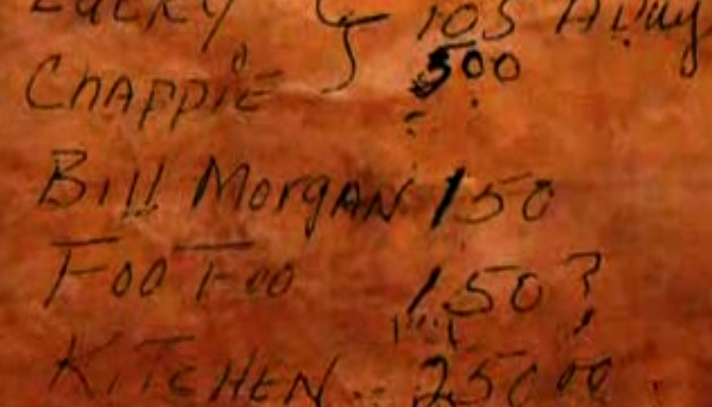
This page from the “Black Mafia notebook” confiscated by the Philadelphia Police Department Organized Crime Unit shows Foo Foo was being shaken down for a weekly “street tax.”

Foo Foo Ragan's Soliciation

Source: American Gangster – The Philly Black Mafia

Philly Groove Records

Located in West Philly on “the Strip,” Philly Groove Records was owned by Stan “The Man” Watson.

The record company put out discs by First Choice, the Delfonics and other lesser-known local acts. Thom Bell, who produced some of the Delfonics’ biggest hits at Sigma Sound Studios, met singer-songwriter Linda Creed while with Philly Groove. The Bell-Creed alliance hit it big in the ’70s with a string of hits they wrote and produced for the Spinners.

According to author Sean Patrick Griffin, the record company had ties to the fearsome Black Mafia:

John Stanley “Stan the Man” Watson owned Philly Groove Records, and employed the Black Mafia’s Bo Baynes from January 1968 until June 1971. Baynes’ stated position at Philly Groove was “road manager or promoter” and a PPD OCU [Philadelphia Police Department Organized Crime Unit] report states, “Reliable sources claim that Baynes did work for Watson. However, his position with Watson was that of an enforcer. Baynes’ primary mission was to intimidate disc jockeys to push certain records.

Black Brothers, Inc.: The Violent Rise and Fall of Philadelphia’s Black Mafia

The former location of Philly Groove Records is a stop on the 52nd Street Stroll. The next walking tour will be held on Saturday, October 5, 2024, 10am to 12pm. Tickets are $25 per person.

Buy Tickets

About Jazz Landmarks

Jazz landmarks are broadly defined. Philadelphia’s jazz scene did not exist in a vacuum. The golden age of jazz predates the Civil Rights Movement.

African Americans were not allowed to stay in downtown hotels. Instead, they stayed at places like the Douglass Hotel in South Philly, the Hotel Chesterfield and Hotel LaSalle in North Philly, and the Blue Moon Hotel and Swim Club in West Philly. The Ebony Lounge was located in the lower level of the Hotel Chesterfield. The Douglass Hotel was home to the Rendezvous Club (1950s), Showboat (1960s), and Bijou Café (1970s).

Douglass Hotel

Jazz was heard in Elks’ lodges, musicians’ homes, Union Local 274 (the Black musicians union), ballrooms, private clubs, and historic venues such as the Academy of Music, Pyramid Club, Blue Horizon, and the Wharton Center Settlement House. Musicians held jam sessions in restaurants, private homes and community centers.

Tenor saxophonist Bootsie Barnes grew up in North Philly’s Richard Allen Homes whose jam sessions in the community center were the inspiration for “Boppin’ Round the Center.”