
Category Archives: Jazz Landmarks


Uptown Theater
Opened on February 16, 1929, the Uptown began life as a movie house. In the 1950s, it became a music venue. Jazz, blues and soul greats who graced the Uptown stage included Count Basie, Sarah Vaughan, Gloria Lynne, Ray Charles, James Brown, Aretha Franklin, Cannonball Adderley, Nancy Wilson, Ramsey Lewis, Oscar Brown, Jr., Art Blakey and the Jazz Messengers, and Jimmy Smith.
Miles Davis played here one Christmas Day, but after the first show, he left because of the small crowd.
In 1958, legendary disc jockey Georgie Woods began producing rhythm & blues shows at the Uptown. The 2,040-seat theater became a stop on the “chitlin’ circuit.” The Uptown was where jazz met R&B.
Saxophonist Sam Reed was the house bandleader. The Sam Reed Orchestra included Bootsie Barnes, Jimmy Heath and Odean Pope.
The Uptown’s heyday was the 1960s and ‘70s. Since the final curtain in 1978, the interior of the Uptown has deteriorated almost beyond recognition. With the exception of the seats, none of the original artifacts remain.

For information on how you can help restore this Art Deco palace to its former glory and preserve an iconic piece of Black music, visit the Uptown Entertainment & Development Corporation.
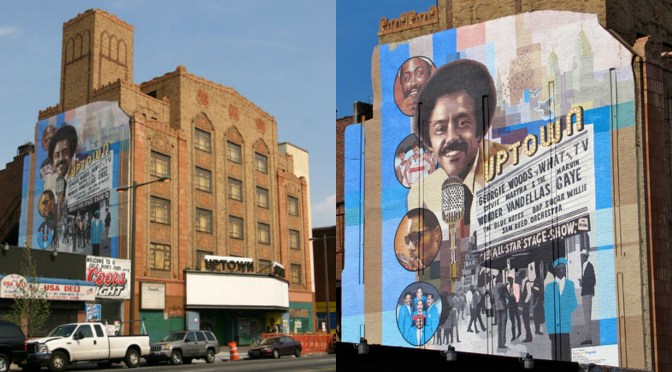
Uptown Reunion Mural
Artist: Peter Pagast
This mural celebrates the musical heritage and cultural influence of the Uptown Theater, which opened in the late 1920s as a movie palace and live-performance venue. The musical careers of Ray Charles, the Jackson 5 and the Temptations, among others, were launched here. The mural also highlights Georgie Woods, “The Man with the Goods,” who used his airtime and celebrity to advocate for civil rights.

John Coltrane Apartment
From Hidden City Philadelphia:
When 18 year old John Coltrane moved to Philadelphia, in 1943 the nation’s third largest city, he entered a fundamentally different world from his hometown of High Point, N.C. Like many African-Americans who migrated to major cities of the North, Coltrane joined older family members and friends already settled there. They lived in an apartment at 1450 N. 12th Street between Jefferson and Master Streets in an area since demolished for the Yorktown Urban Renewal project.

John Coltrane House
In 1952, at the age of twenty-six, with the benefit of a G.I. loan, John Coltrane bought for himself, his mother, his aunt and his first cousin the North 33rd Street property. Coltrane lived here from 1952 until 1958. It was a big, rowhouse, built for a well-to-do middle class at the turn of the 19th century and a huge step up from the cramped quarters in a deteriorating area of town where the family had been living. Coltrane owned and lived in this home longer than any other during his legendary career as a composer and saxophonist.
In 1999, the John Coltrane House was designated a National Historic Landmark, a recognition accorded to places that have “exceptional value or quality in illustrating or interpreting the heritage of the United States.”

The recognition attests to the value of the house. The building is structurally sound but it needs some repairs. Money is needed to preserve the John Coltrane House for current and future generations.
For information on how you can help, contact the John Coltrane House.

Mitten Hall
Yasuhiro Fujioka, founder of the John Coltrane House of Osaka, uncovered the long lost audiotape of John Coltrane’s last performance in Philadelphia. The November 11, 1966 concert was aired live on WRTI, Temple University’s then-student run radio station.
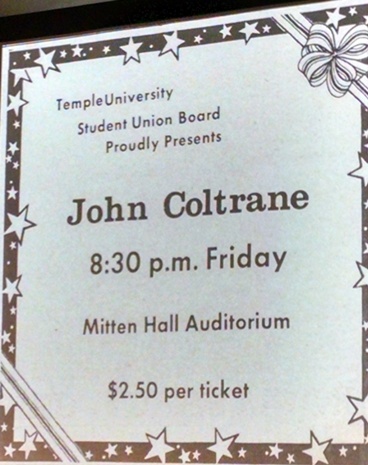
To purchase the album, go here.
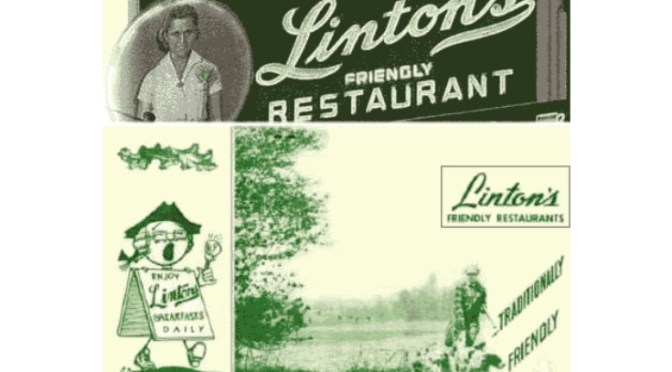
Linton’s Restaurant
Linton’s was a 24-hour diner located on the “Golden Strip.” After their gigs, jazz musicians would hang out here, hold jam sessions to hone their craft, and exchange ideas. In an interview with All About Jazz, Jymie Merritt recalled:
AAJ: That sounds like great fun and very productive at the same time. Another general location at around the same time, as I understand it, was on Columbia Avenue [now Cecil B. Moore Boulevard- eds.] in North Philadelphia near Temple University. There was a restaurant called Linton’s.
JM: Oh, yeah. Right on Broad Street off Columbia Avenue.
AAJ: Yes, exactly. And were you involved with the guys who used to gather there?
JM: Yeah. I used to eat there. And when we’d finish eating, we’d leave a tip. And then Philly Joe [Jones] would go around and collect the money for himself as we went out the door. [laughter]
AAJ: So he’d keep the tips!
JM: He was really ingenious.


Irvine Auditorium
From Wikipedia:
Irvine Auditorium is a performance venue at 3401 Spruce Street on the campus of the University of Pennsylvania in Philadelphia, Pennsylvania. It was designed by the firm of prominent architect Horace Trumbauer and built 1926–1932.[1] Irvine Auditorium is notable for its nearly 11,000-pipe Curtis Organ, the world’s 22nd-largest pipe organ (by ranks),[2] originally built for the Sesquicentennial Exposition of 1926 and donated to the university in 1928. The building was opened in May, 1929.
The 1987 Mellon Jazz Festival was dedicated to the Heath Brothers who performed in the auditorium on June 25, 1987.

Broadwood Hotel
The Broadwood Hotel was the former headquarters of the Benevolent and Paternal Order of Elks, renamed Philadelphia Lodge No. 2 BPOE.

On November 16, 1948, Duke Ellington performed here in the Crystal Ballroom. A notice in Billboard read:
This marks the first time in three years for a name band dance promotion in the hotel’s large ballroom and the first time for a Negro band to play the ballroom on a one-night promotion.
The Crystal Ballroom was used as a recording studio by Eugene Ormandy and the Philadelphia Symphony. Nat King Cole Sings My Fair Lady was recorded in the ballroom in 1963.

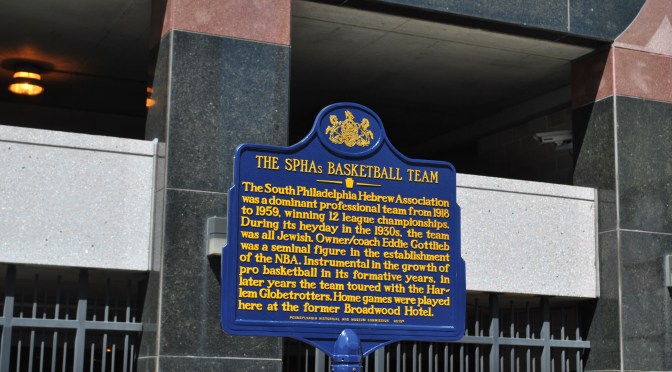
The historical marker out front notes the home games of the SPHAs basketball team (South Philadelphia Hebrew Association), a predecessor of the Philadelphia/San Francisco Warriors, were played in the Crystal Ballroom.
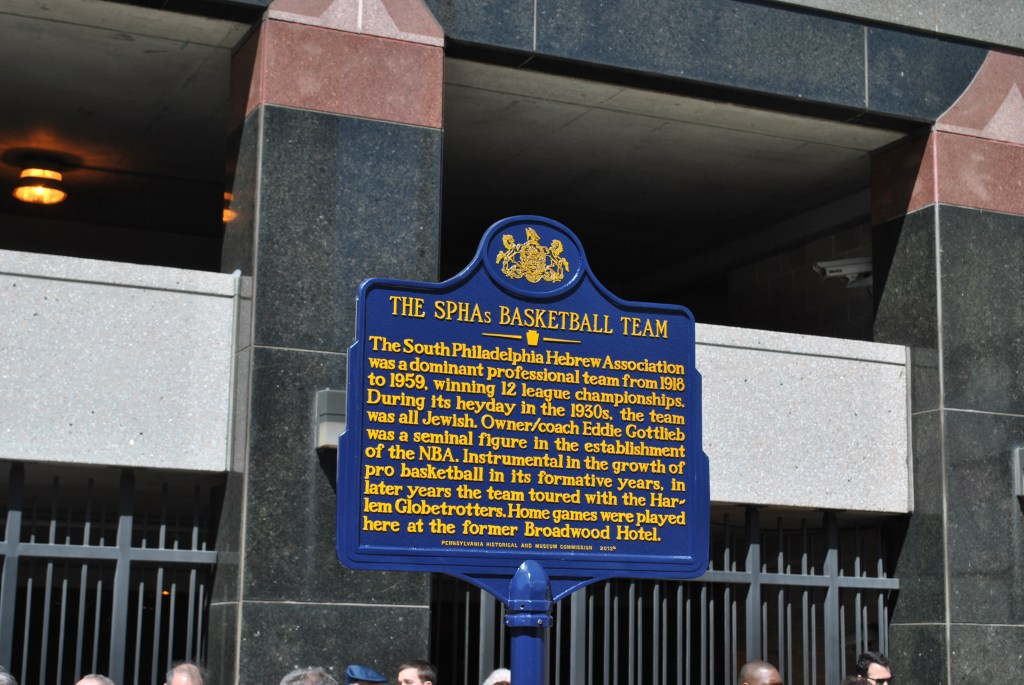
The Broadwood Hotel was replaced by a parking garage in 1994.
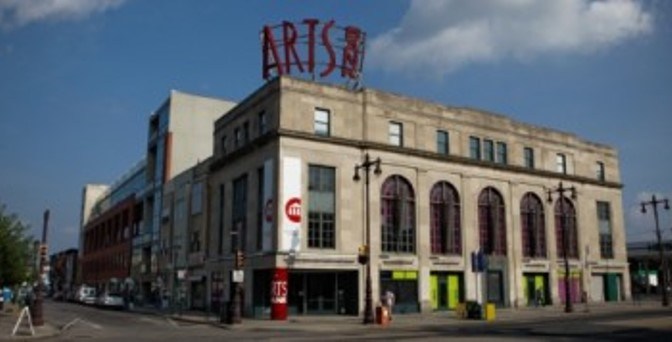
Arts Bank
The Arts Bank is a historic bank building owned by the University of the Arts. The building houses a 230-seat main stage and the Laurie Beechman Cabaret Theater on the first floor. It has played host to a number of jazz greats including organist Shirley Scott and saxophonist Tim Warfield.
 All That Philly Jazz