Category Archives: Jazz Landmarks

Dunbar/Lincoln Theater

African American bankers E. C. Brown and Andrew Stevens opened the Dunbar Theater in 1919, with plans to offer refined entertainment. However, within two years, business floundered and Brown and Stevens sold the theater to John T. Gibson, the black owner of the more raucous Standard Theater on South Street.

Later during the Depression, Gibson was forced to sell the theater to white owners who renamed it the Lincoln Theater.

Dunbar Theatre - Lombard Street Sign

From the 1920s to 1940s, the 1600-seat theater hosted major performers such as Duke Ellington, Louise Beavers, Willie Bryant, Lena Horne, Don Redman, Ethel Waters, Cab Calloway, Paul Robeson and Fats Waller.

Lincoln Theater 1.2

The joint was jumping.

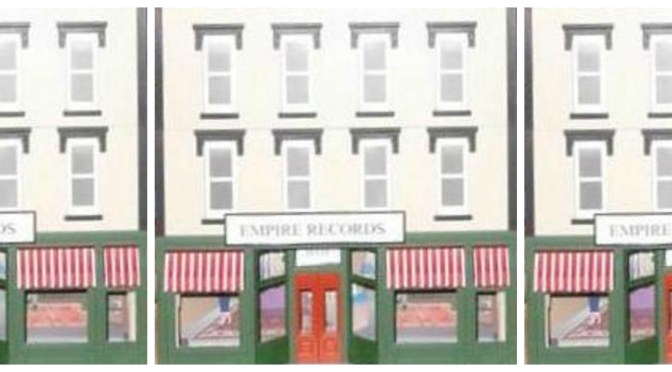
Empire Records

Empire Records Shop was located on the edge of “The Strip” at 52nd and Market Streets.

Empire Record Shop - Overlay -Zoom

Empire Records was the oldest, continually-operated Philadelphia jazz record shop (1930 to 1970). In an online profile, Bill Morlitz shared his story:

I was born in Camden NJ since my mom’s cousin was head of Obstetrics at West Jersey Hospital on February 1, 1950 and have lived my whole life in Philadelphia and/or its suburbs. My dad had the first jazz record shop in Philadelphia so at an early age, I was immersed in the music business. Maybe that’s why I can’t sing a note on key nor have the 10 years of piano lessons stayed with me. Chopsticks is beyond me.

During my teens, I was fortunate to personally meet many great jazz artists including Ray Charles, Dizzy Gillespie, Milt Buckner (who developed the locked wrist rhythm style of piano playing and was Lionel’s pianist), Lionel Hampton and many others. Grover Washington, Jr. worked in the store on the weekends and we used to go listen to jazz sets together. My photography is included on his “Live at the Bijou” album.

Read More

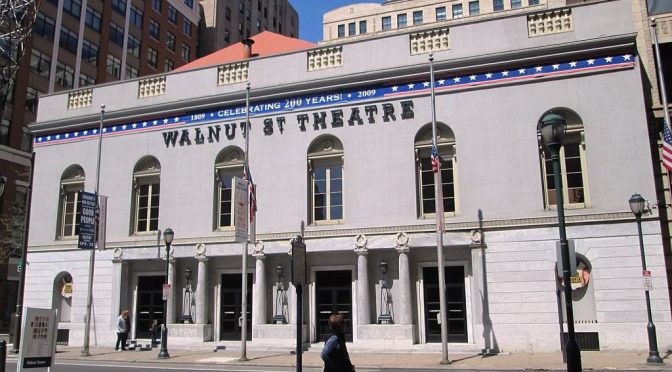
Walnut Street Theatre

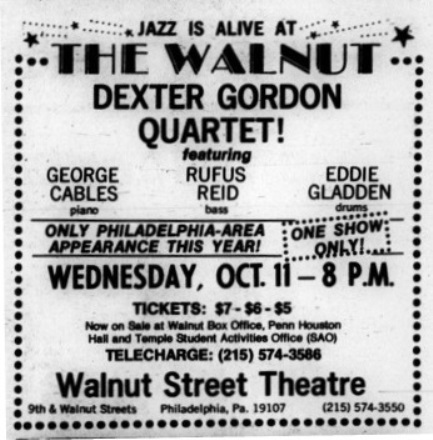
Opened in 1809, the Walnut Street Theatre is the nation’s oldest theatre. In 1978, the theatre launched a superstar jazz series, kicked off by saxophonist Dexter Gordon.

Other performers in the series included Woody Shaw, Sonny Rollins and McCoy Tyner.

Ripley’s Music Hall

Ripley’s Music Hall was located in the former Hippodrome in South Philly. The music venue played host to greats of all genres, including McCoy Tyner, Jimmy Cliff, Peter Tosh, Sam & Dave, Gil Scott-Heron and Stevie Ray Vaughan.

Ripley's Music Hall - Stevie Ray Vaughn - Live In Philadelphia

Ripley’s Music Hall was demolished. A new building constructed on the site was occupied by Tower Records, which closed in 2012.

1st Quaker City Music Festival

The 1st Quaker City Music Festival, a three-day jazz festival produced by George Wein, was held at Connie Mack Stadium in August 1960.

1st Quaker City Festival - Connie Mack Stadium -1960

The lineup included Gloria Lynne, Dizzy Gillespie, Chico Hamilton, Herbert Mann, Nat Adderley, Ornette Coleman, Thelonius Monk, Art Blakey, and Lee Morgan.

Connie Mack Stadium was demolished on July 13, 1976.

2nd Quaker City Jazz Festival

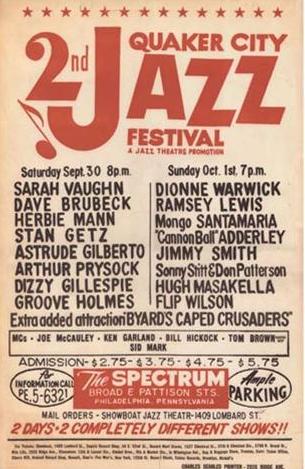
On September 30, 1967, the 2nd Quaker City Jazz Festival became the first event hosted by the Spectrum.

2nd Quaker City Jazz Festival

The two-day festival was produced by Herb Spivak, co-owner of the legendary Showboat. According to Joe McAllister:

Spivak went to Ed Snider and company (the Flyers were still in their infancy and the Sixers played at the Convention Center) and said he’d like to book a two-day jazz concert. Initially rebuffed because the Snider group didn’t believe a jazz bill would sell. Spivak replied, “That’s my problem.”

Spivak booked 10 groups a day and once again sold out the concert in two days. Dizzy Gillespie opened up the Spectrum with “God Bless America” followed by performances by Stan Getz, Dave Brubeck, Sarah Vaughan and Flip Wilson among others.

The lineup also included Cannonball Adderley, Astrud Gilberto, Groove Holmes and Arthur Prysock.

The Spectrum formally closed on October 31, 2009. Demolition was completed in May 2011.

Philadelphia Convention Hall

Philadelphia Convention Hall, also known as Municipal Auditorium, was located in West Philly near the campus of the University of Pennsylvania.

Convention Hall - 34th and Spruce

The venue played host to many events, including the 1940 and 1948 Republican National Conventions, and the 1959 Penn Relays Jazz Festival. Luminaries such as Pope John Paul II, Martin Luther King Jr. and Nelson Mandela spoke here.

On October 19, 1957, the Philadelphia Jazz Festival was held at Convention Hall. Jazz trumpeter and Philly native Lee Morgan was on the bill, along with, among others, trumpeter Miles Davis, pianist Horace Silver and organist Jimmy Smith.

Convention Hall was demolished in 2005.

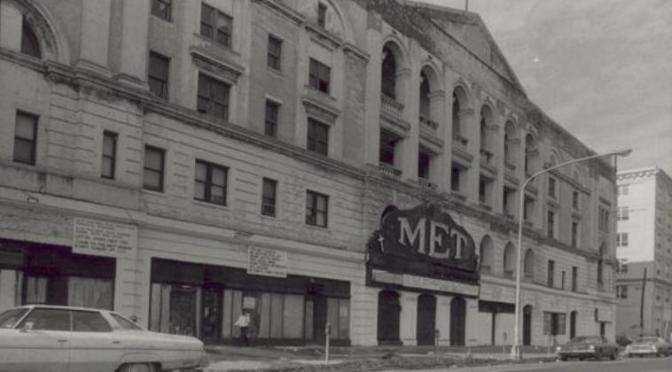
The Met

Located on North Broad Street, the Metropolitan Opera House was known as “The Met.”

#JanesWalkPHL - The Met2

From Curbed Philadelphia:

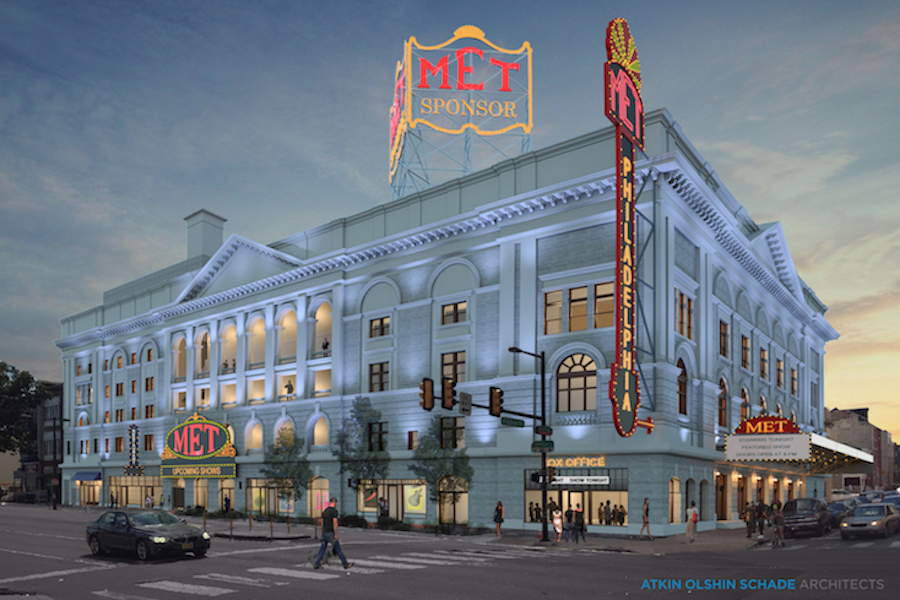
The Philadelphia Metropolitan Opera House was built in 1908 by Oscar Hammerstein I, the grandfather of Oscar Hammerstein II. Designed by architect William H. McElfatrick, it sat some 4,000 people, becoming the largest theater of its kind in the world. After some time Hammerstein I fell into debt and sold the property, which then went through a number of owners. Over the years it’s served as a movie theater, circus venue, ballroom, and most recently, a church.

Read More

UPDATE: Developer Eric Blumenfeld is restoring the Metropolitan Opera House to its original glory. The historic entertainment venue is scheduled to reopen in December 2018 as a Live Nation venue.

Met-Opera-House

Wharton Settlement House

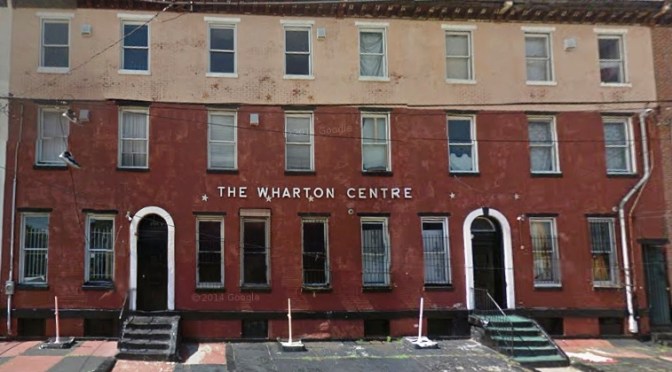
Legendary saxophonist, composer and arranger Benny Golson began his career in Philadelphia with Benjamin Clarence “Bull Moose” Jackson. In Whisper Not: The Autobiography of Benny Golson, the NEA Jazz Master recounted:

Three weeks after I joined the band, we landed a gig at the Wharton Settlement, 22nd Street and Columbia Avenue, a public venue for basketball, dances, swimming, checkers (anything to keep kids from idleness on city streets). We were paid: too good to be true, but welcome. Jackson’s band played stock arrangements that cost seventy-five cents each, most of which written by Spud Murphy or Van Alexander (who recently died at age one hundred) and other writers I have forgotten. Our repertoire included “Take the A Train,” “One O’Clock Jump,” “Tuxedo Junction,” “Jumpin’ at the Woodside,” “The 9:20 Special,” “Stardust,” “Down for Double,” and a variety of honorable standards. Sure enough, I received four dollars that night. It was months before I actually spent those precious few dollars, but I was on my way.

Published by Temple University Press, Golson’s autobiography is available for purchase here.

O.V. Catto Elks Lodge

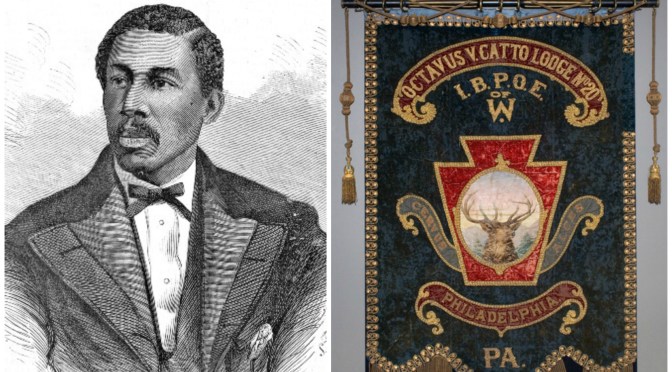
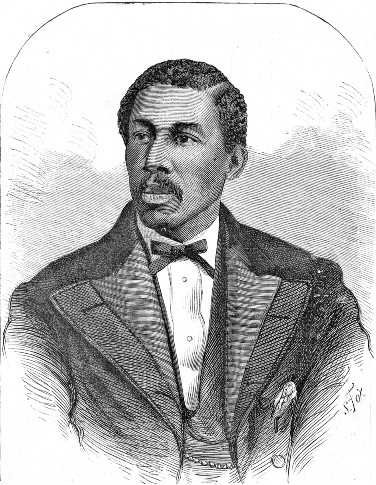
Octavius Valentine Catto was a 19th century educator and activist. He was killed on October 10, 1871, Election Day, when he tried to exercise his right to vote guaranteed by the 15th Amendment.

O.V. Catto

Located at 16th and Fitzwater streets, the O.V. Catto Elks Lodge was a hub of community life for 30 years. In addition to its large meeting space and recreation facilities (including a full boxing ring and a basketball court), the building boasted a large roof garden for formal gatherings.

O.V. Catto Lodge - Special Collections Research Center, Temple University Libraries

The lodge’s Two Bit Club was also a draw. In Whisper Not: The Autobiography of Benny Golson, the NEA Jazz Master recounted that for two years he played with the Mickey Collins Orchestra every Sunday at this South Philly landmark. This photo was taken in 1946 when Golson was 17.

O.V. Catto Lodge - Benny Golson

Published by Temple University Press, Golson’s autobiography is available for purchase here.

The O.V. Catto Elks Lodge 1903 banner has been conserved by the Philadelphia History Museum.

O.V. Catto Elks Lodge Banner