All posts by Faye Anderson

I am director of All That Philly Jazz, a place-based public history project that is documenting and contextualizing Philadelphia’s golden age of jazz. The project is at the intersection of art, public policy, and cultural heritage preservation.

Nina Simone Netflix Documentary

Later this year, Netflix will debut an original documentary about Nina Simone, What Happened, Miss Simone? The film was screened at the Sundance Film Festival.

Rolling Stone reports:

Beginning with footage of the singer staring down an audience at the Montreux Jazz Festival in 1976, What Happened goes about answering its question by flipping back to Simone’s childhood, detailing her early musical ambitions to be the first black female classical pianist. Despite her talent and the financial support of well-to-do patrons, she was rejected by the prestigious Curtis Institute in Philadelphia; that “early jolt of racism,” as Simone referred to the incident, became the first of several events to fuel an inexhaustible supply of anger at society. A summer gig at an Atlantic City bar gave birth to the blues chanteuse she’d eventually become, with the film tracing her rise to hit recording artist, jazz sensation, long-suffering wife (her manager/husband Andrew Stroud does not come off well), a major player in the Civil Rights movement, industry pariah, American ex-pat, playing-for-chump-change café performer and, eventually, a rediscovered legend.

READ MORE

Downstairs at the Showboat

The legendary Showboat was located in the basement of the Douglass Hotel. The historical marker out front notes that Billie Holiday “often lived here.”

Billie Holiday Marker

A while back, I visited what used to be the Showboat with Yasuhiro “Fuji” Fujioka, founder of the Coltrane House of Osaka and co-author of “The John Coltrane Reference”; Lenora Early, founder of the Philadelphia John Coltrane House; and Dr. George E. Allen, author of “I Was Not Asked.”

Until that visit, I assumed the Showboat was in the lower level space with the two windows facing Lombard Street. As we descended the stairs, Dr. Allen said something was wrong. Back then, there was no landing between the steps. Instead, the club was down a steep set of stairs. And sure enough, after a bit of snooping, we found what remains of the original steps that led down to the Showboat.

Stairs 1

Stairs 2

Stairs 3.jpg

So imagine the likes of Billie Holiday, Miles Davis, Lee Morgan, Art Blakey, Cannonball Adderley, Bootsie Barnes, Philly Joe Jones, Jimmy Heath, Thelonious Monk, Dinah Washington, Ray Charles and Ramsey Lewis descending those steps to take their place on the small bandstand behind the bar.

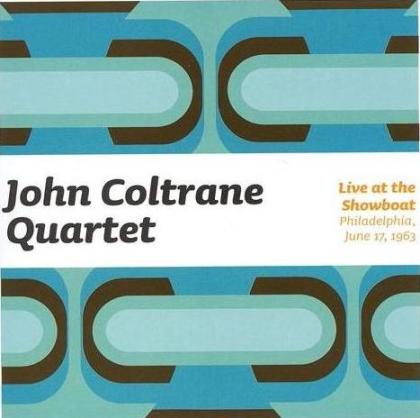
Showboat - John Coltrane - Live at the Showboat

The Douglass Hotel is a stop on the Green Book walking tour which will be held on Saturday, October 12, 2024, 10am to 12pm. Tickets are $25 per person.

Buy Tickets

1959: The Year that Changed Jazz

There are some years that were so momentous just their mention evokes milestones. Think 1776 and 1964. Or 1965 and “Bloody Sunday,” a retelling of which, “Selma,” is now playing in theaters.

1959 was the year that changed jazz. That year marked the release of Miles Davis’ “Kind of Blue,” John Coltrane’s “Giant Steps,” Ornette Coleman’s “Shape of Jazz to Come” and Dave Brubeck’s “Time Out.”

Is Jazz Healthy?

The Jazz Connect Conference, organized by JazzTimes and the Jazz Forward Coalition, was held January 8-9, 2015, in New York City and led into the annual Association of Performing Arts Presenters Conference, as well as Winter Jazzfest. The Jazz Connect Conference featured a series of workshops, panels discussions, and keynote address by Philly-native Christian McBride.

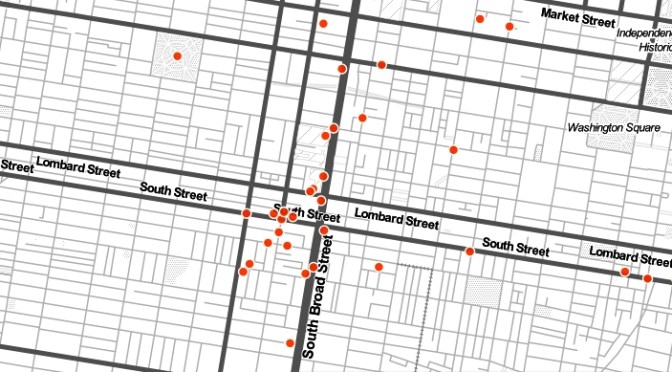
South Street

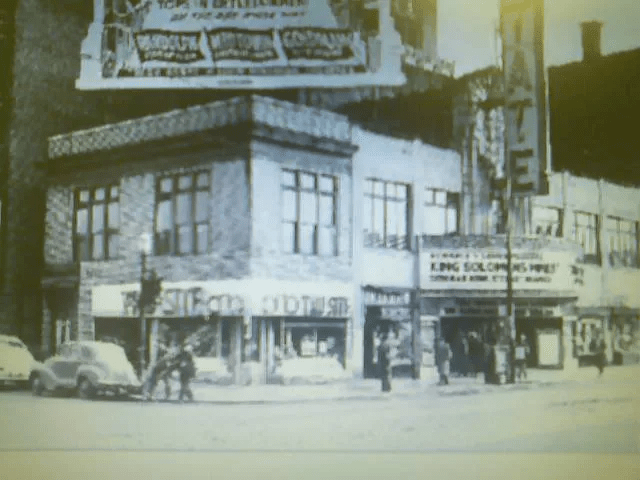
In the 1920s, jazz became the soundtrack for the revolution in manners and morals that was sweeping the nation. In New York’s Harlem, South Philadelphia, the south side of Chicago, Pittsburgh’s Hill District and other northern cities urban African Americans, known as the New Negroes, were finding expanded opportunities and new identities. One of the first singers to give voice to this new generation was Chester, Pennsylvania’s Ethel Waters, the first recording star of the African-American-owned Black Swan Record Company.

In the African-American-owned Standard Theatre on South Street, Waters, Bessie Smith, Duke Ellington, Louis Armstrong, and other jazz and blues stars performed their music for black and white audiences. The Standard and Dunbar were stops on a circuit of African-American theaters that brought the best of black touring shows to their cities.

READ MORE

The Golden Strip

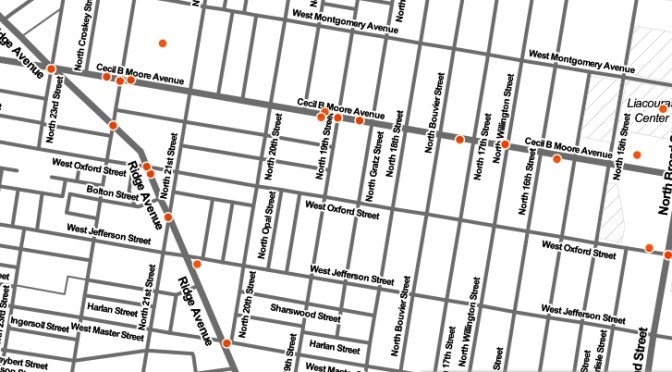
The “Golden Strip” spanned Columbia Avenue from 8th Street to 23rd Street. With neon signs aglow, it was also known as the “Great White Way.” Noted author and hip-hop scholar James G. Spady wrote:

The biggest concentration of bars and clubs frequented by blacks and offering Jazz was along Columbia Avenue (later renamed Cecil B. Moore Avenue). Among what as upwards of fifteen different venues were the Crystal Ball, 820 Club, Spider Kelly’s, Watts Zanzibar — one of the few black owned venues—and the North West Club. [Lee] Morgan played at many of these with groups made up of his peers. The trumpeter Cullen Knight remembered seeing Morgan at the North West, leading a band consisting of tenor saxophonist Odean Pope and a rhythm section of McCoy Tyner, Reggie Workman and Ronald Tucker.

Both the Zanzibar and North West were private clubs, and these were often keener to employ, under-age musicians than other venues; in addition, removed from some off the commercial concerns of the regular bars, they were thought of as sites for some degree of experiment among young musicians, as ‘hardcore’ bebop clubs where players could cultivate their jazz improvisation without needing to make concessions to dancers or casual listeners. Private venues would often pay the musicians a decent nightly fee, often around $10.

In Whisper Not: The Autobiography of Benny Golson, the NEA Jazz Master recalled his days on the Golden Strip with John Coltrane:

On jam days—Saturday afternoons between four and seven—John and I started at one end of Columbia Avenue, where most of the clubs were located, and proceeded toward the other end. We played at each club for an hour, then moved to the next. If we didn’t get to a particular club, we started there the following week. These clubs were small, on the ground floor of apartment houses or in storefront slots, long and narrow.

Published by Temple University Press, Golson’s autobiography is available for purchase here.

West Philly’s Main Street

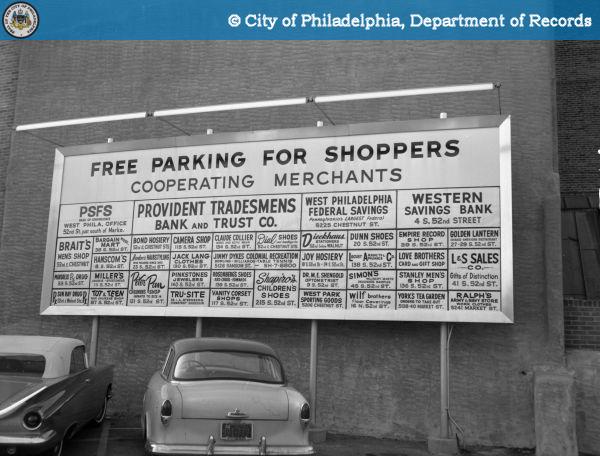
West Philly’s Main Street, 52nd Street, is a historic cultural and commercial corridor that stretches from Arch Street to the north and Baltimore Avenue to the south.

In a 2012 interview with Hidden City Philadelphia, Shirley Randleman, then-president of the 52nd Street Business Association, recounted:

Oh, it was wonderful. It was a thriving commercial corridor surrounded by a neighborhood that was financially stable. The 52nd Street corridor had five movie theaters, many high-end clothing stores, and eateries like Horn & Hardart, with the nickel automats. There were bakeries, doctor’s offices, and independent stores, like Buster Brown shoes. 52nd Street was the entertainment capital of West Philadelphia, AKA “the Strip,” and every top notch entertainer found his way there. It was more than just shops; it was the community meeting place. People were engaged in conversations in every shop and on the streets. We lived together.

In the 1960s and ‘70s, 52nd Street, aka “the Strip,” was the place to see and be seen. Celebrities including Muhammad Ali, Cab Calloway, Billy Eckstine, Joe Frazier, Teddy Pendergrass, Stevie Wonder, and members of the Philadelphia Eagles and Phillies hung out at Mr. Silk’s 3rd Base.

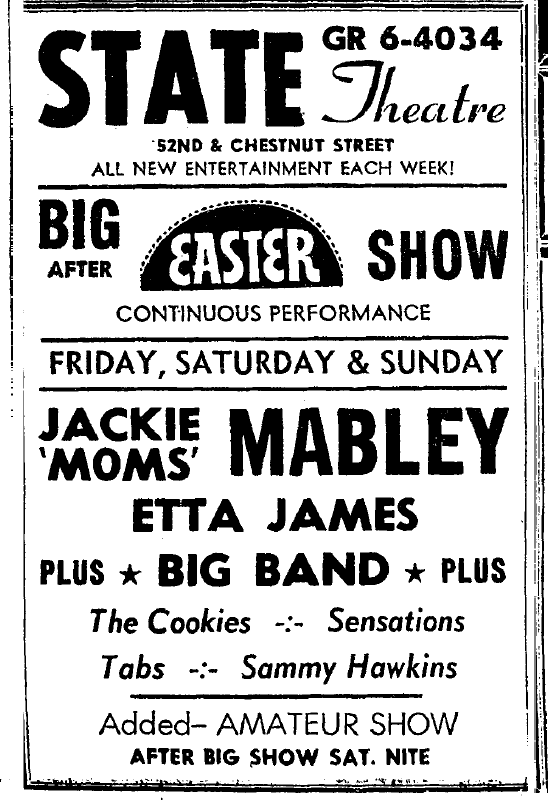
Everyone ordered mammer jammer sandwiches at Foo Foo’s Steak House. Top jazz musicians performed at the Aqua Lounge. Etta James and Jackie “Moms” Mabley graced the stage of the State Theatre in April 1963.

For more risqué entertainment, one could go to the Pony Tail and watch go-go girls bend over and “shake a tail feather.”

Lee Morgan’s historical marker was installed at 52nd and Chancellor streets in front of the former location of the Aqua Lounge (now African Cultural Art Forum) on International Jazz Day 2024.

Join All That Philly Jazz Director Faye Anderson for a stroll along 52nd Street. The walk and talk will start at Malcolm X Memorial Park and end at the Red Rooster.

The most recent 52nd Street Stroll was held on Saturday, October 5, 2024.

Ridge Avenue

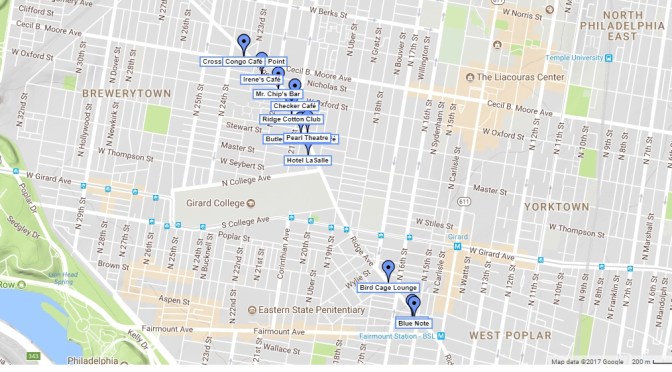
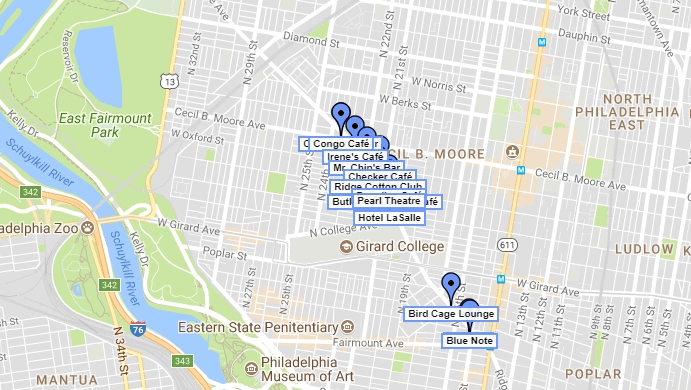
During Philadelphia’s golden age of jazz, there were jazz clubs in every neighborhood. There were so many clubs that folks in North Philly didn’t go to joints in South Philly and vice versa. There was a handful of clubs that reached legendary status and attracted patrons from all over the city. The Blue Note at 15th Street and Ridge Avenue was “the town’s swankiest jazz emporium.”

From 15th Street to Columbia Avenue (later renamed Cecil B. Moore Avenue), Ridge Avenue was a jazz corridor where legends-in-the-making roamed.

Ridge Avenue Entertainment District - 7.26.17