All posts by Faye Anderson

I am director of All That Philly Jazz, a place-based public history project that is documenting and contextualizing Philadelphia’s golden age of jazz. The project is at the intersection of art, public policy, and cultural heritage preservation.

Philly Groove Records

Located in West Philly on “the Strip,” Philly Groove Records was owned by Stan “The Man” Watson.

The record company put out discs by First Choice, the Delfonics and other lesser-known local acts. Thom Bell, who produced some of the Delfonics’ biggest hits at Sigma Sound Studios, met singer-songwriter Linda Creed while with Philly Groove. The Bell-Creed alliance hit it big in the ’70s with a string of hits they wrote and produced for the Spinners.

According to author Sean Patrick Griffin, the record company had ties to the fearsome Black Mafia:

John Stanley “Stan the Man” Watson owned Philly Groove Records, and employed the Black Mafia’s Bo Baynes from January 1968 until June 1971. Baynes’ stated position at Philly Groove was “road manager or promoter” and a PPD OCU [Philadelphia Police Department Organized Crime Unit] report states, “Reliable sources claim that Baynes did work for Watson. However, his position with Watson was that of an enforcer. Baynes’ primary mission was to intimidate disc jockeys to push certain records.

Black Brothers, Inc.: The Violent Rise and Fall of Philadelphia’s Black Mafia

The former location of Philly Groove Records is a stop on the 52nd Street Stroll. The next walking tour will be held on Saturday, October 5, 2024, 10am to 12pm. Tickets are $25 per person.

Buy Tickets

Happy Presidents’ Day

In 1964, Dizzy Gillespie threw his beret into the ring and ran for President of the United States.

dizzy-for-president-balloon

In a piece for Al Jazeera America, Tom Maxwell wrote:

It started as a joke, as so many serious things do. His booking agency had some “Dizzy Gillespie for president” buttons made around 1960, because, you see, it’s funny. Somebody even asked Gillespie why a black jazzman — a permanent member of the underclass if there ever was one — would even think of trying for the job. “Because we need one,” he said.

“Anybody coulda made a better President than the ones we had in those times, dillydallying about protecting blacks in the exercise of their civil and human rights and carrying on secret wars against people around the world,” Gillespie wrote in his autobiography “To Be, or Not … to Bop.” “I was the only choice for a thinking man.”

Vote Dizzy!

Jewel’s

From 1979 to 1989, Jewel Mann-Lassiter operated her eponymous jazz club, Jewel’s, on Broad Street in North Philly. Both local and national artists played here, including Trudy Pitts and Mr. C, Kevin Eubanks, Jimmy Scott, Bootsie Barnes, Evelyn Simms, Joey DeFrancesco and Pieces of a Dream.

In 1986, the Philadelphia Inquirer reported:

She brought in past and current greats Betty Carter, Gloria Lynne, Jimmy McGriff, Arthur Prysock, Dakota Staton, Herbie Mann. She tried out newcomers Nancy Kelly, Janice McClain. And the customers came, with Jewel’s attracting the city’s black movers and shakers as well as professional people, students from nearby Temple University and others seeking good music and good times.

Herbie Mann played there, tenor sax player Al Cohn and organist Jack McDuff. The “new Cotton Club,” Jewel likes to call her place.

READ MORE

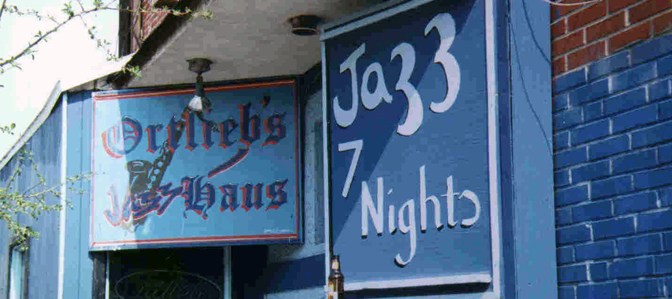
Ortlieb’s Jazzhaus

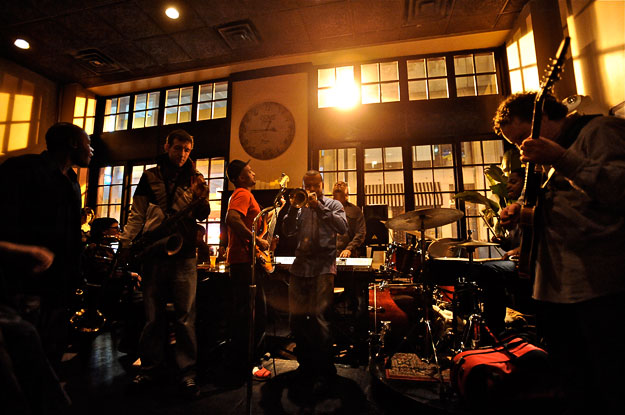
Ortlieb’s Jazzhaus was opened in September 1987 by jazz musician Pete Souders, who ran it until 2007. Under the new owner, they’re still holding their Tuesday night jam session

In a post for Hidden City Philadelphia, Bart Everts wrote:

The bar became a mainstay of the Philadelphia jazz scene, with musicians such as Bootsie Barns, Shirley Scott, Duane Eubanks, Farrid Barron, Cecil Payne and other notables taking residency. Tuesday nights featured an open jam where lesser known musicians might get to play with a legend. Throughout the 1990s, Ortlieb’s thrived as one of the few venues in the region offering jazz seven nights a week, a distinction that continued through the next decade.

READ MORE

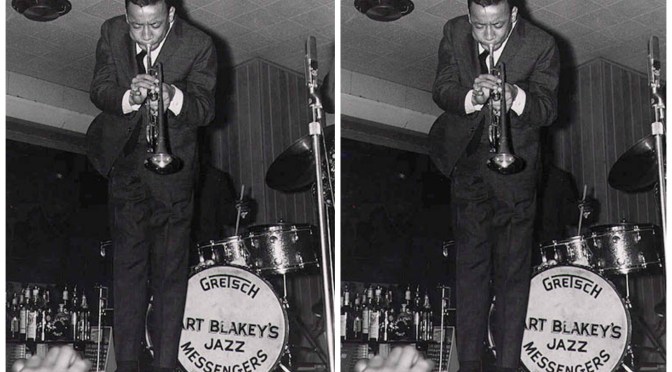
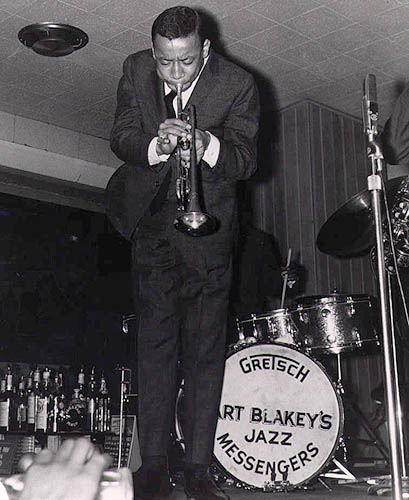
Lee Morgan ‘Walking the Bar’

Back in the day, musicians used to “walk the bar.” Philly native Lee Morgan was among those “honking and stepping.”

Lee-Morgan-Walking-the-Bar

In an interview with the Smithsonian Jazz Oral History Project, NEA Jazz Master and Philly native Benny Golson said: “I caught my boy John Coltrane on the bar.” In a 2009 piece, jazz critic Marc Myers also shared the story:

In 1954, Coltrane’s expanding heroin and alcohol addiction cost him playing jobs, most notably a significant one with alto saxophonist Johnny Hodges. After moving back to Philadelphia, Coltrane was forced to play with local R&B bands to make ends meet. In some of these bands, he had to honk away on the tenor while walking along the bar. One night, he saw childhood friend and tenor saxophonist Benny Golson enter the club. Mortified, Coltrane climbed off the bar and walked out for good.

The Smithsonian interviewer asked Golson where the tradition was started:

I don’t know where it started. It didn’t start with the jazz artists, per se. It started with one of the entertainers. An entertainer’s plot is to do or to second-guess what the audience wants to hear. Yeah, I got involved in that. I did some crazy stuff when I was doing all that stuff. You do what you think is going to entertain them. It’s going to bring acclaim to what you’re doing. Yeah, what’s more ridiculous than getting up on the bar where the drinks are and start playing your low B-flats no matter what key you’re in, just honking. We call that honking and stepping. They’re applauding. Ain’t nothing happening. Stepping over those drinks.

Read More

About Jazz Landmarks

Jazz landmarks are broadly defined. Philadelphia’s jazz scene did not exist in a vacuum. The golden age of jazz predates the Civil Rights Movement.

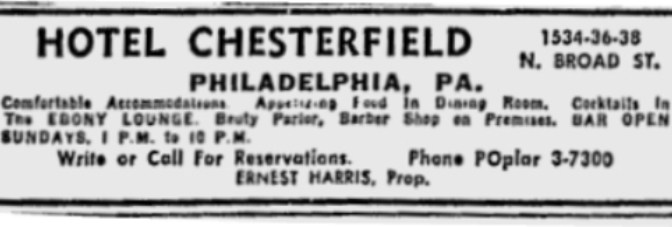
African Americans were not allowed to stay in downtown hotels. Instead, they stayed at places like the Douglass Hotel in South Philly, the Hotel Chesterfield and Hotel LaSalle in North Philly, and the Blue Moon Hotel and Swim Club in West Philly. The Ebony Lounge was located in the lower level of the Hotel Chesterfield. The Douglass Hotel was home to the Rendezvous Club (1950s), Showboat (1960s), and Bijou Café (1970s).

Douglass Hotel

Jazz was heard in Elks’ lodges, musicians’ homes, Union Local 274 (the Black musicians union), ballrooms, private clubs, and historic venues such as the Academy of Music, Pyramid Club, Blue Horizon, and the Wharton Center Settlement House. Musicians held jam sessions in restaurants, private homes and community centers.

Tenor saxophonist Bootsie Barnes grew up in North Philly’s Richard Allen Homes whose jam sessions in the community center were the inspiration for “Boppin’ Round the Center.”

Time

A restaurant and music venue, Time has jazz nearly every night in the 60-seat dining room. There’s a jam session on Sundays, 8pm to midnight.

For more info. visit. www.timerestaurant.net.

The Five Spot

Located in Old City, The Five Spot hosted Black Lily, a weekly live music showcase founded by Mercedes Martinez and Tracey Moore of the Jazzyfatnastees which ran from 2000-2005. Many local and national artists performed here, including Jill Scott, Jaguar Wright and Floetry.

Ebony Lounge

The Ebony Lounge was located in the lower level of the Chesterfield Hotel which was owned by Ernest and Evelyn Harris.

Alonzo Kittrels
of the Philadelphia Tribune reminisced:

[T]he Chesterfield Hotel, a landmark that deserves its own back-in-the-day column, given its significance in the lives of Black people. It was particularly important in the lives of the performers at the nearby Uptown Theater. This hotel was where many performers stayed while appearing at this venue.

Ebony Lounge - SCOOP USA

In a March 28, 1960 conversation with celebrated jazz journalist Ralph J. Gleason, bassist Percy Heath reminisced about his start as a professional musician:

But I remember when Red Garland did come to Philadelphia he was singing and playing “Billie’s Bounce” and “Now’s the Time” and we hadn’t heard those things, and he was sort of an authority on Charlie Parker tunes at that time. But there were an awful lot of promising musicians around Philadelphia. I really started with a trio. At that time we used to play in little cocktail bars and there was hotel there, the Philadelphia Chesterfield Hotel, they had a lounge. We played in there quite a bit and then we’d go around to Wilmington, Delaware, and play some club down there.

Conversations in Jazz: The Ralph J. Gleason Interviews is available on Amazon.com.

John Coltrane Duly Noted

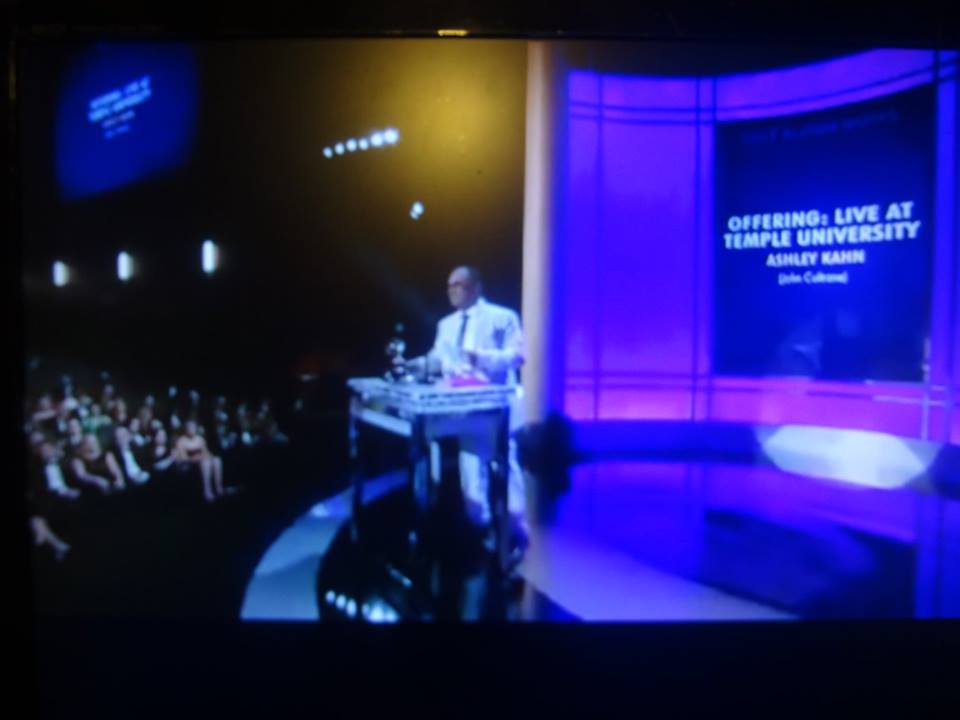
Music historian Ashley Kahn won the 2015 GRAMMY for Best Album Notes for Offering: Live from Temple University.

Ashley Kahn - 2.8.15

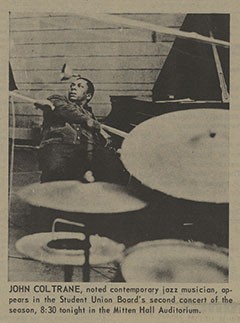
Yasuhiro Fujioka, founder of the John Coltrane House of Osaka, uncovered the long lost audiotape of John Coltrane’s last performance in Philadelphia. The Nov. 11, 1966 concert was aired live by WRTI, Temple University’s student-run radio station.

Notice of Coltrane's Concert at Mitten Hall

To purchase the album, go here.