

Elvira “Vi” Redd (born September 20, 1928) is an American jazz alto saxophone player, vocalist and educator. She has been active since the early 1950s and is known primarily for playing in the bebop, hard bop and post-bop styles. She is highly regarded as an accomplished veteran who personally knew Dizzy Gillespie and has performed with such stars as Count Basie, Rahsaan Roland Kirk, Linda Hopkins and Marian McPartland.
Tag Archives: #PhillyJazzApp

Whose Murals Get Saved?
They say that “blues ain’t nothing but a botheration on your mind.” It’s bothersome that developers are erasing African Americans’ cultural heritage. In Philadelphia, developers routinely – and without notice – demolish or cover up murals that are paid for in part by City taxpayers.

Murals are part of Philadelphia’s cultural landscape. The Mural Arts Program creates murals that engage the community. They reflect a community’s history, identity, hopes and dreams.

City Council members can use Councilmanic Prerogative to require that developers of publicly-subsidized projects replace murals of social or cultural significance. Who will determine which mural meets that threshold? Let’s stipulate that murals that tell stories about events or persons who are the subject of books, songs, documentaries, national holiday, or City and congressional resolutions are culturally significant.

The how of replacement is negotiable. What is non-negotiable is that developers can erase African Americans’ cultural heritage because, to borrow a phrase from Al Gore, there is “no controlling legal authority.” A district Council member is the controlling legal authority in his or her district. He or she decides which projects go forward and which ones go nowhere. While developers view murals as disposable, district Council members must exercise their prerogative and demand that they respect that which came before.

Meiji-en on the Waterfront
This Japanese restaurant held a lavish Sunday Jazz buffet with Trudy Pitts and Mr. C. Dr. Janice Presser shared they ended each performance with “What a Wonderful World.”
Tritone
Tritone was a small neighborhood bar on South Street. It closed in 2011. Bobby Zankel played there on the 1st Thursday of every month.
The club debuted in 2001, when current owner Dave Rogers (a veteran of Fergie’s), and his late partner, music promoter and bartender Rick Dombrowolski (who understandably went by “Rick D.”), joined forces. While a bartender at neighboring Bob & Barbara’s, Dombrowolski, who died of a heart attack in 2007, invented what has become known throughout the city as the “Citywide Special,” a can of Pabst and a shot of Jim Beam for $3.
The bar is the last of its kind. While it can be difficult for a new band to get a foot in the door at Philadelphia’s other music venues, Tritone has always had a much more open-stage policy. This resulted in a vast array of live music. From death metal to punk to singer-songwriter to hip-hop, Tritone presented it all, seven nights a week.

All That Philly Jazz Presentation at Open Access PHL
Faye Anderson, director of All That Philly Jazz, made a presentation at the March convening of Open Access Philly.
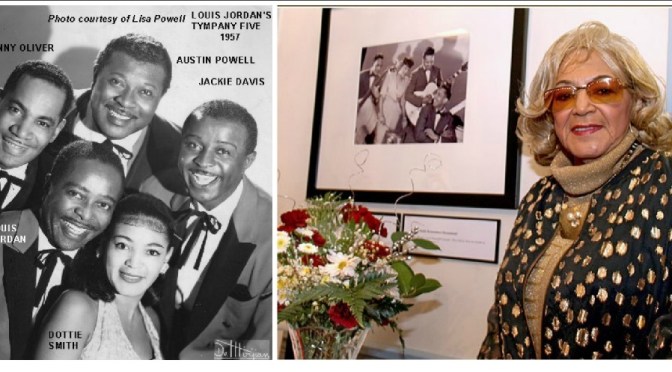
La Gayla
Dottie Smith was a jazz vocalist who recorded and toured with bandleader Louis Jordan. Jordan saw her perform at Spider Kelly’s and offered her a job on the spot.
Jazz Historian and WRTI Jazz Host Bob Perkins wrote:
Dottie Smith opened her own place on Columbia Avenue, called La Gayla, a handle based on her married name, Gayle. She booked local icons Bootsie Barnes, Jimmy Oliver, Philly Joe Jones and host of others.
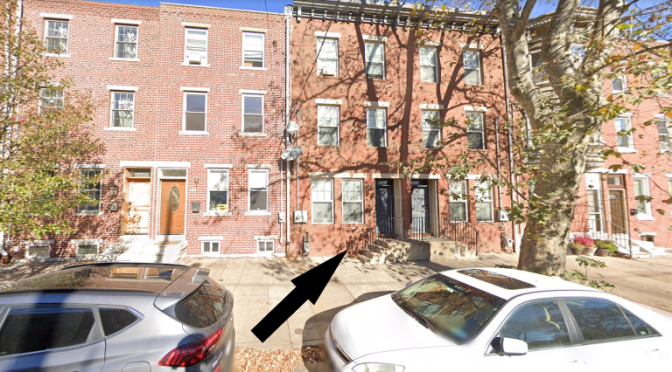
Bessie Smith House
Bessie Smith moved to Philadelphia circa 1922. After her marriage to Jack Gee on June 7, 1923, she lived on Christian Street in South Philly.

The “Empress of the Blues” died in an auto accident in Mississippi on September 26, 1937. Her funeral was held in Philadelphia on October 4, 1937.

The funeral was moved from Upshur’s Funeral Home to O.V. Catto Elks Lodge to accommodate the 30,000 mourners who filed pass her casket.
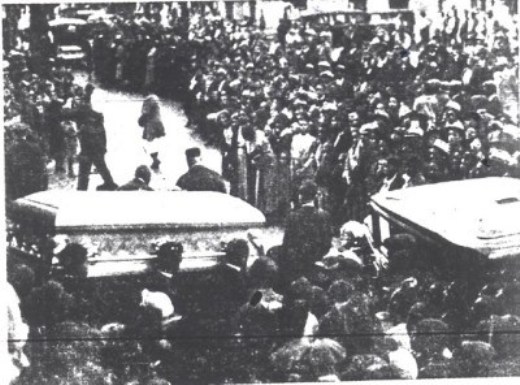
Bessie’s casket was taken on a slow tour of her South Philly neighborhood, briefly stopping at the Standard Theater where she regularly performed.


Women of Jazz Mural
The Women of Jazz mural features many of the most iconic female jazz performers in the world, including Nina Simone, Billie Holiday, Dinah Washington, Betty Carter, Shirley Scott, Dottie Smith, Ella Fitzgerald, Sarah Vaughan and Mary Lou Williams. The tiles below and to the left of the mural were designed by students at several of the city’s public schools.
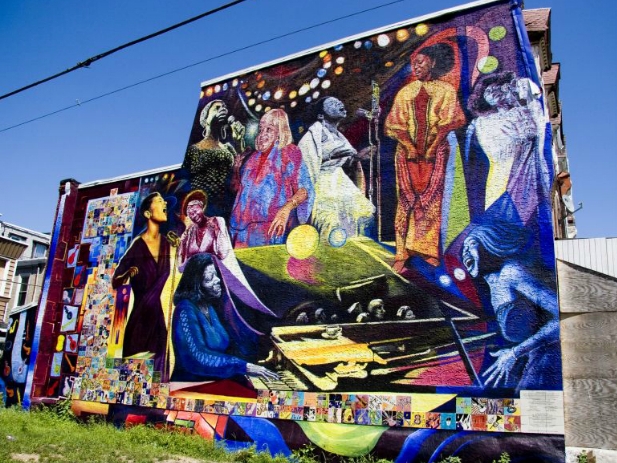
Smith, affectionately called Miss Dot, is the blonde next to Nina Simone. She was a longtime resident of Strawberry Mansion and a former manager of the legendary Gert’s Lounge. Miss Dot died in December 2014.
Women of Jazz is included in the Mural Arts Program’s African American Iconic Images Collection.
UPDATE: In 2016, the Philadelphia Housing Authority demolished the mural.
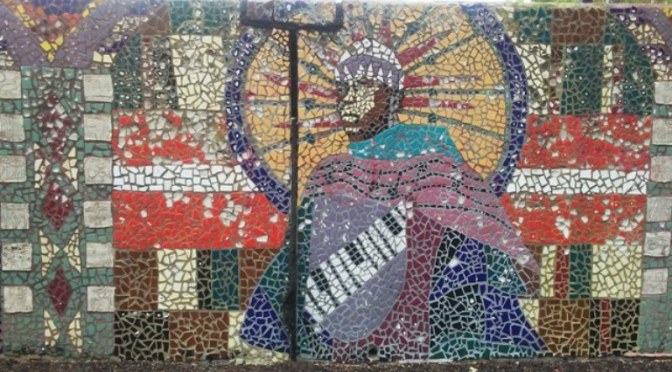
Sun Ra Mural
Memories from jazz educator and musician Paul Combs:
I had a couple of encounters with Sun Ra, who was a neighbor of mine, that I would like to share with you before finishing this memoir. I first met Sun Ra during an interview at WHUY-FM, where I was the music producer/announcer. A colleague of mine, Tom Lopez, was conducting the interview, but I got to sit in on it.
Now it is well documented that Herman Blount was born in Chicago, but when he, as Sun Ra, looked me in the eye and told me he was from Saturn, I could not question it. The man had such a presence; I knew that he knew that I knew it was a fantasy, and yet in his company there was also an undeniable truth to the fantasy.
A couple of years later I had the honor to precede him and the Arkestra in a concert. This was part of a series of concerts that a group of us musicians and artists used to organize on Sundays, in a big park in the middle of the Germantown district, where we all lived. On this particular Sunday the sky was full of menacing clouds. Just as we finished performing, a fine mist began and threatened to become rain. We all worried that Ra and company would have to cancel their performance. The sound crew covered all the equipment and disconnected the power. This was discussed with the Arkestra members who were beginning to assemble at the stage, but they said it would be OK, and proceeded to get ready for their set. Just as their preparations were almost complete a car drove up and Sun Ra stepped out. The rain and mist stopped. They played, sang and danced for the next two hours without interruption from the weather, and it was magnificent. When they finished Ra got back in the car and the mist and light rain resumed. Maybe it was a coincidence, maybe it wasn’t.
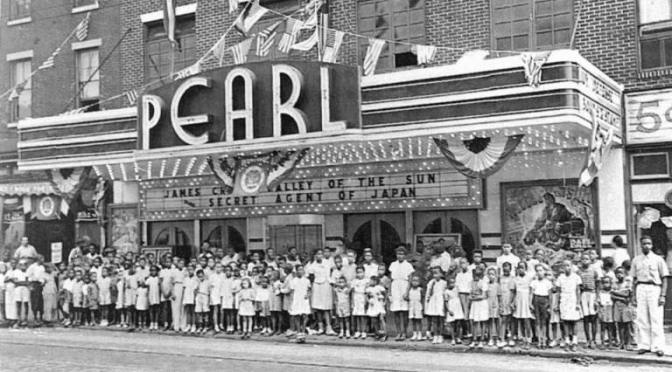
Pearl Theatre
The Pearl Theatre opened in 1927. It closed in 1963 and was demolished circa 1970. When the theater opened, an orchestra seat cost fifty cents in the evening, thirty cents for a matinee. Balcony seats were thirty-five cents in the evening, twenty cents for a matinee.
From: Wikipedia
The Pearl Theatre was a notable jazz and dance venue and had a glamorous reputation among the rich and famous. In 1931 the Nicholas Brothers played here. Duke Ellington, John Coltrane, and many other prominent jazz ensembles of the period performed here. Bennie Moten and the Kansas City Stompers’ featuring Count Basie on piano performed at the club in November 1931, and in December 1932 the audience raved all week about their “Moten Swing”; the doors of the theatre were let open to the public who came crammed into the theatre to hear the new sound, demanding seven encores on one night. Pearl Bailey was discovered at the theatre in which she entered the theatre’s amateur song and dance contest and was paid $35 a week to perform there for two weeks but the theatre closed during her engagement and she wasn’t paid.
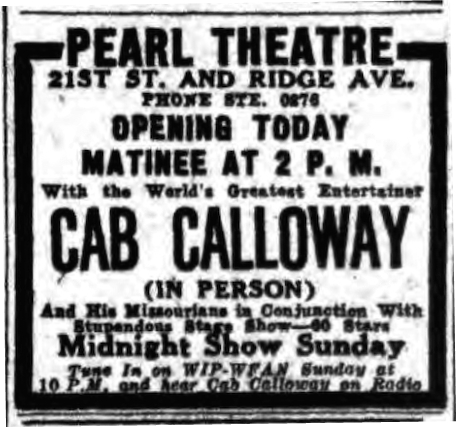
The “Hi De Ho Man,” singer and bandleader Cab Calloway, performed here on several occasions, including a long term residency from January to July 1931.
 All That Philly Jazz