
Tag Archives: Jazz


Geno’s Empty Foxhole
Web Christman opened Geno’s Empty Foxhole on Christmas Day 1970 in the lower level of the parish hall of St. Mary’s Church, Hamilton Village, on the campus of the University of Pennsylvania. The name came from the title of an Ornette Coleman album.
The small space played host to Sun Ra and his Arkestra, Rufus Harley, Charles Mingus, Rahsaan Roland Kirk, Cecil Taylor, the Art Ensemble of Chicago, among others.

Larry Robin, director of Moonstone Arts Center, shared that he took his now-wife Sandy here on their first date. It was Christmas 1976; Betty Carter was performing.
In a 2005 interview with the University of Pennsylvania School of Arts and Sciences’ West Philadelphia Music Project, Christman recalled:
No, just, um my amazement at the hugeness of the crowd for Sun Ra, and later for Rufus Harley those are the two nights when the, there’s a little courtyard and then there’s the Parish hole and then there’s Irving Street which is one of those alley type streets that Philadelphia people were lined up all the way down Irving Street all the way to 40th street waiting to get in.
WHAT-FM
In 1944, Dolly Banks, and her brother William Banks, purchased WHAT-AM from the Public Ledger. The deal included an extremely low profile FM station at 96.5 FM, which simulcasted the AM until the mid 50s.

In 1956, a young man named Sid Mark began hosting an all night music show, the first “live” programming on the FM station. Each morning at the conclusion of the show, two patch cords would be plugged back in to simulcast the AM for the rest of the day. To the surprise of station management, Mark’s Jazz show quickly gained popularity. In 1958, the decision was made for WHAT to become the country’s first 24 hour, live FM Jazz station, a format it would keep for the next 17 years.
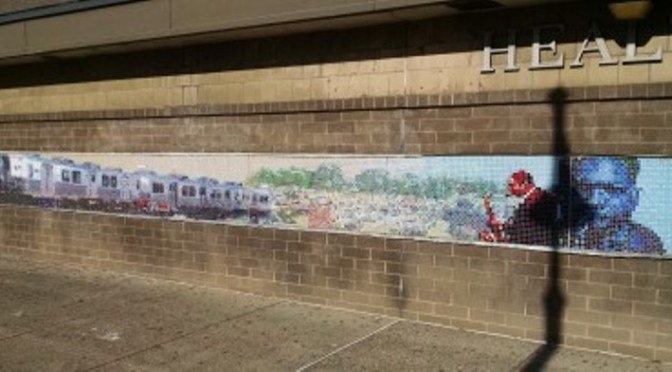
Health Care Center 6 Blue Train
The Health Centers of the Philadelphia Department of Public Health provide a full range of health services for Philadelphia’s underserved communities.
Every block tells a story about Philadelphia’s jazz heritage.
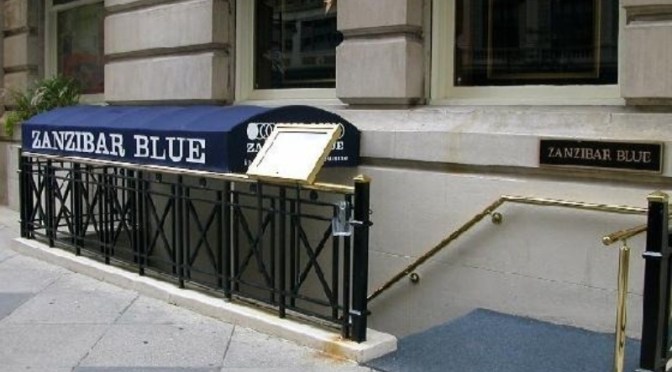
Zanzibar Blue
Owned by brothers, Robert and Benjamin Bynum, Zanzibar Blue first opened in 1990 on 11th Street in Washington Square West. In 1996, the club moved to the Bellevue on the Avenue of the Arts, where it played host to jazz and blues greats, including Nancy Wilson, Lou Rawls, Grover Washington, Jr., Jimmy Scott, Shirley Horn, Ahmad Jamal, Steve Tyrell, Chick Corea, Arturo Sandoval and Chuck Mangione.

Smooth jazz radio station WJJZ broadcast Sunday brunches from Philadelphia’s premier jazz club. Zanzibar Blue closed on April 29, 2007.

Woodbine Club
The Woodbine Club was a private membership club that held regular weekend entertainment. The club was located on North 12th Street between Thompson and Master, less than 500 feet from John Coltrane’s apartment on North 12th Street.

Regular bars were open from 9pm to 2am. Jazz musicians would hang out at the Woodbine Club from 3am to 7am. Musicians would have jam sessions where they would hone their craft and network to get gigs.
Saxophonist Odean Pope recalled:
I think the first time I heard Trane was around 1954. There was a place on 12th Street called the Woodbine Club. During that period people like Jimmy Oliver, Jimmy Heath, Red Garland, Shuggie Rose, Philly Joe Jones, those were the pioneer musicians during that period. And it was a place, an after hours place where they had entertainment, say from say twelve o’clock until around five in the morning. That was like Friday, Saturday, and Sunday. It was a sort of collaboration place where all of the musicians would come and exchange ideas and jobs. So this particular night it was Hassan Ibn Ali, Donald Bailey – some very fine percussion. They had sort of invited me along to go with them. And Trane, Jimmy Oliver, Jimmy Heath, Wilbur Cameron, Bill Barron, all of the musicians came there after they got off work and that was the most enlightened experience in my whole life, I think, of seeing so many wonderful musicians come together collectively and exchange ideas as well as perform.
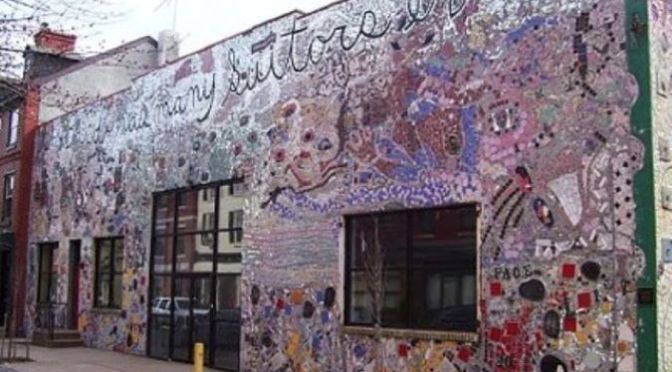
Painted Bride Art Center
Founded in 1969 by a group of visual artists, Painted Bride Art Center was part of the Alternative Space movement of the 1960s and ’70s. In an era when underrepresented artists—women, gays and lesbians, people of color, the disabled, etc.—struggled to gain recognition from commercial institutions, the Alternative Space movement was dedicated to maximizing cultural diversity and visibility in the arts. Within a small network of organizations, Painted Bride Art Center strove to grant artists of every stripe full control over their work and a platform for their vision.
Its name derives from its original location, a former bridal shop on South Street.
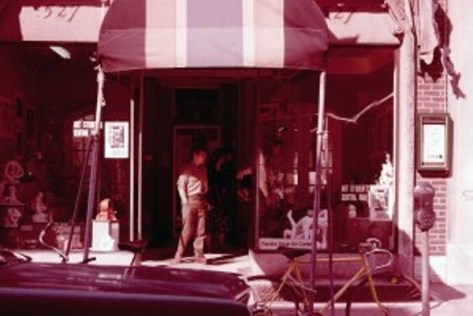
The Bride began as an effort to challenge modern assumptions about art and give every artist the platform they deserved. Today, the nonprofit is an innovative, internationally-lauded arts institution that remains strongly rooted in its mission and the needs of Philadelphia’s creative communities.
45 years later, the Bride remains an artist-centered space, fully committed to the creative process, the artist’s role in the community and artistic diversity.
For information on jazz concerts and other events, join the Painted Bride Art Center mailing list.

Jazz in Philadelphia!
Directed by Steven Berry, the documentary “Jazz in Philadelphia” came about as a result of conversations Berry had with WRTI Jazz Host Harrison “Yes Indeedy” Ridley, Jr.
A jazz educator and historian, Ridley had a lifelong dedication to what he called “the positive music.” He hosted a Sunday night show on WRTI for more than 30 years. Jazz in Philadelphia? Yes indeedy!
LaRose Jazz Club
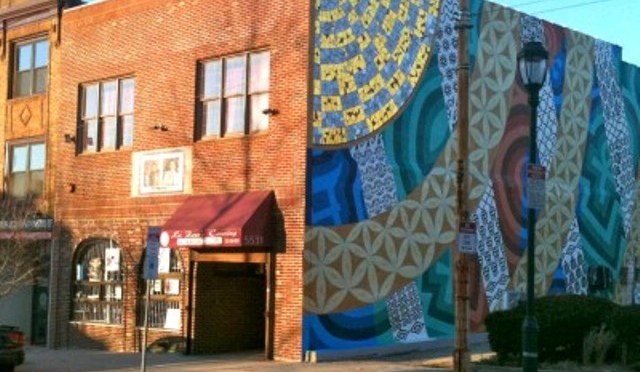
The LaRose Jazz Club presents a weekly Sunday Open Jam Session for seasoned performers and young lions. All instrumental musicians, vocalists, spoken word and jazz poets are welcome. The house band provided by Rob Henderson features a different bassist and pianist each week. Henderson supplies the drums, but musicians are encouraged to sit in throughout the night.
The Sessions run from 6-10 p.m. Admission is $5.00; food and drink are available.
There’s live jazz on Mondays, from 6-9 p.m. with legendary alto saxophonist Tony Williams. For more information, call (215) 844-5818.
2018 UPDATE:
Tony Williams and the Giants of Jazz now take the stage every Monday night and it is a communal affair. They never turn away a willing performer, whether a youngster from the community, a walk-in looking for fun or even someone with a now-questionable reputation in Bill Cosby.
Club LaRose, which is often referred to as LaRose Jazz Club, was in the news after Cosby’s performance there on January 19. But behind the protests, reporters and cameras that evening sat a loyal audience, one that proudly visits the club every week.
“You find people of every stripe, of every dot, every color, every age, every variance that you can think of is in this place and it’s just so warm and wonderful,” said Toni Rose, a Germantown resident who does not miss a Monday show.
Read more at Philadelphia Neighborhoods.

Philly Groove Records
Located in West Philly on “the Strip,” Philly Groove Records was owned by Stan “The Man” Watson.
The record company put out discs by First Choice, the Delfonics and other lesser-known local acts. Thom Bell, who produced some of the Delfonics’ biggest hits at Sigma Sound Studios, met singer-songwriter Linda Creed while with Philly Groove. The Bell-Creed alliance hit it big in the ’70s with a string of hits they wrote and produced for the Spinners.
According to author Sean Patrick Griffin, the record company had ties to the fearsome Black Mafia:
John Stanley “Stan the Man” Watson owned Philly Groove Records, and employed the Black Mafia’s Bo Baynes from January 1968 until June 1971. Baynes’ stated position at Philly Groove was “road manager or promoter” and a PPD OCU [Philadelphia Police Department Organized Crime Unit] report states, “Reliable sources claim that Baynes did work for Watson. However, his position with Watson was that of an enforcer. Baynes’ primary mission was to intimidate disc jockeys to push certain records.
Black Brothers, Inc.: The Violent Rise and Fall of Philadelphia’s Black Mafia
The former location of Philly Groove Records is a stop on the 52nd Street Stroll. The next walking tour will be held on Saturday, October 5, 2024, 10am to 12pm. Tickets are $25 per person.
Buy Tickets All That Philly Jazz