
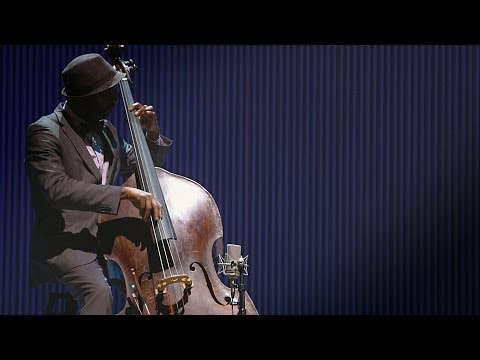
Marcus Shelby is a perennial Bay Area jazz favorite who’s compositions explore the African American experience. Shelby finds deeper meaning for his work sharing the music he loves and its history with young people in schools and juvenile halls. Learn more about Marcus Shelby.
Tag Archives: #Blues

The Hunting of Billie Holiday
In a new book, “Chasing the Scream: The First and Last Days of the War on Drugs,” Johann Hari writes how Billie Holiday was targeted by the Federal Bureau of Narcotics after she refused to be silent about racism:
One night, in 1939, Billie Holiday stood on stage in New York City and sang a song that was unlike anything anyone had heard before. ‘Strange Fruit’ was a musical lament against lynching. It imagined black bodies hanging from trees as a dark fruit native to the South. Here was a black woman, before a mixed audience, grieving for the racist murders in the United States. Immediately after, Billie Holiday received her first threat from the Federal Bureau of Narcotics.
Harry had heard whispers that she was using heroin, and—after she flatly refused to be silent about racism—he assigned an agent named Jimmy Fletcher to track her every move. Harry hated to hire black agents, but if he sent white guys into Harlem and Baltimore, they stood out straight away. Jimmy Fletcher was the answer. His job was to bust his own people, but Anslinger was insistent that no black man in his Bureau could ever become a white man’s boss. Jimmy was allowed through the door at the Bureau, but never up the stairs. He was and would remain an “archive man”—a street agent whose job was to figure out who was selling, who was supplying and who should be busted. He would carry large amounts of drugs with him, and he was allowed to deal drugs himself so he could gain the confidence of the people he was secretly plotting to arrest.

About the Walk of Fame
Established in 1986, the Walk of Fame is the creation of the Philadelphia Music Alliance, a nonprofit organization dedicated to the preservation and promotion of Philadelphia’s rich musical legacy, supporting the current music scene, and mentoring the next generation of music makers.
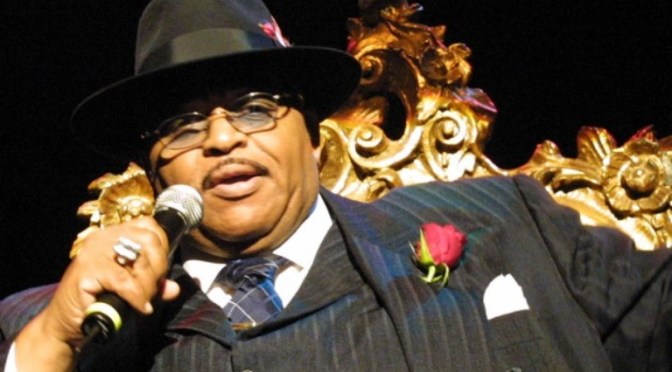
Solomon Burke
While Solomon Burke never made a major impact upon the pop audience – he never, in fact, had a Top 20 hit – he was an important early soul pioneer. On his ’60s singles for Atlantic, he brought a country influence into R&B with emotional phrasing and intricately constructed, melodic ballads and mid-tempo songs. At the same time, he was surrounded with sophisticated “uptown” arrangements and provided with much of his material by his producers, particularly Bert Berns. The combination of gospel, pop, country, and production polish was basic to the recipe of early soul. While Burke wasn’t the only one pursuing this path, not many others did so as successfully. And he, like Otis Redding and Wilson Pickett, was an important influence upon the Rolling Stones, who covered Burke’s “Cry to Me” and “Everybody Needs Somebody to Love” on their early albums.
Burke came by his gospel roots even more deeply than most soul stars. He was preaching at his family’s Philadelphia church, and hosting his own gospel radio show, even before he’d reached his teens. He began recording gospel and R&B sides for Apollo in the mid- to late ’50s. Like several former gospel singers (Aretha Franklin, Wilson Pickett), he was molded into a more secular direction when he signed with Atlantic in the 1960s.

Billie Holiday
Billie Holiday was a true artist of her day and rose as a social phenomenon in the 1950s. Her soulful, unique singing voice and her ability to boldly turn any material that she confronted into her own music made her a superstar of her time. Today, Holiday is remembered for her masterpieces, creativity and vivacity, as many of Holiday’s songs are as well known today as they were decades ago. Holiday’s poignant voice is still considered to be one of the greatest jazz voices of all time.
Holiday began working with Lester Young in 1936, who pegged her with her now-famous nickname of “Lady Day.” When Holiday joined Count Basie in 1937 and then Artie Shaw in 1938, she became one of the very first black women to work with a white orchestra, an impressive accomplishment of her time. In the 1930s, when Holiday was working with Columbia Records, she was first introduced to the poem “Strange Fruit,” an emotional piece about the lynching of a black man. Though Columbia would not allow her to record the piece due to subject matter, Holiday went on to record the song with an alternate label, Commodore, and the song eventually became one of Holiday’s classics.


MFSB Orchestra
The MFSB Orchestra was comprised of musicians handpicked by producers Kenny Gamble, Leon Huff and Thom Bell to be the house band for their recordings. It was the band that recorded the music tracks for the likes of Harold Melvin & the Blue Notes, the O’Jays, the Stylistics, the Spinners, Lou Rawls, Billy Paul and a host of others. A well-oiled machine with talent and enthusiasm so special that the group had to be given its own opportunity in the spotlight. Gamble & Huff did just that in 1973 by officially making the MFSB (Mother Father Sister Brother) Orchestra recording artists in their own right. The MFSB Orchestra quickly became an exciting melodic hybrid of swing, classical, jazz and R&B that went on to Grammy winning gold and platinum success.

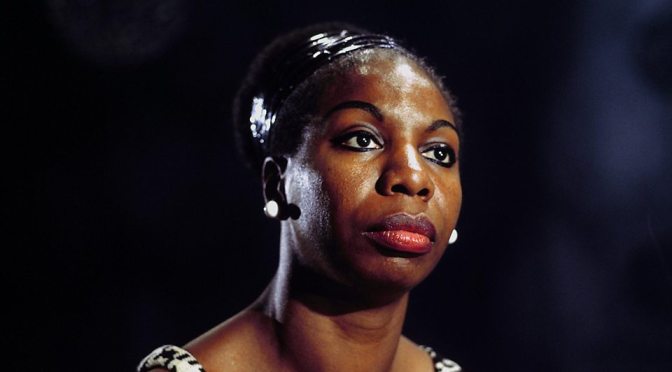
Nina Simone
Of all the major singers of the late 20th century, Nina Simone was one of the hardest to classify. She recorded extensively in the soul, jazz, and pop idioms, often over the course of the same album; she was also comfortable with blues, gospel, and Broadway. It’s perhaps most accurate to label her as a “soul” singer in terms of emotion, rather than form. Simone was an eclectic who brought soulful qualities to whatever material she interpreted. These qualities were among her strongest virtues; paradoxically, they also may have kept her from attaining a truly mass audience. The same could be said of her stage persona; admired for her forthright honesty and individualism, she was also known for feisty feuding with audiences and promoters alike.

Bessie Smith
The first major blues and jazz singer on record and one of the most powerful of all time, Bessie Smith rightly earned the title of “The Empress of the Blues.” Even on her first records in 1923, her passionate voice overcame the primitive recording quality of the day and still communicates easily to today’s listeners (which is not true of any other singer from that early period). At a time when the blues were in and most vocalists (particularly vaudevillians) were being dubbed “blues singers,” Bessie Smith simply had no competition.
Back in 1912, Bessie Smith sang in the same show as Ma Rainey, who took her under her wing and coached her. Although Rainey would achieve a measure of fame throughout her career, she was soon surpassed by her protégée. She perfected her powerful delivery in the cabarets of Philadelphia and Atlantic City where she was a frequent attraction. In 1920, Smith had her own show in Atlantic City and, in 1923, she moved to New York. She was soon signed by Columbia and her first recording (Alberta Hunter’s “Downhearted Blues”) made her famous.

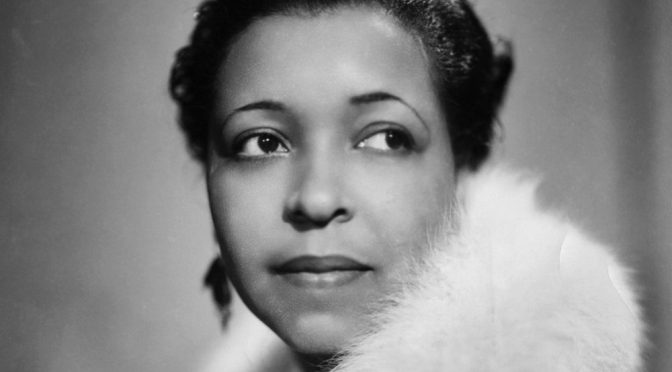
Ethel Waters
Ethel Waters had a long and varied career, and was one of the first true jazz singers to record. Defying racism with her talent and bravery, Waters became a stage and movie star in the 1930s and ’40s without leaving the U.S. She grew up near Philadelphia and, unlike many of her contemporaries, developed a clear and easily understandable diction. Originally classified as a blues singer (and she could sing the blues almost on the level of a Bessie Smith), Waters’ jazz-oriented recordings of 1921-1928 swung before that term was even coined.
A star early on at theaters and nightclubs, Waters introduced such songs as “Dinah,” “Am I Blue” (in a 1929 movie), and “Stormy Weather.” She made a smooth transition from jazz singer of the 1920s to a pop music star of the ’30s, and she was a strong influence on many vocalists including Mildred Bailey, Lee Wiley, and Connee Boswell. Waters spent the latter half of the 1930s touring with a group headed by her husband-trumpeter Eddie Mallory, and appeared on Broadway in 1939 in Mamba’s Daughter and in the 1943 film Cabin in the Sky; in the latter she introduced “Taking a Chance on Love,” “Good for Nothing Joe,” and the title cut.
In later years Waters was seen in nonmusical dramatic roles, and after 1960 she mostly confined her performances to religious work for the evangelist Billy Graham. The European Classics label has reissued all of Ethel Waters’ prime recordings and they still sound fresh and lively today.

Bob & Barbara’s
Bob & Barbara’s Lounge has been serving cold beer, cocktails and live entertainment since 1969. Robert Porter, Owner, and Barbara Carter, Manager, were the original Bob and Barbara.

In 1994, after Barbara Carter passed away and Robert Porter retired, the current owners took over the operation of the bar. For many years, Bob & Barbara’s was the clubhouse for the Philadelphia Cartoonist Society. Naturally, they drew cartoons of the house band, the Crowd Pleasers.

 All That Philly Jazz