Tag Archives: #Blues

From Bebop to Hip-hop

Hip-hop artists are influenced by that which came before. Like beboppers, they have created their own language and culture. Beboppers improvised. Hip-hop artists freestyle.

In an interview with West Philadelphia Music, a project of the University of Pennsylvania School of Arts and Science, jazz drummer Lucky Thompson said:

Uhh, yeah! Yeah, because it’s all improvisation. Like what they do, they call a rap, a rap is nothing new. Rappers, well, they was doing that back in the forties. That’s not, you know, that’s not new, that’s not new. That used to be a hip talk back then. You know, skeealeebop skeetaleebop babop la-deh-da, you know, that’s old. That’s not—that’s new to them, you know, but it’s not nothing new. It’s been out—it’s been here for a while, and they just called it scatting or talking jive—they would call it talking jive. So that’s, you know, and then cuz like, you can use it—they like now, you see, they using a lot of—they go to Europe, they take a lot of the traditional jazz music and put hip hop beats and everything right over the top of it. And they dance to it, you know, I was really—I was really shocked when I heard it when I went to Europe I was like, “Wow, they playing [Col]trane?” And they got them dancing you know, but it had like a hip hop—a hip hop beat, you know. But it was deep, it was deep, I swear it was deep.

Still, for some jazz purists, the only thing bebop and hip-hop have in common is “they rhyme.” While their heads are stuck in rarified air, Ahmir “Questlove” Thompson dropped some knowledge in the liner notes for “Droppin’ Science: Greatest Samples From The Blue Note Lab”:

The one that makes me the proudest, of course, is my hometown champ (and the greatest, funkiest, and most precise DJ ever!), DJ Jazzy Jeff, who lived up to his name in 1986 with a ditty called “A Touch of Jazz,” a compiled cram session of ’70s funk/jazz trivia looped and scratched to perfection. It was the “DJ cut” — remember those? — on his debut album, Rock the House (along with an MC I haven’t heard from in eons? Any locale for a Will Smith? Anyone? . . . lol).

[…]

Enter Idris Muhammad, a crucial general in the Blue Note army that was key to crossing the prestigious jazz label over to the soul side of thangs. That was how I got sucked into Bluebreaks. Same jazz outlook, just a lil’ funkier, to reach the corners of the ghetto that an otherwise (still worthy) Jackie McLean or a Horace Silver couldn’t penetrate. Idris’s drums had equal influence on me just as strong as if he were playing the role of John “Jabo” Starks or Clyde Stubblefield in the James Brown band.

In an interview with the Smithsonian Jazz Oral History project, NEA Jazz Master and Philly native Percy Heath said:

Anyhow, they [hip-hop artists] take little pieces of some things that were written in the bebop era, post-bebop era, and they make little licks out of it and they use it. That’s good that some people, they listen to hip-hop. So, hip-hop is like bebop was back then, revolutionary movement. This business of rapping, I used to do that in the schoolyard when I was twelve years old.
READ MORE

Morgan’s

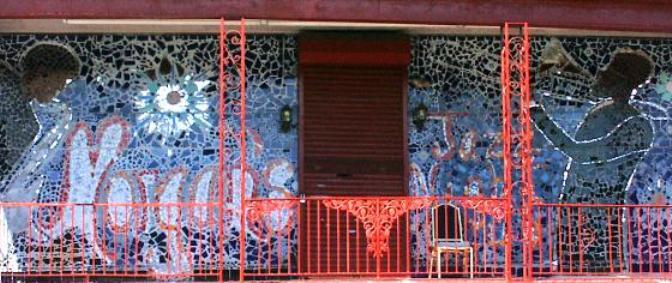
Organist Charles Earland and saxophonist Hank Crawford played here.

LaRose Jazz Club

The LaRose Jazz Club presents a weekly Sunday Open Jam Session for seasoned performers and young lions. All instrumental musicians, vocalists, spoken word and jazz poets are welcome. The house band provided by Rob Henderson features a different bassist and pianist each week. Henderson supplies the drums, but musicians are encouraged to sit in throughout the night.

The Sessions run from 6-10 p.m. Admission is $5.00; food and drink are available.

There’s live jazz on Mondays, from 6-9 p.m. with legendary alto saxophonist Tony Williams. For more information, call (215) 844-5818.

2018 UPDATE:

Tony Williams and the Giants of Jazz now take the stage every Monday night and it is a communal affair. They never turn away a willing performer, whether a youngster from the community, a walk-in looking for fun or even someone with a now-questionable reputation in Bill Cosby.

Club LaRose, which is often referred to as LaRose Jazz Club, was in the news after Cosby’s performance there on January 19. But behind the protests, reporters and cameras that evening sat a loyal audience, one that proudly visits the club every week.

“You find people of every stripe, of every dot, every color, every age, every variance that you can think of is in this place and it’s just so warm and wonderful,” said Toni Rose, a Germantown resident who does not miss a Monday show.

Read more at Philadelphia Neighborhoods.

Philly Groove Records

Located in West Philly on “the Strip,” Philly Groove Records was owned by Stan “The Man” Watson.

The record company put out discs by First Choice, the Delfonics and other lesser-known local acts. Thom Bell, who produced some of the Delfonics’ biggest hits at Sigma Sound Studios, met singer-songwriter Linda Creed while with Philly Groove. The Bell-Creed alliance hit it big in the ’70s with a string of hits they wrote and produced for the Spinners.

According to author Sean Patrick Griffin, the record company had ties to the fearsome Black Mafia:

John Stanley “Stan the Man” Watson owned Philly Groove Records, and employed the Black Mafia’s Bo Baynes from January 1968 until June 1971. Baynes’ stated position at Philly Groove was “road manager or promoter” and a PPD OCU [Philadelphia Police Department Organized Crime Unit] report states, “Reliable sources claim that Baynes did work for Watson. However, his position with Watson was that of an enforcer. Baynes’ primary mission was to intimidate disc jockeys to push certain records.

Black Brothers, Inc.: The Violent Rise and Fall of Philadelphia’s Black Mafia

The former location of Philly Groove Records is a stop on the 52nd Street Stroll. The next walking tour will be held on Saturday, October 5, 2024, 10am to 12pm. Tickets are $25 per person.

Buy Tickets

Jewel’s

From 1979 to 1989, Jewel Mann-Lassiter operated her eponymous jazz club, Jewel’s, on Broad Street in North Philly. Both local and national artists played here, including Trudy Pitts and Mr. C, Kevin Eubanks, Jimmy Scott, Bootsie Barnes, Evelyn Simms, Joey DeFrancesco and Pieces of a Dream.

In 1986, the Philadelphia Inquirer reported:

She brought in past and current greats Betty Carter, Gloria Lynne, Jimmy McGriff, Arthur Prysock, Dakota Staton, Herbie Mann. She tried out newcomers Nancy Kelly, Janice McClain. And the customers came, with Jewel’s attracting the city’s black movers and shakers as well as professional people, students from nearby Temple University and others seeking good music and good times.

Herbie Mann played there, tenor sax player Al Cohn and organist Jack McDuff. The “new Cotton Club,” Jewel likes to call her place.

READ MORE

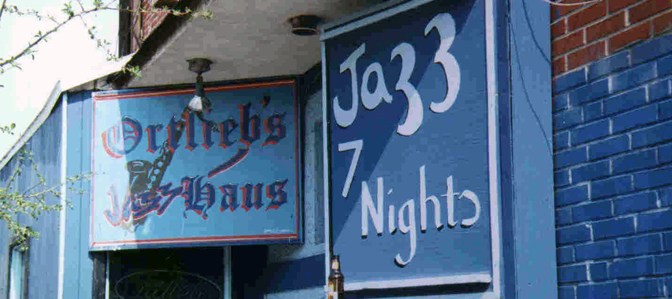
Ortlieb’s Jazzhaus

Ortlieb’s Jazzhaus was opened in September 1987 by jazz musician Pete Souders, who ran it until 2007. Under the new owner, they’re still holding their Tuesday night jam session

In a post for Hidden City Philadelphia, Bart Everts wrote:

The bar became a mainstay of the Philadelphia jazz scene, with musicians such as Bootsie Barns, Shirley Scott, Duane Eubanks, Farrid Barron, Cecil Payne and other notables taking residency. Tuesday nights featured an open jam where lesser known musicians might get to play with a legend. Throughout the 1990s, Ortlieb’s thrived as one of the few venues in the region offering jazz seven nights a week, a distinction that continued through the next decade.

READ MORE

Philadelphia Clef Club Celebrates 20 Years on Avenue of the Arts

The Philadelphia Clef Club dates back to the golden age of Philly jazz. In 1966, it was formally organized as the social arm of Union Local 274, the black musicians union, whose members included Dizzy Gillespie, John Coltrane, Benny Golson, Bill Doggett, the Heath Brothers, Jimmy Smith and Nina Simone.

Over the years, the Clef Club has had five locations, including Broad and Carpenter Streets, and 13th Street and Washington Avenue. The Philadelphia Clef Club of Jazz and Performing Arts moved into its current location on the Avenue of the Arts in 1995. This construction fence told part of the story of the house that jazz built.

Construction Fence

For information about the 20th anniversary schedule of events, visit www.clefclubofjazz.org.

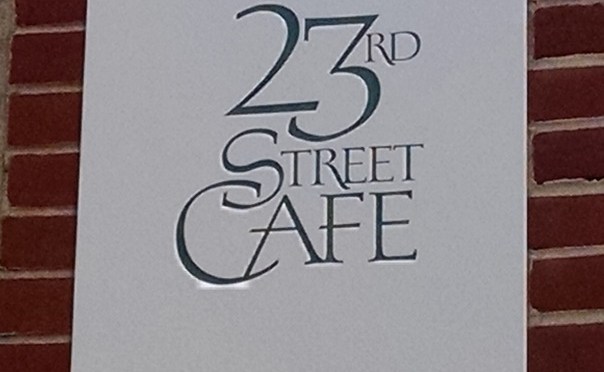
23rd Street Cafe

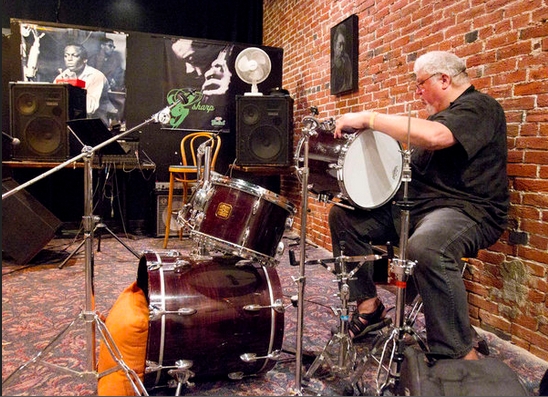
The 23rd Street Café has been featuring jam sessions since 1988. Mace Thompson, the owner, opens his establishment only on Tuesday evenings, 7:30pm to 11:30pm. There is no cover charge.

23rd Street Cafe

Alas, nothing lasts forever. The Philadelphia Inquirer reports:

After 25 years and more than 1,300 Tuesday-night jazz jam sessions at Center City’s 23rd Street Cafe, the horns, drums, basses, guitars, violins, harmonicas, and singers will soon be silenced for good. The property at 223 N. 23d Street will be demolished this summer, likely to make way for condominiums.

But all is not lost. The jam sessions will resume on Tuesday, August 4th at the Manayunk Brewery.

For updates, join the 23rd Street Cafe Facebook group.

Chestnut Cabaret

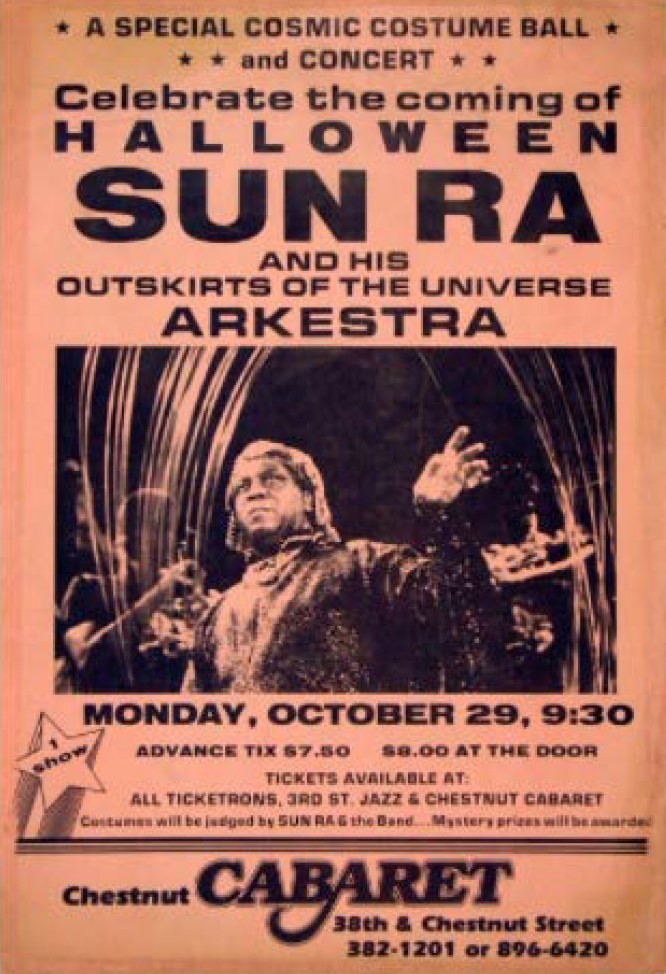
Opened from 1978 to 1995, the Chestnut Cabaret was located in West Philly.  The music venue was later named The Blockley.

Chestnut Cabaret - The Blockley

The club played host to jazz, blues, soul and funk greats, including Koko Taylor, Albert Collins, Albert King, Average White Band, Dizzy Gillespie, John Lee Hooker, Gil Scott-Heron, Parliament-Funkadelic, Stanley Clarke, Wynton and Branford Marsalis, Buddy Guy and Junior Wells.

The Sun Arkestra performed here on October 29, 1984.