Tag Archives: #BlackCultureMatters

Sarah Vaughan Forever Stamp Will Be Issued in 2016

The U.S. Postal Service announced that the Sarah Vaughan forever stamp will be issued in 2016:

Jazz and pop singer Sarah Vaughan (1924-90) will be commemorated on a forever stamp in the Music Icons series, with 16 stamps in the full pane.

The Divine One will join fellow Union Local 274 members Count Basie, John Coltrane, Duke Ellington and Ella Fitzgerald who also have been accorded this honor.

Frank Palumbo’s Click Club

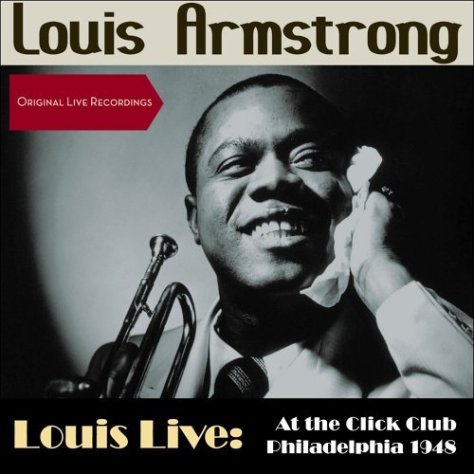
Frank Palumbo was a South Philly-based restaurateur and philanthropist. He owned a number of night clubs, including the legendary Palumbo’s in South Philly and Center City’s Click Club, where Louis Armstrong recorded a live album in 1948.

Click Club - Louis Armstrong

In a 2005 interview with West Philadelphia Music, a project of the School of Arts and Sciences of the University of Pennsylvania, jazz vocalist George Townes recalled:

And then on the corner at 16th and Market there was a club, they had a revolving stage upstairs, that’s no more there either. Big bands used to go in there too. They called it “The Click.”

Read more

National Dance Day 2015

National Dance Day was first celebrated in the District of Columbia and Los Angeles in 2010.

In 2012 and every year since, Congresswoman Eleanor Holmes Norton has introduced a congressional resolution to designate the last Saturday in July as National Dance Day:

National Dance Day has become a grassroots movement when Americans across the country host local events celebrating dance for fun and exercise. The contribution of National Dance Day to healthy lifestyles makes dance do double duty in a nation that wants to be fit and loves to dance.

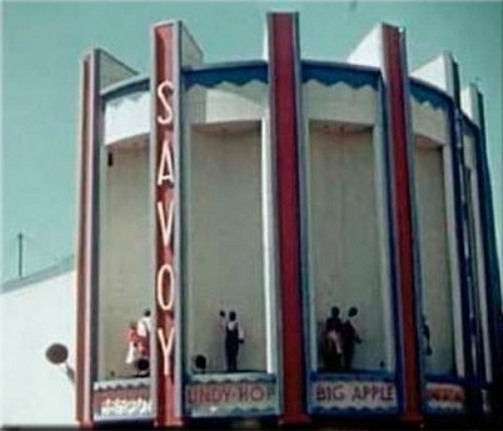
Americans’ have a longstanding fascination with black dance. Indeed, Harlem’s legendary Savoy Ballroom was a featured exhibit at the 1939 World’s Fair.

Savoy Ballroom - 1939 World's Fair

The Savoy Ballroom was the first integrated ballroom in the country. Like jazz, swing dancing helped paved the way for the Civil Rights Movement. The jazz culture allowed black and white people to see each other and dance together. More important, blacks were social peers. For a good read on the history of swing, check out “Queen of Swing” Norma Miller’s biography Swingin’ at the Savoy: A Memoir of a Jazz Dancer.

Now 96, the grande dame of swing is scheduled to perform at the Charlie Parker Jazz Festival on Aug. 22, 2015.

Race, Jazz and American Tradition

Trumpeter and Lincoln Center artistic director of jazz Wynton Marsalis spoke and performed in the closing session of the 2015 Aspen Ideas Festival. Marsalis observed:

In our country the greatest challenge is for all of us to be together in spite of our history, and not only in spite of it, but because of our history.

Marsalis was joined by multi-instrumentalist Jon Batiste, bandleader on the forthcoming “The Late Show with Stephen Colbert” on CBS.

Curtis Institute of Music

The Curtis Institute of Music is a conservatory located in Rittenhouse Square. According to U.S. News & World Report, it has the lowest acceptance rate of any college or university (3.2%), making it the most selective institution of higher education in the United States.

The Institute’s most celebrated rejected applicant is Nina Simone who was denied admission even though she had given classical piano recitals since age 10. Jazz.com reported:

At the age of seventeen, Simone moved to New York to take classes at the Juilliard School of Music in New York. She then moved with her family to Philadelphia, where she auditioned for the city’s prestigious Curtis Institute, a conservatory of classical music.

Simone sought the help of a private instructor to help her audition for the Curtis Institute, but was ultimately denied after a supposedly excellent audition. Simone said she later found out from an insider at Curtis that she was denied entry because she was black. This heightened her anger over the racism which was pervasive in the United States during this period.

READ MORE

NB: The Curtis Institute awarded Nina Simone an Honorary Doctor in Music and Humanities two days before her death in 2003.

The Mitch Thomas Show

The Mitch Thomas Show debuted on August 13, 1955. It was one of the first televised dance shows for black teenagers. During its three-year run, Mitch Thomas brought black rock and roll stars to television, including Little Richard, the Moonglows, Frankie Lymon and the Teenagers, and Ray Charles.

Mitch Thomas - Ray Charles - 7.5.15

The Mitch Thomas Show was broadcast from a studio atop Suburban Station in Center City. Across town in West Philly, Bandstand, excluded black dancers and audience members:

In a typical dissemination process [read: cultural appropriation], dances seen on Bandstand were often picked up at school dances or local dance hops and brought back to the show where they were presented by mostly white adolescents. In fact, many dances derived from The Mitch Thomas Show, the popular all-black teen show in Philadelphia, from which they were copied by white teens and then seen on Bandstand.

On August 5, 1957, Dick Clark made his debut as host of Bandstand. Clark’s claim that he integrated the show before it left Philadelphia has been debunked

More than fifty years after the show first broadcast, American Bandstand’s representations of youth culture remain closely linked both to the show’s legacy and to larger questions about popular culture, race, segregation, and civil rights. Billboard magazine journalist Fred Bronson, for example, argues that American Bandstand was a “force for social good.” Bronson bases this claim on Dick Clark’s memory that he integrated the show’s studio audience when he became the host in 1957. “I don’t think of myself as a hero or civil rights activist for integrating the show,” Clark contends, “it was simply the right thing to do.”

In the context of local and national mobilization in favor of segregation, underscored by widespread anti-black racism, integrating American Bandstand would have been a bold move and a powerful symbol. Broadcasting daily evidence of Philadelphia’s vibrant interracial teenage culture would have offered viewers images of black and white teens interacting as peers at a time when such images were extremely rare. Clark and American Bandstand, however, did not memory of integration. Rather than being a fully integrated program that welcomed black youth, American Bandstand continued to discriminate against black teens throughout the show’s Philadelphia years.

READ MORE

Town Hall

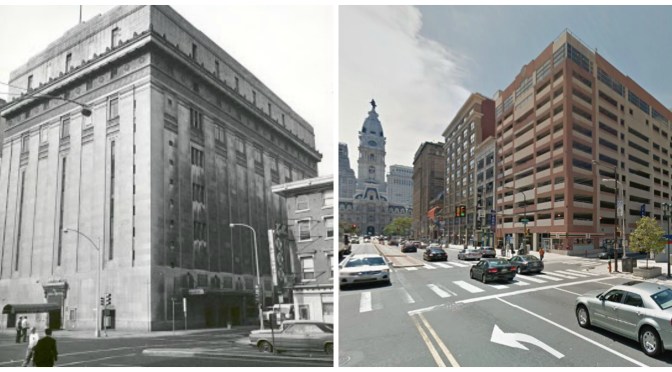
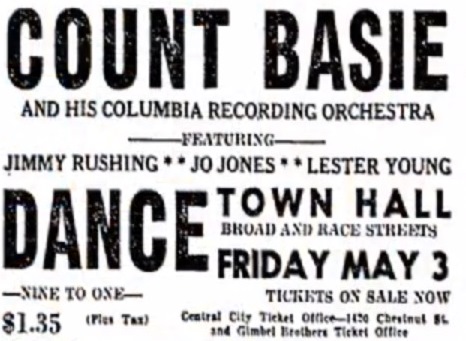
Located in Center City at Broad and Race, the Scottish Rite Temple, also known as Town Hall, was built in 1926. The 1,692 seat auditorium played host to jazz and blues greats, including Count Basie, Lester Young and Jimmy Rushing.

Town Hall - Count Basie - 7.5.15

On Nov. 17, 1955, Ray Charles and his entire band were arrested on drug charges.

Town Hall - Ray Charles

Check out this account from the Ray Charles Video Museum:

Town Hall was divided into two sections; the theater and the cabaret. The Ray Charles show was scheduled for the cabaret. Excited about appearing with a major star like Charles, the Sensations settled into their dressing room and began preparing for the show. All of the sudden, the dressing room door burst open and Ray Charles entered with his entourage including band members David “Fathead” Newman, Jay Dennis, James Sheffield, William Peoples, John Willis, Joseph Bridgewater, Tommy Brown and vocalist Mary Ann Fisher. The Ray Charles band informed the Sensations that this was to be their dressing room and the Sensations must leave. While somewhat in awe of Ray Charles, the Sensations would not back down and give up their dressing room. They were Kae Williams’ group and Kae was producing and MC’ing the show.

If Kae wanted them to have the dressing room, they were staying put! In the middle of the ensuing argument, Kae Williams walked in.

“You don’t understand, I’m Ray Charles!” the famous entertainer proclaimed. Kae Williams had broken into radio a decade before, at a time when blacks were not welcomed in the business. His feisty nature had allowed him to fight back at prejudice and discrimination in the entertainment field. Where weaker men had been driven from radio, Kae had a reputation for not taking crap from anyone. “I don’t care who the @!*# you are!” snapped the fiery dee jay defiantly. “I’m Kae Williams!”

The argument continued for a short while with much shouting. Ray Charles and his band succeeded in getting Kae and his group out of the dressing room and locked the door. Alphonso and the group watched as Kae Williams went to the hallway pay phone and made a call. Shortly thereafter, another commotion ensued. A team of Philadelphia police officers were banging on the door to Ray Charles’ dressing room, looking for drugs. People in the entertainment field knew that members of Ray Charles’ group had at times indulged in the use of illegal substances. But then, drug use was rampant in the business. According to the Philadelphia Tribune, the police found a burnt spoon, a needle and syringe, and a small quantity of marijuana in the dressing room. In addition, Charles and three of the band members were reported to have fresh needle marks in their arms. Ray and his band members were promptly placed under arrest. Fearing a riot, the police consented to allow the show to go on. But through the entire show, the stage was encircled with cops.

After the show, Ray and his entire band were taken downtown and arraigned. Ray Charles made the $2000 bail. The rest were jailed overnight. The Sensations, who had only wine in their possession, were not arrested. Ray Charles, who recalled the incident in his autobiography, Brother Ray, denied the reefer even belonged to his band. The newspapers promptly ran the headlines, “Disc Jockey Had Own Dance Raided For Dope.” After going through a lengthy legal process, the charges were finally dropped. Ray Charles vowed never again to perform in Philadelphia. But Kae Williams further enhanced his reputation that night as a person not to be messed with. And this Kae loved.”

The landmark was demolished in 1983 and replaced with Parkway Corporation’s headquarters and parking garage.

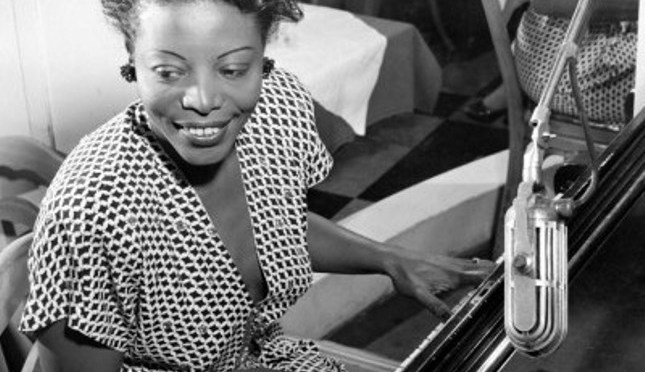
Mary Lou Williams, Jazz Icon

This year marks the 115th anniversary of the birth of Mary Lou Williams. Since 1995, the John F. Kennedy Center for the Performing Arts has paid tribute to the legendary pianist and composer with the Mary Lou Williams Jazz Festival.

Williams is the subject of a new documentary, Mary Lou Williams: The Lady Who Swings the Band. The film premiered on public television on April 1.

Missed it? If you’re in the Philly area, you’re in luck. There will be a screening of the documentary on Tuesday, July 14, at the International House. Hosted by the Scribe Video Center, the screening and conversation with director Carol Bash is co-sponsored by the Leeway Foundation, Philadelphia Jazz Project, Ars Nova Workshop and Reelblack.

Sadly, luck is running out on the Women of Jazz mural, which depicts jazz icons including Williams, Billie Holiday and Nina Simone. This cultural asset is on the Philadelphia Housing Authority’s chopping block.

Women of Jazz Mural

On June 1, I provided public comment before the Philadelphia City Council Committee on Housing, Neighborhood Development and the Homeless, which is chaired by Councilwoman Jannie Blackwell. I brought to Blackwell’s attention the Philadelphia Housing Authority plans to demolish the mural. I made it clear the goal of increasing the availability of affordable housing and preserving the City’s jazz heritage is not mutually exclusive.

COUNCILWOMAN BLACKWELL: Thank you very much. So you’re saying they’re slated to tear down the mural?
MS. ANDERSON: Yes. The Women of Jazz mural at 3200 [block] of Arlington. It will be torn down sometime this year. The date to be determined.
COUNCILWOMAN BLACKWELL: All right. I’m happy to work on that.

The complete transcript is available here. Clap along if you’re happy.

We Remember Clifford Brown

Trumpeter Clifford Brown was only 25 when he died in a car crash in 1956. His last performance was at Philadelphia’s famed Music City.

Although his life was cut short, Brown left an indelible impact. There are 334 versions of Philly native and NEA Jazz Master Benny Golson’s composition, “I Remember Clifford.”

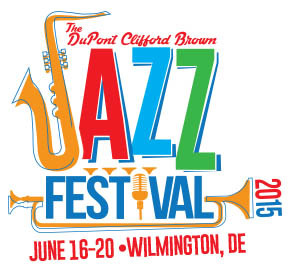
Since 1988, his hometown of Wilmington, Delaware, has held the Clifford Brown Jazz Festival to honor his memory. Fittingly, it’s the largest free jazz festival on the East Coast. This year’s lineup includes Norman Conners, Leela James and Pieces of a Dream.

clifford-brown-jazz-festival-2015
For the complete schedule, visit www.cliffordbrownjazzfest.org.