Tag Archives: #BlackCultureMatters

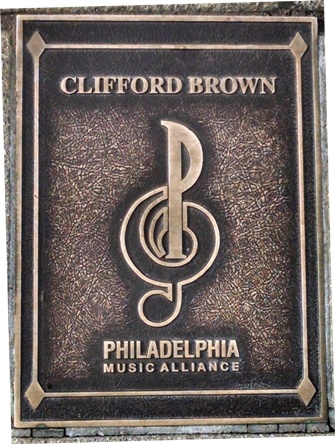
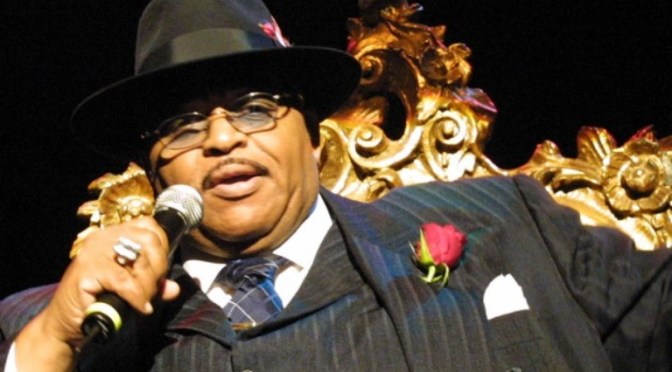
Clifford Brown

Clifford Brown was one of the 20th century’s greatest trumpet players. He represented the highest level of instrumental excellence and influenced a generation of jazz musicians. Dizzy Gillespie called him “the next major voice in the line of trumpeters.” As impressive and historically important as his musical accomplishments were, his personal impact on those who knew him is also quite extraordinary. His profound work ethic, personal integrity, kind-hearted nature, and commitment to excellence deeply affected his friends and fellow musicians. Jazz legend Sonny Rollins once remarked “Clifford was a profound influence on my personal life. He showed me that it was possible to live a good, clean life and still be a good jazz musician.”
READ MORE

Clifford Brown Plaque

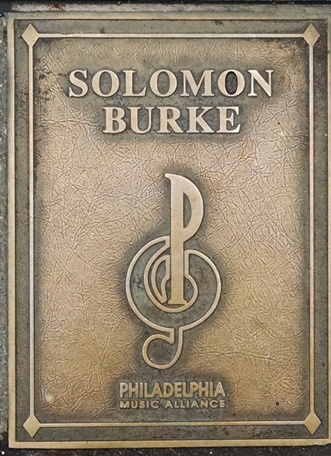
Solomon Burke

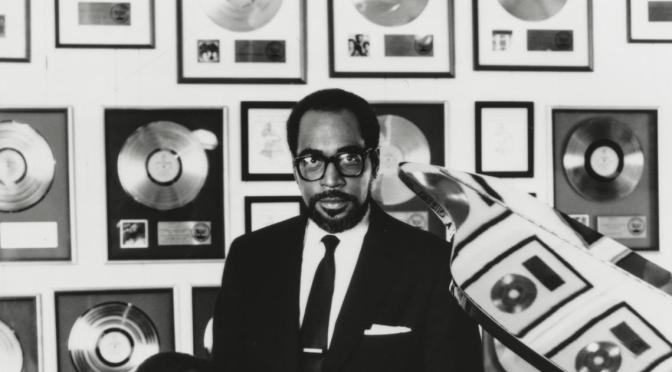
While Solomon Burke never made a major impact upon the pop audience – he never, in fact, had a Top 20 hit – he was an important early soul pioneer. On his ’60s singles for Atlantic, he brought a country influence into R&B with emotional phrasing and intricately constructed, melodic ballads and mid-tempo songs. At the same time, he was surrounded with sophisticated “uptown” arrangements and provided with much of his material by his producers, particularly Bert Berns. The combination of gospel, pop, country, and production polish was basic to the recipe of early soul. While Burke wasn’t the only one pursuing this path, not many others did so as successfully. And he, like Otis Redding and Wilson Pickett, was an important influence upon the Rolling Stones, who covered Burke’s “Cry to Me” and “Everybody Needs Somebody to Love” on their early albums.

Burke came by his gospel roots even more deeply than most soul stars. He was preaching at his family’s Philadelphia church, and hosting his own gospel radio show, even before he’d reached his teens. He began recording gospel and R&B sides for Apollo in the mid- to late ’50s. Like several former gospel singers (Aretha Franklin, Wilson Pickett), he was molded into a more secular direction when he signed with Atlantic in the 1960s.

READ MORE

Solomon Burke Plaque

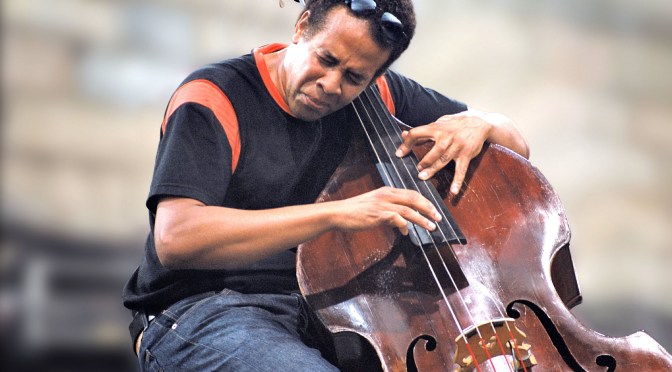
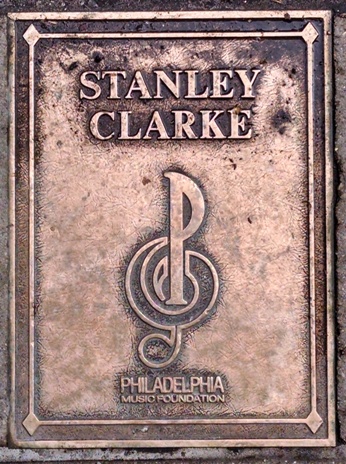
Stanley Clarke

A brilliant player on both acoustic and electric basses, Stanley Clarke has spent much of his career outside of jazz, although he has the ability to play jazz with the very best. Clarke was born in 1951 in Philadelphia. Encouraged by his musically-inclined mother, he took up violin and cello at an early age, only to find his hands growing too big to comfortably play the violin and his legs much too long to easily accommodate the cello. Turning to the bass, he played in R&B and rock bands beginning in junior high school. After high school he enrolled in the prestigious Philadelphia Musical Academy.

READ MORE

Stanley Clarke Plaque

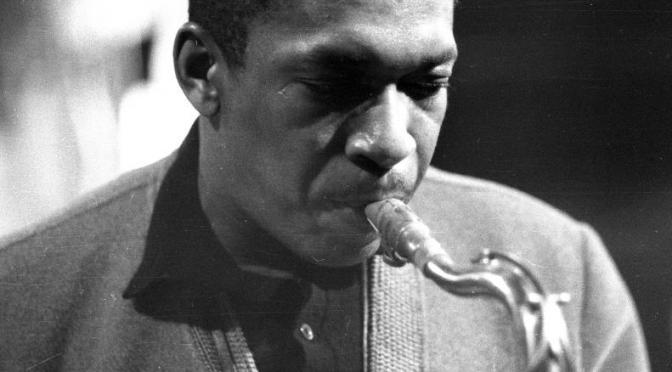
John Coltrane

John Coltrane was the son of John R. Coltrane, a tailor and amateur musician, and Alice (Blair) Coltrane. Two months after his birth, his maternal grandfather, the Reverend William Blair, was promoted to presiding elder in the A.M.E. Zion Church and moved his family, including his infant grandson, to High Point, NC, where Coltrane grew up. Shortly after he graduated from grammar school in 1939, his father, his grandparents, and his uncle died, leaving him to be raised in a family consisting of his mother, his aunt, and his cousin. His mother worked as a domestic to support the family. The same year, he joined a community band in which he played clarinet and E flat alto horn; he took up the alto saxophone in his high school band. During World War II, his mother, aunt, and cousin moved north to New Jersey to seek work, leaving him with family friends; in 1943, when he graduated from high school, he too headed north, settling in Philadelphia. Eventually, the family was reunited there.

READ MORE

John Coltrane Historical Marker - August 28, 2019

Kevin Eubanks

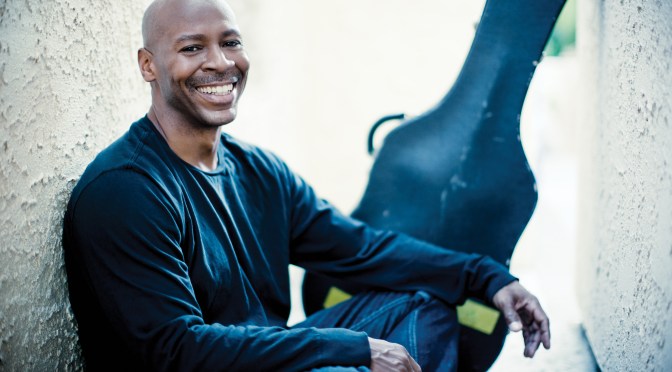
Kevin Eubanks is a gifted musician and prolific composer whose own band, the Kevin Eubanks Quartet, has been evolving for close to twenty years. Kevin is also well known as the Music Director of The Tonight Show Band, appearing on the show 18 years (1992 – 2010). In both situations, Kevin has won over audiences with a laid back style and an affability that seems to be the concentration and focus that has made him both a household word for TV viewers and a consummate guitarist.

Kevin was born into a musical household in Philadelphia. His mother, Vera Eubanks, is a gospel and classical pianist and organist with a Masters Degree in music education. She has taught both privately and in the school system, until her recent retirement. Vera’s brother, Ray Bryant, is a journeyman jazz pianist who has recorded and toured with jazz greats such as Miles Davis, Sonny Rollins, John Coltrane, and Sarah Vaughn not to mention a few hit records of his own. Kevin was thus exposed to world-class music in his formative years, when he began to play the violin. Along with his older brother Robin, an accomplished trombonist and also a professional musician, Kevin played in small groups around his hometown and spent countless hours practicing at home. Kevin studied the trumpet before making his commitment to the guitar, which was solidified with his entrance to the renowned Berklee College of Music in Boston.

READ MORE

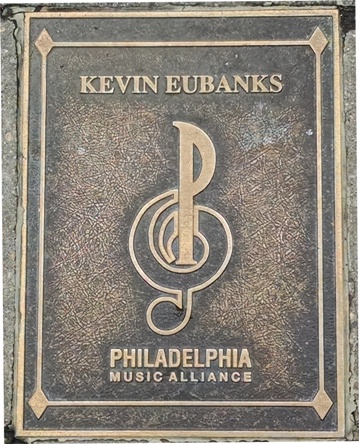
Kevin Eubanks Plaque

Kenneth Gamble

In tandem with his partner Leon Huff, producer and songwriter Kenny Gamble was the principal architect behind the lush and seductive Philly Soul sound, one of the most popular and influential musical developments of the 1970s.

Native Philadelphian Kenny Gamble first teamed with Leon Huff during the late ’50s while a member of the harmony group the Romeos, a unit which also included another aspiring area musician named Thom Bell, who would become crucial to Gamble’s later success. “The 81,” a 1964 single by the little-known Candy & the Kisses, was the inaugural Gamble-Huff co-production, and three years later the duo scored their first Top Five pop hit with the Soul Survivors’ “Expressway to Your Heart.” Soon recruiting Thom Bell as arranger, they subsequently scored with smashes including Archie Bell & the Drells’ “I Can’t Stop Dancing” and Jerry Butler’s “Only the Strong Survive,” gradually forging their own distinctive sound.

READ MORE

Kenneth Gamble Plaque

Dizzy Gillespie

Dizzy Gillespie’s contributions to jazz were huge. One of the greatest jazz trumpeters of all time (some would say the best), Gillespie was such a complex player that his contemporaries ended up copying Miles Davis and Fats Navarro instead, and it was not until Jon Faddis’ emergence in the 1970s that Dizzy’s style was successfully recreated. Somehow, Gillespie could make any “wrong” note fit, and harmonically he was ahead of everyone in the 1940s, including Charlie Parker. Unlike Parker, Dizzy was an enthusiastic teacher who wrote down his musical innovations and was eager to explain them to the next generation, thereby insuring that bebop would eventually become the foundation of jazz.

Dizzy Gillespie was also one of the key founders of Afro-Cuban (or Latin) jazz, adding Chano Pozo’s conga to his orchestra in 1947, and utilizing complex poly-rhythms early on. The leader of two of the finest big bands in jazz history, Gillespie differed from many in the bop generation by being a masterful showman who could make his music seem both accessible and fun to the audience. With his puffed-out cheeks, bent trumpet (which occurred by accident in the early ’50s when a dancer tripped over his horn), and quick wit, Dizzy was a colorful figure to watch. A natural comedian, Gillespie was also a superb scat singer and occasionally played Latin percussion for the fun of it, but it was his trumpet playing and leadership abilities that made him into a jazz giant.

READ MORE

Dizzy Gillespie Plaque

The Heath Brothers

Jimmy, Percy, and Tootie Heath teamed up in 1975 to form the Heath Brothers. Up until then, bassist Percy had been busy with the Modern Jazz Quartet, but with the group in “retirement” (temporarily as it turned out), all three brothers were free to join forces. Originally a quartet with pianist Stanley Cowell, but expanding after the addition of guitarist Tony Purrone and Jimmy’s son Mtume on percussion, the band recorded for Strata East (1975), four albums for Columbia, and two for Island. Tootie Heath left the group early on and was replaced by Akira Tana, although he came back for the final 1983 record. Although the Heath Brothers’ music was essentially hard bop, there were occasional departures into jazzy R&B on isolated selection.

READ MORE

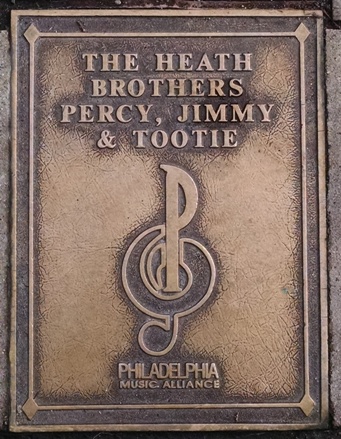
Heath Brothers Plaque

Billie Holiday

Billie Holiday was a true artist of her day and rose as a social phenomenon in the 1950s. Her soulful, unique singing voice and her ability to boldly turn any material that she confronted into her own music made her a superstar of her time. Today, Holiday is remembered for her masterpieces, creativity and vivacity, as many of Holiday’s songs are as well known today as they were decades ago. Holiday’s poignant voice is still considered to be one of the greatest jazz voices of all time.

Holiday began working with Lester Young in 1936, who pegged her with her now-famous nickname of “Lady Day.” When Holiday joined Count Basie in 1937 and then Artie Shaw in 1938, she became one of the very first black women to work with a white orchestra, an impressive accomplishment of her time. In the 1930s, when Holiday was working with Columbia Records, she was first introduced to the poem “Strange Fruit,” an emotional piece about the lynching of a black man. Though Columbia would not allow her to record the piece due to subject matter, Holiday went on to record the song with an alternate label, Commodore, and the song eventually became one of Holiday’s classics.

READ MORE

Billie Holiday Plaque

Leon Huff

In tandem with his partner Leon Huff, producer and songwriter Kenny Gamble was the principal architect behind the lush and seductive Philly Soul sound, one of the most popular and influential musical developments of the 1970s.

Leon Huff started his musical career as a session pianist, and played on sessions for Phil Spector, the Ronettes, and Carole King in New York City before moving to Philadelphia. He formed the Locomotions, and did sessions for Cameo and Swan. Huff earned his first hit as a composer writing “Mixed-Up Shook-Up Girl” for Patty & the Emblems in 1964.

Native Philadelphian Kenny Gamble first teamed with Huff during the late ’50s while a member of the harmony group the Romeos, a unit which also included another aspiring area musician named Thom Bell, who would become crucial to Gamble’s later success. “The 81,” a 1964 single by the little-known Candy & the Kisses, was the inaugural Gamble-Huff co-production, and three years later the duo scored their first Top Five pop hit with the Soul Survivors’ “Expressway to Your Heart.” Soon recruiting Thom Bell as arranger, they subsequently scored with smashes including Archie Bell & the Drells’ “I Can’t Stop Dancing” and Jerry Butler’s “Only the Strong Survive,” gradually forging their own distinctive sound.

READ MORE

Leon Huff Plaque