All That Philly Jazz was named one of the top 50 jazz blogs and websites for jazz musicians, teachers and students. We came in at #41. The list includes JazzWax and Jazz at Lincoln Center.
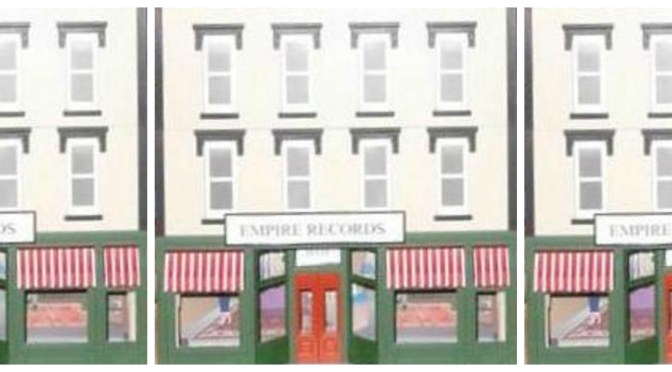
Empire Records Shop was located on the edge of “The Strip” at 52nd and Market Streets.
Empire Records was the oldest, continually-operated Philadelphia jazz record shop (1930 to 1970). In an online profile, Bill Morlitz shared his story:
I was born in Camden NJ since my mom’s cousin was head of Obstetrics at West Jersey Hospital on February 1, 1950 and have lived my whole life in Philadelphia and/or its suburbs. My dad had the first jazz record shop in Philadelphia so at an early age, I was immersed in the music business. Maybe that’s why I can’t sing a note on key nor have the 10 years of piano lessons stayed with me. Chopsticks is beyond me.
During my teens, I was fortunate to personally meet many great jazz artists including Ray Charles, Dizzy Gillespie, Milt Buckner (who developed the locked wrist rhythm style of piano playing and was Lionel’s pianist), Lionel Hampton and many others. Grover Washington, Jr. worked in the store on the weekends and we used to go listen to jazz sets together. My photography is included on his “Live at the Bijou” album.
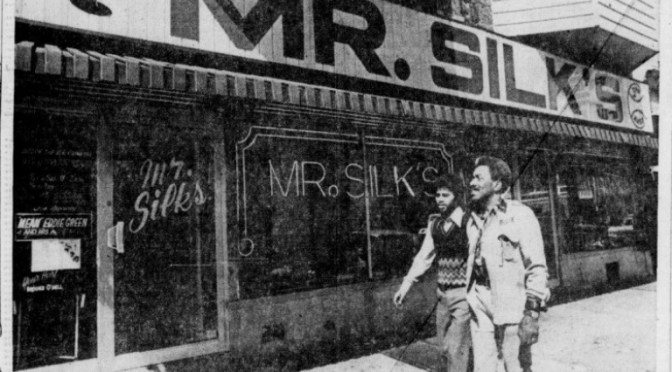
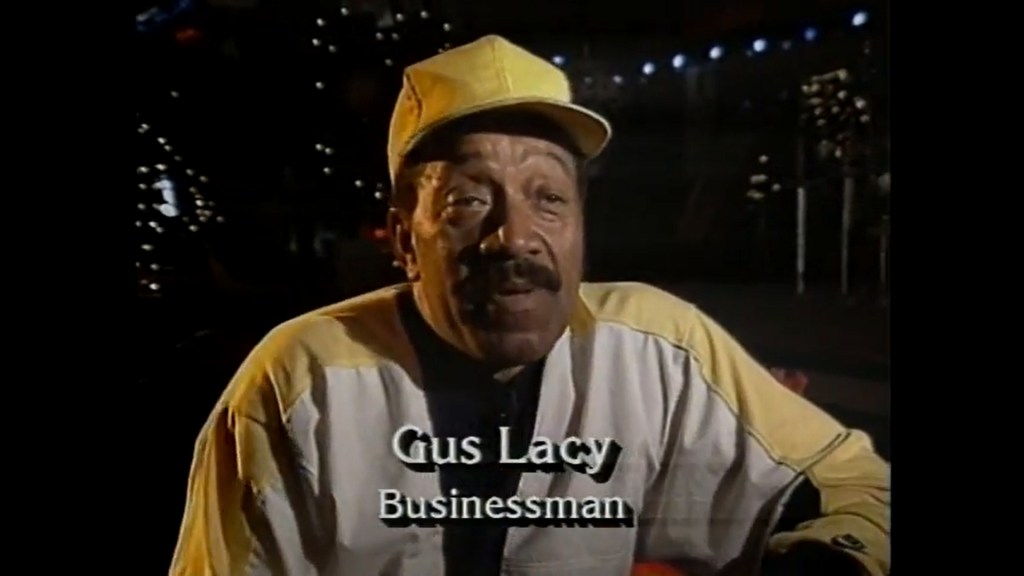
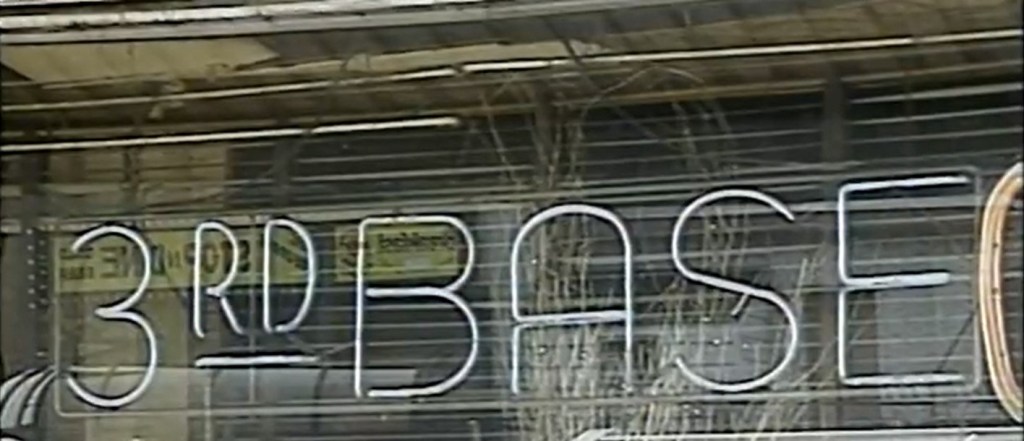
Gus “Mr. Silk” Lacy, was the unofficial mayor of S 52nd Street, aka “the Strip.” He and his wife, Virginia, owned Mr. Silk’s 3rd Base.
Heavyweight champions Muhammad Ali and Joe Frazier, and music legends Cab Calloway, Billy Eckstine, Teddy Pendergrass and Stevie Wonder were among the celebrities who frequented Mr. Silk’s.
Jazz vocalist Jimmy Scott performed here. In his biography, Faith in Time: The Life of Jimmy Scott, he recounted the neon sign outside read: “Always Touch Third Base Before You Go Home.”
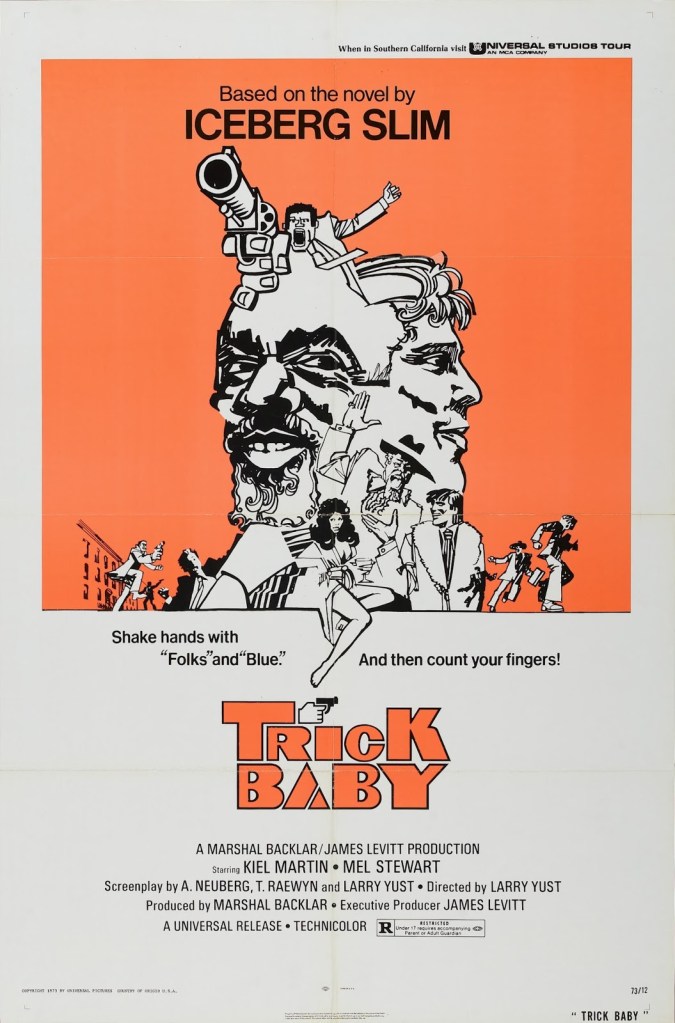
Mr. Silk’s 3rd Base was featured in the 1972 Blaxploitation film Trick Baby.
Between “White Folks” and Blue, we see both sides of the city: from a posh dinner party where “White Folks” meets well-heeled businessmen whose greed makes them potential marks as well as the raucous scene at “Mr. Silk’s Third Base” a West Philly nightclub that functions as Blue’s unofficial office. We see a lot of the warm glowing interior of Mr. Silk’s. The club was a real place, a center of African American nightlife (their slogan was “You have to touch 3rd Base before you go home”).
Owner Gus Lacy was “Mr. Silk,” by all accounts a bon vivant who received his smooth moniker by selling ladies’ undergarments along his postal route. He was also known as “The Mayor of 52nd Street” and before it closed in 1985 politicians, pimps and regular folks rubbed shoulders with stars like Stevie Wonder, Muhammad Ali and James Earl Jones. It’s a blessing that this little corner of the world was captured on film.
Mr. Silk’s closed in 1984. The former location of Mr. Silk’s 3rd Base is a stop on the 52nd Street Stroll. The most recent walking tour was held on Saturday, October 5, 2024.
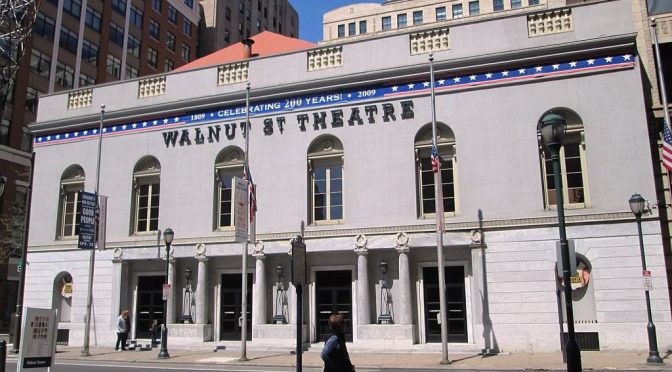
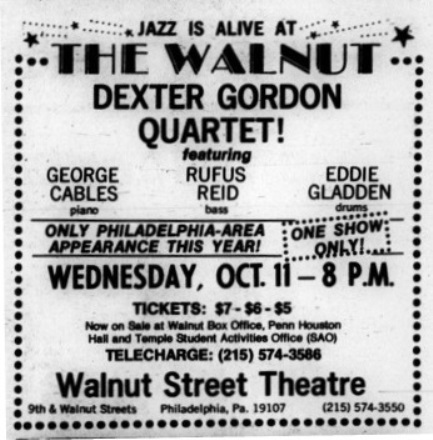
Opened in 1809, the Walnut Street Theatre is the nation’s oldest theatre. In 1978, the theatre launched a superstar jazz series, kicked off by saxophonist Dexter Gordon.
Other performers in the series included Woody Shaw, Sonny Rollins and McCoy Tyner.
Ripley’s Music Hall was located in the former Hippodrome in South Philly. The music venue played host to greats of all genres, including McCoy Tyner, Jimmy Cliff, Peter Tosh, Sam & Dave, Gil Scott-Heron and Stevie Ray Vaughan.
Ripley’s Music Hall was demolished. A new building constructed on the site was occupied by Tower Records, which closed in 2012.
The 1st Quaker City Music Festival, a three-day jazz festival produced by George Wein, was held at Connie Mack Stadium in August 1960.
The lineup included Gloria Lynne, Dizzy Gillespie, Chico Hamilton, Herbert Mann, Nat Adderley, Ornette Coleman, Thelonius Monk, Art Blakey, and Lee Morgan.
Connie Mack Stadium was demolished on July 13, 1976.
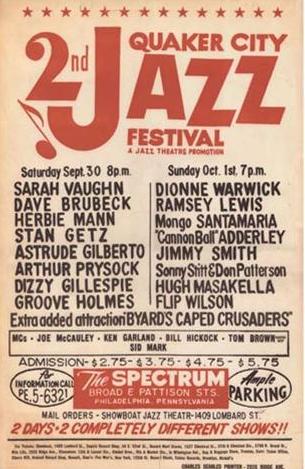
On September 30, 1967, the 2nd Quaker City Jazz Festival became the first event hosted by the Spectrum.
The two-day festival was produced by Herb Spivak, co-owner of the legendary Showboat. According to Joe McAllister:
Spivak went to Ed Snider and company (the Flyers were still in their infancy and the Sixers played at the Convention Center) and said he’d like to book a two-day jazz concert. Initially rebuffed because the Snider group didn’t believe a jazz bill would sell. Spivak replied, “That’s my problem.”
Spivak booked 10 groups a day and once again sold out the concert in two days. Dizzy Gillespie opened up the Spectrum with “God Bless America” followed by performances by Stan Getz, Dave Brubeck, Sarah Vaughan and Flip Wilson among others.
The lineup also included Cannonball Adderley, Astrud Gilberto, Groove Holmes and Arthur Prysock.
The Spectrum formally closed on October 31, 2009. Demolition was completed in May 2011.
Philadelphia Convention Hall, also known as Municipal Auditorium, was located in West Philly near the campus of the University of Pennsylvania.
The venue played host to many events, including the 1940 and 1948 Republican National Conventions, and the 1959 Penn Relays Jazz Festival. Luminaries such as Pope John Paul II, Martin Luther King Jr. and Nelson Mandela spoke here.
On October 19, 1957, the Philadelphia Jazz Festival was held at Convention Hall. Jazz trumpeter and Philly native Lee Morgan was on the bill, along with, among others, trumpeter Miles Davis, pianist Horace Silver and organist Jimmy Smith.
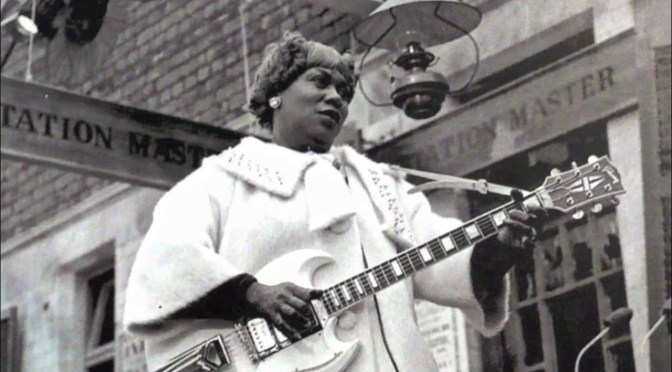
In 1957, Sister Rosetta Tharpe moved to Philadelphia. She was a first-generation resident in the historic Yorktown neighborhood, and a member of Bright Hope Baptist Church.
From Philadelphia, she did some of her finest recordings, releasing five LP’s and gaining a Grammy nomination with her 1968 album, “Precious Memories.” Her tours of Europe in the late 1950’s helped to spark the British blues revival and the onset of 1960’s popular music.
Sister Rosetta was gospel’s first superstar who brought spiritual music into the mainstream with a blend of blues, jazz, big band, and rhythm & blues. Her ringing soprano voice and guitar virtuosity set her apart from other greats of gospel’s Golden Age. In 2007, she was inducted into the Blues Hall of Fame.
In 2011, a historical marker was installed outside the house in Yorktown where she lived for 15 years until her death in 1973.
Philadelphia is a jazz town. This fact will be underscored on Wednesday, October 19th when the Philadelphia Music Alliance inducts the Class of 2016 into the Walk of Fame. This year’s inductees are organist Joey DeFrancesco, tenor saxophonist Benny Golson, bassist Christian McBride, bassist Jaco Pastorius, and WRTI radio broadcaster Bob Perkins
PMA Board chairman Alan Rubens said in a statement:
The Alliance is very excited to be able to specifically honor jazz this year as an extension of Philadelphia’s essential ties to this unique American art form’s rich legacy. It’s important to be reminded of the global impact and influence that Philadelphia has continued to bring to the jazz world, since the Roaring ’20s. Jazz doesn’t always get its due these days, even though it’s current as ever. Jazz is today, and it’s very much got a thriving pulse in our great city.









 All That Philly Jazz