
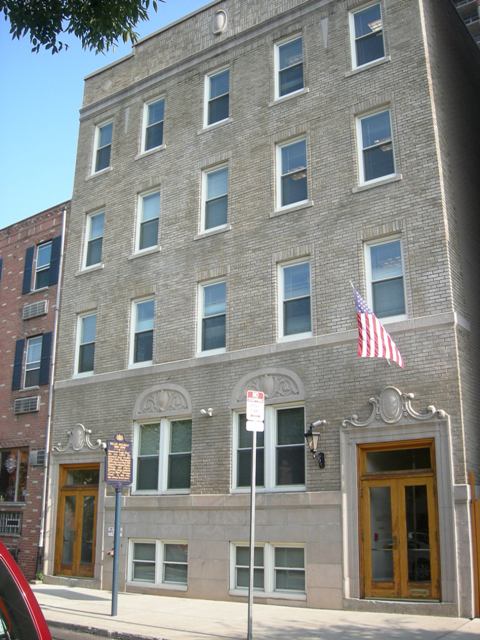
Opened in 1964, musicians stayed here because of its close proximity to nightspots in Mill Creek and on “the Strip.”


Opened in 1964, musicians stayed here because of its close proximity to nightspots in Mill Creek and on “the Strip.”
In 1979, Jazz City-TV began recording live jazz and blues concerts in clubs and the back streets bars of Philadelphia and New York City. Raw footage was edited into half-hour broadcast and cable-ready programs.
Jazz City-TV first began cable casting on Teleprompter Manhattan CATV. The shows could not air in Philadelphia because the city was not wired for CATV and the Internet was in its early development.
For more information, check out Jazz City-TV on YouTube.
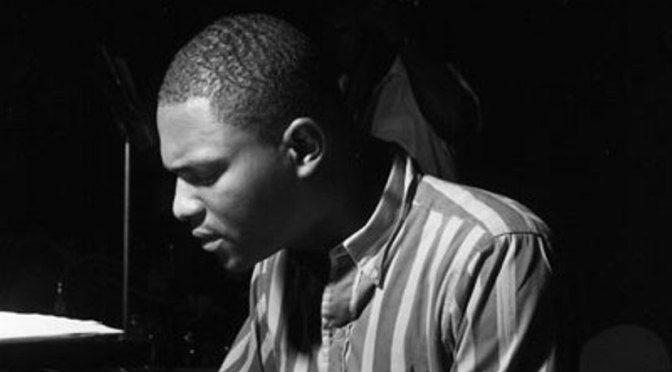
McCoy Tyner grew up in West Philly. The family lived above his mother’s beauty shop on the corner of Fairmount Avenue and May Place. Tyner’s family home is memorialized in “Blues on the Corner.”
In an interview with Dr. Anthony Brown for the Smithsonian Jazz Oral History Project, the NEA Jazz Master shared that he held jam sessions in the beauty shop:
Tyner: Yeah the kitchen was . . . the living room-it wasn’t very big but it was right behind the beauty shop. And the beauty shop was a pretty large place because they had shampoos and they had these stations for people doing their hair. And then right behind that was that little small living room where we had the TV and everything. And then there was, after that, there was a kitchen, and then above all that were bedrooms upstairs; bed and bathroom upstairs. It was a nice location, and then my mother had to get in a cab to go any place. They drop her right downstairs (laughs) and that’s where my piano was. So sometimes-you know I had an R&B band in the beginning and we had jam sessions. I had quite a few jam sessions in my mother’s shop, and my mother would be doing hair and say, “Ah you guys go ahead play. It’s alright, it’s no problem”. So we would be in there and the ladies would be under the dryer patting their foot. … (laughs) a musical beauty shop!
Brown: So, they’re sitting under those hair dryers patting their feet and you guys are jamming?
Tyner: Jamming!
Brown: Right in the same room.
Tyner: Yeah, we were in the same room. She loved music anyway and she loved piano. I think she might have felt as though that’s what I was going to do. I think she saw the handwriting on the wall and so she didn’t discourage me. I took lessons and all that and I used to practice a lot. And then when I got the band, but she was very willing to let us go ahead and do our thing. That’s where I developed the skills of writing for other instruments.
In an interview with All About Jazz, bassist Jymie Merritt talked about the “Forerunners” jazz workshops:
JM: So I started a workshop at the Tuskegee Clubhouse, and I got Kenny Lowe, the late, gifted pianist, the drummer Donald Bailey (we called him Duck), singer September Wrice and the saxophonist Odean Pope. And we kept it going for five years until I went with Max Roach.
AAJ: So the “Forerunners” was an ongoing workshop.
JM: Yes, and then we got to play on Sundays at Father Paul Washington’s church [Church of the Advocate], and I used that opportunity to go beyond the kind of bass playing I’d been exposed to, in order to develop new forms and build from that.
The Afro-American Historical and Cultural Museum was the forerunner to the African American Museum in Philadelphia. Slide Hampton and Max Roach performed here on June 26, 1987 during the Mellon Jazz Festival.
The Roots mural is located in the footprint of the legendary Pep’s.
Philly’s jazz legacy spans the generations from bebop to hip-hop. In an interview with the Smithsonian Jazz Oral History project, NEA Jazz Master and Philly native Percy Heath said:
Anyhow, they [hip-hop artists] take little pieces of some things that were written in the bebop era, post-bebop era, and they make little licks out of it and they use it. That’s good that some people, they listen to hip-hop. So, hip-hop is like bebop was back then, revolutionary movement. This business of rapping, I used to do that in the schoolyard when I was twelve years old.
Artist: Marcus Akinlana
ARTsolutely is a tribute to Philly’s arts community, the Francisville neighborhood where it is located and its role in the Civil Rights Movement. The mural is on the side of the Arts Garage, a performance venue for emerging artists. Its owner, Ola Solanke, is depicted in the mural, dressed in blue and playing the African talking drum.
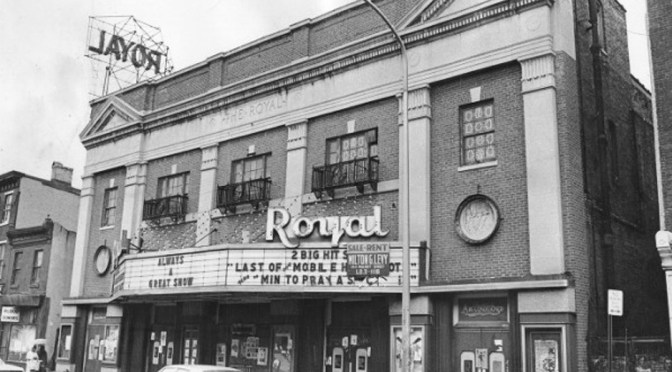
Opened in 1920, the Royal Theater was advertised as “America’s Finest Colored Photoplay House.” The all-black staff formed the nucleus of the Colored Motion Picture Operators Union.
The 1,200-seat theater showed movies by African American film pioneer Oscar Micheaux. The small stage played host to luminaries such as Fats Waller, Bessie Smith, Pearl Bailey, Della Reese and Cab Calloway.
South Philly residents were the Royal’s most loyal patrons and participated in talent shows and radio broadcasts. Business owners received increased foot traffic after Royal shows. But by the 1960s, the threat of the construction of an expressway in the neighborhood (that never materialized) and civil rights legislation which allowed blacks to move freely and patronize other entertainment venues, decimated the Royal’s neighborhood and attendance.
The Royal closed its doors in 1970. It is listed on the Philadelphia Register (1976) and National Register of Historic Places (1980).

The Royal Theater and adjacent parcels were purchased by music mogul Kenny Gamble from the Preservation Alliance of Greater Philadelphia in 2000 for $250,000.
In 2016, Kenny Gamble’s Universal Companies sold the Royal Theater. The facade is all that remains of the historic landmark. It, too, would have been demolished but the Preservation Alliance of Greater Philadelphia holds an easement.
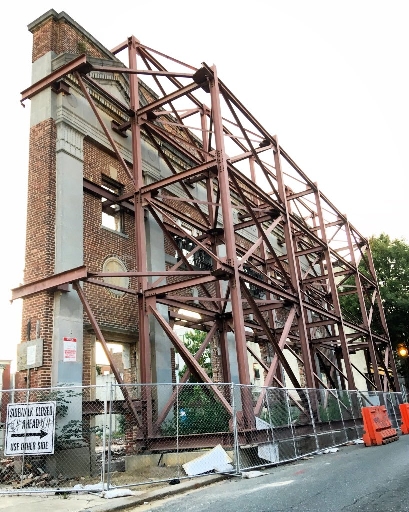
The Royal Theater is a stop on the Green Book walking tour which will be held on Saturday, November 9, 2024, 10am to 12pm. Tickets are $25 per person.
Buy Tickets


 All That Philly Jazz