
All That Philly Jazz Director Faye Anderson leads walking tours in the Fall and Spring.


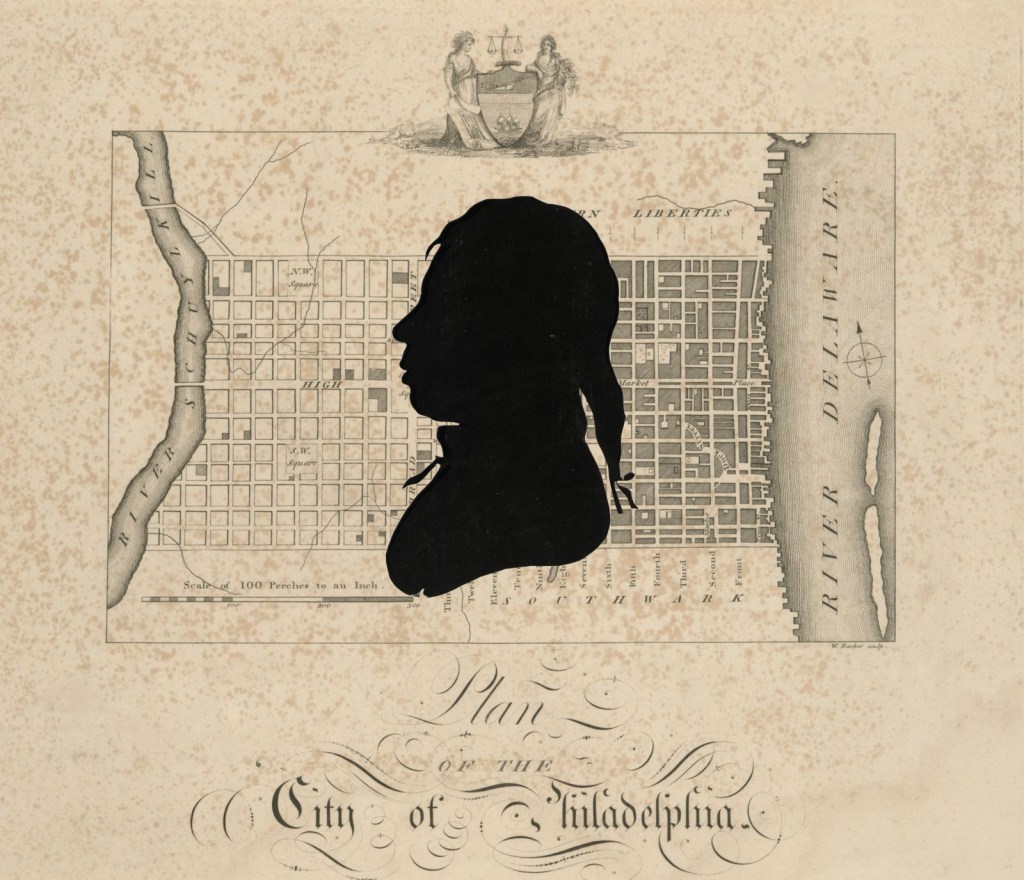

I am closing out Black History Month with Victor Hugo Green, the visionary publisher of “The Negro Motorist Green Book.”

Green was a postal worker who lived in Harlem and had routes in New Jersey. The Green Book was a crowdsourced travel guide to help African Americans navigate Jim Crow laws in the South and racial segregation in the North.

Green identified businesses through his own travel and a network of postal workers. The travel guide directed Black travelers to nondiscriminatory lodging, dining, entertainment and other services. The Green Book was published from 1936 to 1966.

It’s been nearly 60 years since the last edition of the travel guide was published, but the Green Book is still in the news.
I lead a walking tour of Green Book sites in Philadelphia. The next walk will be held in April 2025. For updates, send contact info to greenbookphl@gmail.com.
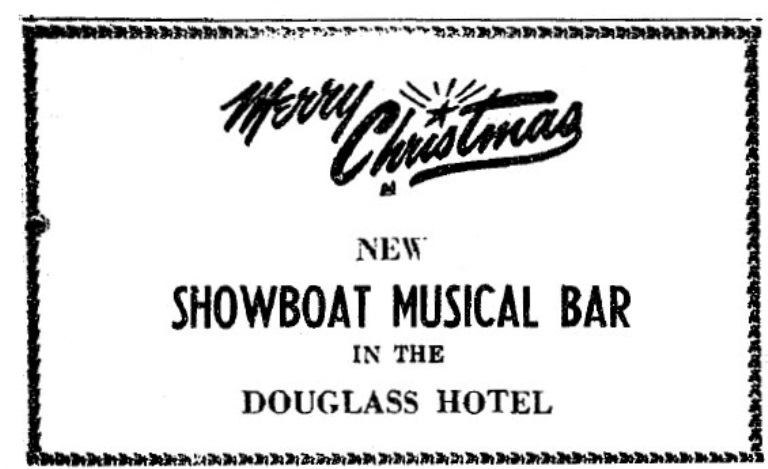
I want to send season’s greetings from some of the legendary artists who performed at the Showboat and stayed at the Douglass Hotel.
As Black History Month comes to a close, a threat to teaching African American history is looming in Pennsylvania. In the last session of the Pennsylvania legislature, a conservative lawmaker introduced the Teaching Racial and Universal Equality Act which would limit how teachers discuss racism and sexism, and ban schools from hosting speakers who advocate “racist or sexist concepts.” Republican State Rep. Russ Diamond said his bill is “aimed at curtailing the divisive nature of concepts more commonly known as ‘critical race theory’.” Diamond likely cannot spell “CRT.” Critical race theory is an academic framework for examining how racism is embedded in law, public policy and institutions.
Not to be outdone, Republican State Rep. Parke Wentling, one of four state lawmakers on the 12-member Pennsylvania Historical and Museum Commission, wants to privatize the state agency’s historical marker program which recognizes people, places and events that have statewide or national significance. In a 2021 op-ed Wentling wrote:
Rather than have the official arm of the state be the arbiter of history, perhaps it is time for the commission to get out of the marker business entirely and find a way to privatize our historical recognitions.
The Pennsylvania Historical and Museum Commission’s blue and gold historical markers are public history lessons. For many Americans, the markers are their only exposure to African American history and culture.

In a recent op-ed published in The Philadelphia Inquirer, I wrote:
For only the second time in its history, the Pennsylvania Historical and Museum announced in November that it was “temporarily pausing” the program because of “ongoing supply chain issues” affecting the production of the iconic blue-and-gold markers. I contacted the agency this week to check on the program’s status; spokesperson Howard Pollman told me, “There is no timetable as to when the temporary hiatus will be lifted.”
To me, the open-ended suspension — coupled with the vague language in the November announcement that the agency “will be reviewing the marker program in the interest of continuous improvement” — raises a red flag.
…
I believe Wentling’s screed is of a piece with a bill introduced in the last session by Republican State Rep. Russ Diamond, which seeks to prevent our schools from teaching “critical race theory.” Some politicians want to erase the progress made in telling a more inclusive American story by attacking a conceptual framework for the teaching of Black history. I fear these culture wars will escalate as the 2024 presidential election heats up.
Founded by WDAS program director and DJ Jimmy Bishop in 1964, Arctic Records was a building block for “The Sound of Philadelphia.”


Future cofounder of Philadelphia International Records Kenny Gamble was a songwriter and producer for the record label, and a recording artist with the group, Kenny Gamble and the Floaters.
In a 2013 interview, Rock and Roll Hall of Famer Gamble told WHYY:
That was like my training ground. It was like going to school. Experimenting. Jimmy Bishop used to let me work in the studio, work on the board.
Daryl Hall of Hall & Oates got his start at Arctic with the blue-eyed soul group the Temptones.
A teenager from North Philly, Barbara Mason, wrote and recorded Arctic’s best-selling record (Kenny Gamble was one of the backup singers).
Arctic released its last record in 1971. Around the same time, Jimmy Bishop disappeared, and to this day nobody knows whether he’s dead or alive.
The site of Arctic Records is a stop on my walking tour, “North Broad Street: Then and Now.” We will take a stroll down North Broad on Saturday mornings in October. To be added to the mailing list, send your contact info to greenbookphl@gmail.com.

First listed in the Green Book in 1938, the Parrish Café was located in North Philly.

Empress of the Blues Bessie Smith headlined Halloween Weekend 1935. Dance music was played by Charlie Gaines and His Orchestra.

May is Preservation Month, a time to celebrate historic places that matter to you. The former Douglass Hotel matters to me. Built in 1926, the Douglass Hotel was first listed in the Green Book in 1938. The property was added to the Philadelphia Register of Historic Places in 1995. The historical marker out front notes that when Billie Holiday was “[i]n this city, she often lived here.”

The Douglass Hotel was a safe haven for Black travelers. While the hotel rooms were basic, the lower level was magical. For nearly four decades, and several ownership and name changes, the basement space played host to jazz greats from Cannonball Adderley to Joe Zawinul. In the 1950s it was known as the Rendezvous Club. In the 1960s, it was renamed the Showboat. In the 1970s, it was the Bijou Café. This door leads down to the lower level where John Coltrane and Grover Washington Jr. recorded live albums.

The future Queen of Soul performed in the lower level of the Douglass Hotel on January 2, 1961. In Higher Ground: Stevie Wonder, Aretha Franklin, Curtis Mayfield, and the Rise and Fall of American Soul, John Wilson, a pianist for the legendary Clara Ward and the Ward Singers, recalled:
Aretha Franklin came to Philly to sing at the Showboat Club on Lombard Street. After checking in at the hotel upstairs over the club, she took a cab over to Mom Ward’s house to get connected to familiar souls. She was a little nervous about breaking into pop singing. That night Clara, me, and Rudy (the Wards’ chauffeur) went to the Showboat to catch Aretha’s performance. The only people familiar with the name Aretha Franklin were gospel people, who weren’t about to show up. They were angry at her crossing over to pop. When we went in the door we heard that wonderful voice and saw that it was being wasted on an almost empty house.
Sixty years later, there will be full houses to see the movie RESPECT starring Academy Award® Winner Jennifer Hudson as Aretha Franklin.
RESPECT will be in theaters in August. If the movie lives up to the trailer, a second Oscar might be in Jennifer Hudson’s future.
Billie Holiday, née Eleanora Fagan, was born on April 7, 1915 at Philadelphia General Hospital. “Looking for Lady Day,” hosted and written by news anchor Tamala Edwards, is a fact-based portrait of the iconic singer who changed the game on and off stage.

All That Philly Jazz Director Faye Anderson leads a walking tour, “Billie Holiday’s Philadelphia.” Follow in Billie’s footsteps starting at the Bessie Smith Walk of Fame plaque. During an appearance on “Eddie Condon Floor Show Live” in 1949, Condon told Billie, “You’re the best Bessie I’ve seen since Bessie.”
The walking tour ends at the Attucks Hotel (distance: 0.7 miles).

The stops include the Academy of Music, Billie Holiday Walk of Fame plaque, and sites of the Fantasy Lounge and South Broad USO.

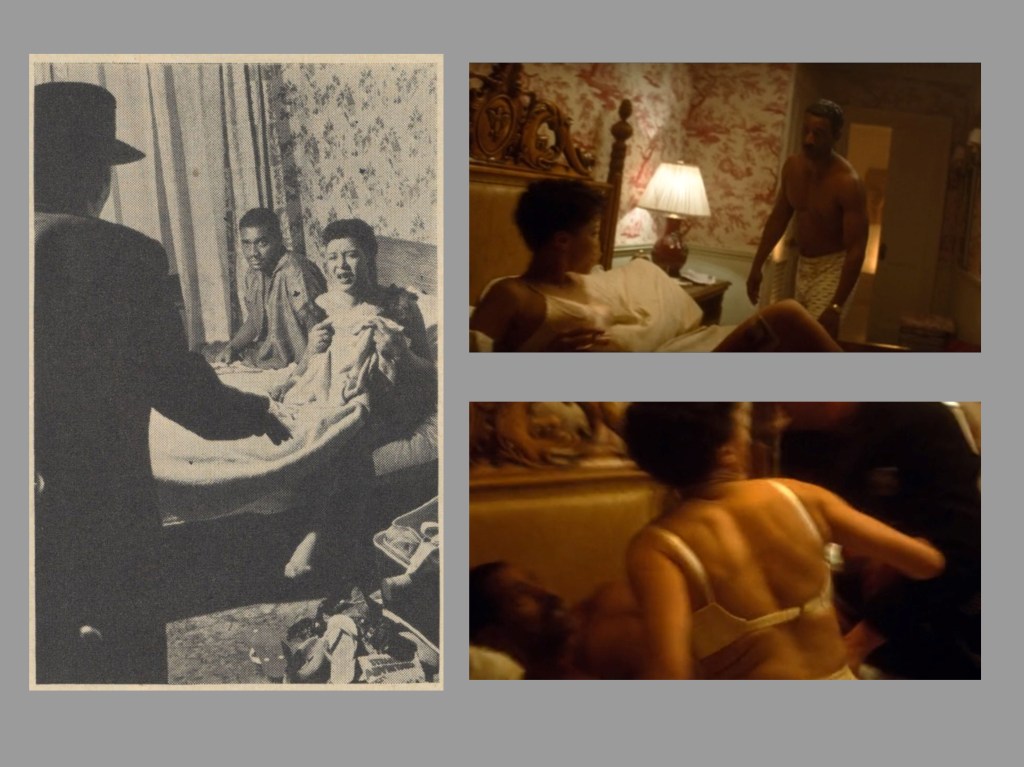
We also stop at hotels where Lady Day stayed, including the hotel where she and her husband, Louis McKay, were arrested. The arrest is depicted in the biopic United States vs. Billie Holiday.
Our next-to-last stop is the Green Book site where Billie Holiday performed four months before her death. Emerson’s is the setting for the Broadway play, “Lady Day at Emerson’s Bar and Grill.” Audra McDonald won the 2014 Tony Award for Best Performance by an Actress in a Leading Role in a Play.

To schedule a presentation or to be added to the mailing list, contact Faye Anderson at phillyjazzapp@gmail.com.
It has been nearly 62 years since Billie Holiday passed away. Hundreds of dissertations, books, films and documentaries later, she is a blank canvas onto which fans and detractors project their hopes, dreams and issues. I see a strong Black woman whose back did not bend.
From an early age, Billie was failed by the institutions that should have protected her. She was racially profiled and harassed by the FBI and hounded by the Philadelphia Police Department. From where Billie sat, the whole of the United States was arrayed her. But still she persisted. She didn’t give a damn what folks thought about her drug abuse, sexuality or string of no-good men.
Billie was a popular club artist and concert artist but she harbored no illusion about her audiences. She famously said, “They come to see me fall on my ass.” While there, she demanded their attention when she sang “Strange Fruit,” the anti-lynching protest song that took a toll on her livelihood and ultimately her life.
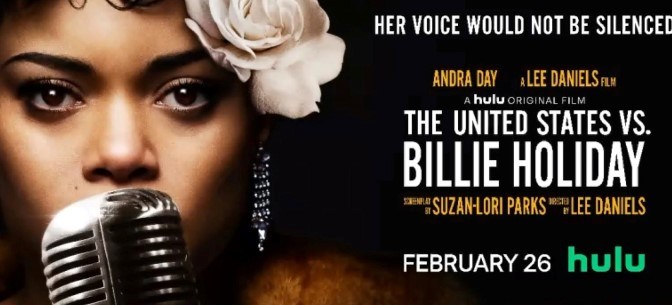
The Billie Holiday historical marker at 1409 Lombard Street piqued my interest in investigating her story beyond the marker. One of Billie’s Philadelphia stories is told in the new biopic starring Andra Day and directed by Lee Daniels.
The United States vs. Billie Holiday is now streaming on Hulu.
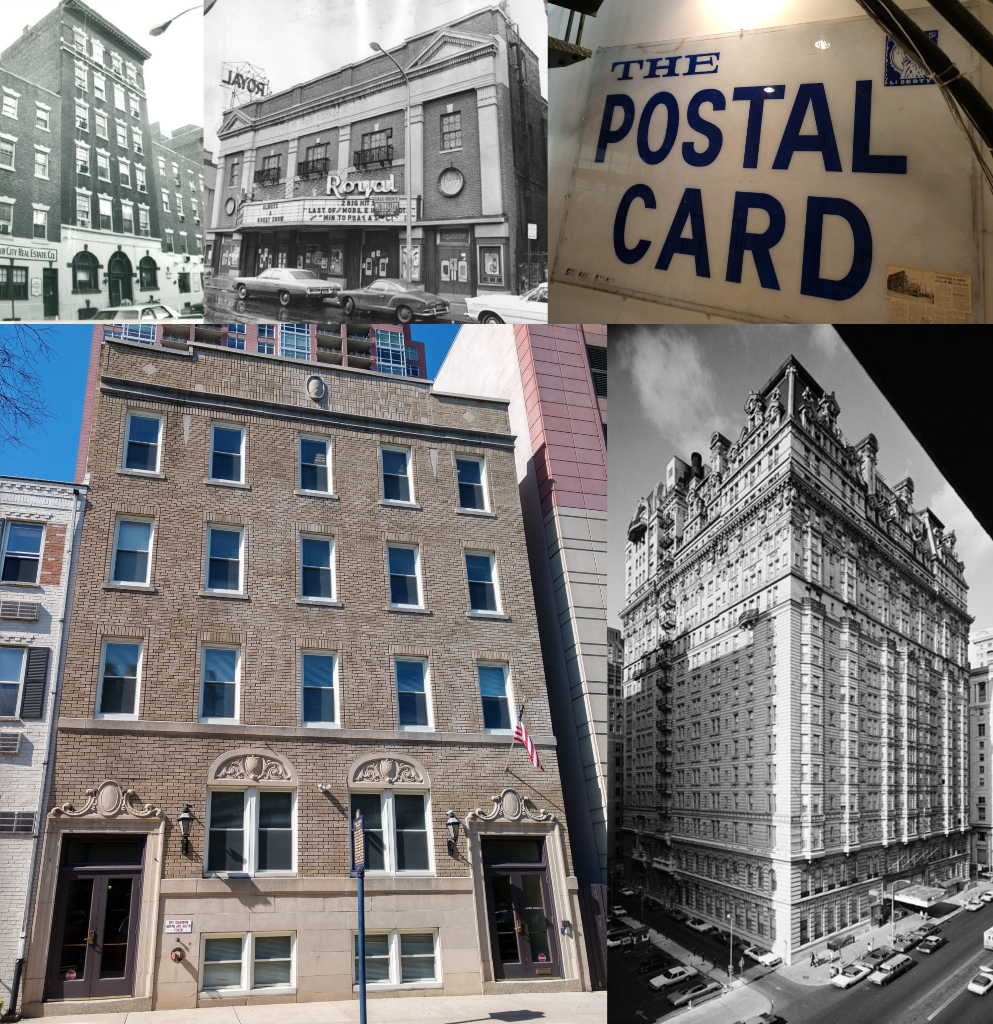
The two-story jazz spot was first listed in The Negro Motorist Green Book in 1947.

Organist Austin Mitchell, Jr., was a featured attraction at The Postal Card.

WRTI Jazz Host Bob Perkins shared that “Michel [sic] and his Hammond organ was his calling card.”
Trumpeter Lee Morgan had a week-long engagement at The Postal Card the last week in December 1961. According to a story published in the Philadelphia Tribune on January 6, 1962, Morgan didn’t finish his gig:
Here’s why Lee Morgan, the jazz trumpeter, cancelled out his week’s engagement at that South Philly club before it was over. He’s Army bound.
The Tribune later reported that Morgan was not drafted. Truth be told, it was wishful thinking. The talented trumpeter was in the throes of a heroin addiction.
The Postal Card is a stop on the Green Book walking tour which will be held on Saturday, November 9, 2024, from 10am to 12pm. Tickets are $25 per person.
Buy Tickets



 All That Philly Jazz