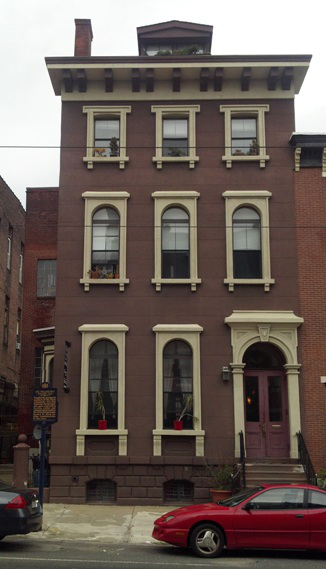
Founded in 1937 and formally opened three years later, the Philadelphia Pyramid Club was a small, exclusive club for black professionals. Its mission was to foster the “cultural, civic, and social advancement of Negroes in Philadelphia.” The membership fee was $120, and monthly dues were $2.40.
The club hosted a wide range of social and cultural activities, including performances by Marian Anderson and Duke Ellington and, after 1941, annual art exhibitions for African American artists. It also hosted events with Dr. Martin Luther King Jr. and physicist J. Robert Oppenheimer, father of the atomic bomb. During the Pyramid Club’s heyday, its membership rolls were a Who’s Who of black Philadelphia.
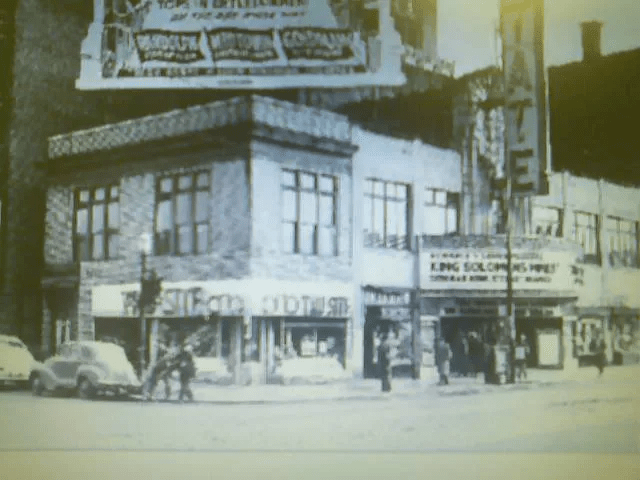
Opened on February 16, 1929, the Uptown began life as a movie house. In the 1950s, it became a music venue. Jazz, blues and soul greats who graced the Uptown stage included Count Basie, Sarah Vaughan, Gloria Lynne, Ray Charles, James Brown, Aretha Franklin, Cannonball Adderley, Nancy Wilson, Ramsey Lewis, Oscar Brown, Jr., Art Blakey and the Jazz Messengers, and Jimmy Smith.
Miles Davis played here one Christmas Day, but after the first show, he left because of the small crowd.
In 1958, legendary disc jockey Georgie Woods began producing rhythm & blues shows at the Uptown. The 2,040-seat theater became a stop on the “chitlin’ circuit.” The Uptown was where jazz met R&B.
Saxophonist Sam Reed was the house bandleader. The Sam Reed Orchestra included Bootsie Barnes, Jimmy Heath and Odean Pope.
The Uptown’s heyday was the 1960s and ‘70s. Since the final curtain in 1978, the interior of the Uptown has deteriorated almost beyond recognition. With the exception of the seats, none of the original artifacts remain.
For information on how you can help restore this Art Deco palace to its former glory and preserve an iconic piece of Black music, visit the Uptown Entertainment & Development Corporation.
Opened in the 1930s and listed in the The Negro Motorist Green Book, the Ridge Cotton Club shows the influence of Harlem and the Cotton Club. And like the legendary Harlem nightspot, it was probably controlled by the mob.
Two of the original owners, Morris Brodsky and Harry Hirsch, died within days of each other in January 1949 following “injuries inflicted by an assailant.”
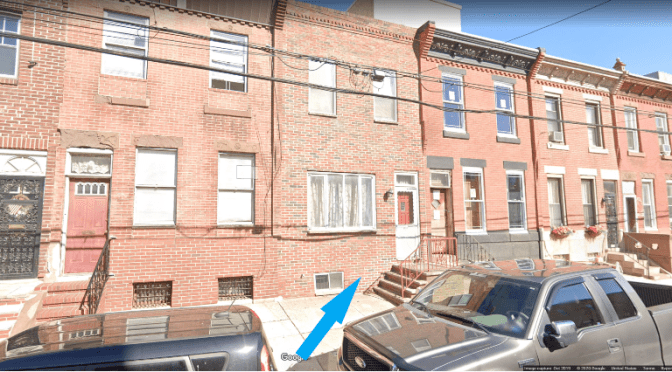
In his autobiography, “I Walked with Giants,” Jimmy Heath lovingly recalled the jam sessions in his parents’ basement that attracted the likes of Dizzy Gillespie, Charlie Parker and John Coltrane.
Benny Golson recounted:
Enough cannot be said about Mr. and Mrs. Heath, his mother and father, who continuously put up with all of us who used to come to their home in South Philadelphia, remove all of the furniture in the living and dining room, then begin our rehearsal. No matter what we did, how much noise (music) we made or how late we did it, they were always our champions. It was their support that, in part, enabled us to grow. And grow we did.
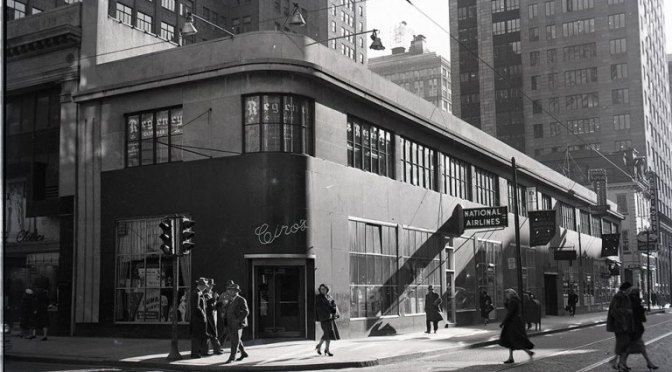
Ciro’s was one of a string of nightclubs owned by Frank Palumbo, a restaurateur, humanitarian, and power broker.
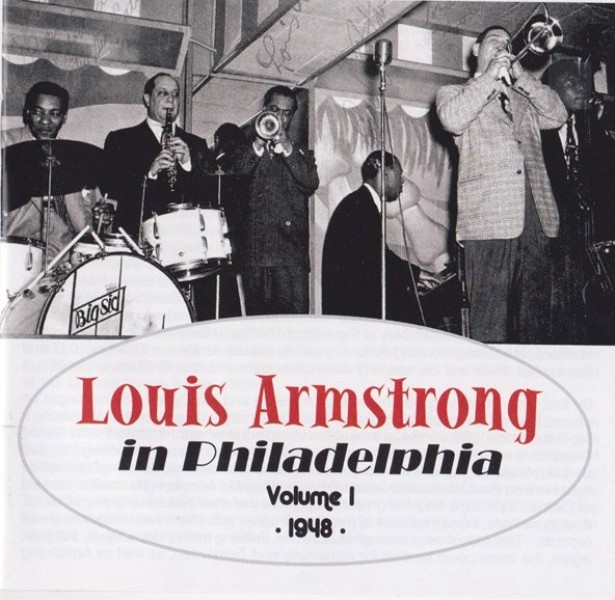
In 1948, Louis Armstrong’s All Stars — featuring Barney Bigard, Sid Catlett, Earl Hines, Velma Middleton and Jack Teagarden — recorded a series of radio broadcasts at Ciro’s.
In 1987, Congress passed House Concurrent Resolution 57 designating jazz “a rare and valuable national American treasure.” The resolution recognized jazz as a “unifying force, bridging cultural, religious, ethnic and age differences.” Indeed, jazz played an important role in paving the way for the Civil Rights Movement.
The Downbeat, located at 11th and Ludlow streets in Philadelphia, was the first racially integrated club in Center City. The building is still there.
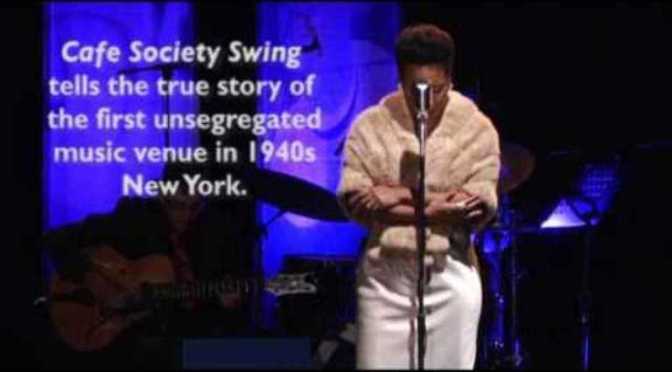
Café Society Swing, written by Alex Webb, tells the story of the legendary Café Society, the first integrated nightclub in New York City. The jazz spot played host to, among others, Fats Navarro, Dizzy Gillespie, Charlie Parker, Count Basie, Sarah Vaughn, Lena Horne, Sister Rosetta Tharpe, Ida Cox and Big Joe Turner. Philly Joe Jones was the house drummer.
The Café Society is where Billie Holiday first sang “Strange Fruit” in January 1939.
Philly’s Café Society was located on “The Golden Strip.”
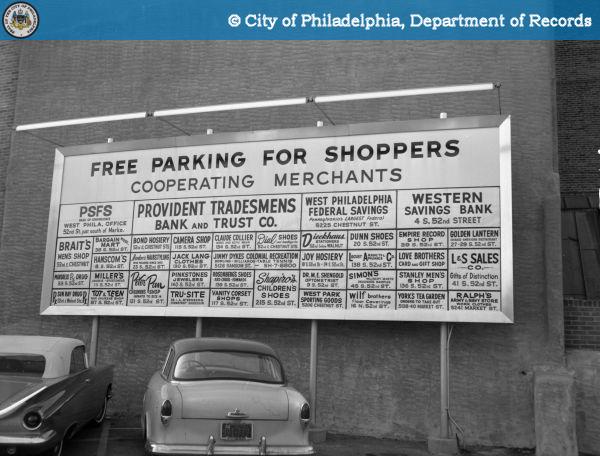
West Philly’s Main Street, 52nd Street, is a historic cultural and commercial corridor that stretches from Arch Street to the north and Baltimore Avenue to the south.
In a 2012 interview with Hidden City Philadelphia, Shirley Randleman, then-president of the 52nd Street Business Association, recounted:
Oh, it was wonderful. It was a thriving commercial corridor surrounded by a neighborhood that was financially stable. The 52nd Street corridor had five movie theaters, many high-end clothing stores, and eateries like Horn & Hardart, with the nickel automats. There were bakeries, doctor’s offices, and independent stores, like Buster Brown shoes. 52nd Street was the entertainment capital of West Philadelphia, AKA “the Strip,” and every top notch entertainer found his way there. It was more than just shops; it was the community meeting place. People were engaged in conversations in every shop and on the streets. We lived together.
In the 1960s and ‘70s, 52nd Street, aka “the Strip,” was the place to see and be seen. Celebrities including Muhammad Ali, Cab Calloway, Billy Eckstine, Joe Frazier, Teddy Pendergrass, Stevie Wonder, and members of the Philadelphia Eagles and Phillies hung out at Mr. Silk’s 3rd Base.
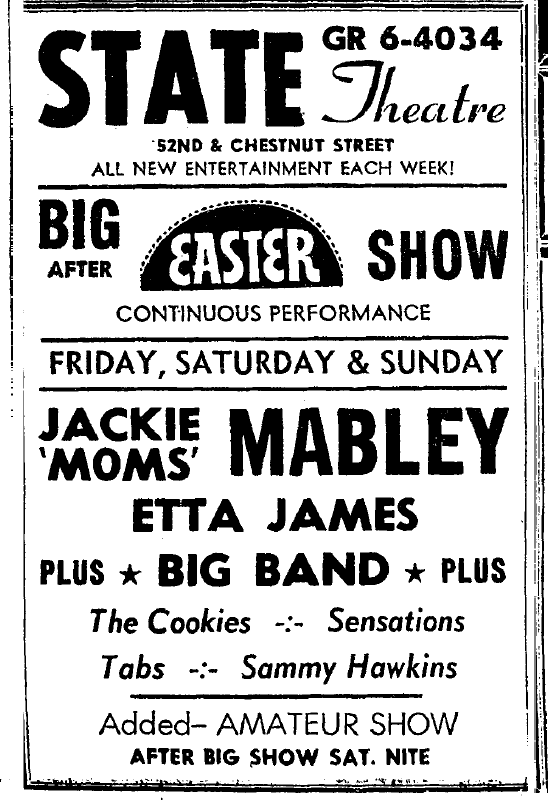
Everyone ordered mammer jammer sandwiches at Foo Foo’s Steak House. Top jazz musicians performed at the Aqua Lounge. Etta James and Jackie “Moms” Mabley graced the stage of the State Theatre in April 1963.
For more risqué entertainment, one could go to the Pony Tail and watch go-go girls bend over and “shake a tail feather.”
Lee Morgan’s historical marker was installed at 52nd and Chancellor streets in front of the former location of the Aqua Lounge (now African Cultural Art Forum) on International Jazz Day 2024.
Join All That Philly Jazz Director Faye Anderson for a stroll along 52nd Street. The walk and talk will start at Malcolm X Memorial Park and end at the Red Rooster.
The most recent 52nd Street Stroll was held on Saturday, October 5, 2024.
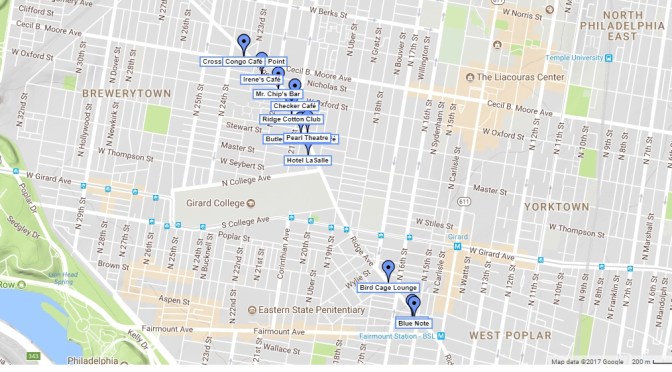
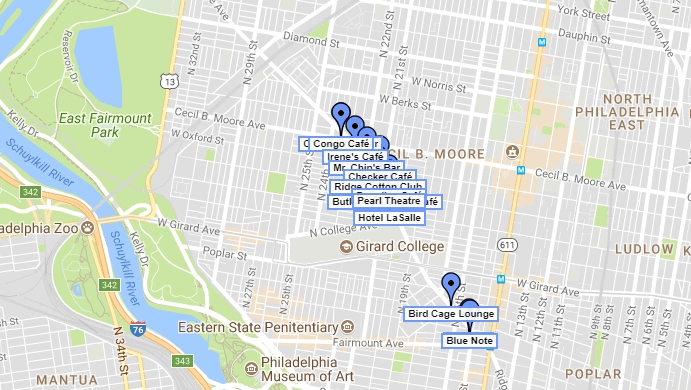
During Philadelphia’s golden age of jazz, there were jazz clubs in every neighborhood. There were so many clubs that folks in North Philly didn’t go to joints in South Philly and vice versa. There was a handful of clubs that reached legendary status and attracted patrons from all over the city. The Blue Note at 15th Street and Ridge Avenue was “the town’s swankiest jazz emporium.”
From 15th Street to Columbia Avenue (later renamed Cecil B. Moore Avenue), Ridge Avenue was a jazz corridor where legends-in-the-making roamed.










 All That Philly Jazz