Category Archives: Advocacy

Shirley Scott: Queen of the Organ

From NPR’s Jazz Night in America:

Known as the “queen of the organ,” Shirley Scott was one of several Philadelphians who developed the electric Hammond B-3 into a viable instrument for a soulful, bluesy style of jazz. With dozens of recordings to her name, she was already a major voice when she became the leader of the house band at Ortlieb’s Jazzhaus. Among the young players who timidly found their way onto the stage at Ortlieb’s were Warfield and Stafford — and, in doing so, they got a lot more than they bargained for.

READ MORE

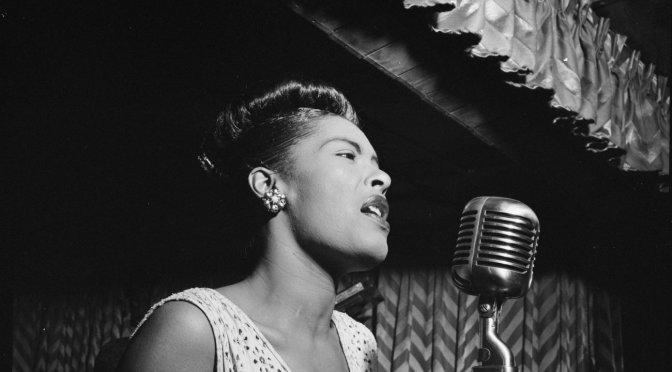
Billie Holiday Inducted into Philadelphia Walk of Fame

Billie Holiday was born in West Philly 100 years ago. This morning, her star will be reborn as Lady Day is inducted into the Philadelphia Walk of Fame.

I am proud to have played a role in making this happen.

Billie Holiday Joins Walk of Fame

For me, it was personal. After a failed romance when I was in college, I started my day by playing “Good Morning Heartache.” My best friend would ask me, “Why are you always listening to that junkie?” I ignored him. We now know Lady Day was an early victim of racial profiling.

Billie helped me get through a rough patch. It will be my pleasure to help keep her bronze plaque clean.

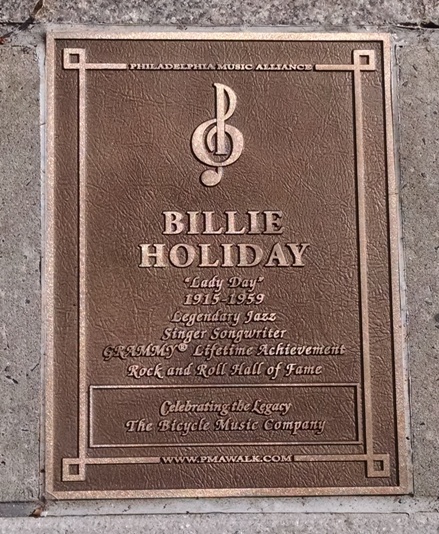
UPDATE: Billie Holiday’s Walk of Fame plaque unveiled. It’s located in front of the Kimmel Center.

Billie Holiday - Walk of Fame Plaque - 10.26.15

John Coltrane and Cultural Heritage Preservation

Jazz legend John Coltrane personified cool.

John Coltrane

Coltrane was into cultural heritage preservation before it was cool. His composition, “Alabama” was in response to the Sept. 15, 1963, bombing of the 16th Street Baptist Church that killed four young girls. His mournful tribute captured the zeitgeist of the Civil Rights Movement.

Philadelphia shaped and nurtured Coltrane. On June 5, 1945, the Dizzy Gillespie Quartet, featuring Charlie Parker, performed at the Academy of Music. Coltrane and Benny Golson were seated in the next-to-last row. In an interview with the Smithsonian Jazz Oral History Project, NEA Jazz Master Golson recalled:

When we heard – John and I – when we first heard Charlie Parker and Dizzy Gillespie – I told you he was sounding like Johnny Hodges – our lives changed that night. We had never heard any music like that. Never. We were screaming like these Beatles groupies, when they used to hear the Beatles.

Coltrane kicked his heroin habit at his home in Strawberry Mansion, a neighborhood in North Central Philly. The Mural Arts Program, in collaboration with the community, honored a former neighbor. On or about Sept. 15, 2014, Pennrose Company demolished the Tribute to John Coltrane mural.

John Coltrane Mural - Resized

Pennrose has not contributed a dime to replace the tribute to an American icon. The cultural resource was paid for, in part, by taxpayers. After being called out, a company rep lied about “ongoing discussions.”

I know they lied because I was part of the only discussion that has taken place. At the March 10, 2015, meeting with Mural Arts, Lopa Kolluri, Pennrose’s Vice President of Operations, asked for a “menu of options.” Mural Arts sent a proposal and several follow-up emails to which Pennrose has yet to respond.

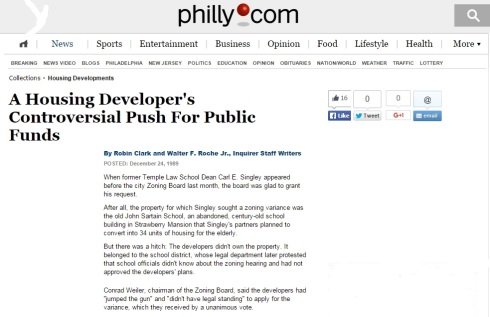
Pennrose’s arrogance is particularly galling given the company has feasted on public subsidies seasoned with political donations for nearly 40 years. In 1989, a Philadelphia Inquirer story noted the company’s reliance on government subsidies.
Pennrose doesn’t think our stories matter, but we do. It’s our responsibility to remember the ancestors and preserve their legacy for present and future generations.

3rd Annual Philadelphia United Jazz Festival

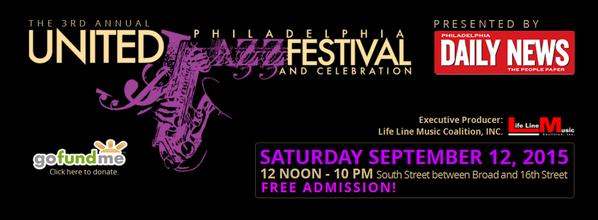
The 3rd Annual Philadelphia United Jazz Festival will be held on Saturday, Sept. 12, 2015, from noon to 10pm. The free festival will be held on South Street, between Broad and 16th streets.

3rd Annual Philadelphia Unified Jazz Festival

The festival features an exciting lineup of talent, including Odean Pope, Sam Reed, Jamaaladeen Tacuma, Warren Oree, Bobby Zankel, Arpeggio Jazz Ensemble, and the U.S. Army Jazz Big Band.

For more information, visit Philadelphia United Jazz Festival.

Sarah Vaughan Forever Stamp Will Be Issued in 2016

The U.S. Postal Service announced that the Sarah Vaughan forever stamp will be issued in 2016:

Jazz and pop singer Sarah Vaughan (1924-90) will be commemorated on a forever stamp in the Music Icons series, with 16 stamps in the full pane.

The Divine One will join fellow Union Local 274 members Count Basie, John Coltrane, Duke Ellington and Ella Fitzgerald who also have been accorded this honor.

Shout, Sister Rosetta Tharpe, Shout!

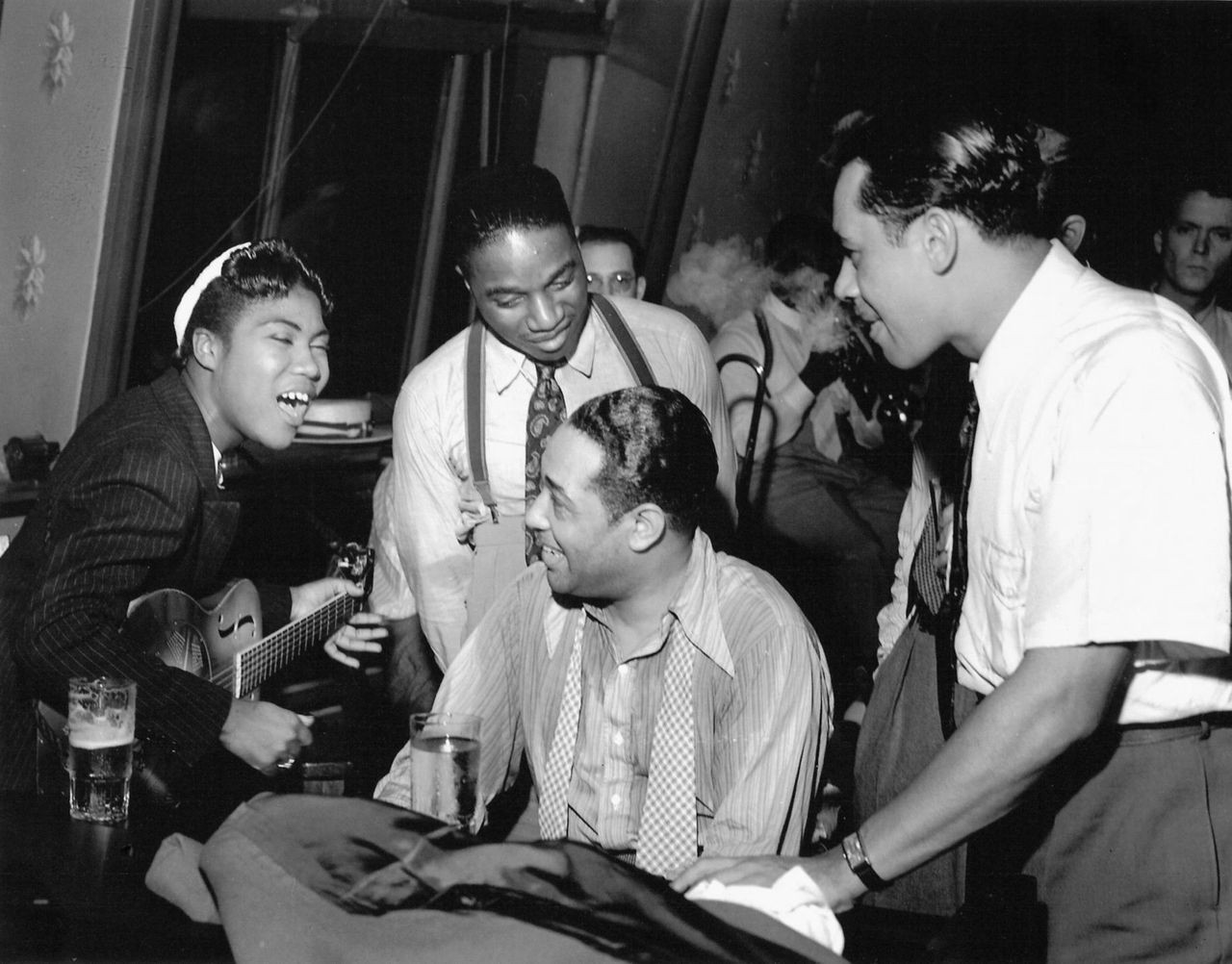
The story of Sister Rosetta Tharpe is coming to the stage on Broadway. The guitar virtuoso played with jazz greats, including Cab Calloway, Count Basie, Benny Goodman, Lucky Millinder and Duke Ellington.

Sister-Rosetta-Tharpe-Duke-Ellington-and-Cab-Calloway

BroadwayWorld reports:

Shout, Sister, Shout! is the story of the trailblazing performer Sister Rosetta Tharpe who influenced scores of popular musicians, from Elvis Presley, Johnny Cash, Little Richard, Eric Clapton and Etta James. Rosetta Tharpe was gospel music’s first superstar. A guitar virtuoso with a clear, ringing voice, she took the rich musical traditions of Black Pentecostal churches and made music for the world to enjoy. Audiences adored her and said she played guitar “like a man” — even though men learned a thing or two from her.

Before we had the phrase “women in rock,” Rosetta rocked churches, tent-meetings, revivals, dance clubs, stadiums, and concert halls — from Carnegie Hall to the Grand Ole Opry. Her remarkable journey–from Cotton Plant, Arkansas to an acknowledged influence on Elvis Presley, Johnny Cash, and a generation of British rockers–shows how a black female gospel musician was an essential player in the development of rock-and-roll. She is a pioneer and considered by many to be “The Mother of Rock and Roll.”

READ MORE

National Dance Day 2015

National Dance Day was first celebrated in the District of Columbia and Los Angeles in 2010.

In 2012 and every year since, Congresswoman Eleanor Holmes Norton has introduced a congressional resolution to designate the last Saturday in July as National Dance Day:

National Dance Day has become a grassroots movement when Americans across the country host local events celebrating dance for fun and exercise. The contribution of National Dance Day to healthy lifestyles makes dance do double duty in a nation that wants to be fit and loves to dance.

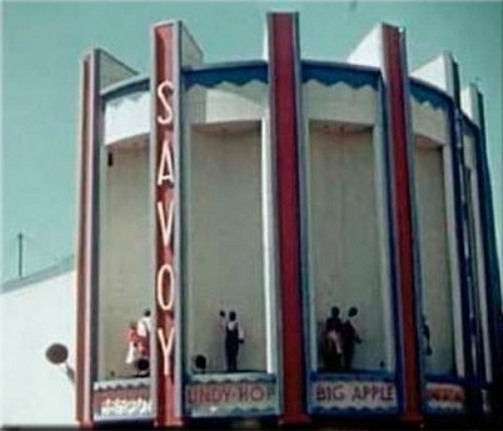
Americans’ have a longstanding fascination with black dance. Indeed, Harlem’s legendary Savoy Ballroom was a featured exhibit at the 1939 World’s Fair.

Savoy Ballroom - 1939 World's Fair

The Savoy Ballroom was the first integrated ballroom in the country. Like jazz, swing dancing helped paved the way for the Civil Rights Movement. The jazz culture allowed black and white people to see each other and dance together. More important, blacks were social peers. For a good read on the history of swing, check out “Queen of Swing” Norma Miller’s biography Swingin’ at the Savoy: A Memoir of a Jazz Dancer.

Now 96, the grande dame of swing is scheduled to perform at the Charlie Parker Jazz Festival on Aug. 22, 2015.

Race, Jazz and American Tradition

Trumpeter and Lincoln Center artistic director of jazz Wynton Marsalis spoke and performed in the closing session of the 2015 Aspen Ideas Festival. Marsalis observed:

In our country the greatest challenge is for all of us to be together in spite of our history, and not only in spite of it, but because of our history.

Marsalis was joined by multi-instrumentalist Jon Batiste, bandleader on the forthcoming “The Late Show with Stephen Colbert” on CBS.

The Mitch Thomas Show

The Mitch Thomas Show debuted on August 13, 1955. It was one of the first televised dance shows for black teenagers. During its three-year run, Mitch Thomas brought black rock and roll stars to television, including Little Richard, the Moonglows, Frankie Lymon and the Teenagers, and Ray Charles.

Mitch Thomas - Ray Charles - 7.5.15

The Mitch Thomas Show was broadcast from a studio atop Suburban Station in Center City. Across town in West Philly, Bandstand, excluded black dancers and audience members:

In a typical dissemination process [read: cultural appropriation], dances seen on Bandstand were often picked up at school dances or local dance hops and brought back to the show where they were presented by mostly white adolescents. In fact, many dances derived from The Mitch Thomas Show, the popular all-black teen show in Philadelphia, from which they were copied by white teens and then seen on Bandstand.

On August 5, 1957, Dick Clark made his debut as host of Bandstand. Clark’s claim that he integrated the show before it left Philadelphia has been debunked

More than fifty years after the show first broadcast, American Bandstand’s representations of youth culture remain closely linked both to the show’s legacy and to larger questions about popular culture, race, segregation, and civil rights. Billboard magazine journalist Fred Bronson, for example, argues that American Bandstand was a “force for social good.” Bronson bases this claim on Dick Clark’s memory that he integrated the show’s studio audience when he became the host in 1957. “I don’t think of myself as a hero or civil rights activist for integrating the show,” Clark contends, “it was simply the right thing to do.”

In the context of local and national mobilization in favor of segregation, underscored by widespread anti-black racism, integrating American Bandstand would have been a bold move and a powerful symbol. Broadcasting daily evidence of Philadelphia’s vibrant interracial teenage culture would have offered viewers images of black and white teens interacting as peers at a time when such images were extremely rare. Clark and American Bandstand, however, did not memory of integration. Rather than being a fully integrated program that welcomed black youth, American Bandstand continued to discriminate against black teens throughout the show’s Philadelphia years.

READ MORE