Category Archives: Advocacy

Philadelphia’s 20th Century ‘Underground Railroad’

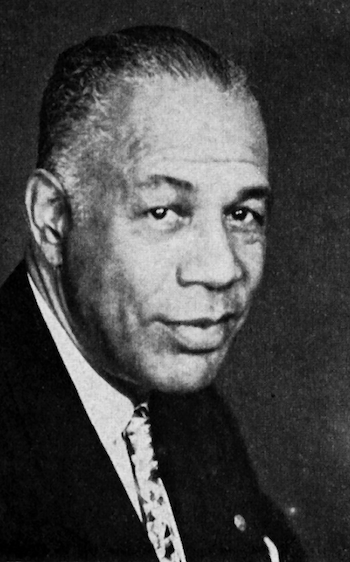
Victor Hugo Green, publisher of The Negro Motorist Green Book, was a visionary.

Victor_Hugo_Green_1892-1960_in_1956

Green envisioned a network of safe and welcoming places for African Americans. First published in 1936, the travel guide targeted the New York City metropolitan area. By 1938, the Green Book included all the states east of the Mississippi River.

Green Book - 1938

Over time, there were 9,500 Green Book listings across the United States, Canada, the Caribbean, Mexico, South America, Europe and Africa. The highest concentration was in cities with large African American populations including Atlantic City, Washington, DC, Atlanta, Chicago and Philadelphia.

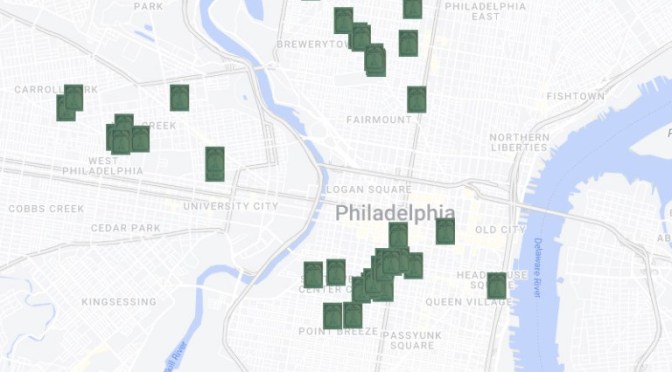
Green Book Sites - 1956

Check out this WHYY podcast focusing on Philadelphia’s extant Green Book sites, “Philly’s ‘20th century Underground Railroad’ hides in plain sight.”

Don’t Drink and Drive

The holiday season is in full swing. Sadly, death never takes a holiday. The National Highway Traffic Safety Administration estimates there will be 1,253 motor vehicle traffic crash fatalities between Thanksgiving and New Year’s Day. Roughly one-third of the fatalities will be alcohol-related.

Alcohol-impaired drivers are not a new phenomenon. In 1959, the General Board of Temperance of the Methodist Church produced an animated PSA about safe driving called “Stop Driving Us Crazy.” The soundtrack was scored by Philadelphia native and National Endowment for the Arts Jazz Master Benny Golson, and music played by Art Blakey and the Jazz Messengers.

Green Book Philadelphia

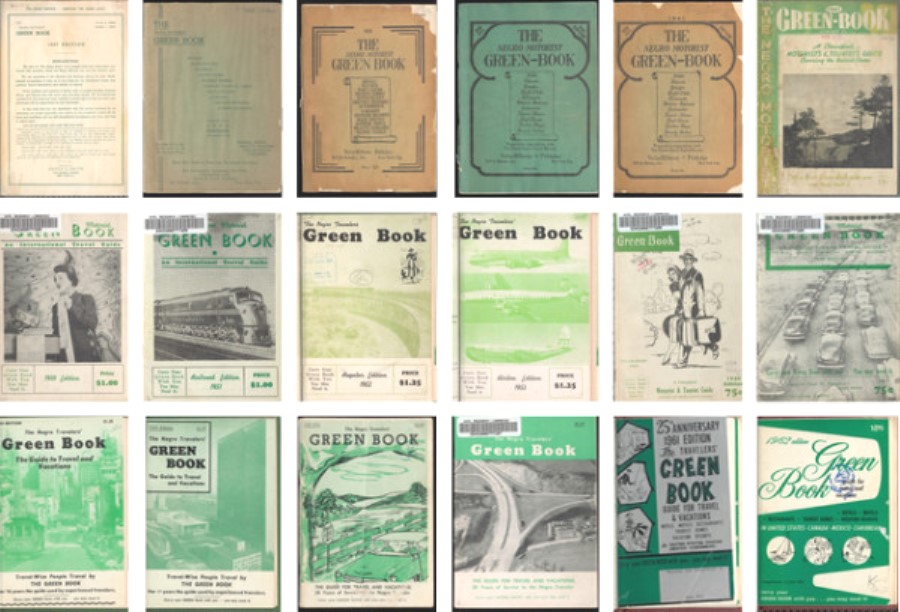
I first wrote about “The Negro Motorist Green Book” in 2015. That year, the Schomburg Center for Research in Black Culture digitized Victor Hugo Green’s travel guide which was published from 1936 to 1966.

#GreenBook Collage

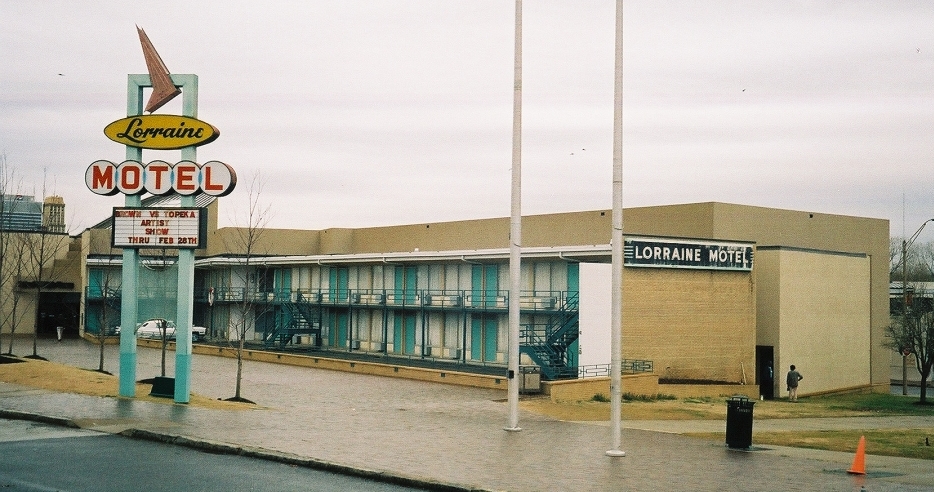
The now-iconic publication is experiencing a renaissance. Countless news articles, essays and blog posts have been written. A documentary, Driving While Black, will air on PBS next year. In June 2020, a Green Book exhibition created by the Smithsonian Institution Traveling Exhibition Service will begin a three-year tour. The first stop is the most infamous Green Book site, the Lorraine Motel in Memphis where Dr. Martin Luther King Jr. was assassinated on April 4, 1968.

Lorraine Motel

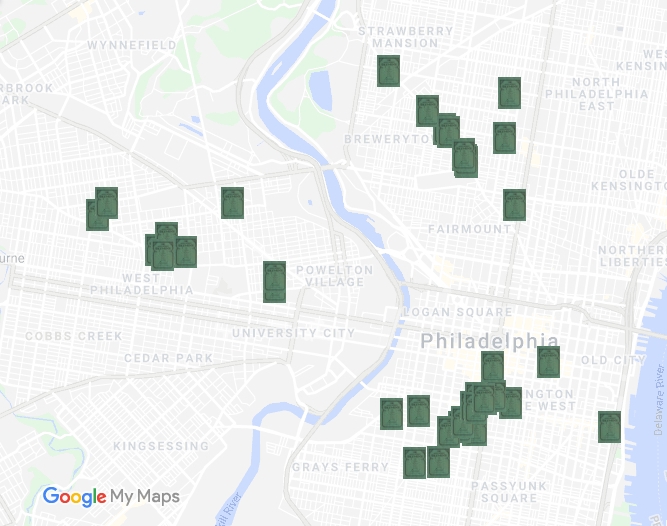
Over the course of 30 years, dozens of Philadelphia businesses were listed in the Green Book. The businesses were clustered in South Philadelphia, then the heart of the African American community.

Mapping Green Book Philadelphia - Green Book Icon4

Roughly 70 percent of Philadelphia’s buildings were constructed before 1945. So it’s not surprising there are 45 extant Green Book sites. A few are vacant; most have been repurposed. Five are in the same business, including the Hotel Carlyle which was first listed in the Green Book in 1948 and is doing business under the same name.

Hotel Carlyle - Vintage Sign

Hotel Carlyle - June 7, 2019

All That Philly Jazz Director Faye Anderson is sitting in the lobby with the current owner of the Hotel Carlyle. Step back in time and imagine James Brown patting down his pompadour in that mirror before heading out the door for an engagement at the Uptown Theater.

To arrange a Green Book Philadelphia walking tour or presentation, contact Faye Anderson at greenbookphl@gmail.com.

Jubilee Singers

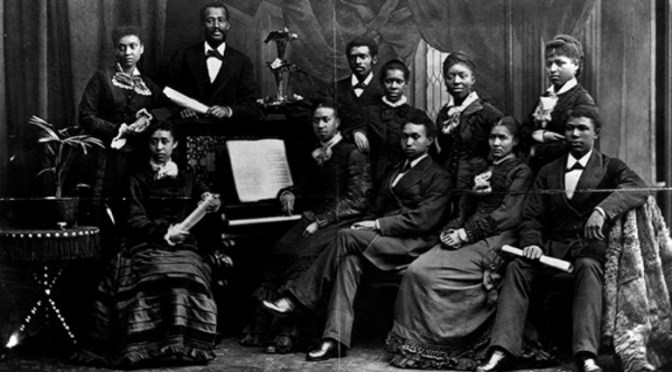
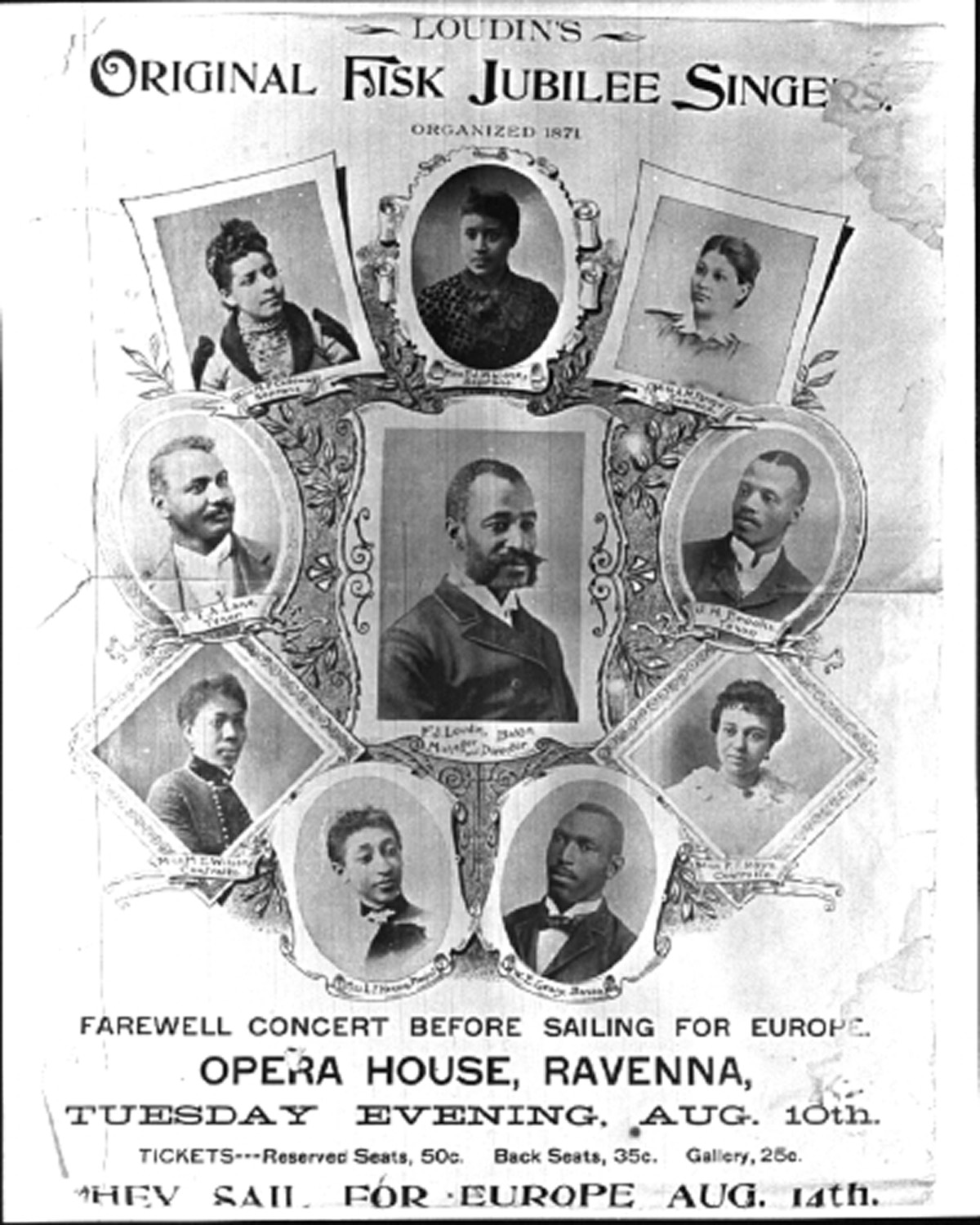
Fisk University was founded in January 1866 to educate newly freed blacks. Between 1871 and 1880, the Fisk Jubilee Singers staged a series of fundraising concerts that introduced slave songs to the world.

Original Jubilee Singers

From Fisk University History:

The tradition of excellence at Fisk has developed out of a history marked by struggle and uncertainty. Fisk’s world-famous Jubilee Singers originated as a group of traveling students who set out from Nashville on October 6, 1871, taking the entire contents of the University treasury with them for travel expenses, praying that through their music they could somehow raise enough money to keep open the doors of their debt-ridden school.

The singers struggled at first, but before long, their performances so electrified audiences that they traveled throughout the United States and Europe, moving to tears audiences that included William Lloyd Garrison, Wendell Phillips, Ulysses S. Grant, William Gladstone, Mark Twain, Johann Strauss, and Queen Victoria.

On November 19, 2019, American Experience PBS will air “Jubilee Singers: Sacrifice and Glory.”

Pennsylvania National Action Network Calls on Sen. Warren to Support Removal of Frank Rizzo Monument

When I moved to Philadelphia, Frank Rizzo, a former mayor and police commissioner, had been dead for nearly two decades. Still, Philadelphians spoke about him with a passion and anger that was visceral. Rizzo’s legacy includes the untreated trauma that he inflicted on the African American community.

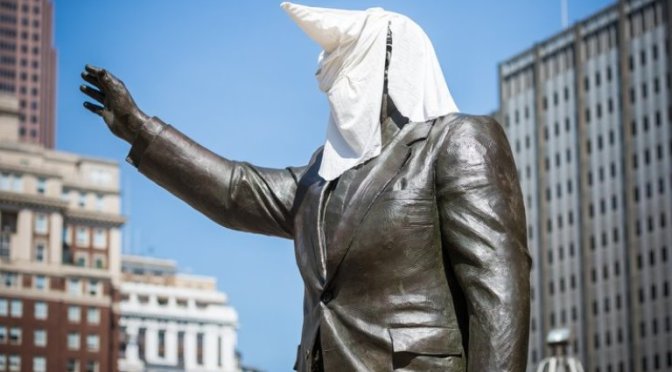
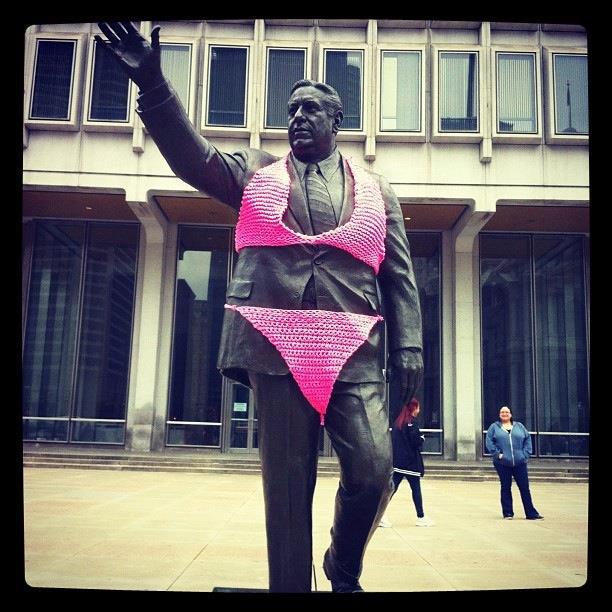
As I researched Philadelphia’s jazz history, I heard stories about how Rizzo harassed jazz musicians and club owners. So it is shocking that a monument of a man who was sued by the U.S. Department of Justice for a pattern of police brutality that “shocks the conscience” is at the gateway to municipal services.

#FrankRizzo - Yarnbomb - 2012

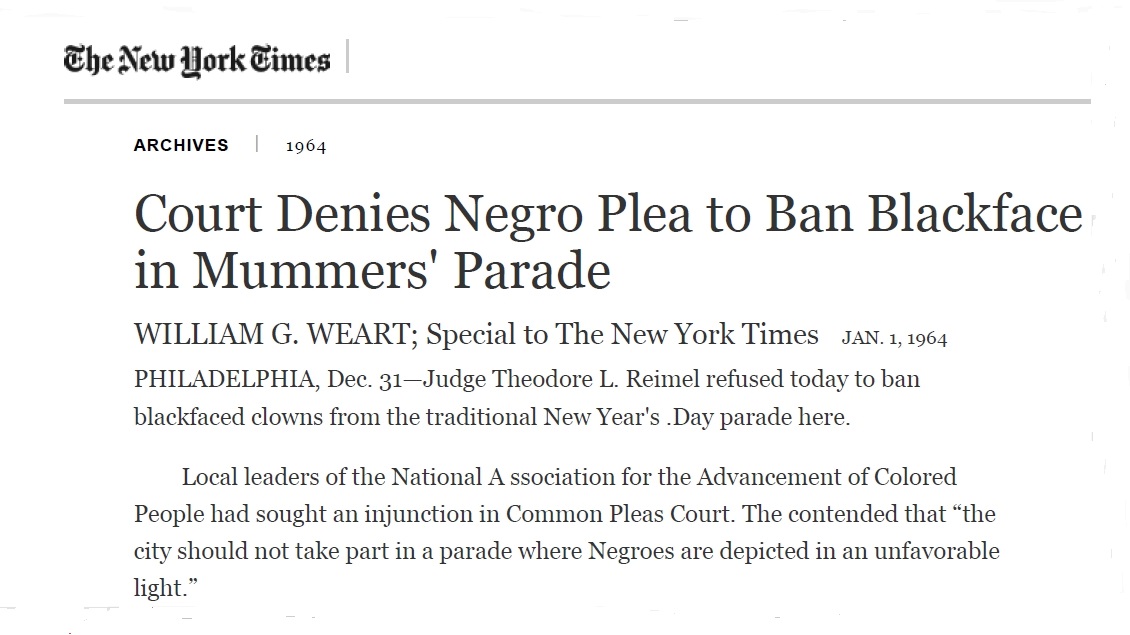
I looked at the story behind the story and learned the Rizzo monument was financed by his family. The public was never asked whether the vanity project was an appropriate monument for the City of Philadelphia. Not only was the public not asked, the vanity project was unveiled on January 1, 1999 after the Mummers Parade, an event that for decades featured marchers in blackface.

#FrankRizzo - NYT - Mummers Parade

On the day Philadelphia Mayor Jim Kenney announced his endorsement of Sen. Elizabeth Warren for the Democratic presidential nomination, it was reported Kenney has no plan to remove the Rizzo monument from Thomas Paine Plaza. Warren supports removal of Confederate monuments and the Confederate battle emblem from the Mississippi state flag.

I join Pennsylvania State Chapter National Action Network in calling on Warren to support removal of the monument of Frank Rizzo, a racist cop who trampled on civil rights, urged supporters to “vote white” and traumatized the African American community. You can read the press release here.

#PublicMemory Playback

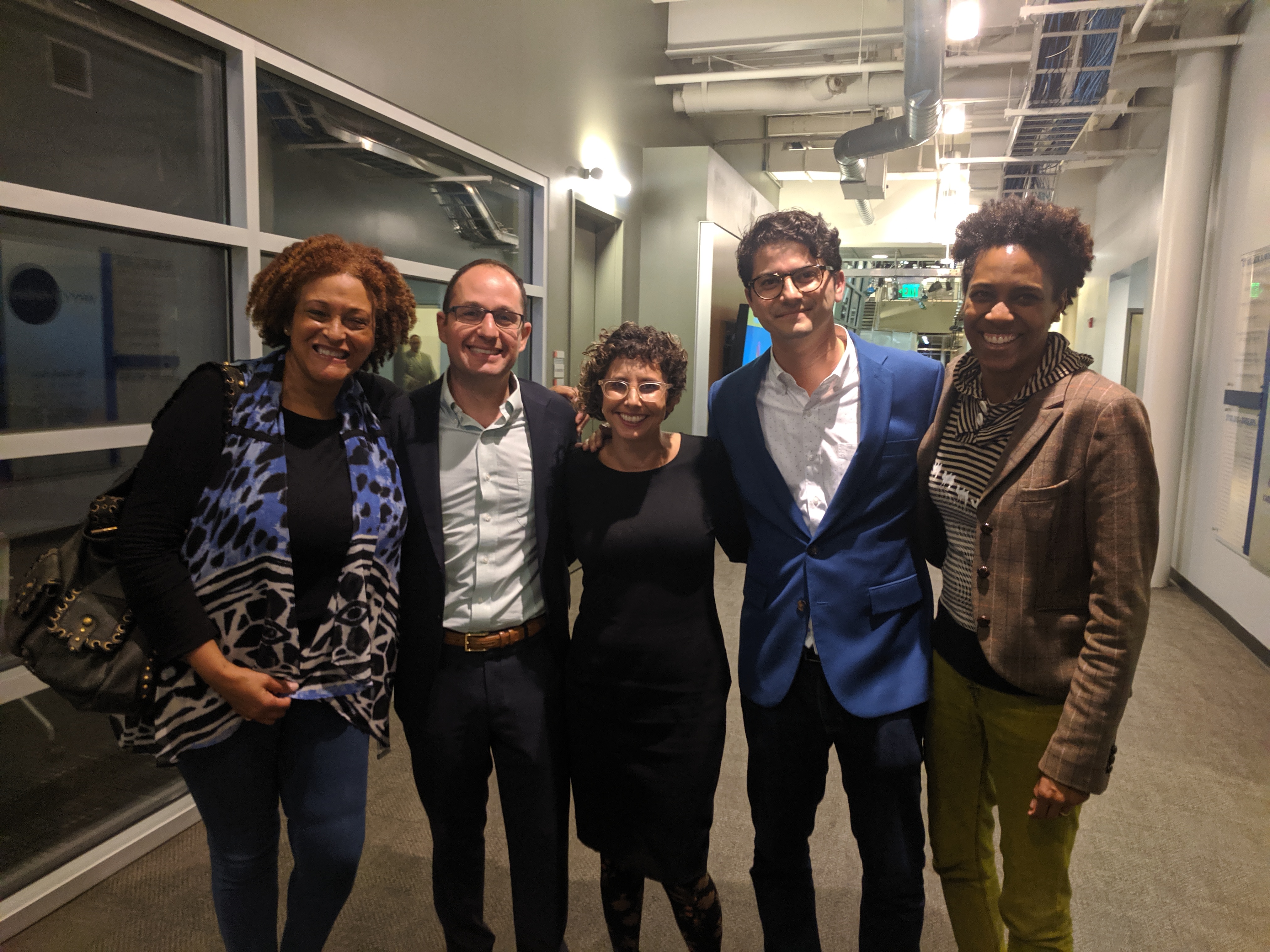
On October 22, PlanPhilly held a panel discussion on historic preservation, public memory, cultural heritage and displacement. PlanPhilly Managing Editor Ariella Cohen moderated the discussion. The panelists were:

PlanPhilly Panel Discussion - October 22, 2019

The conversation was lively and at times confrontational. You can listen to the audio here.

Public Memory and Place Matter

In a recent essay published by the Brookings Institution, the writers asked: Whose history gets recognized in our public spaces?

Ultimately, the fight over Barry Farm is about more than those last 32 buildings left standing. It signifies a larger struggle over representation in our physical spaces, one that has only intensified as cities become more divided, unaffordable, and unequal. This struggle has manifested itself in a myriad of ways, from efforts to remove racist memorials from public plazas to movements to protect Black culture on rapidly gentrifying blocks. Within all these actions is one critical, underlying message: Black history matters.

In Philadelphia, our story is being erased from public memory. From the demolition of the church where Marian Anderson first learned to sing to the Henry Minton House, one of the last places John Brown laid his head, developers don’t give a fig about black history.

Henry Minton House - Inquirer

Midwood Development & Investment CEO John Usdan plans to demolish the Henry Minton House. In a news article, Usdan said, “Because the city’s so rich in history and has all these great historic buildings and amazing places where you want to congregate, it’s exactly what the demographic moving to Philly wants.”

For this developer, black history is not American history. And black folks are not included in Usdan’s vision for a changing city since he is building for “the demographic moving to Philly.”

First they displace us. Then they erase us.

#DisappearingBlackness - Where's Our Story

The National Museum for African American History and Culture’s exhibition “Power of Place” underscores that place matters:

People make places even as places change people. Places are secured by individual and collective struggle and spirit. Place is about movement and migration and displacement. Place is where culture is made, where traditions and histories are kept and lost, and where identities are created, tested, and reshaped over time.

On October 22, PlanPhilly is holding a panel discussion, “Place, Preservation and Public Memory in Philadelphia.” All That Philly Jazz Director Faye Anderson is a panelist, along with Paul Farber, Ori Feibush and Karen Olivier. The event is free but you must register. To reserve your spot, go here.