Category Archives: Advocacy

First started as “Negro History Week” by Carter G. Woodson in February 1926, African American History Month is a celebration of all things Black. The Association for the Study of African American Life and History chose Black Resistance for this year’s theme:

African Americans have resisted historic and ongoing oppression, in all forms, especially the racial terrorism of lynching, racial pogroms, and police killings since our arrival upon these shores. These efforts have been to advocate for a dignified self-determined life in a just democratic society in the United States and beyond the United States political jurisdiction. The 1950s and 1970s in the United States were defined by actions such as sit-ins, boycotts, walk outs, strikes by Black people and white allies in the fight for justice against discrimination in all sectors of society from employment to education to housing. Black people have had to consistently push the United States to live up to its ideals of freedom, liberty, and justice for all. Systematic oppression has sought to negate much of the dreams of our griots, like Langston Hughes and Zora Neale Hurston, and our freedom fighters, like the Rev. Dr. Martin Luther King, Jr., Septima Clark, and Fannie Lou Hamer fought to realize.

Billie Holiday denounced the terrorism of lynching in “Strange Fruit,” the first protest song. Bassist Charles Mingus observed that Lady Day resisted racial oppression before Dr. Martin Luther King Jr.

From Louis Armstrong to Max Roach and Abbey Lincoln, jazz is the music of Black Resistance.

Poet Langston Hughes said jazz transformed Black Resistance into an art form:

But jazz to me is one of the inherent expressions of Negro life in America; the eternal tom-tom beating in the Negro soul—the tom-tom of revolt against weariness in a white world, a world of subway trains, and work, work, work; the tom-tom of joy and laughter, and pain swallowed in a smile.

Jazz is the sound of resilience and the struggle for freedom.

Remembering Dr. Martin Luther King Jr.

Dr. Martin Luther King Jr., a drum major for justice, was born on January 15, 1929 in Atlanta, Georgia.

Legends recognize legends. Jazz pianist Herbie Hancock dedicated his 1969 album, The Prisoner, to Dr. King. In his 2014 memoir Possibilities, Herbie wrote:

It was a concept album focusing on the struggle for civil rights. The Prisoner reflected the beginnings of my new musical directions.

Lee Morgan Marker Approved

The Pennsylvania Historical & Museum Commission approved the nomination of jazz trumpeter, composer and activist Lee Morgan for a historical marker.

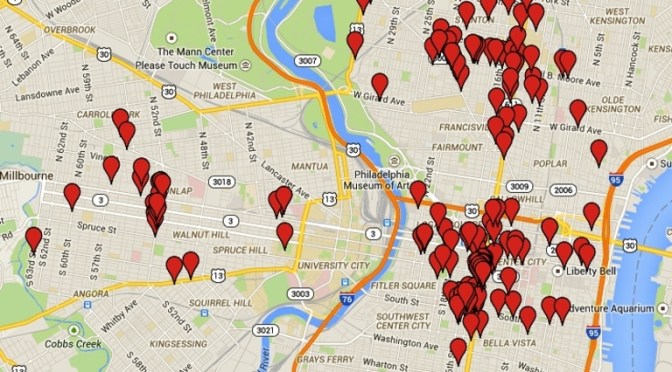
Lee will join John Coltrane, Billie Holiday, and his union, Union Local 274 of the American Federation of Musicians, with a historical marker in Philadelphia.

The blue-and-gold marker will be installed in front of the former location of the Aqua Lounge. Lee Morgan had a week-long engagement here in October 1971. It was his last hometown performance before his tragic death four months later.

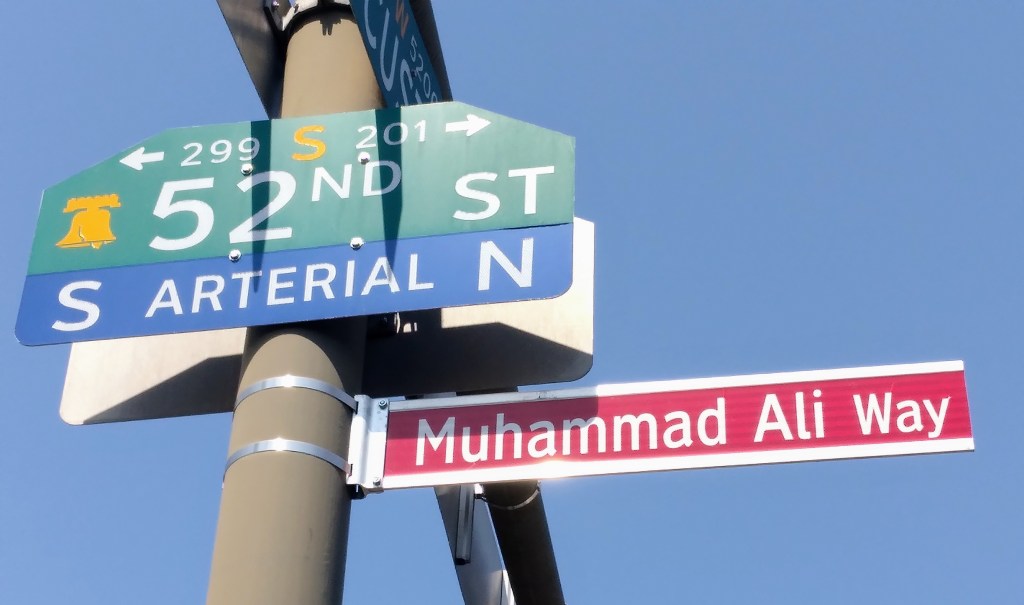
The Aqua Lounge was located on “the Strip” in West Philadelphia. This stretch of S 52nd Street was ceremoniously renamed Muhammad Ali Way in 2019.

UPDATE: Due to supply chain issues, fabrication of the marker was delayed. On the first day of Black History Month 2024, I received notice that Lee Morgan’s historical marker has been shipped.

The dedication ceremony will be held on April 30, 2024, International Jazz Day. RSVP at Lee Morgan Historical Marker Unveiling.

Nana Harriet Tubman Committee Says ‘Enough!’

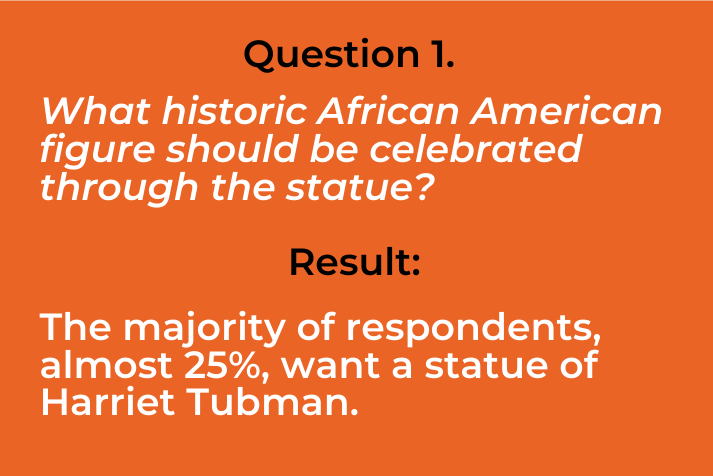
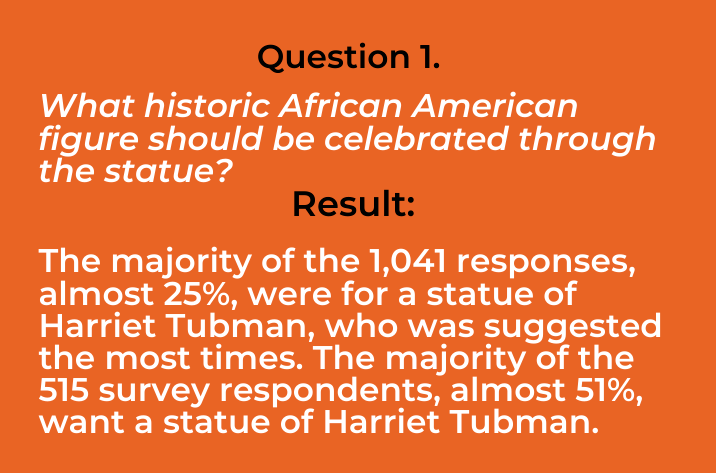
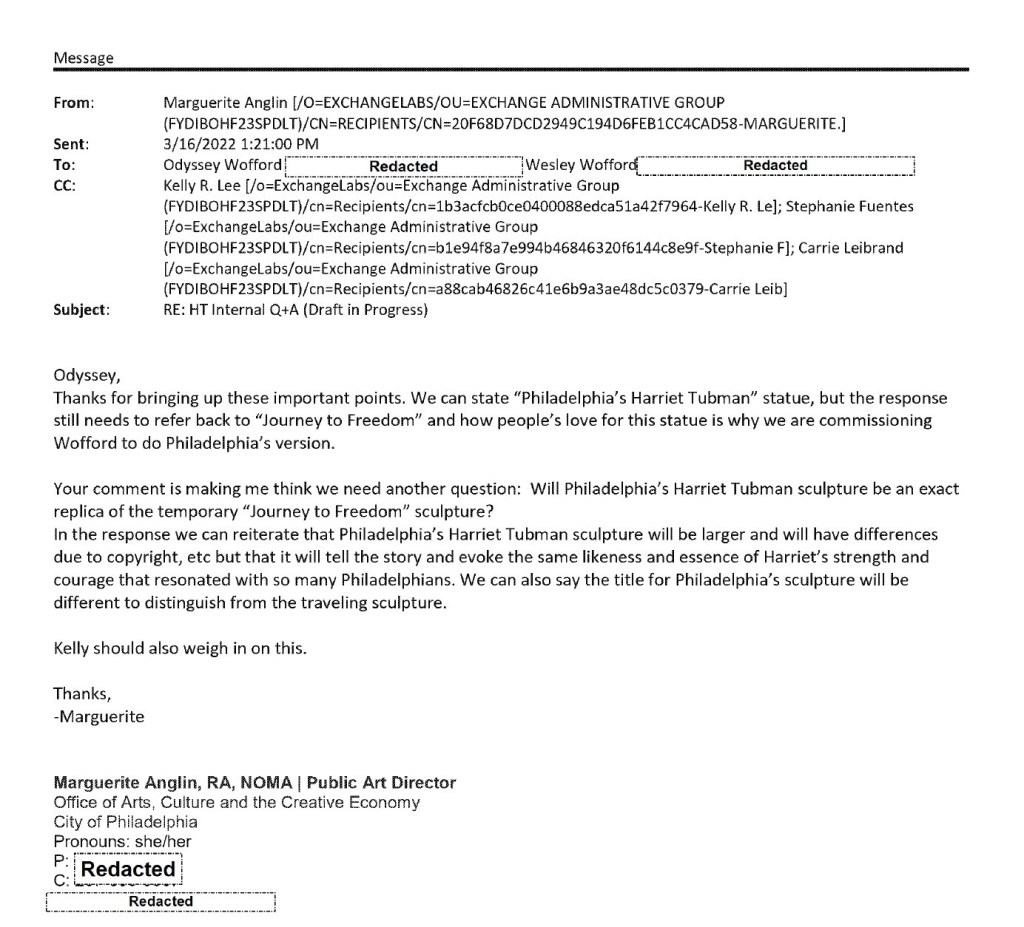
From Auburn, New York to Ypsilanti, Michigan, the commissioning of a Harriet Tubman statue has been a source of civic pride. In Philadelphia, the city where Harriet first experienced freedom, the public art acquisition process is tainted by white privilege, lies, and fuzzy math. The Office of Arts, Culture and the Creative Economy (OACCE) manipulated survey data to minimize public support for a permanent Harriet Tubman statue. OACCE claimed that only 25% of respondents want a statue of the American icon.

When OACCE was called out by a reporter with the Philadelphia Inquirer, the “full report and report summary were revised on November 22, 2022, clarifying the result for question one.”

The Celebrating the Legacy of Nana Harriet Tubman Committee has had enough of OACCE’s lies and “math not mathing.” During an interview on “Wake Up With WURD” Committee spokesperson Mama Maisha Sullivan-Ongoza said, “We cannot let this level of disrespect and incompetence continue to happen.”

Mama Maisha recounted that OACCE Director Kelly Lee told her that the City planned to award a no-bid commission to Wesley Wofford “because he’s in the system already. We can expedite it faster because he’s already in our system.” Her response: “Of course he is. White men are always in the system.” In a majority-minority city, two African American women are gatekeepers for white privilege.

These unaccountable bureaucrats want to sign the contract for the Harriet Tubman statue – or random African American figure – while their boss, Mayor Jim Kenney, is still in office. To do so, they have set an arbitrary timeline that would require artists competing for the commission to work like slaves through Christmas, Kwanzaa, Watch Night, New Year’s Day and Martin Luther King Jr. Weekend. By contrast, Lee and Anglin spoon-fed Wofford inside information for months as he prepared his proposal.

Mama Maisha notes the disparate treatment of Black and other underrepresented artists:

Now they got a speedy timeline. They want everything in by January, over the holidays. People busy, people committed to their families. They got stuff to do at the end of the year. So now you got a rushed timeline. You didn’t have a rushed timeline for Wesley Wofford. But now that you’re dealing with people of color and women, you got a rushed timeline.

The Celebrating the Legacy of Nana Harriet Tubman Committee said in a statement:

Enough! OACCE’s misinterpretation of the data and the lack of transparency in their decisions and actions minimize the importance of community engagement in public art acquisition. We demand a moratorium on the current statue commission Open Call until new, competent, transparent, and accountable oversight is created.

Mama Maisha told Attorney Michael Coard:

We want a moratorium on this Open Call, and we want Kelly Lee and Marguerite Anglin removed from any oversight. We’re going to the Mayor. We’re going to City Council. And if necessary, we will put boots on the ground in front of the Mayor’s Office. We’re ready to hit the streets.

If you have had enough of the coonery at OACCE, contact Mama Maisha Sullivan-Ongoza at (215) 385-0214 or Dr. Michelle Strongfields at (267) 231-0092; email: nanaharrietlegacydefense@gmail.com.

Donate to All That Philly Jazz

All That Philly Jazz is a place-based public history project at the intersection of art, public policy, and cultural heritage preservation.

While our content is free, researching and documenting Philadelphia’s jazz history and untold stories takes time. And time is money. If you value and appreciate what we do, please make a donation today.

Please click on the image to make a donation with PayPal, debit or credit card. Thank you!

Election Day 2022

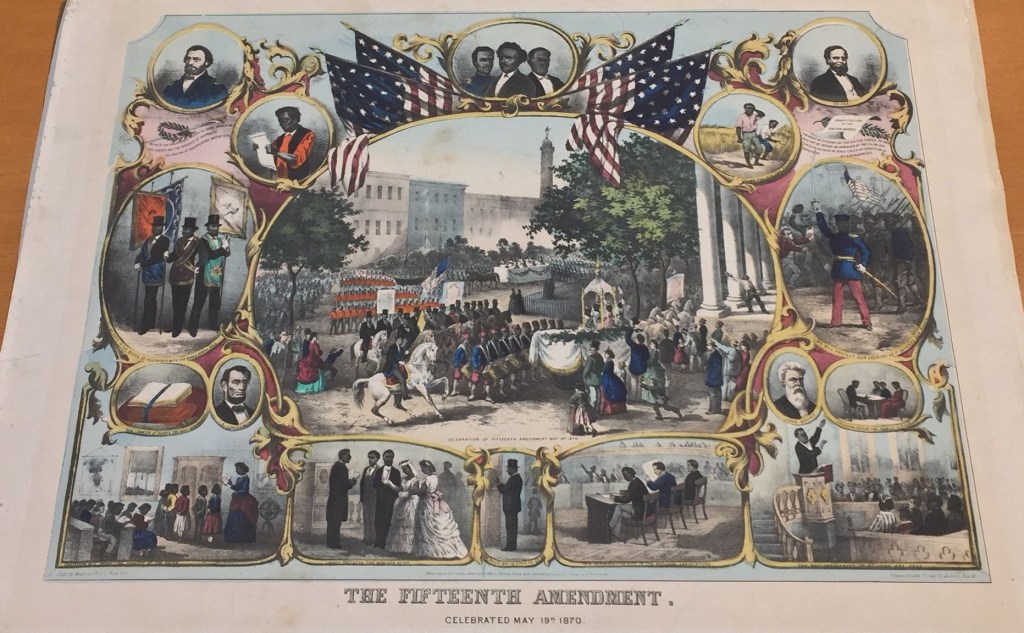
The 15th Amendment to the U.S. Constitution was ratified on February 3, 1870.

Section 1 of the Reconstruction Amendment reads:

The right of citizens of the United States to vote shall not be denied or abridged by the United States or by any State on account of race, color, or previous condition of servitude.

Election Day is Tuesday, November 8. Be careful how you vote.

Trane Wreck in Philadelphia

In their latest court filing to gain possession of the Strawberry Mansion rowhouse that John Coltrane purchased in 1952, Ravi and Oran Coltrane claim their father’s beloved cousin, “Mary Lyerly Alexander, put in place a plan to unlawfully claim the Coltrane House for herself and her progeny instead of the remaining grandchildren of Alice Gertrude Coltrane, as required by the Will.” Ravi and Oran speciously claim that a typo is evidence that conveyance of the Philadelphia property was “fraudulent.” In the deed conveying the property to Norman Gadson in 2004, Coltrane is misspelled “Cultrate.”

Cousin Mary had a plan to preserve the John Coltrane House. After decades of indifference, do Ravi and Oran Coltrane now have a plan to rehabilitate the National Historic Landmark?

To catch up on the ongoing John Coltrane House family feud, go here.

Philadelphia Searches for Black Historical Figure to Celebrate

The PBS documentary HARRIET TUBMAN: VISIONS OF FREEDOM premiered on October 4, 2022.

From Frederick Douglass to the CIA, Harriet Tubman’s singular contribution to American history is recognized. In Philadelphia, the city where Tubman first experienced freedom, the Office of Arts, Culture and the Creative Economy (OACCE) is scrounging around for random African American historical figures to celebrate. Without explanation, OACCE is seeking public input “for a permanent statue that celebrates Harriet Tubman’s story or another African American’s contributions to our nation’s history.”

The survey asks five questions, all of which beg the question: Why is OACCE searching for a “Magical Negro?” In an earlier survey, the public said they want a permanent statue of Harriet Tubman.

OACCE is heading down the same opaque and incoherent path that led to the reversal of their plan to award a no-bid commission to a white artist. Without a change in direction, OACCE Director Kelly Lee and Public Art Director Marguerite Anglin are cruising for another bruising.

Harriet Tubman Statue By Any Means Necessary

The Office of Arts, Culture and the Creative Economy’s announcement that there will be an open Call for Artists for Philadelphia’s permanent Harriet Tubman statue struck the wrong chord. Public Art Director Marguerite Anglin said:

Yes, the open Call for Artists for this public art project will welcome proposals for a permanent statue that celebrates Harriet Tubman’s story or another African American’s contribution to our nation’s history. This will be a true open Call for Artists, where the City will be looking for a wide variety of original and unique ideas from many artists.

First, Harriet is sui generis. She cannot be replaced by a random African American historical figure. Second, the Managing Director’s public art policy directive establishes criteria for artwork placed on public property. The artwork must commemorate individuals who “made significant contributions to Philadelphia, have had significant impact on Philadelphia and beyond, and represent broadly shared community values.” In my op-ed published in the Philadelphia Inquirer, I wrote:

Representation matters, but when it comes to artwork on city property, who is represented matters. Anglin said that the city “will be looking for a wide variety of original and unique ideas from many artists.” But the city’s public art policy does not allow for that.

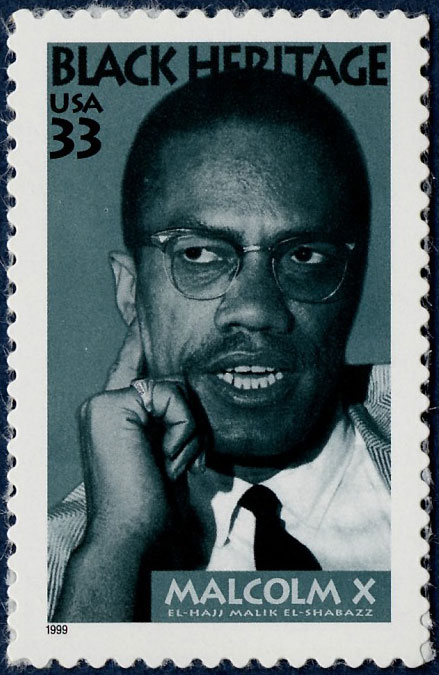
The short list of African American historical figures who meet the city’s public art policy includes Malcolm X. Like Harriet, Malcolm was prepared to use a firearm and any means necessary in his pursuit of freedom and racial justice.

Malcolm X, aka El-Hajj Malik El-Shabazz, was a world-renowned human rights activist, racial justice advocate and cultural icon whose charismatic leadership laid the foundation for the growth of Sunni Islam among African Americans. Today, an estimated 200,000 Muslims live in Philadelphia, the majority of whom are Black.

Malcolm has been memorialized in books, movies, music, visual art, and a U.S. Postal Service Black Heritage Stamp.

In addition to Malcolm X Park and murals, Malcolm’s time in Philadelphia is commemorated with a state historical marker that notes his leadership of Nation of Islam Temple No. 12 in the 1950s. Will the City’s Request for Proposals include Malcolm X, “Our Black Shining Prince?” If not, why not?

John Coltrane House Update

In the Before Times, I celebrated John Coltrane’s birthday (September 23, 1926) by leading a walking tour. We would meet at Coltrane’s Walk of Fame plaque where I would give an overview of the legendary saxophonist’s time in Philadelphia and talk about the John Coltrane House.

In light of the drama unfolding in the Court of Common Pleas, I am not in a celebratory mood. Coltrane’s sons, Ravi and Oran, are suing Norman Gadson’s daughters, Aminta and Hathor, for possession of the Philadelphia rowhouse that their father purchased in 1952 and where he composed Giant Steps.

They claim Mary Lyerly Alexander, better known as Cousin Mary, “duped” Gadson into buying property that she had no right to sell. Gadson paid $100,000 for the National Historic Landmark in 2004. That same year, John and Alice Coltrane’s house in Dix Hills, NY was at imminent risk of demolition.

On August 31, 2022, the third anniversary of Alexander’s death, Defendants allege in court documents that Cousin Mary “extinguished” Ravi and Oran’s remainder interest in the property with their knowledge and acquiescence. Defendants further claim that if they lose possession of the property, they should be reimbursed more than $220,000 for costs incurred in maintaining, renovating and insuring the Coltrane House. They claim “Plaintiffs would have no remainder interest were it not for the activities of Gadson and his successors.”

While the claims and counterclaims fly back and forth, I think about that hot and humid Saturday morning when something – or someone – told me to go check on the Coltrane House. Later that day, I learned Cousin Mary had died.

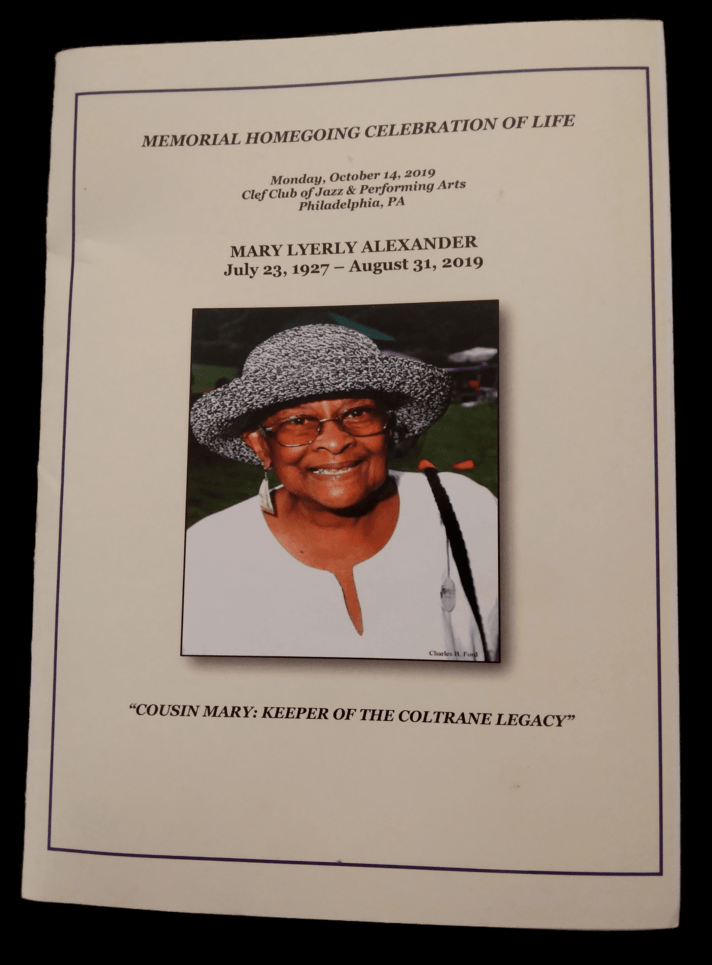
I vowed at Cousin Mary’s homecoming celebration that I would do everything I could to save the National Historic Landmark.

Little did I know my successful nomination of the John Coltrane House for listing on 2020 Pennsylvania At Risk would set in motion this family feud.

Ravi and Oran have cast aspersions on Cousin Mary. The court will decide who owns the Strawberry Mansion rowhouse. But for nearly 40 years, Cousin Mary devoted her life to preserving John Coltrane’s legacy in public memory. On July 6, 2004, she agreed to sell the property to Norman Gadson, a friend and jazz enthusiast who shared her vision for a Coltrane Museum and Cultural Center. Three months earlier, random Coltrane aficionados, preservationists and local officials saved from demolition Ravi and Oran’s childhood home in Dix Hills, NY. The place where their father composed A Love Supreme.