Tag Archives: #PhillyJazzApp

Pearl Bailey House

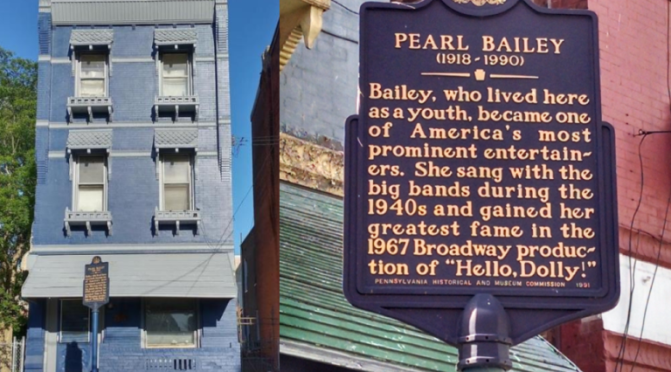
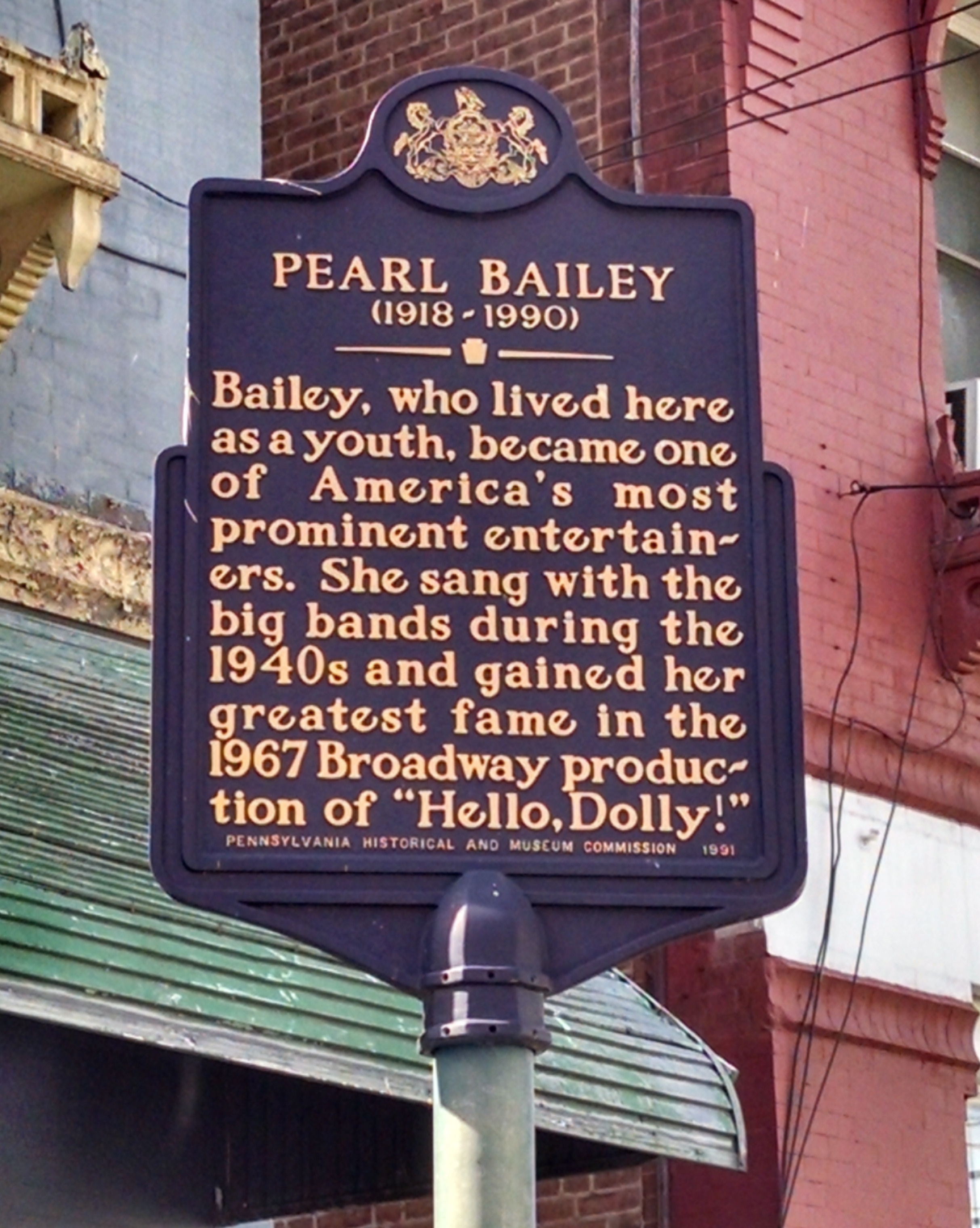
Pearl Bailey grew up in North Philadelphia in the 1920s and ’30s. Her family was part of the Great Migration from the South. She began her storied career by winning an amateur song and dance contest at the Pearl Theatre, which was located on the Ridge Avenue jazz corridor, a few blocks from the Golden Strip.

Pearl Bailey - 4.5.15

After she hit the big time, Bailey bought the house on N. 23rd Street for family members who had migrated from Newport News, Va., where she was born.

Pearl Bailey House

The current owner, William Sharrock, shared that overnight guests included comedians Redd Foxx and Slappy White, Bailey’s ex-husband. She opened the house to friends because African Americans were barred from hotels that catered to white guests.

The Pearl Bailey House has been visited by, among others, Bon Jovi and Bill Clinton (yes, that Bill Clinton).

Two Bit Club

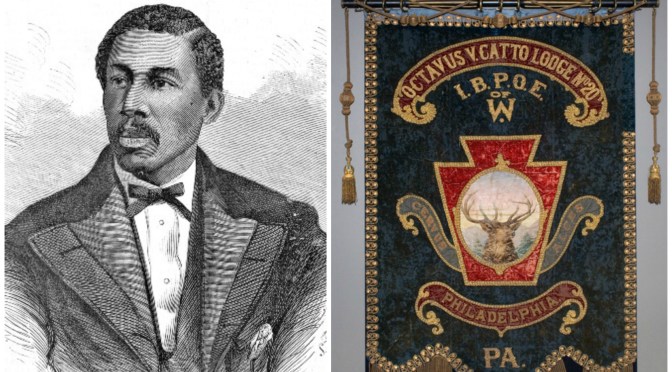
The Two Bit Club was located on the top floor of the O.V. Catto Elks Lodge, a cultural center for the African American community. The building was demolished in 1994.
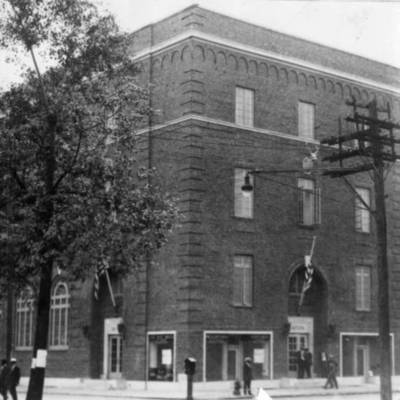
O.V. Catto Lodge - Special Collections Research Center, Temple University Libraries

From a 1994 Philadelphia Inquirer article lamenting the loss of this landmark:

Lois Fernandez, who lives a few blocks away, was one of the mourners who stopped by last week to see the wrecking ball at work.

“Damn, we’re losing a big part of our history and nobody cares,” said Fernandez, co-founder and director of Odunde, the annual African American festival on South Street.

Back in the 1950s, when Fernandez was a teenager, the “O.V.,” as she called it, was the late-night place to be.

After dinner at the former Postal Card, at 15th and South, and drinks and jazz at the former Pep’s, at Broad and South, young African Americans told each other, “Meet you at the Two Bit” after all the other clubs had closed at 2 a.m.

They were referring to the nightclub that once was located on the top floor of the old Elks Lodge.

On weekend nights until 5 a.m., couples danced the stroll, the strand and the Philly bop. The men wore their hair in the close-cropped “hustler” style and dressed in suits of silk and sharkskin. And their dates did their hair in pageboys or poodle cuts and wore long flared dresses over crinoline slips, accompanied by high heels and white gloves.

It was at the Two Bit Club that then-19-year-old Fernandez held her breath as she waited to get past the man at the door. Once inside, she ordered a Tom Collins or a Canadian Club and ginger ale, and let it sit all night until it turned to water.

“You felt so adult when you went to the Two Bit Club,” Fernandez said. ”You were always trying to act so sophisticated.”

It was at the Two Bit Club that Fernandez listened to jazz bands and saw tap dancers, her first shake dance and her first striptease.

READ MORE

Spider Kelly’s

WRTI Jazz Host Bob Perkins recently wrote:

From North Philly, “Queen of the Organ” Shirley Scott was a dear friend of mine. Saxophonist Eddie “Lockjaw” Davis heard her play at the old Spider Kelly’s jazz spot in Center City, and didn’t have to persuade her to accompany him to New York City, where they would help Count Basie open a nightclub. They remained the featured attraction for several years. Scott married saxophonist Stanley Turrentine in 1960, and they toured and recorded together for the next 10 years.

Don Gardner, managing director of the Philadelphia Clef Club of Jazz & Performing Arts, played here. Don Gardner and his Sonotones included organist Jimmy Smith.

Spider Kelly’s is where legendary bandleader Louis Jordan discovered Dottie Smith. He hired her on the spot.

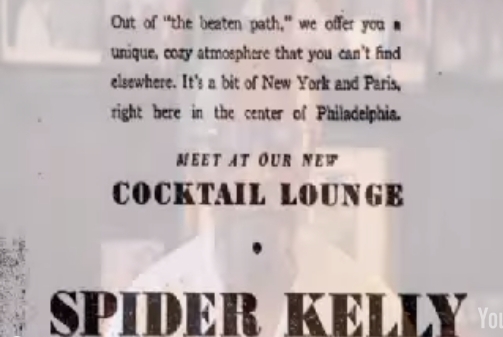
Spider Kelly Screenshot

In a 2005 interview with the West Philadelphia Music, a project of the University of Pennsylvania School of Arts and Sciences, jazz vocalist George Townes remembered:

There was a little place on Mole Street right between 15th and 16th. There’s no more Mole Street now, between Market and Ranstead, no more Mole St. And a place called Spider Kelly’s that was a club, and there was Kelly’s, um, fishery next door, but Spider Kelly’s was the place, where if you want to hide from someone, don’t go to Spider Kelly’s, ’cause they would see you there, and that was a good place.

READ MORE

Jazz City-TV

In 1979, Jazz City-TV began recording live jazz and blues concerts in clubs and the back streets bars of Philadelphia and New York City. Raw footage was edited into half-hour broadcast and cable-ready programs.

Jazz City-TV first began cable casting on Teleprompter Manhattan CATV. The shows could not air in Philadelphia because the city was not wired for CATV and the Internet was in its early development.

For more information, check out Jazz City-TV on YouTube.

Beatrice Tyner’s Beauty Shop

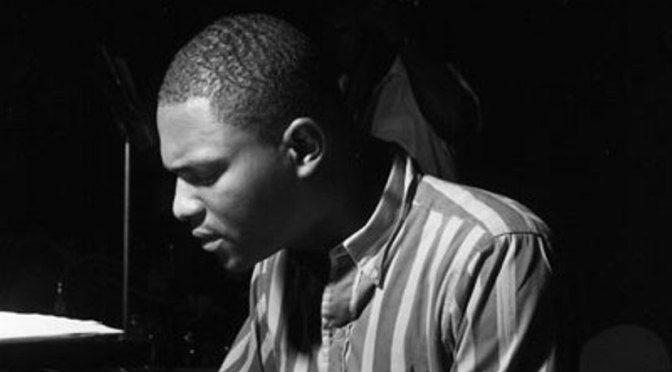
McCoy Tyner grew up in West Philly. The family lived above his mother’s beauty shop on the corner of Fairmount Avenue and May Place. Tyner’s family home is memorialized in “Blues on the Corner.”

In an interview with Dr. Anthony Brown for the Smithsonian Jazz Oral History Project, the NEA Jazz Master shared that he held jam sessions in the beauty shop:

Tyner: Yeah the kitchen was . . . the living room-it wasn’t very big but it was right behind the beauty shop. And the beauty shop was a pretty large place because they had shampoos and they had these stations for people doing their hair. And then right behind that was that little small living room where we had the TV and everything. And then there was, after that, there was a kitchen, and then above all that were bedrooms upstairs; bed and bathroom upstairs. It was a nice location, and then my mother had to get in a cab to go any place. They drop her right downstairs (laughs) and that’s where my piano was. So sometimes-you know I had an R&B band in the beginning and we had jam sessions. I had quite a few jam sessions in my mother’s shop, and my mother would be doing hair and say, “Ah you guys go ahead play. It’s alright, it’s no problem”. So we would be in there and the ladies would be under the dryer patting their foot. … (laughs) a musical beauty shop!

Brown: So, they’re sitting under those hair dryers patting their feet and you guys are jamming?

Tyner: Jamming!

Brown: Right in the same room.

Tyner: Yeah, we were in the same room. She loved music anyway and she loved piano. I think she might have felt as though that’s what I was going to do. I think she saw the handwriting on the wall and so she didn’t discourage me. I took lessons and all that and I used to practice a lot. And then when I got the band, but she was very willing to let us go ahead and do our thing. That’s where I developed the skills of writing for other instruments.

Read more

Tuskegee Clubhouse

In an interview with All About Jazz, bassist Jymie Merritt talked about the “Forerunners” jazz workshops:

JM: So I started a workshop at the Tuskegee Clubhouse, and I got Kenny Lowe, the late, gifted pianist, the drummer Donald Bailey (we called him Duck), singer September Wrice and the saxophonist Odean Pope. And we kept it going for five years until I went with Max Roach.

AAJ: So the “Forerunners” was an ongoing workshop.

JM: Yes, and then we got to play on Sundays at Father Paul Washington’s church [Church of the Advocate], and I used that opportunity to go beyond the kind of bass playing I’d been exposed to, in order to develop new forms and build from that.

READ MORE

Memories of Trudy Pitts and Mr. C

Jazz memories must be stored in a special place – not just your brain, but body and soul.

After being at Faye Anderson’s talk about the old locations and why she wants them given their due respect via a walking tour, I could hear – and want to move to – the wonderful sounds of Trudy Pitts & Mr. C playing the classics at Sunday jazz brunches on the river, somewhere near Spring Garden around the late 80s/early 90s. They had an occasional guest, but the highlight for me was Mr. C always ending with the Louis Armstrong classic, “What a Wonderful World.”

Anyone have more detailed memories?

Dr. Janice Presser, CEO of The Gabriel Institute, is a behavioral scientist and the architect of Teamability® – a completely new technology that measures how people will perform in teams.

ED. Note: Trudy Pitts and Mr. C held forth at Meiji-en on the Waterfront.

The Roots Mural

The Roots mural is located in the footprint of the legendary Pep’s.

Philly’s jazz legacy spans the generations from bebop to hip-hop. In an interview with the Smithsonian Jazz Oral History project, NEA Jazz Master and Philly native Percy Heath said:

Anyhow, they [hip-hop artists] take little pieces of some things that were written in the bebop era, post-bebop era, and they make little licks out of it and they use it. That’s good that some people, they listen to hip-hop. So, hip-hop is like bebop was back then, revolutionary movement. This business of rapping, I used to do that in the schoolyard when I was twelve years old.

Read More

ARTsolutely Awesome North Philadelphia…Yeah Mural

Artist: Marcus Akinlana

ARTsolutely is a tribute to Philly’s arts community, the Francisville neighborhood where it is located and its role in the Civil Rights Movement. The mural is on the side of the Arts Garage, a performance venue for emerging artists. Its owner, Ola Solanke, is depicted in the mural, dressed in blue and playing the African talking drum.