Tag Archives: Jazz

Jewel’s

From 1979 to 1989, Jewel Mann-Lassiter operated her eponymous jazz club, Jewel’s, on Broad Street in North Philly. Both local and national artists played here, including Trudy Pitts and Mr. C, Kevin Eubanks, Jimmy Scott, Bootsie Barnes, Evelyn Simms, Joey DeFrancesco and Pieces of a Dream.

In 1986, the Philadelphia Inquirer reported:

She brought in past and current greats Betty Carter, Gloria Lynne, Jimmy McGriff, Arthur Prysock, Dakota Staton, Herbie Mann. She tried out newcomers Nancy Kelly, Janice McClain. And the customers came, with Jewel’s attracting the city’s black movers and shakers as well as professional people, students from nearby Temple University and others seeking good music and good times.

Herbie Mann played there, tenor sax player Al Cohn and organist Jack McDuff. The “new Cotton Club,” Jewel likes to call her place.
READ MORE

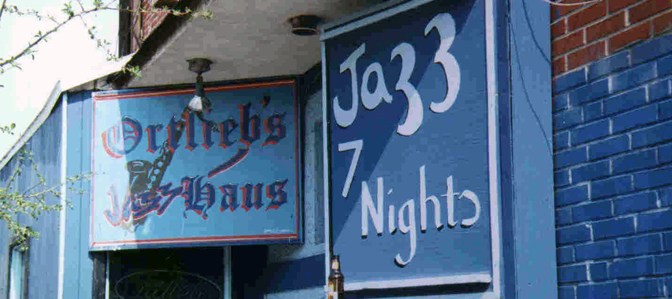
Ortlieb’s Jazzhaus

Ortlieb’s Jazzhaus was opened in September 1987 by jazz musician Pete Souders, who ran it until 2007. Under the new owner, they’re still holding their Tuesday night jam session

In a post for Hidden City Philadelphia, Bart Everts wrote:

The bar became a mainstay of the Philadelphia jazz scene, with musicians such as Bootsie Barns, Shirley Scott, Duane Eubanks, Farrid Barron, Cecil Payne and other notables taking residency. Tuesday nights featured an open jam where lesser known musicians might get to play with a legend. Throughout the 1990s, Ortlieb’s thrived as one of the few venues in the region offering jazz seven nights a week, a distinction that continued through the next decade.

READ MORE

Philadelphia Clef Club Celebrates 20 Years on Avenue of the Arts

The Philadelphia Clef Club dates back to the golden age of Philly jazz. In 1966, it was formally organized as the social arm of Union Local 274, the black musicians union, whose members included Dizzy Gillespie, John Coltrane, Benny Golson, Bill Doggett, the Heath Brothers, Jimmy Smith and Nina Simone.

Over the years, the Clef Club has had five locations, including Broad and Carpenter Streets, and 13th Street and Washington Avenue. The Philadelphia Clef Club of Jazz and Performing Arts moved into its current location on the Avenue of the Arts in 1995. This construction fence told part of the story of the house that jazz built.

Construction Fence

For information about the 20th anniversary schedule of events, visit www.clefclubofjazz.org.

23rd Street Cafe

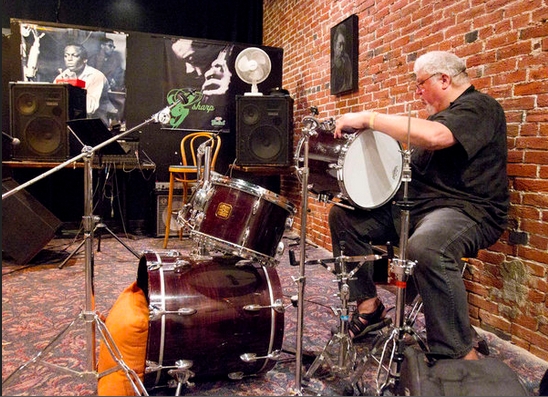
The 23rd Street Café has been featuring jam sessions since 1988. Mace Thompson, the owner, opens his establishment only on Tuesday evenings, 7:30pm to 11:30pm. There is no cover charge.

23rd Street Cafe

Alas, nothing lasts forever. The Philadelphia Inquirer reports:

After 25 years and more than 1,300 Tuesday-night jazz jam sessions at Center City’s 23rd Street Cafe, the horns, drums, basses, guitars, violins, harmonicas, and singers will soon be silenced for good. The property at 223 N. 23d Street will be demolished this summer, likely to make way for condominiums.

But all is not lost. The jam sessions will resume on Tuesday, August 4th at the Manayunk Brewery.

For updates, join the 23rd Street Cafe Facebook group.

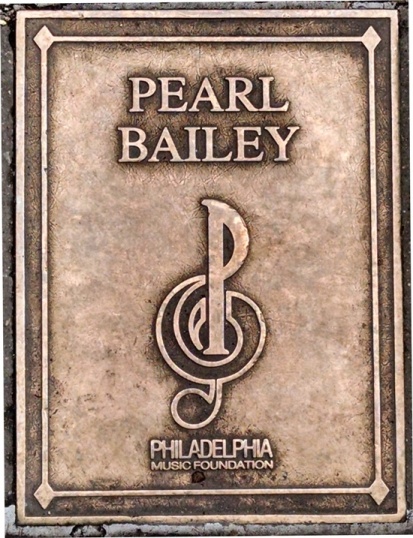
Pearl Bailey

The daughter of a preacher, Pearl Bailey began singing at the age of three (her brother, Bill Bailey, also taught her a few dance steps). She was performing professionally by her early teenage years and after touring as a dancer for several years, she featured both as a singer and dancer with jazz bands led by Noble Sissle, Cootie Williams and Edgar Hayes. She began performing as a solo act in 1944, and wooed nightclub audiences with her relaxed stage presence and humorous asides. After briefly replacing Sister Rosetta Tharpe in Cab Calloway’s Orchestra during the mid-’40s, she debuted on Broadway during 1946 in the musical St. Louis Woman. Bailey earned an award for most promising newcomer, and made her first film, Variety Girl, in 1947.

READ MORE

Pearl Bailey - 1.12.15

Stan Getz

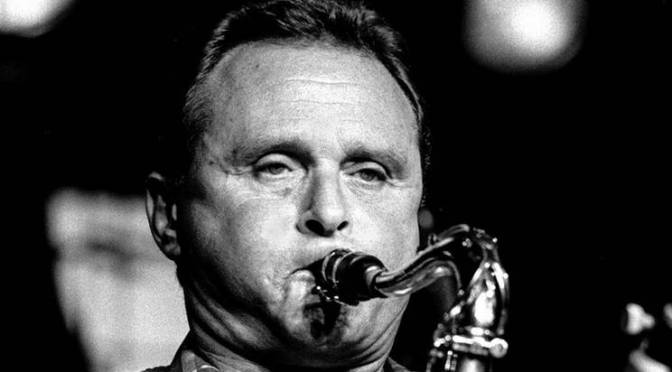
One of the all-time great tenor saxophonists, Stan Getz was known as “The Sound” because he had one of the most beautiful tones ever heard. Getz, whose main early influence was Lester Young, grew to be a major influence himself and to his credit he never stopped evolving.

Stan Getz had the opportunity to play in a variety of major swing big bands while a teenager due to the World War II draft. He was with Jack Teagarden (1943) when he was just 16 and this was followed by stints with Stan Kenton (1944-1945), Jimmy Dorsey (1945), and Benny Goodman (1945-1946). Getz, who had his recording debut as a leader in July 1946 with four titles, became famous during his period with Woody Herman’s Second Herd (1947-1949), soloing (along with Zoot Sims, Herbie Steward, and Serge Chaloff) on the original version of “Four Brothers” and having his sound well-featured on the ballad “Early Autumn.” After leaving Herman, Getz was (with the exception of some tours with Jazz at the Philharmonic) a leader for the rest of his life.

READ MORE

Stan Getz Plaque

Billie Holiday

Billie Holiday was a true artist of her day and rose as a social phenomenon in the 1950s. Her soulful, unique singing voice and her ability to boldly turn any material that she confronted into her own music made her a superstar of her time. Today, Holiday is remembered for her masterpieces, creativity and vivacity, as many of Holiday’s songs are as well known today as they were decades ago. Holiday’s poignant voice is still considered to be one of the greatest jazz voices of all time.

Holiday began working with Lester Young in 1936, who pegged her with her now-famous nickname of “Lady Day.” When Holiday joined Count Basie in 1937 and then Artie Shaw in 1938, she became one of the very first black women to work with a white orchestra, an impressive accomplishment of her time. In the 1930s, when Holiday was working with Columbia Records, she was first introduced to the poem “Strange Fruit,” an emotional piece about the lynching of a black man. Though Columbia would not allow her to record the piece due to subject matter, Holiday went on to record the song with an alternate label, Commodore, and the song eventually became one of Holiday’s classics.

READ MORE

Billie Holiday Plaque

MFSB Orchestra

The MFSB Orchestra was comprised of musicians handpicked by producers Kenny Gamble, Leon Huff and Thom Bell to be the house band for their recordings. It was the band that recorded the music tracks for the likes of Harold Melvin & the Blue Notes, the O’Jays, the Stylistics, the Spinners, Lou Rawls, Billy Paul and a host of others. A well-oiled machine with talent and enthusiasm so special that the group had to be given its own opportunity in the spotlight. Gamble & Huff did just that in 1973 by officially making the MFSB (Mother Father Sister Brother) Orchestra recording artists in their own right. The MFSB Orchestra quickly became an exciting melodic hybrid of swing, classical, jazz and R&B that went on to Grammy winning gold and platinum success.

MFSB Orchestra Plaque

Billy Paul

On December 1, 1934 in North Philadelphia, Paul Williams was born to sing. Becoming far better known as Billy Paul, at the age of twelve he was appearing on radio shows in his hometown. By age fifteen, Billy was sharing the stage with legends Charlie Parker and John Coltrane as a jazz vocalist. Briefly he served as a stand-in for one of Harold Melvin and the Blue Notes. More than twenty artful albums and a coveted Grammy award later, Billy Paul is still setting worldwide audiences afire, both live and on record.

Billy Paul has developed into a widely respected vocal virtuoso uniquely blending traces of jazz, R&B and pop. As a testament to his versatility, Billy’s talent has been internationally showcased on stages shared with the likes of Stevie Wonder, Miles Davis, James Brown and Gloria Estefan.

READ MORE

Billy Paul Plaque

Charlie Ventura

A fine swing-oriented tenor saxophonist, Ventura is best-remembered for his attempt at popularizing bebop during the tail end of the music’s mid- to late-’40s heyday. Born Charles Venturo, one of thirteen children in a musical South Philadelphia family. His first instrument was C-melody sax. He switched to alto before eventually settling on tenor. Ventura left his day job at the Philadelphia Navy Yard in 1942 to join Gene Krupa’s band. He became a featured soloist with Krupa, playing with the drummer from 1942-1943 and 1944-1946 (working in the interim with guitarist/bandleader Teddy Powell). Ventura achieved considerable popularity while with Krupa, winning a Down Beat magazine award as best tenor saxophonist in 1945.

READ MORE

Charlie Ventura Plaque